

Start with a gentle paste of baking soda and 3% hydrogen peroxide, or a pH-neutral cleaner if you’d rather skip the mixing bowl. Scrub with a nylon brush, then rinse or vacuum up every drop of dirty solution. That extraction step is the part most folks skip, and skipping it is why grout looks clean for a day and gross again by Friday. Save steam or acids for stains that just won’t quit, and call a pro before you reach for anything that eats through cement.
TL;DR:
- Proper extraction is essential, as vacuuming up dirty slurry after applying cleaner prevents grime from redepositing and prolongs grout cleanliness.
- Mild cleaning methods, such as baking soda and hydrogen peroxide paste or pH-neutral solutions, are effective for routine maintenance and lighter stains.
- For stubborn or organic stains, oxygen bleach soaking and steam cleaning are recommended steps before considering harsher chemicals or professional service.
- Avoid using acids, wire brushes, or oil-based polishes, as these can damage grout surfaces or cause long-term issues like disintegration or discoloration.
- Professional cleaning becomes worthwhile if stains persist after home methods, if grout is cracking or efflorescing, or for delicate or costly tiles that require expert treatment.
Table of Contents
- Which Tile Grout Cleaning Method Fits Your Mess?
- How Do You Clean Tile Grout the Right Way?
- What Do Professionals Use for Stubborn Grout Stains?
- What Should You Never Use to Clean Grout?
- How Often Should You Seal Grout?
- What Tools Do You Need for DIY Grout Cleaning?
- When Should You Call a Professional Grout Cleaner?
- Is DIY or Professional Grout Cleaning Worth It?
- Ready for a Deeper Clean? Here’s the Home Service Simple Option
- Where to Learn More About Grout Care
- Sources
- FAQ
Which Tile Grout Cleaning Method Fits Your Mess?
Not every grout line needs the same fight. Some just need a wipe. Others look like they’ve hosted a middle school science fair. Here’s how to size up the job before you grab a single bottle.
- Light haze or everyday grime: A pH-neutral cleaner or a few drops of dish soap in warm water, applied with a microfiber mop, handles most weekly upkeep.
- Medium staining (coffee, dirt tracked in from the yard, general dinginess): Mix a baking soda and hydrogen peroxide paste, let it sit 5 to 15 minutes, scrub, then rinse.
- Heavy or embedded stains: Soak with oxygen bleach, then follow up with extraction or steam to actually pull the loosened grime out of the pores.
- Mold or mildew in a bathroom or basement: Reach for an oxygen-based cleaner first. Save chlorine bleach as a targeted, occasional last resort, not your default weapon.
Match the method to the mess and you’ll save yourself a lot of scrubbing you didn’t need to do.
How Do You Clean Tile Grout the Right Way?
This is your everyday routine, the one you can repeat every few weeks without wrecking anything.
- Prep the area. Sweep or vacuum loose dirt first, then test your cleaner on a hidden patch of grout and protect nearby vents or trim.
- Mix your cleaner. Combine two parts baking soda with one part 3% hydrogen peroxide for a DIY paste, or dilute a pH-neutral tile cleaner per the label.
- Apply in small sections. Spread the paste along the grout lines and let it dwell 5 to 10 minutes. Don’t rush this part. The chemistry needs time to loosen the grime.
- Scrub with a nylon grout brush, working along the line rather than across it. Skip anything metal or abrasive.
- Rinse and extract. Go over the area twice with clean water, and if you own a wet-dry vacuum, use it to pull up the dirty slurry instead of letting it dry back into the grout.
- Dry it fully with a towel or squeegee before you walk on it or think about sealing.
Pro Tip: A spray bottle of plain water and a second microfiber cloth turn “rinse thoroughly” from a suggestion into a habit. Wipe once with your cleaning cloth, once with a fresh damp one, and you’ll stop redepositing grime you just spent ten minutes loosening.
What Do Professionals Use for Stubborn Grout Stains?
When the paste and the brush don’t cut it, the answer isn’t a stronger chemical. It’s a better process. Tile Council of North America guidance treats extraction, applying a cleaner and then vacuuming up the dirty water, as the real fix, since it lifts soil out of the grout pores instead of just moving it around on the surface.
Here’s the order worth trying, from mildest to most aggressive:
- Extraction first. Apply your usual cleaner, agitate it with a brush, then vacuum up every bit of the resulting slurry rather than mopping it dry.
- Steam cleaning next. A consumer steamer with a grout attachment loosens grime and kills mildew on contact, but keep the nozzle moving and use a moderate setting. Parking a steamer on one spot too long can soften the cement matrix, especially in older grout.
- Oxygen bleach soak. Mix sodium percarbonate powder with warm water, let it sit for 10 to 15 minutes on tough organic stains, then rinse well. It handles what a peroxide paste can’t without the long-term damage that comes with harsher chemicals.
- Chlorine bleach, sparingly. For mildew that won’t respond to anything else, a diluted bleach spot treatment can work, but only with gloves, eye protection, and open windows. Skip it entirely on colored or dyed grout and most natural stone.
If you’ve worked through that whole ladder and the stain is still winning, that’s usually a sign the grout itself is compromised, not just dirty. The Spruce’s restoration guide points to the same escalation order: clean, extract, steam, then professional help if none of it holds.
What Should You Never Use to Clean Grout?
More damage gets done by well-meaning DIY tricks than by dirt itself. Cementitious grout is basically a sponge for chemistry it can’t handle, and a few popular “hacks” wreck it slowly enough that you won’t notice until the damage is done.
- Skip vinegar, lemon juice, and muriatic acid. Acids dissolve cement grout at a chemical level, and enough exposure means you’re not cleaning anymore. You’re regrouting.
- Go easy on bleach and ammonia. Both can strip sealers and discolor grout with repeated use, even if one application looks fine.
- Never touch grout with wire brushes, steel wool, or heavy-duty abrasive pads. They gouge the grout lines and scratch the tile face right alongside them.
- Avoid wax or oil-based floor polishes. They leave a sticky film that grabs dirt faster than the stain you were trying to fix.
- Rinse like you mean it. Leftover cleaner residue is basically a dirt magnet, which is the whole reason extraction matters as much as the scrubbing does.
Housedigest’s breakdown of grout cleaning mistakes covers most of these in more detail if you want the full list of what not to reach for. If mold keeps coming back no matter what you avoid, it might be a moisture problem bigger than a cleaning one, worth a closer look at shower grout mold before you keep fighting it with bleach.
How Often Should You Seal Grout?
Cleaning and sealing are two different jobs, and skipping the second one means redoing the first one constantly.
There are two sealer types worth knowing. Penetrating sealers soak into the grout and repel water from inside, while topical sealers sit on top like a coating and wear off faster underfoot. TCNA guidance treats reseal timing as traffic-dependent: entryways and kitchen floors need it every 6 to 12 months, while a low-traffic guest bathroom can often go 2 to 3 years between coats.
- Test whether you’re due by dripping water on the grout. If it beads up, you’re covered. If it soaks in fast, it’s time to reseal.
- Squeegee shower walls after each use and give tile floors a weekly microfiber mop to keep grime from building up between deep cleans.
- Never mop with dirty water. You’ll just grind the same soil back into the joints you cleaned.
- Let grout dry fully, 24 to 48 hours, before sealing. Sealing over damp grout traps moisture underneath and defeats the purpose.
Pro Tip: Mark your sealer date on your phone calendar the day you apply it. Grout doesn’t send you a reminder when it’s due, and “I think it was a while ago” is how most people end up resealing two years late.
What Tools Do You Need for DIY Grout Cleaning?
You don’t need a garage full of gear. A short, focused kit covers almost every situation above.
- Nylon grout brush for scrubbing without scratching.
- Microfiber mop and cloths for everyday upkeep and rinsing.
- Bucket and spray bottle for mixing and applying cleaner.
- Wet-dry shop vacuum for real extraction, arguably the single most underrated tool in this whole process.
- Consumer steam cleaner with a grout attachment, optional, but useful for occasional deep cleans.
- Grout colorant pen, a cosmetic touch-up for faded or lightly stained grout once it’s clean and fully dry.
Wear gloves and eye protection when mixing anything, work with a window open, and never combine bleach with acids or ammonia. That combination produces fumes you do not want in your bathroom.
When Should You Call a Professional Grout Cleaner?
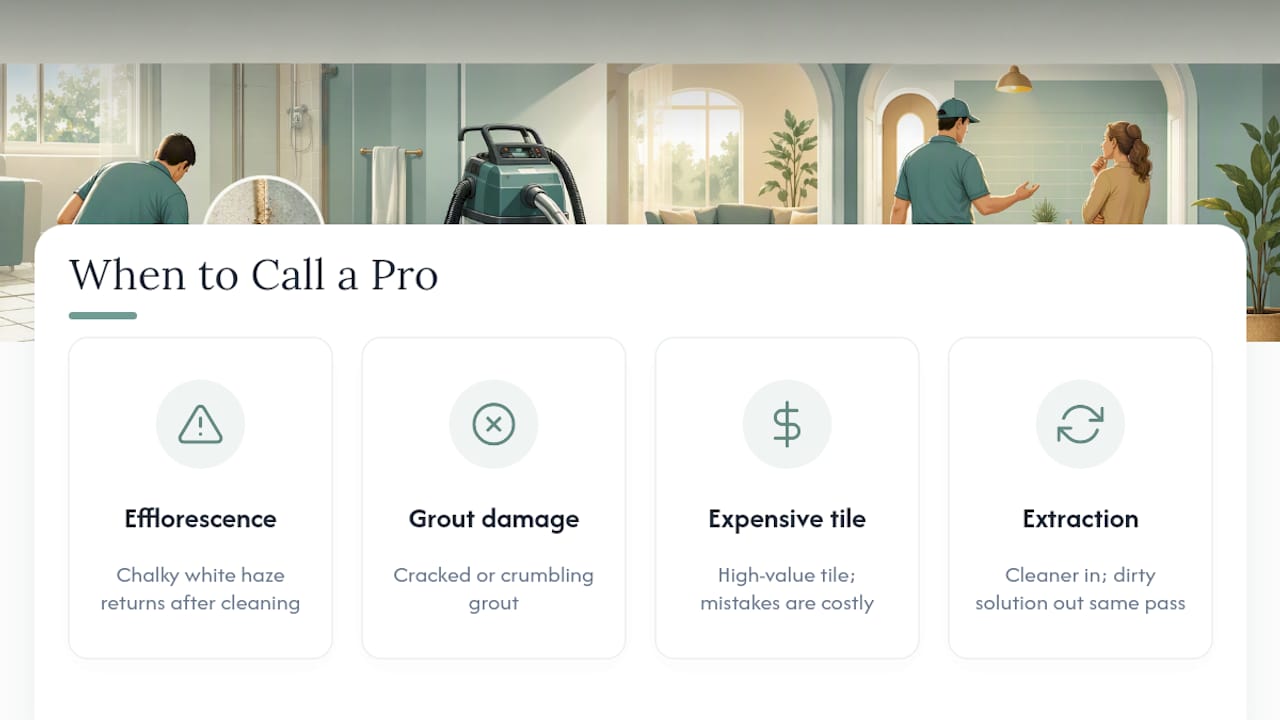
If you’ve worked through the escalation ladder and the stain is still there, that’s not a “scrub harder” problem anymore. Call a pro when you see efflorescence (that chalky white haze), grout that’s crumbling or cracked, or tile expensive enough that a mistake would sting. Professional crews use industrial steam and extraction systems that apply cleaner and pull dirty solution out in the same pass, which is exactly the principle that makes extraction work at a scale your shop-vac can’t match. A real quote should be itemized, covering cleaning, color restoration, and resealing separately, so you know what you’re actually paying for. If the efflorescence keeps coming back no matter how often you clean it, that’s usually your cue.
Is DIY or Professional Grout Cleaning Worth It?
DIY handles routine grime and moderate stains just fine, and there’s no reason to pay someone for a job a baking soda paste and a Saturday afternoon can finish. Where it stops making sense is deep staining, cracked grout, or anything on a deadline. Extraction and resealing are what actually protect your investment long term, and the safest methods are usually the least aggressive ones, so reach for peroxide before you reach for a steamer set to maximum.
— chris
Ready for a Deeper Clean? Here’s the Home Service Simple Option
If you’ve worked through the paste, the brush, and even a round of steam and the grout still looks tired, that’s usually the point where DIY stops being worth the time. Professional tile and grout cleaning, scuff removal, and tile floor polishing services often use extraction equipment far beyond typical home shop-vacs, and may include satisfaction guarantees.

Persistent staining, cracked grout, or delicate stone tile are exactly the situations where a professional pass makes more sense than another weekend of scrubbing. Rather than guessing at the right cleaner-to-water ratio one more time, get a straightforward look at what the job actually involves on the tile and grout cleaning page, where you can request an estimate and see what’s included before you book.
Where to Learn More About Grout Care

The Tile Council of North America publishes the closest thing to an industry standard on grout chemistry and sealing, and it’s worth a look if you want the technical reasoning behind extraction. Architectural Digest and The Spruce both cover practical step-by-step cleaning with sensible safety notes, and if you’re curious how grout differs structurally from mortar, this trade-pro explainer breaks it down clearly.
Sources
- Cleaning Grout | Tile Council of North America
- How to clean and restore tile grout | The Spruce
- The Worst Tile And Grout Cleaners And Methods To Avoid (And Better Solutions To Try) | HouseDigest
- Best commercial tile and grout cleaner | Kaivac Clean Academy
FAQ
Is Dawn Dish Soap Bad for Grout?
No. A few drops of mild dish soap in warm water is one of the gentler options for light, everyday grout cleaning. Just rinse thoroughly afterward, since any soap residue left behind attracts dirt just as fast as the grime you removed.
What Do Professionals Use to Clean Grout?
Professionals rely on the same core idea homeowners should: apply a cleaner, then extract the dirty solution rather than letting it dry back into the grout. Home Service Simple and similar services use industrial-grade steam and extraction equipment to pull that slurry out completely, which is harder to match with home tools alone.
What Should You Not Use to Clean Grout?
Skip vinegar, lemon juice, and muriatic acid, since acids dissolve cementitious grout over repeated use. Also avoid wire brushes, steel wool, heavy abrasive pads, and oil or wax-based polishes, all of which either scratch the surface or leave a sticky film that grabs dirt.
How Do I Get My Grout White Again?
Start with a baking soda and hydrogen peroxide paste or an oxygen bleach soak, followed by a thorough rinse or extraction. If the grout is clean and dry but still faded or stained, a grout colorant pen offers a cosmetic fix, though it won’t repair cracked or crumbling grout underneath.