

Many old carpet stains can be significantly improved or removed if you follow a staged, cautious process that starts with blotting and rehydration. Results depend on the stain type, your carpet fiber, and whatever got tried on it before. Start by blotting with a clean white cloth, misting the spot with water, and never scrubbing. If two careful attempts don’t move the stain, that’s your sign to call in a pro.
TL;DR:
- Classify drink spills as water based, grease as oil based, and blood, dairy, or pet accidents as protein stains; pretest cleaners on a hidden patch.
- Use one quarter teaspoon of clear, non bleach dish soap per cup of cool water, blot, and rinse fully before switching cleaners.
- For stubborn stains, rehydrate and blot two or three times rather than soaking; avoid saturating jute backing, and skip aggressive solvents on viscose rugs.
- Rinse until a white cloth shows no residue, then fan dry for six to eight hours; call a professional after two careful attempts.
Table of Contents
- Quick triage: identify the stain category and pretest cleaners safely
- A staged, repeatable workflow for old stains
- Advanced tactics for set-in stains
- How to verify removal, rinse thoroughly, dry safely, and restore pile
- Maintenance tips to prevent old stains from setting permanently
- Why old carpet stains are harder to remove than fresh ones
- Common old stains and how to treat each one
- Why pH balance matters in your stain solution
- Techniques for dye damage and discoloration from old stains
- A pro’s perspective: why professionals often succeed where DIY stops
- When to choose Home Service Simple for persistent old stains
- FAQ
- Sources
Quick triage: identify the stain category and pretest cleaners safely
Before you touch a single cleaner, figure out what you’re dealing with. Grape juice, coffee, and most drink spills are water-based. Grease, makeup, and cooking oil are oil-based. Blood, dairy, and pet accidents fall under protein stains. Then there’s dye and ink, rust rings from old plant pots or furniture feet, and paint. Each one wants a different approach, and using the wrong one can set a stain permanently instead of lifting it.
Once you know your stain type, pretest. Pick a hidden spot, maybe inside a closet or under a couch cushion. Apply your cleaning solution, about 10 drops, and wait 10 seconds. Blot with a white cloth and check for color transfer or fiber damage before you ever touch the real spot.
Here’s what to have on hand before you start:
- Plain white cloths or paper towels, no patterns or dyes to bleed onto the carpet
- A mist sprayer filled with plain cool water
- A blunt spoon or dull knife for scraping dried residue
- A vacuum to lift loose debris before treating
- Rubber gloves to protect your hands from solvents and enzyme cleaners
Pro Tip: Keep a small stain kit by the laundry room. The faster you can triage a fresh spill, the less likely it ends up on this list next year.
A staged, repeatable workflow for old stains
Old stains respond best to a sequence, not a single product. Jump straight to a solvent and you risk setting the stain or damaging the fiber. Work through these stages in order and stop as soon as the stain lifts.
- Vacuum and scrape. Remove any dried solids or crust first so your cleaner reaches the actual stain instead of sitting on top of debris.
- Blot and rehydrate. Mist the area lightly with plain water and let it sit a few minutes. Blot with a white cloth, working from the outer edge inward.
- Apply a mild detergent solution. Mix 1/4 teaspoon of clear, non-bleach, non-lanolin dish soap into 1 cup of cool water, a recipe the Carpet and Rug Institute recommends for minor spots. Apply sparingly and blot, never pour it on.
- Step up to a targeted solvent if needed. Oil-based stains may need a dry-cleaning solvent, ink often responds to rubbing alcohol, and certain dye stains call for a diluted ammonia solution. Rinse thoroughly between any chemistry change.
- Rinse with clear water. Mist again and blot repeatedly until no more residue transfers to your cloth.
A few rules make this workflow actually work:
- Always blot from the outside of the stain toward the center to avoid spreading it.
- Skip optical brighteners and heavily fragranced detergents, they can leave their own residue or discoloration.
- Never mix two different cleaning chemistries back to back without rinsing in between.
- Keep a dry towel underneath lighter stacks of cloths so moisture doesn’t migrate further into the pad.
The Carpet and Rug Institute points to a specific failure mode here: applying multiple spot-removal products one after another without rinsing can chemically set a stain that might otherwise have come out. That’s the single most common mistake we see in stains that “should have” worked.
The order matters because carpet fiber and backing are forgiving up to a point. Blotting lifts loose pigment without driving it deeper. Mild detergent breaks the bond between stain and fiber gently. Solvents go further but carry more risk, which is why they come after, not before, the gentler steps. Rinse last because leftover soap residue attracts dirt and can actually make the spot look worse a week later.
Advanced tactics for set-in stains
When the staged workflow above doesn’t fully clear a stain, a few more serious techniques come into play. These work, but they also carry more risk to color and fiber, so go slow.
Rehydration with patience. Mist the stain, let it dwell for several minutes, then blot gently. Repeat two or three times over a session rather than soaking it once. Avoid saturating the backing, especially if it contains jute, because over-wetting causes browning that shows up as a ring once the area dries.
Poultice method. For stubborn paint, dye, or some rust stains, mix an absorbent material (cornstarch or talc works) with a compatible solvent to form a paste. Spread it over the stain, cover with plastic to slow evaporation, and let it sit for several hours or overnight. Lift the dried poultice and vacuum the residue. University extension research notes poultices work best when the solvent matches the stain’s own chemistry, a polar solvent for a polar stain, and that drying typically takes six to eight hours.
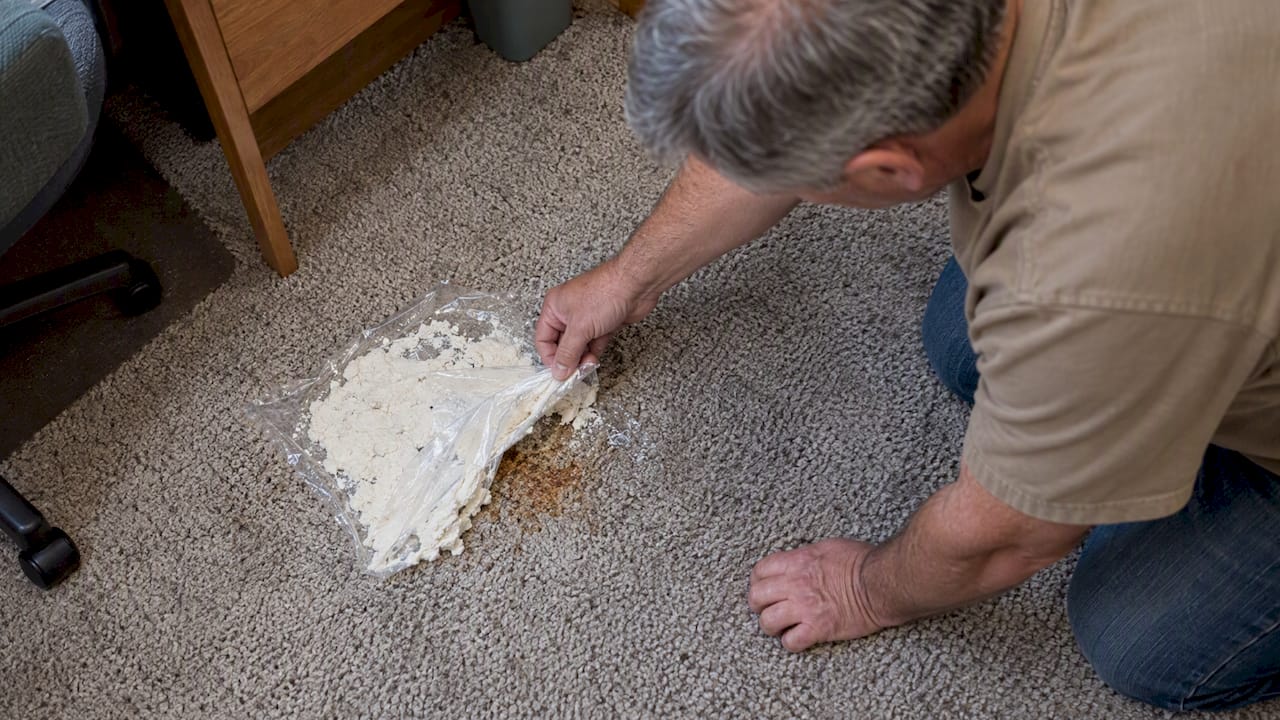
Enzyme cleaners are built for organic, protein-based messes like pet accidents because the enzymes break down the proteins rather than just masking odor.
A short list of what ruins an otherwise fixable stain:
- Scrubbing, which pushes the stain deeper and crushes the pile
- Over-wetting, which saturates the backing and causes browning
- Mixing cleaning chemistries without rinsing between them
Pro Tip: If your rug has viscose or another delicate fiber, skip the aggressive solvents altogether. Viscose rug care calls for a much gentler hand than standard wall-to-wall carpet.
How to verify removal, rinse thoroughly, dry safely, and restore pile
Getting the stain out is only half the job. Rinse until a white cloth comes away clean, no soap, no color, nothing. Mist, blot, repeat as many times as it takes.
For drying, weighted absorbent pads or stacked paper towels pull moisture up out of the pile. Point a fan at the spot and give it six to eight hours to dry fully before walking on it.
Once dry, vacuum the area and use your fingers or a soft brush to lift the pile back to its natural direction.
- Rinse until no residue transfers to a clean white cloth.
- Weight the area with absorbent pads and add fan airflow to speed drying.
- Vacuum and groom the pile once it’s completely dry.
Skipping the rinse step is why some “fixed” stains come back within days: leftover detergent attracts dirt fast, and a saturated backing that never fully dries can brown even after the visible stain is gone.
Maintenance tips to prevent old stains from setting permanently
The best stain is the one that never gets the chance to set. Treat spills the moment they happen, even a quick blot buys you time before the chemistry of the carpet starts working against you.
Rotate furniture occasionally so the same traffic patterns and pressure points don’t grind dirt into one area. Use doormats at every entrance, they catch the grit that acts like sandpaper on fibers over time. Vacuum at least weekly, more often in high-traffic rooms, since trapped soil combines with moisture to accelerate staining.
Keep a small stain kit stocked year-round: a mist sprayer, white cloths, and your detergent solution ready to go. And don’t skip routine professional cleaning, done every 12 to 18 months, which the Carpet and Rug Institute points to as one of the more reliable ways to keep spots from becoming permanent fixtures in your carpet.
Why old carpet stains are harder to remove than fresh ones
Fresh spills sit on top of the fiber. Old stains have had time to oxidize, bond chemically with the fiber, and sometimes even migrate into the carpet backing. That chemical change is part of why a coffee spill you catch in the first five minutes behaves completely differently than one that sat for three weeks.
Heat, sunlight, and repeated foot traffic speed up this process. UV exposure can alter a stain’s pigment structure, making it bind more tightly to synthetic fibers. Foot traffic grinds the stain deeper into the pile with every pass.
Fiber damage compounds the problem. Scrubbing, harsh chemicals, or past DIY attempts with the wrong solvent can roughen or discolor fibers, leaving a mark that isn’t actually a stain anymore, it’s physical damage to the carpet itself. That distinction matters because no amount of cleaning solution fixes broken or bleached fiber.
Common old stains and how to treat each one
Red wine needs a cool water rinse first, then a mild detergent solution, working from the outside in. Club soda works in a pinch for lifting fresh pigment, and we’ve covered a full red wine method in more depth.
Pet urine is a protein-and-mineral combination that often needs an enzyme cleaner to break down fully, especially once it’s dried. Odor usually lingers longer than the visible stain, so check our pet stain guidance for the enzyme approach.
Coffee behaves like a tannin stain, similar to tea, and responds well to the standard detergent solution followed by a vinegar rinse if discoloration remains. We break this down further in our coffee stain steps.
Rust is mineral-based and needs an acidic approach rather than detergent alone. Our rust stain method walks through the specifics since standard soap solutions won’t touch it.
Why pH balance matters in your stain solution
Carpet fiber, especially nylon and wool, reacts differently depending on the pH of whatever you put on it. Most stains respond best to a near-neutral solution, which is exactly why the standard dish soap recipe works as a first step rather than reaching for something stronger right away.
Alkaline cleaners, like ammonia solutions, can help break down certain dye and protein stains but risk damaging wool fibers with repeated use. Acidic solutions, like diluted vinegar, work well on mineral stains such as rust but can dull colors on some synthetic fibers if left too long.
The CRI Seal of Approval program exists partly because of this balancing act: many consumer cleaning products test no better than plain water when it comes to actually lifting a stain without harming the carpet. Reaching for the most aggressive bottle under the sink usually backfires. Match the pH to the stain type, rinse thoroughly, and move to a stronger solution only if the gentle one genuinely fails.
Techniques for dye damage and discoloration from old stains
Sometimes what’s left behind isn’t the original stain at all, it’s dye damage from the stain itself or from a past cleaning attempt. This shows up as a lighter or differently colored patch where the carpet’s original color has been stripped or altered.
For light discoloration, a carpet dye pen or touch-up kit matched to your carpet’s color can blend the spot. For more noticeable dye loss, a professional colorist can sometimes re-dye the affected patch, though this depends heavily on the carpet’s fiber type and age.
Bleach-based cleaners are the most common cause of this kind of damage. CDC guidance on bleach notes that it’s generally meant for hard, non-porous surfaces rather than carpet, since many carpets aren’t dye-fast and will discolor or strip under bleach exposure. If you suspect bloodborne contamination requiring disinfection, OSHA has noted there’s no reliable way to routinely decontaminate plush carpet for that purpose, which is a safety point worth knowing before reaching for a disinfectant as your stain solution.
A pro’s perspective: why professionals often succeed where DIY stops
A homeowner with a mist bottle and patience can fix a lot. What we bring beyond that is hot water extraction equipment that pulls moisture and residue out of the backing instead of just the surface, plus CRI-certified chemistry matched to the stain and fiber in front of us.
During an inspection, we’re checking pile type, manufacturer tags if they’re still there, and signs of prior treatment, because a carpet that’s already seen bleach or the wrong solvent needs a different plan. Our rule of thumb for homeowners: try two careful DIY attempts. If the stain or backing still shows risk of damage after that, it’s time to call someone.
— chris
When to choose Home Service Simple for persistent old stains
When a stain outlasts your second careful attempt, we’re the next step, not another bottle to try. We run deep steam carpet cleaning built around hot water extraction that lifts dirt, allergens, and old residue from the backing up, without leaving a sticky film behind that attracts new dirt. For the same spill chemistry upstairs, we also handle upholstery cleaning, mattress cleaning, and area rug cleaning.
A typical visit includes:
- An inspection of fiber type, pile condition, and any prior treatments on the stain
- Pretreating the affected area before extraction
- Deep extraction to pull residue out of the pad, not just the surface
- Pile grooming once the carpet dries, so it looks even again
If you’d rather not think about scheduling every time a spot shows up, we also offer subscription plans to keep routine care on autopilot. Current prices are available on our pricing page.
To get a quote, have your carpet’s age, fiber type if known, and a quick description of the stain’s history ready. From there, booking a carpet cleaning takes just a few minutes.
FAQ
What’s the best way to clean a carpet?
The most reliable approach is blotting rather than scrubbing, working from a stain’s outer edge inward, and using a mild detergent solution before anything stronger. CRI guidance recommends this blot-treat-rinse sequence and calling a professional if a spot won’t lift after a couple of careful tries.
How do you get deep imprints out of carpet?
Mist the flattened area with water, then work the pile back up with your fingers or a soft brush once it’s slightly damp. For stubborn imprints, a few passes with a carpet rake after the area dries usually restores most of the texture.
Can old stains still be removed?
Many old stains can be significantly improved or fully removed, though results depend on the stain type, fiber, and what’s already been tried on it. Rehydration and patient, repeated blotting often work on stains that looked permanent at first glance.
Does Dawn dish soap remove stains from carpet?
A clear, non-bleach, non-lanolin dish soap mixed at 1/4 teaspoon per cup of cool water is the exact ratio the Carpet and Rug Institute recommends for minor spots, and Dawn’s clear varieties fit that description. Always pretest first, since dyed or heavily fragranced formulas can leave their own residue.
Sources
- Simple stain removal tips and tricks – Carpet and Rug Institute
- Decontamination of a plush carpet surface after a spill. | Occupational Safety and Health Administration
- Cleaning and disinfecting with bleach – CDC