

For lasting results and warranty-safe soil removal, professional hot-water extraction is the deep carpet cleaning method the Carpet and Rug Institute recommends, and it’s the one that actually gets embedded grit and old spills out from the base of the fiber. If your carpet just needs a refresh between visits, or you’re stuck waiting a few weeks for an appointment, a careful DIY extraction can hold the line without doing damage.
Here’s how to pick your path:
- Hire a pro if it’s been over a year, you’ve got pets or allergy sufferers in the house, or you’re dealing with deep-set stains, odors, or water damage.
- DIY it if you need a quick interim clean, you’re renting a hot-water extractor (not just a carpet shampooer), and you’re prepared to rinse thoroughly and dry fast.
- Skip both and call a pro immediately if there’s flooding, sewage contact, or urine that’s soaked into the backing. That’s a different problem entirely.
Key Takeaways
Professional hot-water extraction, backed by CRI and IICRC standards, remains the most reliable deep carpet cleaning method for removing embedded soil and protecting warranty coverage.
| Point | Details |
|---|---|
| Hot-water extraction leads | It’s the CRI-recommended method for removing embedded dirt, oils, and residue that vacuuming can’t reach. |
| Follow the 12 to 18 month baseline | Compress to 6 to 12 months for pets, kids, or allergy sufferers in the household. |
| Never skip the rinse pass | Skipping water-only rinsing after pre-spray causes the sticky residue that attracts dirt right back. |
| Flooding and urine need immediate service | Contamination reaching the backing calls for professional extraction under IICRC S500, not a routine cycle. |
| Home Service Simple offers a residue-free option | Its deep steam cleaning and Simple Club subscription pair full extraction with consistent scheduling and a satisfaction guarantee. |
Table of Contents
- What Deep Carpet Cleaning Actually Removes
- What Does a Professional Deep Clean Actually Involve?
- Can You Deep Clean Carpet Yourself?
- How Often Should You Deep Clean Carpet?
- Getting Your Carpet Ready and What to Do After
- What Does Professional Deep Cleaning Cost?
- Steam, Dry, and Bonnet Cleaning: How the Methods Compare
- Is DIY Carpet Cleaning Safe? What to Watch For
- What We’d Tell a Neighbor Asking About This
- Ready for a Deep Clean That Actually Lasts?
- Sources
- FAQ
What Deep Carpet Cleaning Actually Removes
Vacuuming picks up surface debris. Deep cleaning goes after what’s stuck to the fiber itself: ground-in soil, cooking oils, skin cells, dust mite waste, and the sticky residue left behind by past cleanings gone wrong. That layered gunk is what makes carpet look dull and smell musty even when it seems tidy on top.
Industry standards built around the CRI-204 commercial cleaning guidelines break real deep cleaning into four steps: dry soil removal (vacuuming), soil suspension (loosening it with a pre-spray and agitation), soil extraction (pulling it out with water and suction), and drying (finishing the job so nothing re-deposits).
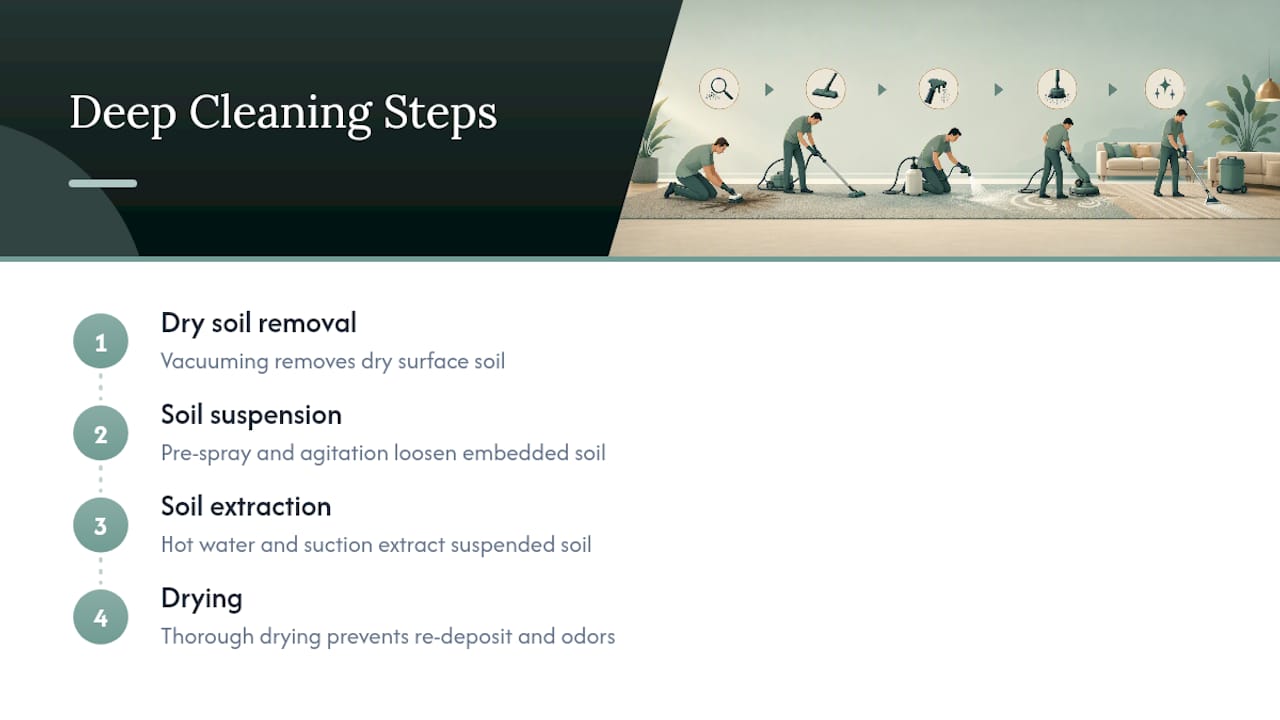
Skip any one of those steps and you haven’t deep cleaned. You’ve just moved dirt around. That’s exactly why hot-water extraction, done by someone who understands all four stages, sits at the top of the recommendation list from both the Carpet and Rug Institute and carpet manufacturers themselves. It’s not marketing. It’s the only method that reliably completes the full cycle.
What Does a Professional Deep Clean Actually Involve?
Hot-water extraction forces a heated cleaning solution deep into the carpet pile under pressure, then immediately vacuums it back out along with the soil it lifted. Professionals run one of three system types: truck-mounted units (the most powerful, with hoses running from a van outside), portable extractors (self-contained but plugged into your outlets), and self-contained units that combine both tank and vacuum in one rolling machine. Truck-mounts generally win on heat and suction. That matters because higher temperature and pressure pull soil out of the pile that lower-powered machines leave behind.
A quality visit follows a specific order, and you should expect to see all of it:
- Walk-through inspection. The technician notes traffic patterns, stains, and any fiber types that need special handling.
- Thorough vacuuming. Dry soil comes out first, before anything gets wet.
- Pre-spray application. A cleaning solution goes down on traffic lanes and spots to start breaking down oils and residue.
- Agitation. A grooming tool or machine works the pre-spray into the pile so it actually reaches the embedded soil.
- Extraction. Hot water and suction pull out the loosened soil and solution together.
- Grooming. The pile gets brushed upright so it dries evenly and doesn’t mat.
- Drying and ventilation plan. Fans or open windows speed up evaporation and cut down on re-soiling risk.
Pro Tip: Ask any company you’re considering whether they use CRI Seal of Approval certified equipment and solutions. That certification means the gear has been tested to lift soil effectively without leaving the sticky residue that attracts dirt right back.
Drying time is where a lot of homeowners get surprised. A properly run truck-mount job with good airflow typically dries in a few hours typically in that range depending on ventilation and equipment, while underpowered equipment or poor ventilation can stretch that out overnight or longer, during which your carpet is a magnet for whatever dust settles on it.
Before you book anyone, ask three questions: Are your technicians IICRC-trained under the S100 standard for carpet cleaning? Do you use CRI SOA-certified solutions? What’s your expected drying time for my square footage? A company that answers all three without hesitation is one worth trusting with your floors.
Can You Deep Clean Carpet Yourself?
Renting a hot-water extractor from a hardware or grocery store is a legitimate option for interim cleaning, light traffic areas, or stretching the time between professional visits. It’s not the right call for heavily soiled carpet, carpet under a manufacturer warranty that specifies professional service, or any situation involving pet urine that’s reached the padding or backing. Those jobs need power and expertise that rental machines don’t have.
Here’s the process that actually works if you’re going the rental route:
- Vacuum slowly and thoroughly, going over high-traffic areas twice to lift as much dry soil as possible before anything gets wet.
- Apply pre-spray according to the label, focusing on visible stains and traffic lanes rather than soaking the entire floor.
- Run extraction passes in overlapping rows, pulling the machine slowly enough that it actually has time to suction water back out.
- Follow with a water-only rinse pass to pull out leftover cleaning solution. This step is the one people skip, and it’s the one that causes the sticky, dirt-attracting residue everyone complains about later.
- Dry aggressively with open windows, fans, or a dehumidifier before anyone walks on it.
Rental machines run roughly moderate temperature and pressure levels typical of consumer rental machines, compared to a professional truck-mount’s 200 to 250 degrees and 200 to 500 PSI. That gap explains why DIY results, even done correctly, rarely match a professional job on deeply embedded soil.
For odors and organic stains, skip the harsh chemicals. A few things that hold up:
- Enzyme cleaners break down pet accidents and food stains at the molecular level, and CRI-tested versions won’t damage stain-resistant treatments.
- Baking soda absorbs odor when left overnight before vacuuming.
- A vinegar-and-water solution (diluted, never full strength) works on fresh spots but should always be followed by a clean-water rinse.
Never double up on consumer shampoo concentration to “clean harder.” Overusing consumer cleaning solutions is one of the most common causes of sticky residue buildup, and it can void a manufacturer’s stain-resistance warranty outright.
How Often Should You Deep Clean Carpet?
CRI guidance sets a baseline interval generally recommended to be about a year to a year and a half as the baseline for a typical household under normal conditions. That window shrinks depending on what’s actually happening in your home.
- Homes with pets or young kids: every 6 to 12 months.
- Allergy or asthma sufferers: every 6 to 12 months, since trapped allergens aggravate symptoms well before carpet looks dirty.
- High-traffic households (large families, frequent guests): consider the shorter end of that range, or even zone-based cleaning in entryways and hallways every few months.
- Immediate service triggers, regardless of schedule: visible deep soiling, persistent odors, any water intrusion or flooding, or a specific health need flagged by a doctor.
Keep your invoices. Manufacturer warranties often require documented professional cleaning at specified intervals using approved methods, and a paper trail showing you followed the schedule protects your coverage if a claim ever comes up.
Getting Your Carpet Ready and What to Do After
A little prep work before the technician (or the rental machine) arrives makes a real difference in how the job turns out, and how fast it dries.
Before cleaning:
- Vacuum first, even though the crew will do it again. Every bit of dry soil removed beforehand is soil the extraction process doesn’t have to fight.
- Move small furniture, toys, and rugs out of the work area.
- Photograph and point out stubborn stains so they get targeted pre-treatment.
- Slide protective tabs or foil under furniture legs to prevent rust rings on damp carpet.
After cleaning:
- Open windows or run fans immediately to move air across the wet carpet.
- Use a dehumidifier if humidity is high. Damp air is the enemy of fast drying.
- Stay off the carpet in socks or bare feet until it’s fully dry, and keep pets off it too.
- Once dry, groom the pile with a soft brush to lift crushed fibers back upright.
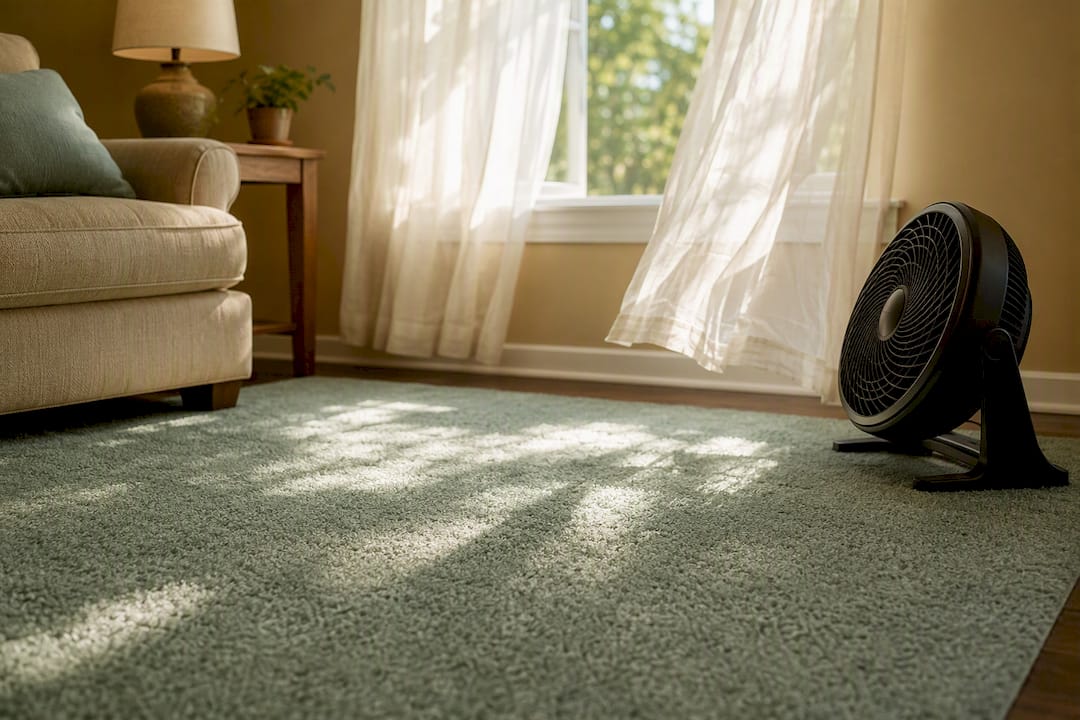
Pro Tip: Set a fan blowing across the carpet surface rather than straight down at it. Airflow parallel to the fiber pulls moisture out faster than a fan aimed straight down ever will.
Expect a few hours typically in that range depending on ventilation and equipment for a well-ventilated professional job. DIY extraction, especially without a dehumidifier, can stretch well beyond that, so plan cleaning days around good weather and open windows.
What Does Professional Deep Cleaning Cost?
Pricing swings based on square footage, how many rooms you’re doing, whether furniture needs moving, and whether you’re adding pet treatment or stain protector. Larger rooms, heavy staining, and specialty add-ons all push the estimate up from a basic per-room rate.
A quote worth trusting will spell out:
- The inspection and pre-treatment process, not just “cleaning.”
- Extraction method and equipment type.
- Expected drying time and any fans or air movers included.
- Whether furniture moving is included or billed separately.
- A written satisfaction guarantee.
Watch for red flags: a price quoted with no mention of pre-treatment, no drying time estimate, or pressure to add “protectant” packages on the spot without explaining what they do. Ask directly what equipment they use and whether their technicians carry IICRC training. A company confident in its process answers without dodging.
Steam, Dry, and Bonnet Cleaning: How the Methods Compare
Hot-water extraction isn’t the only professional method on the market, though it’s the one CRI points to first. Two others show up often enough that it’s worth knowing where they fit.
Dry carpet cleaning uses an absorbent compound or low-moisture encapsulation product worked into the pile, then vacuumed out along with the soil it grabbed. The appeal is speed: drying time is minimal, sometimes just an hour, which makes it attractive for offices or spaces that can’t sit empty. The tradeoff is depth. Dry methods clean closer to the surface and generally don’t match hot-water extraction on deeply embedded soil or old stains.
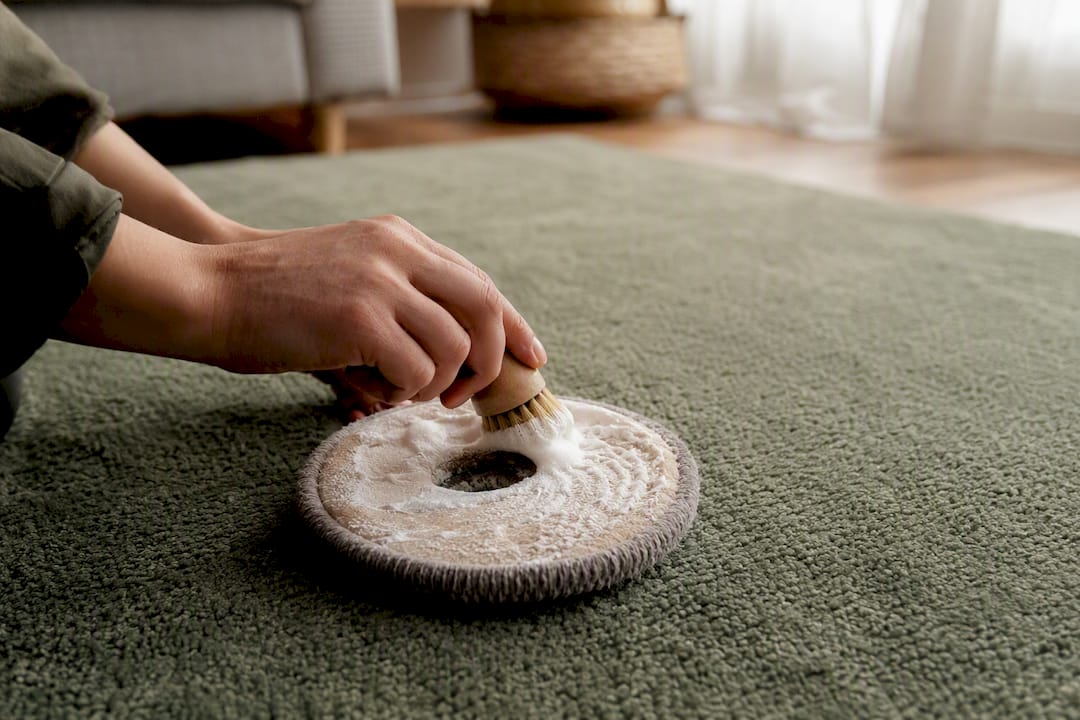
Bonnet cleaning spins an absorbent pad across the carpet surface, similar to buffing a floor. It’s fast and inexpensive, which is why it shows up often in commercial settings like hotel lobbies between deeper cleanings. It’s a surface-level touch-up more than a true deep clean, and repeated bonnet cleaning without periodic extraction can actually push soil deeper into the pile over time rather than removing it.
For a typical home dealing with months of accumulated soil, pet traffic, or allergy concerns, hot-water extraction remains the method that reaches what the others can’t. Dry and bonnet methods have their place for maintenance between full cleanings, but they’re not a substitute for the real thing on a 12 to 18 month cycle.
Is DIY Carpet Cleaning Safe? What to Watch For
Rental extractors and cleaning chemicals aren’t dangerous when used as directed, but a few precautions matter more than people assume.
Ventilation comes first. Running a machine and cleaning solution in a closed room, especially with pets or kids around, means breathing concentrated fumes for longer than necessary. Open windows and run a fan the entire time you’re working, not just during drying.
Never mix cleaning products. Combining an enzyme cleaner with a vinegar solution, or layering a store-bought spot treatment on top of a rental machine’s pre-spray, can create unpredictable chemical reactions or simply cancel out the products’ effectiveness. Pick one method and follow it through.
Watch the electrical setup. Extractors pull real power, and running one on an extension cord shared with other appliances risks a tripped breaker mid-job, or worse, in a room that’s about to get wet. Keep cords away from the wet path entirely.
If flooding, sewage backup, or urine that’s reached the carpet backing is involved, DIY extraction isn’t adequate no matter how careful you are. That level of contamination calls for immediate professional service following IICRC S500 protocols to prevent microbial growth, and it’s a different job entirely from a routine deep clean.
What We’d Tell a Neighbor Asking About This
The gap between a good deep clean and a mediocre one almost never comes down to the machine. It comes down to whether every step in the sequence actually happened: real pre-treatment, real agitation, a genuine rinse pass, and enough drying time that nothing re-deposits into damp fibers. A lot of disappointing DIY results, and honestly a few disappointing professional ones, trace back to someone skipping the rinse step because it feels redundant. It isn’t.
That’s the philosophy behind how Home Service Simple runs its deep steam cleaning jobs: full extraction with a genuine rinse pass, so there’s no sticky film left behind to attract dirt again in two weeks. For households that don’t want to think about scheduling every baseline interval generally recommended to be about a year to a year and a half, the Simple Club subscription model solves a real problem, not a manufactured one. Consistent care without a recurring mental to-do item is worth something on its own, separate from the cleaning quality itself.
Where a subscription model genuinely outperforms one-off DIY: households with pets, kids, or allergy sufferers who need that 6 to 12 month compressed schedule anyway. Once you’re cleaning more than once a year regardless, a plan that handles the scheduling removes the friction that makes people push it off until the carpet looks bad again.
Ready for a Deep Clean That Actually Lasts?
If reading through the pro workflow above made rental extractors sound like more hassle than they’re worth, that’s a fair reaction. Home Service Simple runs deep steam cleaning built around the full extraction and rinse process, no sticky residue left behind, no guessing whether the drying plan was handled right.
Beyond one-time carpet cleaning, the Simple Club subscription keeps your carpets, upholstery, air ducts, and mattresses on a consistent schedule without you having to remember to book it. Every job comes backed by a satisfaction guarantee. If you’re ready to see what a proper deep clean looks like, request a free quote from Home Service Simple and get a date on the calendar before your next allergy season hits.
Sources
- Cleaning and Maintenance – Carpet for Homes | Carpet and Rug Institute
FAQ
What is the best way to deep clean a carpet?
Hot-water extraction, done by a professional using CRI SOA-certified equipment and solutions, is the most thorough deep-clean method for removing embedded soil and allergens.
Is it worth paying for a deep clean?
Yes, for most households, since professional equipment reaches higher temperatures and pressure than rental machines and includes a documented drying plan that protects manufacturer warranties.
How often does carpet need to be deep cleaned?
CRI guidance sets a baseline interval generally recommended to be about a year to a year and a half as the baseline for normal residential use, dropping to 6 to 12 months for homes with pets, children, or allergy sufferers.
Can you deep clean a carpet yourself?
Yes, with a rented hot-water extractor and a careful vacuum, pre-spray, extraction, rinse, and dry sequence, though results won’t match professional equipment on heavily soiled carpet.
Is steam cleaning better than shampooing?
Steam cleaning, or hot-water extraction, rinses the carpet and pulls out the solution along with the soil, while shampooing can leave residue behind that attracts dirt if it isn’t fully rinsed out.