

Blot the spill, don’t scrub it, then work through a cold-water rinse and spot-treatment cycle. That’s the whole game plan in one sentence, and it’s the same order every carpet pro and the Carpet and Rug Institute tells you to follow.
Here’s your first five minutes:
- Grab a clean white cloth or paper towels and blot from the outside of the spill toward the center. Don’t scrub. Scrubbing just pushes coffee deeper into the pad and roughs up the pile.
- Pour on cold water, blot again, and repeat until the cloth stops picking up color.
- Apply a mild dish soap solution, blot it out, then move to a stronger recipe if a shadow remains.
- Fresh spills usually come out completely if you act quickly.
- Old, dried coffee stain carpet damage can often improve with effort, but full removal isn’t guaranteed.
Pro Tip: Never dump a bucket of water on a coffee spill. Overwetting drives the stain into the carpet backing, and that moisture can wick back up as a stain days later.
Key Takeaways
Blotting first with cold water, matching your spotter to the coffee type, and rinsing thoroughly determine whether a coffee stain lifts completely or lingers as a shadow.
| Point | Details |
|---|---|
| Blot, never scrub | Scrubbing pushes coffee deeper into the pile and can fray the fibers. |
| Cold water only | Hot water sets tannin pigment, making stains harder to remove later. |
| Match cleaner to spill | Use vinegar and soap for black coffee, enzyme cleaner for milk or cream. |
| Always rinse residue | Leftover cleaner attracts dirt and causes the spot to resoil fast. |
| Call a pro past two tries | Home Service Simple runs a full extraction and neutralizing rinse when DIY stalls. |
Table of Contents
- Coffee Spill on Carpet: The Fresh-Stain Protocol
- Removing an Old, Set-In Coffee Stain
- DIY Coffee Stain Removal Recipes That Actually Work
- Wool, Natural Fibers, and Tricky Coffee Additives
- When to Stop DIY and Call a Carpet Cleaning Pro
- What Home Service Simple Does With a Coffee Stain
- Sources
- FAQ
Coffee Spill on Carpet: The Fresh-Stain Protocol
A fresh coffee spill on carpet is the best-case scenario you’ll get. The coffee is still liquid, it hasn’t bonded to the fiber, and you have a real window to pull most or all of it out before it sets. Treat the next ten minutes like a small emergency, not a chore you’ll circle back to after dinner.
Step 1: Blot first, always
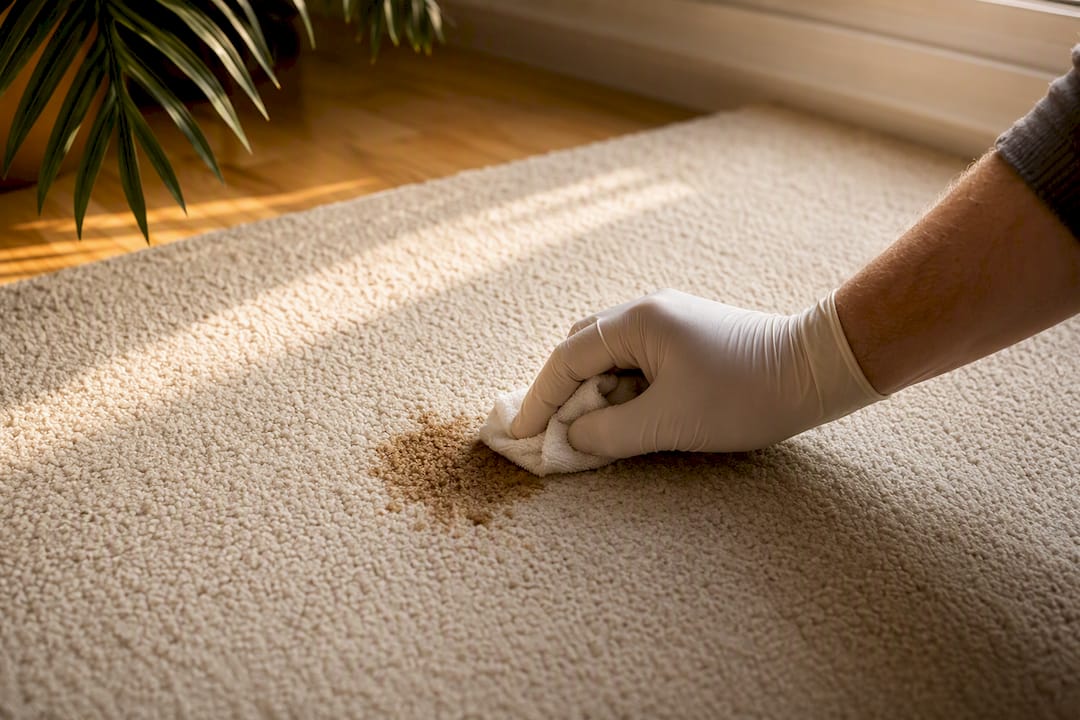
Fold a clean white cloth or stack of paper towels and press straight down on the spill, working from the outer edge inward. This outside-in motion keeps the stain from spreading wider across the carpet. The CRI’s own guidance is blunt about this: blot, never scrub. Scrubbing forces liquid deeper into the pile and can fray or distort the fibers, which sometimes leaves a rough patch even after the color is gone.
Step 2: Dilute with cold water, not hot
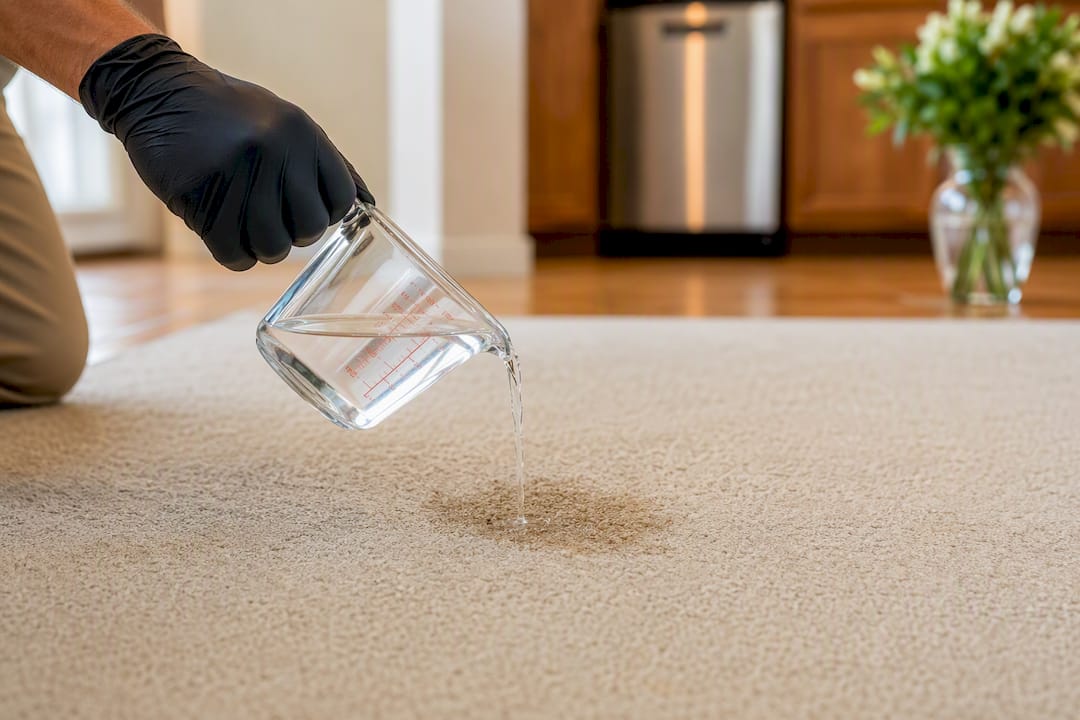
Cold water is non-negotiable here. Hot water can “set” the tannins in coffee the same way it sets a blood stain, making the pigment bond more tightly to the fiber. Pour a small amount of cold water over the area, blot, and repeat two or three times. You’re diluting the coffee, not flooding the carpet.
Step 3: Match the spotter to the coffee
For black coffee, mix one tablespoon of white vinegar, one tablespoon of Dawn dish soap, and two cups of cold water. Apply with a cloth, blot, don’t pour it directly onto the carpet in a puddle.
For coffee with milk or cream, start with dish soap alone. Milk and cream carry fat and protein that vinegar won’t touch, and treating the tannin before the dairy component often locks in a dull, slightly sour patch that lingers even after the visible stain fades.
Step 4: Rinse and extract, more than once
- Blot with your spotter solution until the cloth stops transferring color.
- Rinse with plain cold water to lift out any remaining soap or vinegar residue.
- Blot dry with a fresh towel, pressing firmly to pull moisture out rather than push it around.
Skipping the rinse step is one of the most common mistakes homeowners make. Leftover cleaning solution attracts dirt like a magnet, and you’ll end up with a stain shaped ring of resoiling a week later.
Step 5: Test before you escalate
If a faint shadow remains after two or three cycles of soap and rinse, you might reach for hydrogen peroxide next. Before you do, dab a small amount on a hidden spot, like inside a closet or under a couch, and check after ten minutes for any color change or bleeding. This colorfastness test matters even more on dyed or older carpet, where pigment can lift unpredictably.
Pro Tip: Speed up drying with a fan pointed at the wet spot. Fast drying reduces the chance of wicking, where the stain reappears as moisture travels back to the surface.
Removing an Old, Set-In Coffee Stain
A dried coffee stain carpet situation is a different animal than a fresh spill, and it’s worth being honest about that up front. The coffee has had time to bond with the fiber, and depending on how long it’s been there, you might be managing the stain down rather than erasing it completely.
Start by rehydrating the area. Dampen the stain with cold water and let it sit for two or three minutes before you blot. This softens whatever has dried and bonded, giving your cleaning solution something to actually work on. Go easy on the water. Oversaturating an old stain risks pushing pigment further into the carpet backing and pad, which can create a bigger problem than the one you started with.
Once the area is softened, work through your spotters in escalating order:
- Dish soap and vinegar solution, blotted in and rinsed out.
- A baking soda paste, worked gently into the fibers, left to dry, then vacuumed up.
- Hydrogen peroxide, applied sparingly and only after a colorfastness test, as peroxide targets the tannin pigment directly. The IICRC mentions 3% hydrogen peroxide as an option for residual color on non-natural fibers.
Expect to repeat this cycle multiple times on a genuinely old stain. Each pass should lift a little more color. If you’re seeing zero improvement by the third try, that’s your signal the stain has likely gone permanent.
A stain that keeps “ghosting” back after it dries, leaves a rough or crunchy texture in the backing, or shows dye that’s actually migrated into the surrounding fiber usually means you’ve hit the ceiling of what a spot treatment can fix.
Hydrogen peroxide and other oxidizers carry real risk on wool and other natural fibers. The IICRC warns that DIY peroxide use can cause dye loss on colored carpet and isn’t recommended for wool without testing first. If you’re working on a wool rug or anything with sentimental or dollar value, test twice, wait longer than you think you need to, and stop the moment you see any color shift.
DIY Coffee Stain Removal Recipes That Actually Work
Different coffee stains need different chemistry. Black coffee is mostly tannin. Add milk and you’ve introduced protein and fat. Add sugar or flavored syrup and now you’re dealing with a sticky residue that attracts dirt long after the color fades. Picking the right recipe for what actually spilled saves you a lot of wasted effort.
Vinegar and dish soap mix. One tablespoon white vinegar, one tablespoon Dawn, two cups cold water. This is your workhorse for straight black coffee. The vinegar’s mild acidity helps break down tannin, while the dish soap lifts oils and surfactant residue.
Hydrogen peroxide and dish soap. A few drops of Dawn mixed into a small amount of 3% hydrogen peroxide. Reserve this for stubborn tannin stains that survived a round or two of vinegar and soap. Always test for colorfastness first, this combination is your strongest DIY oxidizer and it can lift dye along with the coffee.
Baking soda paste. Three parts baking soda, one part water, worked in and left to dry before vacuuming. Baking soda is gentler and works well as a first pass on stains that are more about lingering odor than visible pigment, or as a follow-up step after a wet treatment to absorb any remaining moisture and residue.
Enzyme-based cleaner. For coffee with milk, cream, or flavored creamers, a pet-enzymatic cleaner (the kind sold for pet accidents) breaks down the protein and fat that soap alone won’t fully clear. Apply per the product’s label, let it dwell, then blot and rinse.
Match the recipe to the spill:
- Straight black coffee: vinegar and dish soap, escalate to peroxide if needed.
- Coffee with milk or cream: dish soap and enzyme cleaner first, tannin treatment second.
- Sweetened or flavored coffee: dish soap with a longer dwell time to break down the sugar and oil, followed by a thorough rinse.
- Old, dried stains: baking soda paste to lift residue, followed by the vinegar or peroxide cycle above.
What to avoid: skip bleach entirely on colored or patterned carpet, it’s not selective and it will strip dye along with the stain. Skip hot water, which sets tannins. And be careful with strong alkaline carpet cleaners on wool. Many supermarket spotters run a pH of 9 to 11, and that alkalinity can leave a sticky, soil-attracting residue on natural fibers unless it’s rinsed out or neutralized.
Whatever recipe you use, rinse it out with plain cold water afterward. Leftover cleaner residue is exactly what causes a spot to reappear grimier than before, sometimes within days.
Wool, Natural Fibers, and Tricky Coffee Additives
Not every carpet reacts to a spill the same way, and this is where a lot of well-meaning DIY attempts backfire. Wool and other natural fibers are more porous and more reactive to pH than synthetic carpet, which means the same peroxide mix that saved your nylon hallway carpet could bleach a wool area rug.
Coffee additives complicate things further. Milk and cream bring protein and fat into the mix, which is why an enzyme cleaner outperforms straight detergent on a latte spill. Sugar and flavored syrups leave a sticky film that keeps attracting dirt long after the brown color is gone, which is why those stains often need a longer soap dwell time rather than a stronger chemical.
| Fiber Type | Safe Approach | Avoid |
|---|---|---|
| Wool / natural fiber rugs | Mild dish soap, cold water, always spot-test first | Hydrogen peroxide, bleach, strong alkaline cleaners |
| Synthetic carpet (nylon, polyester) | Vinegar/soap mix, peroxide for tannin, still spot-test | Hot water, excessive scrubbing |
- Always test any product, including “gentle” ones, on a hidden patch of wool before applying it to the visible stain.
- Treat dairy and protein components first on milky coffee spills, then move to tannin treatment.
- Give sugary spills extra dwell time with a mild surfactant rather than reaching for a stronger chemical.
Pro Tip: If it’s a valuable wool rug, an heirloom piece, or you’re seeing brown discoloration that won’t budge after one careful attempt, stop. Repeated home treatments on delicate fibers do more damage than the original stain.
When to Stop DIY and Call a Carpet Cleaning Pro
Run through this checklist before you commit to another round of home treatment:
- The stain is more than a few days old and has fully dried.
- The spill covered a large area or soaked through to the pad.
- You’re dealing with wool, silk, or another natural fiber rug.
- You’ve already tried two or three home recipes with no improvement.
- The stain seems to fade after cleaning but returns as the carpet dries (that’s wicking).
- There’s a lingering odor even after the color is gone.
Once any of those apply, a certified technician brings tools and chemistry you don’t have at home. The typical professional sequence starts with an alkaline pre-spray to break down oils and chromogens, moves into an oxidizer dwell using hydrogen peroxide concentrations stronger than what’s sold at the store, then finishes with hot-water extraction and an acidic rinse that neutralizes the alkaline residue so the spot doesn’t resoil. Coffee itself is a genuinely complex stain, it carries tannins, chromogens, and oils that each respond to different chemistry, which is exactly why a layered professional approach outperforms a single home product.
IICRC-certified technicians train specifically on this sequencing, and that training is a big part of why professional extraction carries a lower risk of dye loss or wick-back than repeated DIY attempts on the same spot.
From a local pro’s perspective
We’d rather see you run a calm blot, dilute, soap, rinse cycle than panic-scrub the second coffee hits the carpet. Two things matter more than any product: test a hidden spot first, and always rinse out whatever you apply. If a stain survives two honest attempts, that’s not a failure on your part. It’s just the point where a pro’s tools do what a paper towel cannot.
What Home Service Simple Does With a Coffee Stain
If you’d rather skip the trial-and-error entirely, Home Service Simple gets a coffee stain out in one visit instead of three attempts and a trip to the store for peroxide. Wichita homeowners call us when a DIY cycle has stalled or when it’s a rug they don’t want to risk experimenting on.

Our technicians start with a diagnostic look at the stain and a test patch, then move through spot removal, deep steam extraction, and a neutralizing rinse that keeps the area from resoiling the way a leftover DIY residue often does. Fast, high-suction drying finishes the job, so you’re not left with a damp spot that wicks the stain back to the surface days later.
Here’s how to get started:
- Schedule an inspection for a stubborn or older coffee stain.
- Ask about the Simple Club subscription if you want consistent carpet care without booking separately every time.
- Request an on-site coffee-stain consult before committing to a full cleaning.
Every job comes backed by a satisfaction guarantee, and you’ll get a plan tailored to your carpet’s fiber type before any chemical touches the floor. Book a visit with Home Service Simple and let a certified tech handle the stain your paper towels couldn’t.
If you’re in a different area, a local partner like Pure Resto’s carpet cleaning service follows a similar professional protocol worth asking about.
Sources
- Carpet and Rug Institute (CRI) — Best practices for removing stains
- IICRC consumer floor and furnishings care information (Tip Sheet — Carpet Topics)
- Coffee stain removal: a pro carpet cleaning guide — CarpetCleaningDigital
- Know your pH for optimal carpet care — CMM Online
FAQ
Can You Get Coffee Stains Out of Carpet?
Yes, especially fresh spills treated within the first hour using a blot, dilute, and spot-treat cycle. Older, set-in stains often improve significantly but don’t always come out completely.
Are Coffee Stains on Carpet Permanent?
Not usually, if you act quickly and use the right sequence of cold water, dish soap, and tannin-specific treatments like hydrogen peroxide. A stain becomes more likely to be permanent the longer it sits and the more times it’s been scrubbed or treated with hot water.
Can Old Coffee Stains Be Removed?
Often, yes, through repeated cycles of rehydrating, applying dish soap or baking soda paste, then escalating to 3% hydrogen peroxide with a colorfastness test first. If you see zero improvement after three attempts, the stain has likely reached a point where a professional extraction is your best remaining option.
How Do I Know if a Coffee Stain Has Become Permanent?
Signs include a shadow that returns after the carpet dries (wicking), a rough or crunchy texture in the backing, or visible dye that has migrated into the surrounding fibers. At that point, Home Service Simple’s professional-grade extraction and neutralizing rinse offer the best remaining chance at improvement.