A fragrance-free professional carpet cleaning is a technician-run hot water extraction job that skips added scents entirely, pulling soil, allergens, and odor out of your carpet without leaving that chemical-flowery smell behind. It’s the move for anyone with asthma, migraines, or a nose that just can’t handle synthetic fragrance. Before you book, ask for the SDS on every product and get the rinse and drying plan in writing.
TL;DR:
- Fragrance-free cleaning requires full disclosure of all products used, including SDS, and involves no added scent during pre-treatment, extraction, or deodorizing.
- Proper methods include hot water extraction with pre-vacuuming, spot testing, and thorough rinsing to remove residue without masking odors or leaving scent behind.
- Ventilation during and after cleaning is crucial to prevent respiratory irritation, with drying times of 24 to 48 hours to avoid mold growth, especially in humid environments.
- Cost typically ranges from $123 to $242 per room, with higher prices for unscented products, extra rinsing, and additional drying equipment; cleaning is recommended every 12 to 18 months.
- Always request SDS, confirm no fragrance is added, and verify drying plans and odor removal specifics before booking to ensure a safe, effective service.
Table of Contents
- What “fragrance free” actually means when you hire a pro
- How pros clean carpets without the fragrance (methods that matter)
- Your pre-booking checklist: what to ask before anyone shows up
- Why fragrance-free matters for breathing, not just comfort
- What a fragrance-free clean costs and how often you need one
- What actually happens during and after your appointment
- Why we recommend going fragrance-free for sensitive homes
- How Home Service Simple keeps your air cleaner, not just your carpet
- Sources
- FAQ
What “fragrance free” actually means when you hire a pro
Here’s where folks get tripped up. You can grab an “unscented” jug of carpet shampoo off a shelf, but that’s a different animal than hiring a technician who runs a truly fragrance-free service. One’s a bottle. The other is a whole process, done by someone trained to skip the perfume step at every stage: pre-treatment, extraction solution, and any deodorizer.
A real fragrance-free professional clean means:
- No added fragrance in the pre-spray, extraction solution, or any “finishing” product
- Full product disclosure, including Safety Data Sheets, before the truck even shows up
- A rinse step built to remove residue and odor sources, not mask them with something that smells like a mountain meadow
This approach focuses on steam cleaning designed to leave no sticky residue behind, with disclosure available on request. That combination, no residue plus no added scent, is important for chemical-sensitive households, rather than relying solely on product labels.
How pros clean carpets without the fragrance (methods that matter)
Hot water extraction, often just called steam cleaning, is the method most pros lean on for a fragrance-free job. Hot water and pressure loosen soil, and a wet vacuum immediately pulls it back out along with most of the moisture. Done right, it removes the stuff causing the odor instead of just covering it up.
A solid fragrance-free visit usually looks like this:
- Pre-vacuuming to lift dry soil before any liquid touches the carpet
- Spot testing in a low-traffic area to confirm the unscented product won’t discolor fibers
- Extraction and rinse passes that flush out cleaning residue, not just visible dirt
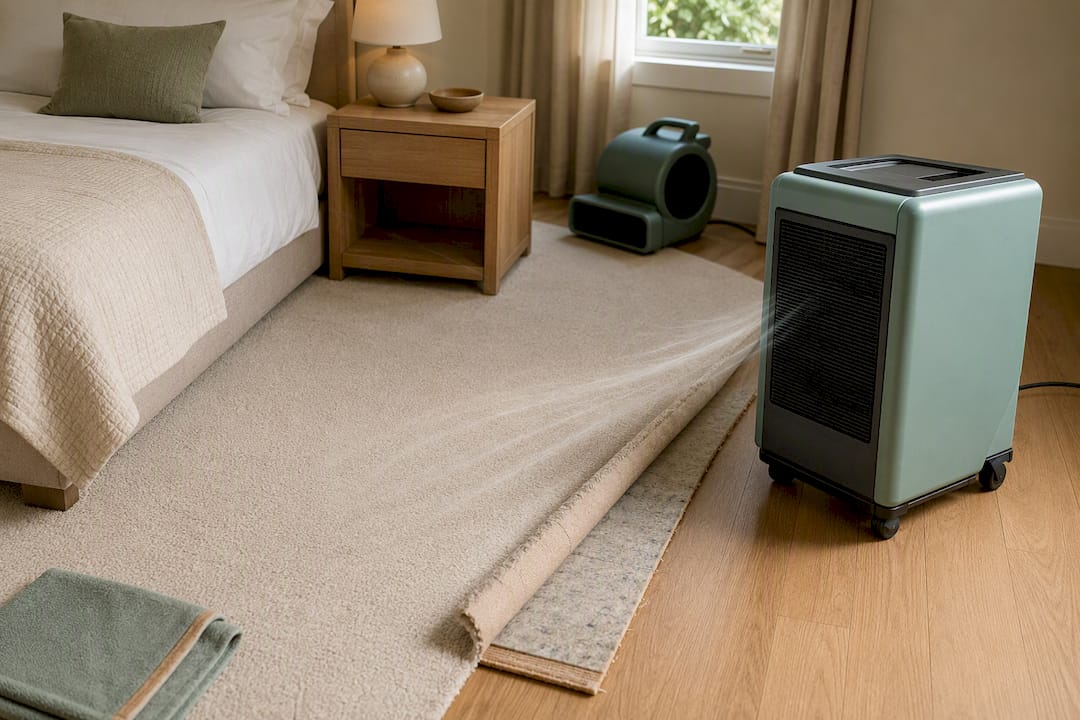
- Air movers and dehumidifiers positioned right after cleaning to push drying time down
Truck-mount units generally pull more water and dry faster than portable machines, which matters more in a small back bedroom than in a wide-open living room. Ask which one your technician is bringing.
One more thing worth flagging: those “green” or “natural” cleaning sprays sound like a safer bet, but many still carry plant-based terpenes. Terpenes can react with indoor ozone and form secondary irritants of their own. True fragrance-free means no fragrance source at all, natural or synthetic, not a swap from one scent family to another.
Pro Tip: Skip pet urine spots with a heat-heavy setting. Heat can set the stain and the smell in deeper rather than release it, so ask your technician to extract those spots with controlled, cooler water.
Your pre-booking checklist: what to ask before anyone shows up
Get this in writing before the crew arrives, not after.
- Request the SDS for every product they plan to use on your carpet.
- Ask directly: “Is this a no added fragrance service?” Get a yes or no, not a maybe.
- Confirm they pre-vacuum before any wet step, and ask whether their products carry CRI’s Seal of Approval.
- Ask what their drying plan looks like: fans, dehumidifiers, or just “it’ll air dry.”
- Clarify furniture-moving limits and what happens if a spot needs a second pass.
- Get an itemized estimate so odor treatments, stain removal, and any add-ons are broken out, not buried in one lump number.
- If odor removal is on the table, ask whether it involves enzymes or ozone. Skip ozone treatments; enzyme-based odor removal is the gentler, more predictable route.
Any cleaner who dodges the SDS question or gets vague about “eco-friendly” without naming the actual product is one to keep shopping past.
Why fragrance-free matters for breathing, not just comfort
This isn’t just a preference thing for people with sensitive noses. The CDC has documented that fragrances in cleaning products can trigger asthma or respiratory symptoms, including in people who’ve never had breathing problems before. A lot of workers and homeowners don’t even realize a cleaning product is the source of their symptoms, because ingredient labels rarely spell out every chemical component.
Some workers may not know cleaning products are the source of their respiratory symptoms because many products contain multiple, often undisclosed, chemical components.
That’s exactly why ventilation matters as much as product choice. OSHA’s indoor air quality guidance recommends opening windows, running fans, and increasing outdoor air exchange during and after any cleaning job, carpet included. Scheduling the appointment for a time when you can leave windows cracked for a few hours afterward isn’t overkill, it’s a real exposure control.
Drying speed matters here too. The EPA’s mold guidance is specific: carpet and backing need to dry within about 24 to 48 hours to avoid mold growth. If your home runs humid or your technician’s equipment seems light on air movers, ask about supplemental dehumidifiers. Anyone with severe chemical sensitivity might plan to be out of the house for a few hours during and right after the service, just to give the space time to air out.
For allergy-driven households, there’s more detail on what actually cuts symptoms worth reading before you book.
What a fragrance-free clean costs and how often you need one
Pricing for professional carpet cleaning runs a wide range depending on room count, soil level, and add-ons. Angi’s cost guide puts typical averages around $123 to $242 per room, with method and extras like stain treatment or odor removal shifting that number up or down.
A fragrance-free request itself can nudge cost slightly, mostly because it often means:
- Specific unscented, CRI-listed products instead of whatever’s cheapest on the truck
- An extra rinse pass to flush out residue thoroughly
- Additional drying equipment to hit that 24 to 48 hour window
On frequency, the Carpet and Rug Institute recommends professional hot water extraction every 12 to 18 months, more often if you’ve got pets, kids, or allergy sufferers in the house. A subscription cleaning plan can take the guesswork out of maintaining a cleaning schedule.
What actually happens during and after your appointment
A typical visit starts with a walk-through, where the technician checks trouble spots and confirms scope. Then comes pre-vacuuming, any needed pre-treatment on stains, the hot water extraction pass itself, and a final grooming of the carpet fibers to help it dry evenly.
- Fans and dehumidifiers usually go up before the crew leaves, aimed at hitting that 24 to 48 hour dry window
- You should notice zero added fragrance and no sticky feel once carpet dries
- A written follow-up policy should cover what happens if a spot resurfaces
Pro Tip: Walk barefoot over a dry section before the crew leaves. Sticky or tacky fibers usually mean residue wasn’t rinsed enough, and that’s worth flagging on the spot.
If odor lingers well past the expected drying window, or you notice a musty smell alongside visible dampness, that’s your signal to call a restoration specialist rather than wait it out. More on tackling stubborn odor is covered in our guide on stopping carpet odors for good.
Why we recommend going fragrance-free for sensitive homes
Sensitive lungs and noses don’t need a debate, they need a clean carpet that doesn’t announce itself. That’s the whole case for fragrance-free service: it does the job of removing soil and odor without adding a new irritant to the room. Some providers build their steam cleaning around that approach, with no-residue extraction and disclosure available on request, sometimes backed by a satisfaction guarantee. Before you book anyone, get the itemized estimate and the SDS first.
— chris
How Home Service Simple keeps your air cleaner, not just your carpet
Some local providers offer deep steam cleaning designed to leave no sticky residue and no added fragrance, with product disclosure available upon request. That’s the aim: clean carpet, breathable air, and transparency about ingredients.
For homes that need this on a regular schedule, allergy-prone households, rental turnovers, or offices with sensitive staff, subscription plans can cover regular cleanings without the hassle of remembering to schedule each time. Here are some things to consider before booking:
- Some providers back their visits with a satisfaction guarantee
- SDS and product disclosure may be available on request
- Many professional cleaning services also handle upholstery, air duct, and mattress cleaning for extended home care needs.
Request an itemized estimate, ask for the SDS, and book your carpet cleaning whenever you’re ready. We’ll walk you through exactly what’s in the tank before we start.
Sources
For deeper reading: the CRI’s cleaning and maintenance guidance on service intervals, the CDC’s findings on fragrance and respiratory symptoms, OSHA’s indoor air quality publication, the EPA’s mold remediation chapter on drying timelines, and Angi’s cost breakdown for pricing context. For moisture concerns beyond carpet, this attic mold remediation guide is a useful companion read.
This article is general information, not a substitute for advice from a qualified doctor. Consult a qualified healthcare professional about your own circumstances before acting on anything here.
- Stacks
- Carpet and Rug Institute — Cleaning and maintenance
- OSHA — Indoor Air Quality in Commercial and Institutional Buildings
- EPA — Mold remediation guide, chapter 4
- Angi — How much does carpet cleaning cost?
FAQ
What does “fragrance free” mean in professional carpet cleaning?
It means the technician uses products with no added fragrance at any stage: pre-spray, extraction solution, or deodorizer. That’s different from a consumer product labeled “unscented,” since a professional service also controls rinsing and drying to remove odor sources rather than mask them.
Is fragrance-free carpet cleaning safer for people with asthma?
Fragrances in cleaning products can trigger asthma or respiratory symptoms, even in people with no prior history of breathing issues, according to the CDC. Choosing a fragrance-free service and ventilating the space during and after cleaning are two practical ways to lower that risk.
How long does carpet need to dry after cleaning?
Carpet and its backing should dry within about 24 to 48 hours to avoid mold growth, per EPA guidance. Fans, dehumidifiers, and good airflow through the room all help hit that window faster.
How often should carpets get professionally cleaned?
The Carpet and Rug Institute recommends hot water extraction every 12 to 18 months for most homes. Households with pets, kids, or allergy sufferers often benefit from cleaning on the more frequent end of that range.
What should I ask before booking a fragrance-free cleaner?
Ask for the SDS on every product, confirm directly that no fragrance is added at any step, and get their drying plan and follow-up policy in writing. An itemized estimate also helps you spot any odor-removal add-ons, like enzyme or ozone treatments, before the crew arrives.