

For the healthiest, most genuinely green carpet clean, hire a pro who uses Safer Choice or DfE certified, low-VOC solutions with Chinaware extraction, or follow a specific low-VOC DIY sequence if you’re tackling it yourself. Trust signals matter more than marketing copy here: look for EPA Safer Choice labels, CRI 205 process standards, and clear drying targets. Some companies build their steam cleaning around exactly that combination.
TL;DR:
- EPA Safer Choice or DfE certified low-VOC solutions paired with Chinaware extraction are key to truly eco-friendly carpet cleaning.
- DIY methods can handle surface dirt and fresh stains but are limited in deep cleaning and moisture removal, which requires professional equipment.
- Proper preconditioning, thorough pre-vacuuming, and high-powered extraction are essential for effective and environmentally safe cleaning results.
- Ventilation, drying within 24 to 48 hours, and avoiding prolonged dampness are crucial to prevent mold and maintain indoor air quality.
- Regular maintenance every 6 to 12 months extends carpet life, reduces environmental impact, and improves indoor health more than sporadic or no cleaning.
Table of Contents
- What Does “Eco-Friendly” Carpet Cleaning Actually Mean?
- Professional Cleaning vs. Low-VOC DIY: What Each One Can Actually Do
- How to Choose a Genuinely Green Carpet Cleaner
- The Products and Equipment That Actually Deliver Results
- Keeping Your Air Safe During and After a Cleaning
- Why Regular Maintenance Is the Real Sustainability Move
- What Our Cleaning Crews Have Learned About Doing This Right
- Get an Eco-Aware Clean Without the Guesswork
- Sources
- FAQ
What Does “Eco-Friendly” Carpet Cleaning Actually Mean?
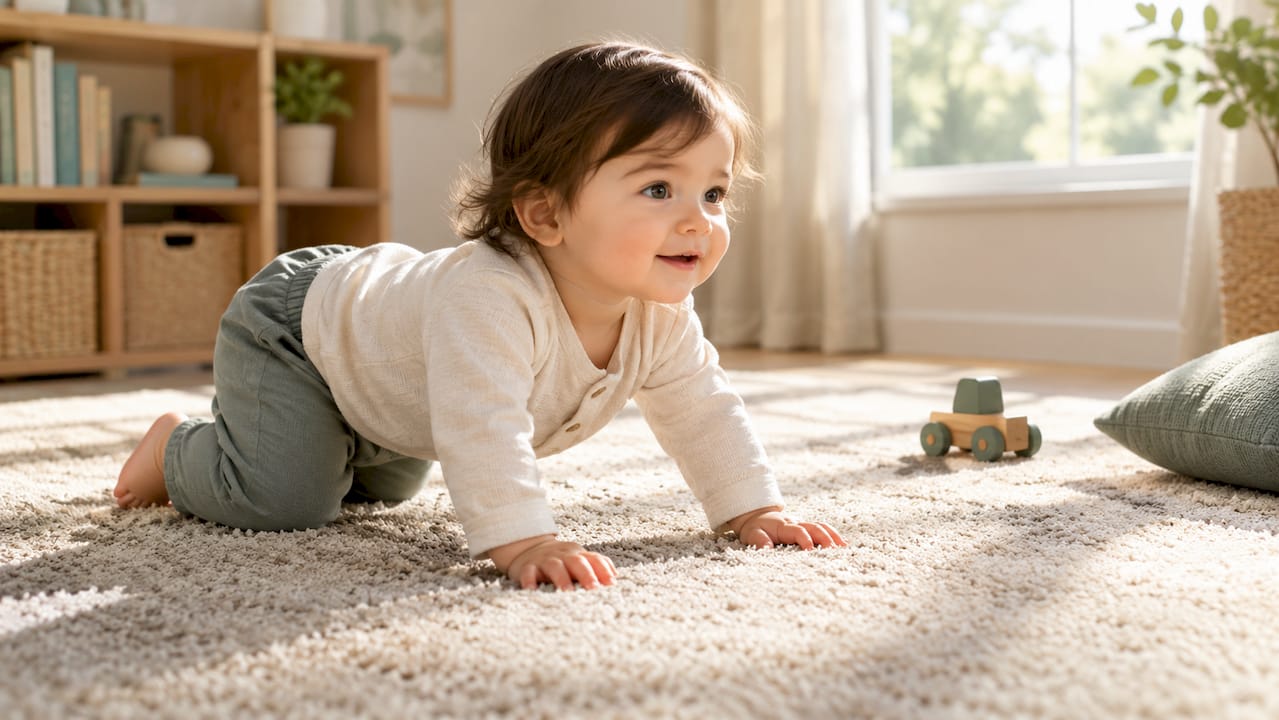
Eco-friendly carpet cleaning means low-VOC formulations, biodegradable surfactants, minimal chemical residue, and a process safe enough for kids crawling on the floor an hour later. It is not a label a company slaps on a bottle because the cap is green.
Greenwashing is common in this industry. A product can say “natural” or “plant-based” without meeting any verified standard, and plenty of cleaners marketed as gentle still contain solvents that off-gas for days. That is why third-party certification matters more than the word choice on packaging.
Two labels carry real weight:
- EPA Safer Choice and its Design for the Environment (DfE) predecessor certify that a product meets strict human health and environmental safety criteria, verified by the EPA itself rather than the manufacturer.
- CRI 205, published by the Carpet and Rug Institute, sets the residential cleaning standard that ties process (pre-vacuuming, preconditioning, extraction, drying) to actual results.
The IICRC’s cleaning principles reinforce the same idea: the chemistry in the bottle is only half the equation. How a technician applies it, how long it dwells, and how fast the carpet dries determine whether the job is actually eco-friendly or just marketed that way.
Professional Cleaning vs. Low-VOC DIY: What Each One Can Actually Do
DIY has a real place in eco-friendly carpet care, but it has limits worth knowing before you commit a Saturday to it.
- Baking soda and vacuuming handles light odor and surface soil. Sprinkle, wait an hour, vacuum. It does nothing for embedded dirt in the pile base.
- Diluted white vinegar solutions work on fresh, small stains but can dull certain fibers if overused and won’t touch oil-based soiling.
- Club soda and blotting lifts fresh spills before they set, though it’s a stopgap, not a deep clean.
- Rental extractors with low-VOC solution get closer to professional results but usually lack the vacuum power to pull moisture back out, which leaves carpets damp for days.
That last point is the real limitation. Homeowners can buy the same category of low-VOC solution a pro uses, but rental machines rarely match commercial extraction power. Underpowered suction means longer drying times, and longer drying times are exactly what breed mold.
Professionals add three things DIY typically can’t replicate: proper preconditioning dwell time to break down soil before extraction, CRI-tested equipment that pulls more water out per pass, and the judgment to know when a carpet needs more than a standard clean. Deep-set pet stains, persistent odor, past flooding, or heavy allergen loads in a home with asthma or allergy sufferers are situations where hiring a professional isn’t overkill. It’s the safer call for indoor air quality.
How to Choose a Genuinely Green Carpet Cleaner
Not every company that says “eco-friendly” on its website backs it up. A short conversation before booking tells you almost everything.
- Ask for the Safety Data Sheet (SDS) and the actual product names, not just a category description like “green solution.”
- Confirm the products carry EPA Safer Choice or DfE certification, or are on the CRI Seal of Approval list.
- Ask what drying time they target. A vague answer is a red flag; a confident “24 hours or less with fans running” is what you want to hear.
- Confirm their wastewater and rinse water disposal practices meet local guidelines rather than getting dumped in a storm drain.
- Ask about ventilation practices during and after the job, especially if anyone in the home has asthma or is pregnant.
Pro Tip: Ask specifically whether the technician can name the solution they’re using on your carpet, on the spot, without checking a truck manifest. If they can’t tell you what’s in the bottle, they probably don’t know how it performs either.
Red flags stack up fast once you know what to listen for. Evasive answers about ingredients, refusal to commit to a drying window, and vague responses about where wastewater goes all point to a company treating “eco-friendly” as a marketing line rather than an operating standard. A legitimate green cleaner welcomes these questions because pet-safe, transparent practices are part of how they built their reputation.
The Products and Equipment That Actually Deliver Results
Cleaning chemistry only works when the process around it is sound. The CRI’s preconditioning research breaks the fundamentals into five steps: dry soil removal, preconditioning, soil suspension through agitation and dwell time, extraction, and drying. Skip any one of those steps, and even a Safer Choice certified product will underperform.
Dry soil removal comes first for a reason; using the right tools for impeccable cleaning ensures this step is effective. Thorough pre-vacuuming pulls out the loose particulate matter that would otherwise combine with cleaning solution into a muddy paste. It also means the technician needs less solution overall, which is a direct win for both indoor air quality and runoff.
What to look for in a formulation:
- EPA Safer Choice or DfE label on the actual bottle used, not just referenced on the company’s marketing page
- Low-VOC or zero-VOC classification
- Fragrance-free options, since synthetic fragrance is a common trigger for sensitive occupants
- Biodegradable surfactants that break down without persisting in wastewater systems
- Avoidance of solvents like 2-butoxyethanol, a common carpet-cleaning ingredient linked to elevated indoor air concentrations that can persist for several days after application
That persistence detail matters more than most homeowners realize. Research measuring indoor air after professional cleaning events found that VOC and SVOC concentrations can climb temporarily, and certain compounds don’t fully dissipate for days rather than hours. That’s the practical argument for choosing low-VOC products over conventional ones: it’s not just about what’s safer in the bottle, it’s about what’s still floating in your air on Wednesday after a Monday cleaning.
Equipment choice compounds the effect. Truck-mounted hot water extraction units generally pull more water out of the carpet than portable units, which shortens drying time and reduces the residual moisture where mold and mildew take hold. Low-moisture or “dry” cleaning systems trade some of that deep-clean power for faster dry times, which can be the right call for offices or homes with sensitive flooring, but they’re not always a substitute for full extraction on heavily soiled residential carpet. The right choice depends on the soil load and how fast the space needs to be back in use.
Keeping Your Air Safe During and After a Cleaning
A cleaning appointment temporarily changes your indoor air, and that’s true even with low-VOC products. EPA research on cleaning events confirms that common household cleaners, including carpet solutions, can raise VOC levels for a period after use. The fix isn’t avoiding cleaning. It’s managing the air around it.
- Open windows before, during, and after the appointment, weather permitting, to keep air moving out rather than settling.
- Run ceiling fans or a portable fan pointed at the treated area to speed evaporation and push VOCs outward.
- Change your HVAC filter within a few days of a deep clean, since it will have caught extra particulate from the process.
- Target full dry time within 24 to 48 hours. Beyond that window, CDC guidance treats prolonged dampness as a mold risk, and carpet soaked longer than 48 hours from flooding is often better replaced than salvaged.
- Sensitive occupants (asthma, pregnancy, infants) should ask about scheduling a cleaning while they’re out for a few hours, and anyone doing serious water damage remediation themselves should wear an N95 mask.
Why Regular Maintenance Is the Real Sustainability Move
The most overlooked eco-friendly habit isn’t a product swap. It’s frequency. The Carpet and Rug Institute recommends professional cleaning every 12 months for typical households, and more often, every 6 to 12 months, for high-traffic homes with kids, pets, or allergy sufferers.
Here’s the environmental case most guides skip: a carpet that’s maintained on schedule lasts years longer than one cleaned sporadically or not at all. Fewer replacements mean less carpet in the landfill and less manufacturing demand overall. Regular, planned cleaning is genuinely one of the more sustainable choices a homeowner can make, right alongside choosing low-VOC products.
Between professional visits:
- Vacuum at least twice a week, more in high-traffic rooms
- Treat spots immediately rather than letting them set into stains
- Rotate area rugs seasonally to even out wear
- Keep a shoes-off policy near entryways to cut down on tracked-in soil
What Our Cleaning Crews Have Learned About Doing This Right
Working a subscription cleaning model teaches that drying control matters more than which bottle you grab. We’ve walked into homes where a well-meaning DIY attempt left carpet damp for three days, and that’s a mold risk waiting to happen, not a job well done.
Being upfront about our SDS and product choices isn’t a courtesy, it’s the baseline. DIY is fine for a fresh coffee spill. Once you’re dealing with pet accidents, old stains, or anything that’s been wet more than a day, call a pro.
— chris
Get an Eco-Aware Clean Without the Guesswork
Professional deep steam cleaning pulls out dirt, allergens, and odors without leaving the sticky residue that causes carpets to recoil quickly, avoiding the over-wetting problems that undermine many DIY attempts. If scheduling is the real barrier to staying on that 6 to 12 month maintenance cadence, the Simple Club subscription handles it automatically so you’re never the one remembering to book.
Beyond carpets, the same drying-focused, low-residue approach covers upholstery, air ducts, and mattresses for households trying to cut allergens across the whole house, not just the floors. Some professional cleaning services offer a satisfaction guarantee to ensure quality of cleaning results. Ready to see it for yourself? Book a carpet cleaning with Home Service Simple and get a drying timeline and product rundown before the crew ever steps inside.
Sources
- Safer Choice | US EPA
- Influence of Cleaning on Indoor Air Concentrations of Volatile and Semivolatile Organic Compounds in Residences
- Clinical guidance and mold cleanup advice | CDC
FAQ
Is eco-friendly carpet cleaning as effective as conventional cleaning?
Yes, when the process follows CRI fundamentals like pre-vacuuming, preconditioning, and full extraction, low-VOC products clean just as effectively as conventional ones. The difference isn’t cleaning power, it’s what’s left behind in your air afterward.
Is eco-friendly carpet cleaning safe for pets and children?
Products carrying the EPA Safer Choice or DfE label are formulated to meet stricter human and environmental health criteria, making them a safer choice around pets and kids than unverified “natural” products. Always confirm drying time too, since a damp carpet is more of a rolling-around risk than the solution itself.
How much does eco-friendly carpet cleaning cost compared to standard cleaning?
Pricing varies by provider and square footage rather than by whether the product is certified green, since low-VOC formulations don’t carry a significant cost premium over conventional ones. Home Service Simple’s Simple Club membership runs $20 a month for the Standard plan or $40 a month for Premium, which covers routine care without booking each visit separately.
How long should carpet take to dry after a green cleaning?
Aim for full drying within 24 to 48 hours. Beyond that window, CDC guidance treats prolonged dampness as a mold risk, which is why ventilation and proper extraction power matter as much as the product itself.
Can I do eco-friendly carpet cleaning myself, or should I hire a pro?
Light DIY methods like baking soda treatments or spot cleaning with diluted vinegar work fine for minor, fresh issues. For deep stains, pet odor, allergen buildup, or anything that’s stayed wet more than a day, a professional deep clean is the safer route for both your carpet and your indoor air.