

A musty carpet smell almost always means trapped moisture, and sometimes mold, underneath what your nose can reach. Don’t spray it with something that smells like a candle store and call it done. Get the carpet and pad dry as quickly as possible, ideally within about two days, check underneath for wet padding or subfloor, and if the smell sticks around after a real cleaning and drying effort, you’re probably looking at replacement or a professional’s help.
TL;DR:
- Removing the moisture source within 24 to 48 hours is critical to prevent mold growth and long-lasting odors.
- Carpet padding that remains spongy, smells worse, or shows mold must usually be replaced instead of cleaned.
- Moisture meters and humidity controls are essential tools to confirm that the area is thoroughly dry and mold risk is eliminated.
- Using deodorizing sprays or scented powders only masks the smell; controlling moisture and removing mold are the actual solutions.
- Persistent odors after proper cleaning signal that a professional assessment and possibly replacement of the carpet or padding are necessary.
Table of Contents
- What’s Really Causing That Musty Carpet Smell
- The First 24 to 48 Hours Matter More Than Anything Else
- DIY Odor Removal: What Actually Works and What Just Covers It Up
- When the Carpet or Pad Has to Go
- Keeping the Smell From Coming Back
- When It’s Time to Stop DIYing and Call a Pro
- Why Homeowners Keep Making the Same Mistake
- Get Your Carpet Actually Fixed, Not Just Freshened
- Where This Guidance Comes From
- Sources
- FAQ
What’s Really Causing That Musty Carpet Smell
That smell has a name, and it’s not “carpet funk.” It’s coming from microbial volatile organic compounds, or mVOCs, the gasses mold releases as it grows and feeds. The EPA links that musty scent directly to active mold growth, which means your nose is basically a cheap mold detector. If you smell it, something back there is alive and eating.
Here’s the thing about carpet in a house full of kids: a spilled water bottle after a Saturday game feels harmless. But moisture doesn’t stay on the surface. It wicks down through the fibers, into the pad, and sometimes into the subfloor underneath, where it just sits in the dark and grows something you don’t want to think about.
Before you decide this is a quick fix or a rip-it-out situation, check these spots:
- Localized dampness or cool spots when you press your palm flat on the carpet.
- Visible staining or discoloration, especially rings that weren’t there last month.
- Odor that gets stronger when you move furniture or walk across a specific patch.
- Smell concentrated near baseboards, basement walls, or exterior doors, which usually points to a moisture entry point.
- Musty smell from air vents, which can mean the source isn’t the carpet at all but mold hiding in your air ducts.
A cheap moisture meter, the kind with two metal prongs you press into the carpet, will confirm what your nose already suspects. Anything reading noticeably wetter than the surrounding area means there’s a hidden source you haven’t found yet.
The First 24 to 48 Hours Matter More Than Anything Else
This is the window that decides whether you’re dealing with a smell or a full mold colony. The EPA’s own guidance on drying materials quickly is blunt about it: items dried promptly after getting wet usually avoid mold growth. Miss that window, and you’re playing a different game.
Here’s your priority list, in order:
- Stop the water source first. Shut off the leaking supply line, move the wet dog bed, fix the gutter, whatever it is. Drying carpet while water keeps coming is like bailing a boat with the plug still out.
- Pull up any standing water. A wet/dry shop vac works faster than towels and does a better job pulling water out of the fibers instead of just pushing it around.
- Get air moving immediately. Box fans, ceiling fans, open windows if the weather cooperates. Airflow across wet carpet speeds evaporation more than people expect.
- Bring in a dehumidifier, ideally one sized for the room, and run it continuously until the area tests dry.
- Check the padding underneath if the wet area is larger than a dinner plate or the water sat for more than an hour. Peel back a corner of the carpet, not the whole room, and look and smell before you decide anything.
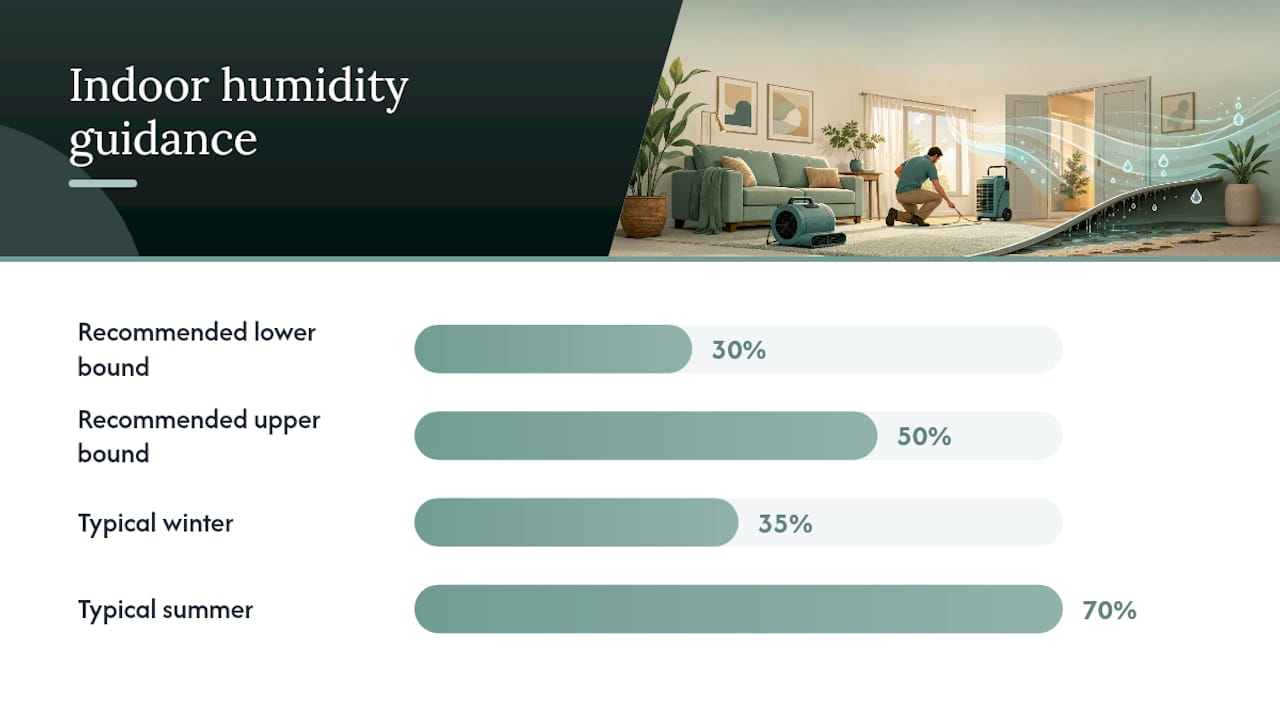
- Monitor humidity with a hygrometer and keep pushing toward 30 to 50 percent relative humidity, which the EPA identifies as the range that prevents condensation and microbial growth. Above 60 percent, mold has everything it needs.
Pro Tip: If you lift the carpet and the pad underneath smells worse than the carpet itself, or feels spongy instead of springy, stop trying to dry it in place; that pad is probably not salvageable. Trying to save it usually just delays the inevitable and gives mold more time to spread.
One safety note that doesn’t get said enough: if you pull back the carpet and see mold covering more than a small patch, about the size of a small hand-sized area, or the smell is genuinely overwhelming when you lift it, stop. Don’t keep disturbing it without a mask and gloves at minimum. Widespread hidden mold can release spores into the air the moment you start moving material, and that’s not a DIY afternoon project anymore.
DIY Odor Removal: What Actually Works and What Just Covers It Up
Some of these methods genuinely work. Others just buy you a few days before the smell comes back stronger, like a weed you mowed instead of pulled.
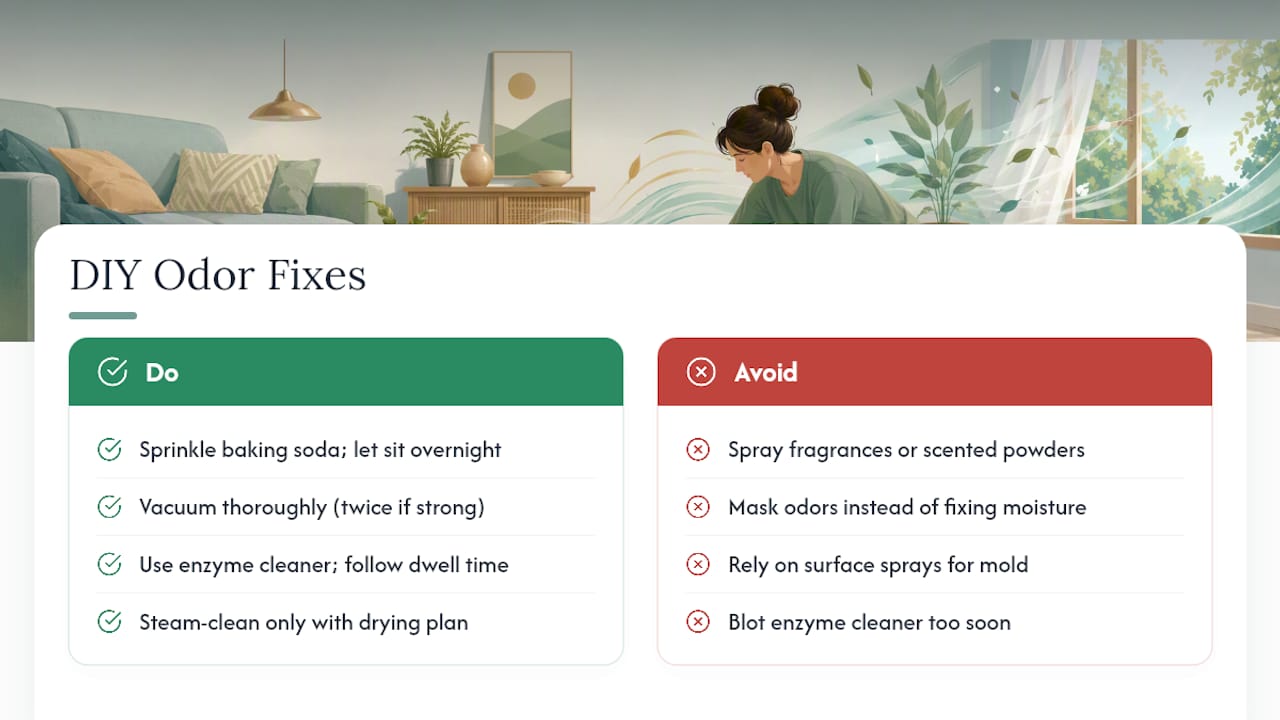
Baking soda is the reliable workhorse here. Sprinkle it generously over the dry carpet, work it in lightly with a broom, and let it sit for at least a few hours, overnight is better. Baking soda absorbs odor molecules rather than masking them, which is why it actually helps. Vacuum thoroughly afterward, twice if you have a strong vacuum, because leftover powder just sits in the fibers doing nothing.
White vinegar diluted with water (roughly equal parts) neutralizes a lot of surface odors and mild mildew smell on contact. Spot-test an inconspicuous area first since vinegar’s acidity can affect some dyes. What vinegar will not do: reach mold that’s colonized deep in the padding. It’s a surface tool, not a remediation tool.
Enzyme cleaners are the right call specifically for organic stains like pet urine, since enzymes break down the proteins that regular cleaners just push around. Follow the product’s dwell time exactly. Rushing it and blotting too soon is the most common reason people think enzyme cleaners “don’t work.” If pets are the actual source of your odor problem, a dedicated deodorizing approach built for pet owners tends to outperform whatever’s under the kitchen sink.
Steam cleaning goes deeper than any spray bottle and lifts embedded dirt and residue that feed odor-causing bacteria. But here’s the catch nobody mentions on the box: steam cleaning adds moisture, and if you don’t have a drying plan, fans running, windows open, humidity under control, you can make the musty smell after carpet cleaning worse than before you started. This is the number one reason people search for why carpet smells worse after cleaning. They added water and didn’t remove it fast enough.
A partner guide on removing pet urine from carpet walks through enzyme technique in more detail if organic staining is your main issue.
What you should never do: spray fragrance, febreze, or scented carpet powder over a musty smell and call it solved. Federal guidance is explicit that masking odors instead of fixing the moisture problem behind them just delays a fix while the actual issue keeps growing underneath. A vanilla-scented mold colony is still a mold colony.
When the Carpet or Pad Has to Go
Carpet padding acts like a sponge. It’s designed to absorb impact and cushion your step, and that same porous structure absorbs and holds water exceptionally well, way better than the carpet fibers above it. Once mold colonizes that structure, cleaning the surface carpet does nothing for what’s happening two layers down.
This is where a lot of well-meaning DIY effort hits a wall. You steam clean, it smells better for four days, then it’s back. That cycle usually means the pad, not the carpet, is the actual source.
The EPA is direct about this: porous, absorbent materials that have become moldy often need to be removed rather than cleaned, because mold fills the crevices of materials like foam padding in ways that surface treatments can’t reach. Trade experience backs this up consistently. Absorbent padding that’s taken on water and mold is rarely salvageable, and treating it like it is just wastes time and delays the real fix.
Signs you’re past the cleaning stage and into replacement territory:
- The musty smell returns within days of a thorough cleaning and full drying period.
- You can see visible mold growth on the carpet backing or padding.
- A moisture meter still reads elevated levels in the subfloor after 48 hours of active drying.
- Staining has spread or darkened rather than lifting during cleaning, a sign of carpet browning after cleaning.
- Someone in the house has started reporting headaches, congestion, or allergy flares that ease up when they’re away from the room.
If you’re at this stage, a detailed breakdown of permanent odor removal covers what the replacement and remediation process actually looks like, and what questions to ask before signing off on any contractor’s plan.
Keeping the Smell From Coming Back
Prevention is genuinely less work than another round of steam cleaning and crossed fingers. Most of it comes down to controlling humidity and thoughtfully choosing where carpet is installed in your home.
Keep indoor relative humidity between 30 and 50 percent. A dehumidifier in basements or humid climates, paired with your HVAC system doing its normal job, keeps you in that range most of the year. Run bathroom and kitchen exhaust fans every single time, not just when it’s obviously steamy, since low-grade humidity buildup is sneakier than a dramatic bathroom fog.
A few habits make a bigger difference than people expect:
- Blot spills immediately instead of letting them sit and soak in overnight.
- Walk your basement and laundry room after heavy rain to catch slow leaks before they become carpet problems.
- Schedule seasonal professional cleaning with an actual drying plan attached, not just a quick pass with a rented machine.
- Skip wall-to-wall carpet in basements or flood-prone rooms entirely if you can, since washable area rugs and water-tolerant flooring are the safer call in those spaces.
Pro Tip: Keep a $15 hygrometer in your basement or laundry room. Most homeowners have no idea their humidity swings from 35 percent in winter to 70 percent in July until they actually measure it, and that swing is exactly what feeds musty odors year after year.
If area rugs are your go-to for moisture-prone rooms, professional area rug cleaning is a lot easier to manage than wall-to-wall carpet precisely because you can pull them up and dry them properly instead of guessing what’s happening underneath.
When It’s Time to Stop DIYing and Call a Pro
Some situations just aren’t a weekend project, and pretending otherwise usually costs more in the long run.
- The smell survives thorough drying and cleaning. If you’ve hit the 24 to 48 hour window, run a dehumidifier, and cleaned properly, and it’s still there, something deeper is going on.
- You can see mold, on the carpet backing, baseboards, or drywall. That’s not a spot-clean situation anymore.
- Water damage covered a large area or sat for more than a day before anyone noticed.
- Someone in the house has ongoing symptoms like coughing, headaches, or allergy flares tied to being in that room.
A real professional assessment goes beyond a quick vacuum and spray. Expect moisture mapping across the affected area, a physical pad inspection (not just a guess based on smell), targeted removal where needed, and a documented drying plan with follow-up checks to confirm the space actually dried out instead of just looking dry.
Before hiring anyone, ask about their drying timeframe, how they assess padding, what containment looks like if mold is involved, and whether they guarantee the result. Home Service Simple handles exactly this kind of assessment for Wichita homeowners, backed by a satisfaction guarantee and the option to keep problems from returning through the Simple Club plan.
Why Homeowners Keep Making the Same Mistake
The most common failure I see isn’t laziness, it’s optimism. People spray an odor eliminator, get a good result for three days, and assume the problem solved itself. It didn’t. It just went quiet for a while.
The other mistake is skipping the pad inspection because lifting carpet feels invasive. But that ten-minute check is what tells you whether you’re cleaning a surface problem or ignoring a structural one. Sometimes replacement really is the only honest fix, and a good professional will tell you that instead of running another cleaning cycle that won’t hold. That’s exactly the kind of call a satisfaction guarantee is supposed to back up.
— chris
Get Your Carpet Actually Fixed, Not Just Freshened
A professional service that offers a reliable alternative to rental steam cleaners and uncertain results. When a musty smell keeps coming back, deep steam cleaning paired with a real drying plan, not just a fast pass and a bottle of spray, is what actually gets underneath the problem instead of postponing it.
Homeowners in Wichita seek professional help for persistent musty odors, padding assessments, and cleaning jobs requiring documented drying timelines rather than estimates. If the smell keeps returning after your own attempts, book a professional carpet cleaning and get a straight answer on whether the pad needs replacing. For homes that want to stay ahead of moisture problems year round instead of reacting to them, the Simple Club membership covers routine care starting at $20 a month, so you’re never scrambling to book a fix after the smell’s already set in. Many professional cleaning services back their work with satisfaction guarantees, making it easy to get started with a simple call.
Where This Guidance Comes From
The moisture and mold guidance in this article draws directly on EPA mold and moisture control resources and HUD’s consumer guidance on mold cleanup, the two most authoritative federal sources on why odors form and how to actually address them instead of covering them up.
Sources
- What does mold smell like? | US EPA
- HUD issues consumer guidance on how to clean up and prevent mold (HUD archive)
FAQ
How long does it take for a musty smell to go away from carpet?
If the source is properly dried promptly and the padding wasn’t compromised, odor usually fades within a few days of thorough cleaning. If it lingers past a week despite proper drying, the pad or subfloor likely needs inspection or replacement.
Does a smelly carpet always mean mold?
Not always, but a musty odor specifically is a strong indicator of active mold growth from mVOCs, according to the EPA. Other smells, like pet odor or general staleness, have different causes and don’t necessarily signal mold.
What’s the best way to get rid of a musty smell instead of just covering it up?
Baking soda and thorough vacuuming handle mild surface odor, but the real fix is controlling moisture and drying the carpet and pad completely. Federal guidance is clear that fragrance products only mask the smell instead of fixing the underlying moisture problem.
Will a musty carpet smell go away on its own?
No. Moisture and mold don’t resolve without intervention, and an untreated musty smell typically gets worse as mold continues growing. Address the moisture source directly, or the odor will persist and often spread to a larger area.