

For most spills, the safest bet is gentle, wool-compatible spot cleaning paired with fast, low-water extraction. Skip the hot water and the heavy scrubbing. Test any cleaner in a hidden corner first, dry the rug all the way through, and if you’re dealing with an antique, a hand-knotted piece, or a soaked mess, call a pro before you make it worse.
TL;DR:
- Wool rugs require gentle, low-water cleaning methods and should never be soaked or cleaned with hot water to prevent damage.
- Regular vacuuming with low suction and flipping or rotating the rug can reduce allergens and prolong its lifespan without professional intervention.
- For spills, act quickly by blotting with a wool-safe cleaner and drying thoroughly to prevent stains and odor setting.
- Antique, heavily soiled, or water-exposed rugs need professional cleaning with controlled moisture and specialized equipment to avoid permanent damage.
- Proper drying involves avoiding heat and ensuring even airflow to prevent warping, mold growth, or fiber deterioration.
Table of Contents
- How to tell if your rug is wool and what the care label is really saying
- Vacuuming, rotation, and pads: your weekly wool rug maintenance tips
- Step-by-step spot-cleaning process for spills and stains
- When DIY won’t cut it: signs you need a professional rug cleaner
- Drying wool rugs safely without warping the fibers
- Keeping moths and carpet beetles out of your wool rug
- Why gentle chemistry beats aggressive cleaning for wool
- Home Service Simple’s area rug cleaning and Simple Club membership
- Sources
- FAQ
How to tell if your rug is wool and what the care label is really saying
Before you touch a spot with anything, figure out what you’re actually working with. Wool fibers are springy and warm to the touch, and the pile tends to bounce back when you press it with your palm. Synthetic fibers, by contrast, often feel a little slicker or flatter, and they don’t recover the same way.
Skip the burn test. It’s messy, it’s risky indoors, and there’s a simpler way: check the tag, or look at the base of the fibers near the fringe where the weave is exposed.
- Read the label first. “Dry clean only” or “spot clean” instructions from the maker override any generic advice you find online.
- Check for wear and repairs. Old patches, uneven dye lots, or areas that look loose or thin call for a gentler hand.
- Watch for soaked or musty spots. These suggest deeper damage that a quick spot clean won’t fix.
Vacuuming, rotation, and pads: your weekly wool rug maintenance tips
Regular upkeep does more for a wool rug than any deep clean ever will. Vacuuming pulls out the grit that grinds down fibers over time, and it keeps allergens from building up in the pile.
- Vacuum on low suction with the beater bar off, especially on fringed or older rugs where the pile is more fragile.
- Flip lightweight rugs occasionally and vacuum the underside to catch what’s settled through the weave.
- Rotate the rug every few months so foot traffic and sun exposure wear evenly instead of wearing a path.
- Use a rug pad underneath to cut down on slipping, crushing, and premature wear on the backing.
One indexed study of 52 households found that vacuuming with central, HEPA, or micro-filter vacuums cut mite allergen levels by roughly 50% to 85% over five weeks. That’s a strong case for consistent vacuuming over relying on detergent strength to do the work.
How often you vacuum should track traffic and household habits rather than a fixed calendar. A rug in an entryway or a home with pets needs more attention than one in a guest room nobody walks through.
Step-by-step spot-cleaning process for spills and stains
Speed matters more than muscle here. The faster you act, the less a spill has a chance to set into the fibers.
- Remove any solids first, scraping gently with a spoon or dull knife rather than smearing them further into the pile.
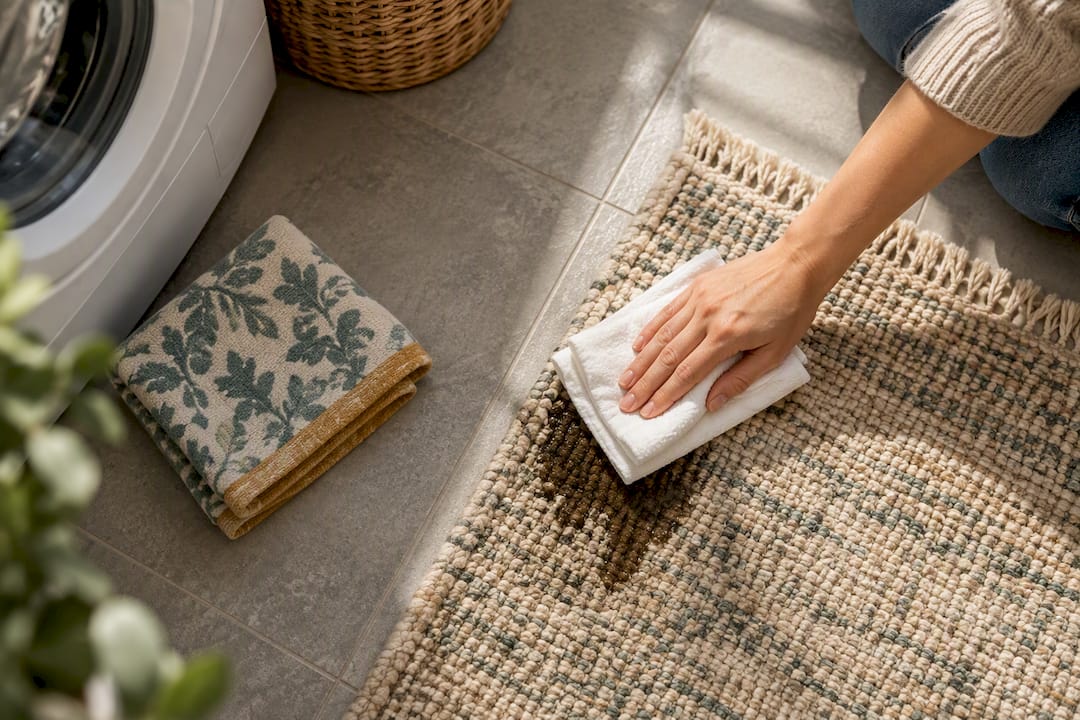
- Blot liquid from the outside of the stain toward the center, using a clean white cloth, never rubbing.
- Test your cleaner on a hidden patch of the rug first and watch for color transfer or fading.
- Apply a small amount of a wool-compatible, low-residue cleaner. The Carpet and Rug Institute lists water-based spotters formulated to be low-residue and safe for WoolSafe carpets, though it’s worth confirming current certification before you buy.
- Blot again with a dry cloth to lift the cleaner and moisture, applying light pressure rather than pressing hard.
- Dry the area quickly with airflow from a fan, checking that it’s fully dry before walking on it or replacing furniture.
Coffee and wine respond well to this sequence if you catch them fast, since both contain tannins that set with time and heat. Pet accidents need the same steps, plus attention to the padding underneath, since urine tends to travel further than it looks. For a closer look at odor removal, see our guide on handling pet stains and stopping the smell fast.
Pro Tip: Keep a stack of plain white cloths just for rug spills. Colored or printed towels can transfer dye onto damp wool.
For a broader rundown of what to try and when to stop trying, our piece on rug cleaning methods for homeowners walks through the same logic in more detail.
When DIY won’t cut it: signs you need a professional rug cleaner
Some situations call for more than a cloth and a spray bottle. Wool holds onto moisture and soil in ways that punish shortcuts, and a few scenarios are genuinely not worth the risk.
- Antique or hand-knotted rugs. Museum conservation guidance treats these as specialized cleaning jobs requiring testing and controlled equipment, not a home fix.
- Heavy or set-in soil. If a spot has been there for weeks, spot cleaning usually just spreads it around.
- Water or sewage exposure. Anything soaked through needs assessment before it’s treated, since damp carpet can turn into a microbial growth problem fast.
- Persistent odor or dye bleed. Both point to something happening below the surface that a spot treatment won’t reach.
Before booking anyone, ask about their colorfastness testing process, how they control moisture during extraction, expected drying time, and whether they carry insurance and a satisfaction guarantee. Costs for a standard 8×10 wool rug vary widely depending on soil level, fringe condition, and whether pickup and delivery are included, so get a written estimate before you commit. For more on picking the right route for a valuable or fragile piece, see our Oriental rug cleaning guide.
Drying wool rugs safely without warping the fibers
Wool moves when it gets wet. Conservation research on hygral expansion shows that wool’s dimensions shift with moisture content, which means uneven wetting or slow drying can leave a rug slightly warped or rippled.
EPA guidance is blunt about the other risk: damp carpet and textiles can become sources of microbial growth if they don’t dry fully and quickly. Both risks point to the same fix.
- Extract as much moisture as you can with blotting or a wet vacuum before you rely on air drying.
- Set up fans or open windows for steady airflow across the whole rug, not just the treated spot.
- Dry rugs flat when possible, or hang them supported evenly, never draped over a single bar.
- Skip space heaters and direct high heat, which dry the surface fast while trapping moisture underneath.
Keeping moths and carpet beetles out of your wool rug
Wool is a food source for clothes moth larvae and carpet beetle larvae, and both are drawn to soiled fabric more than clean fabric. That’s another reason routine cleaning matters beyond appearances.
- Vacuum along edges, under furniture, and in nearby baseboard cracks where larvae tend to hide.
- Clear out lint, hair, and food debris that give larvae something to feed on.
- Isolate any rug you suspect is infested, and consider freezing small pieces or calling pest control for a larger problem, both methods supported by extension guidance on clothes moths.
- Store rugs clean and dry. Cedar helps deter moths somewhat but isn’t a substitute for regular cleaning.
Why gentle chemistry beats aggressive cleaning for wool
The instinct with a stubborn stain is to reach for something stronger. With wool, that instinct usually backfires. Conservation science treats wool cleaning as a balancing act between removing soil and preserving the fiber’s structure, which is why the emphasis stays on moisture control and mild, tested chemistry rather than raw cleaning power.
Guidance from the EPA, the Carpet and Rug Institute, and museum textile conservators all point the same direction: control the water, test before you treat, and accept that some stains are better left faded than removed at the cost of the fiber. That’s the same philosophy behind how we approach area rug cleaning and the educational guides we publish for homeowners trying to protect what they’ve already got.
— chris
Home Service Simple’s area rug cleaning and Simple Club membership
When a wool rug crosses into pro territory, that’s exactly what our area rug cleaning service is built for. Careful moisture control, testing before treatment, and full attention to the fringe are standard, and we offer rug fringe cleaning separately for pieces where the fringe has taken the worst of the wear.
- Call us for soaked rugs, persistent odors, dye bleed, or anything old and hand-knotted, the same red flags covered above.
- Ask about the Simple Club if you’d rather have routine care scheduled than book appointments one at a time.
- The Standard Membership runs $20 per month and the Premium Membership runs $40 per month, both built around consistent home care without repeated scheduling.
Get a quote on your rug through our area rug cleaning page and we’ll take it from there.
Sources
This guide draws on EPA indoor air quality guidance, Carpet and Rug Institute cleaning standards, Smithsonian conservation research, and Utah State University Extension pest guidance, along with fiber-care context from sweater washing guidance for readers who want to dig deeper into wool fiber behavior.
- Carpet and Rug Institute — Cleaning and maintenance guidance
- EPA — Indoor air quality and carpet guidance
- Smithsonian / Museum Conservation Institute — Conservation guidance
- Utah State University Extension — Clothes moth guidance
FAQ
What is the best way to clean a wool rug?
The safest method is gentle vacuuming for routine upkeep and prompt, low-water spot cleaning for spills, blotting from the outside in with a wool-compatible cleaner. Avoid soaking the rug or using hot water, and always test the cleaner on a hidden spot first.
How much does it cost to have an 8×10 wool rug cleaned?
Pricing depends heavily on soil level, fringe condition, and whether pickup or delivery is included, so costs vary widely by provider and rug condition. Home Service Simple doesn’t publish a flat rate for area rug cleaning, so it’s best to request a quote directly based on your rug’s size and condition.
Should wool rugs be professionally cleaned?
Wool rugs benefit from professional cleaning when they’re antique, hand-knotted, heavily soiled, or exposed to significant water or sewage, situations museum conservation guidance treats as specialized work. Routine spills and light soil are usually fine to handle at home with careful spot cleaning.
Can I take a wool rug to the dry cleaners?
Some dry cleaners handle wool rugs, but many general dry cleaners aren’t equipped for the testing, extraction, and drying controls that wool rugs need, especially larger or hand-knotted pieces. Check whether the cleaner has specific rug-handling experience, or look for a service that specializes in area rug cleaning rather than garments.