

Hire a pro who inspects your carpet before quoting a price, tells you exactly which method they’re using, and hands you a written, itemized estimate before any equipment touches your floor. Ask for proof of insurance and IICRC certification up front. Expect honest limits on old stains and a drying window, not a miracle. Many reputable carpet cleaning providers follow this exact process for homes and businesses in Wichita.
TL;DR:
- Ensure the carpet cleaner conducts a pre-inspection to identify fiber type and soil level before beginning any work.
- Confirm the company provides proof of insurance, IICRC certification, and a written, itemized estimate prior to service.
- Ask which equipment they will use, explaining the differences between truck-mounted and portable units and their suitability for your space.
- Inquire about the specific cleaning method and whether pre-treatment or protector application is included or extra.
- Manage expectations by understanding that some stains, like old wine or pet urine, may not fully come out without risking fiber damage.
Table of Contents
- What to Expect From a Carpet Cleaning Company
- The Vetting Checklist Before You Book Anyone
- What Questions Should I Ask a Carpet Cleaner?
- What Can Professional Carpet Cleaning Actually Fix?
- How to Prepare for Carpet Cleaning and What to Do After
- How Do I Check a Carpet Cleaner’s Reviews and Reputation?
- How Far in Advance Should I Book a Carpet Cleaner?
- Why Equipment and Technology Matter More Than You Think
- Why Pre-Inspection Is the Line Between a Pro and a Gamble
- Ready to Book a Carpet Cleaner You Can Trust?
- Where to Verify Standards and Consumer Guidance
- Sources
- FAQ
What to Expect From a Carpet Cleaning Company
A real pro walks your carpet before they touch a single fiber. That’s the whole game right there.
Here’s what should happen, in order: pre-inspection to identify fiber type and soil level, a spot test in an inconspicuous corner, pre-treatment on traffic lanes and stains, then the actual deep clean. A pre-inspection that identifies fiber type and soil level is not optional. It’s the difference between a tech who knows your carpet and one who’s guessing.
Most companies use one of two approaches:
- Hot-water extraction (steam cleaning) — the industry standard, widely recommended by carpet manufacturers for its deep-soil removal
- Very-low-moisture (VLM) cleaning — dries faster but can struggle with heavy soil or set-in grime
- Bonnet cleaning — a surface-level buff, fine for light commercial touch-ups but not a substitute for real extraction
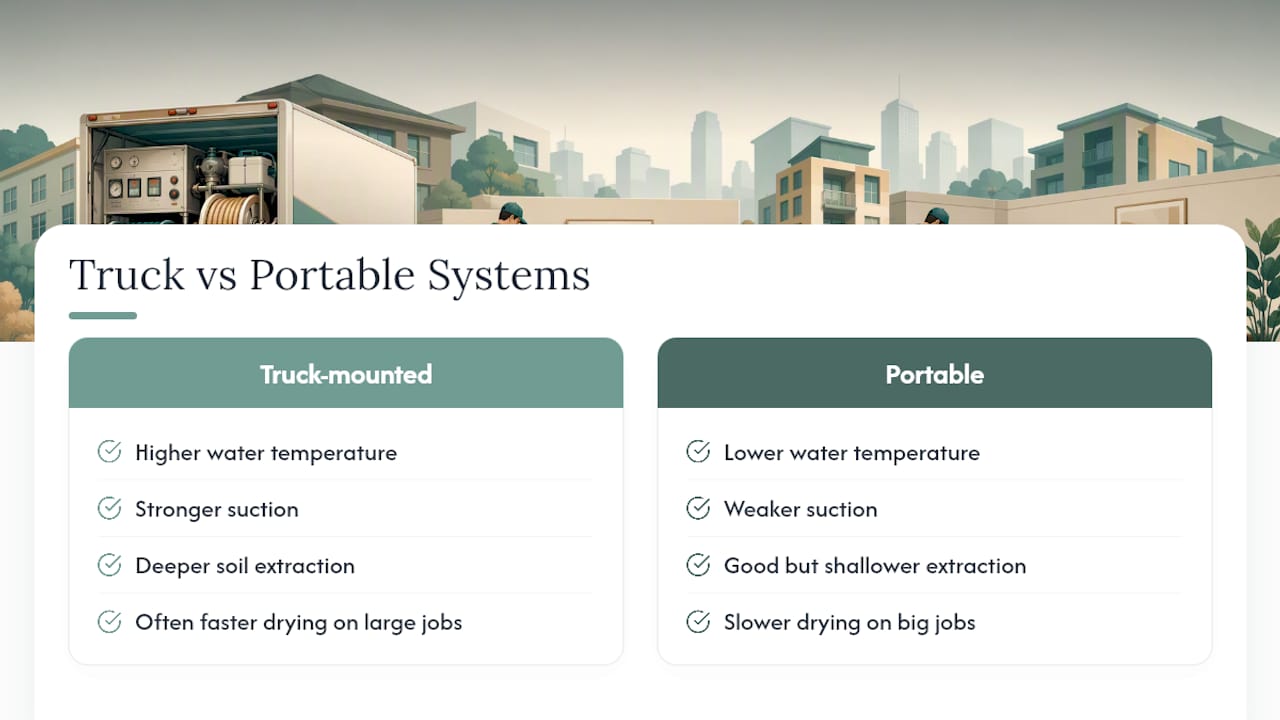
Truck-mounted units pull more water and heat than portable machines, which matters on heavily soiled carpet or large square footage. Portable rigs work fine for apartments, small offices, or spot jobs. Either way, ask which one is showing up at your door.
Pro Tip: If a company can’t tell you whether they’re bringing a truck-mount or a portable unit, that’s your first sign they’re not thinking about your specific job.
Expect before-and-after photos, an optional protector application, and a clear window for drying time. Most manufacturers recommend professional cleaning every 12 to 18 months depending on foot traffic, which matters if you’re a landlord managing multiple units on a rotation.
The Vetting Checklist Before You Book Anyone
Do this homework before you ever let someone in your door.
- Check for IICRC certification. The Carpet Cleaning Technician (CCT) credential means the tech went through standardized training, not a YouTube crash course the night before.
- Require proof of insurance. Ask for a certificate showing general liability and workers’ compensation coverage. No certificate, no booking. If your carpet gets damaged or a tech gets hurt on your property and there’s no coverage, that liability lands on you.
- Demand a written, itemized estimate. Bait-and-switch pricing is rampant in this industry. That $19-a-room ad often excludes pre-treatment, stain removal, furniture moving, and protector, all of which show up as surprise add-ons once the truck’s in your driveway.
- Match the method to the fiber. Wool rugs, antique Orientals, and delicate blends need gentler handling than standard nylon or polyester carpet. A cleaner who suggests the same method for everything hasn’t done this very long.
- Get the guarantee in writing. A satisfaction or re-cleaning policy, spelled out on paper, tells you what happens if the results fall short.
Running this two-phase process, research first, then in-person evaluation, weeds out the operators who show up uninsured and underqualified before they ever get near your carpet.
What Questions Should I Ask a Carpet Cleaner?
Keep it short. Ask these on the phone first, then again in person.
Before they arrive:
- Are you licensed and insured, and can you email me a certificate?
- What cleaning method do you use, and why is it right for my carpet?
- Are your techs IICRC certified?
- Can you come do an on-site walk-through before quoting a final price?
During the walk-through:
- What fiber is this carpet, and does that change your approach?
- Are there stains you expect to fully remove, partially fade, or can’t guarantee at all?
- Is pre-treatment and protector included, or extra?
- How long will this take to dry, and do you move furniture?
Before you sign anything:
- Will I get a written, itemized estimate before you start?
- What’s your satisfaction or re-cleaning guarantee?
- Will you document the job with before-and-after photos?
Reputable techs will explain why a particular method fits your fiber type and flag any warranty considerations tied to your carpet’s manufacturer. If they dodge that question, keep calling around.
What Can Professional Carpet Cleaning Actually Fix?
Manage your expectations before the truck shows up. A good tech will tell you upfront that some set-in stains cannot be fully removed without risking damage to the fibers, and they’ll say so instead of promising perfection. Old red wine, deep pet urine, and rust are the usual suspects. If you’re battling a stubborn one, our guide on removing rust stains from carpet covers what’s realistic to expect.
Drying time varies by method:
Typical drying windows: Hot-water extraction usually runs 6 to 24 hours. Very-low-moisture methods dry in 1 to 4 hours. Humidity, airflow, and carpet density all shift these numbers.
Watch for these red flags during your search:
- Vague or evasive answers about which method they use
- Refusal to show proof of insurance when asked directly
- Flat per-room pricing quoted over the phone with no inspection
- High-pressure upsells once the crew is already in your living room
Any one of these is a reason to call the next name on your list.
How to Prepare for Carpet Cleaning and What to Do After
A little prep on your end makes the whole appointment run smoother and protects the results longer.
- Clear the clutter. Pick up toys, cords, and small furniture before the crew arrives.
- Move valuables. Anything breakable or irreplaceable should be off the floor and out of the way.
- Point out problem areas. Tell the tech about old stains, pet accidents, or any past water damage before they start.
- Ventilate after cleaning. Open windows or run fans to speed drying and cut down on that damp-carpet smell.
- Stay off wet carpet. Keep foot traffic light until it’s fully dry, especially with kids and pets in the house.
- Follow protector instructions. If you paid for a protectant application, give it the recommended cure time before heavy use.
Pro Tip: Keep your signed itemized invoice, before-and-after photos, and any protector receipt in one folder. If you ever need a re-clean under warranty, that paperwork saves you an argument.
How Do I Check a Carpet Cleaner’s Reviews and Reputation?
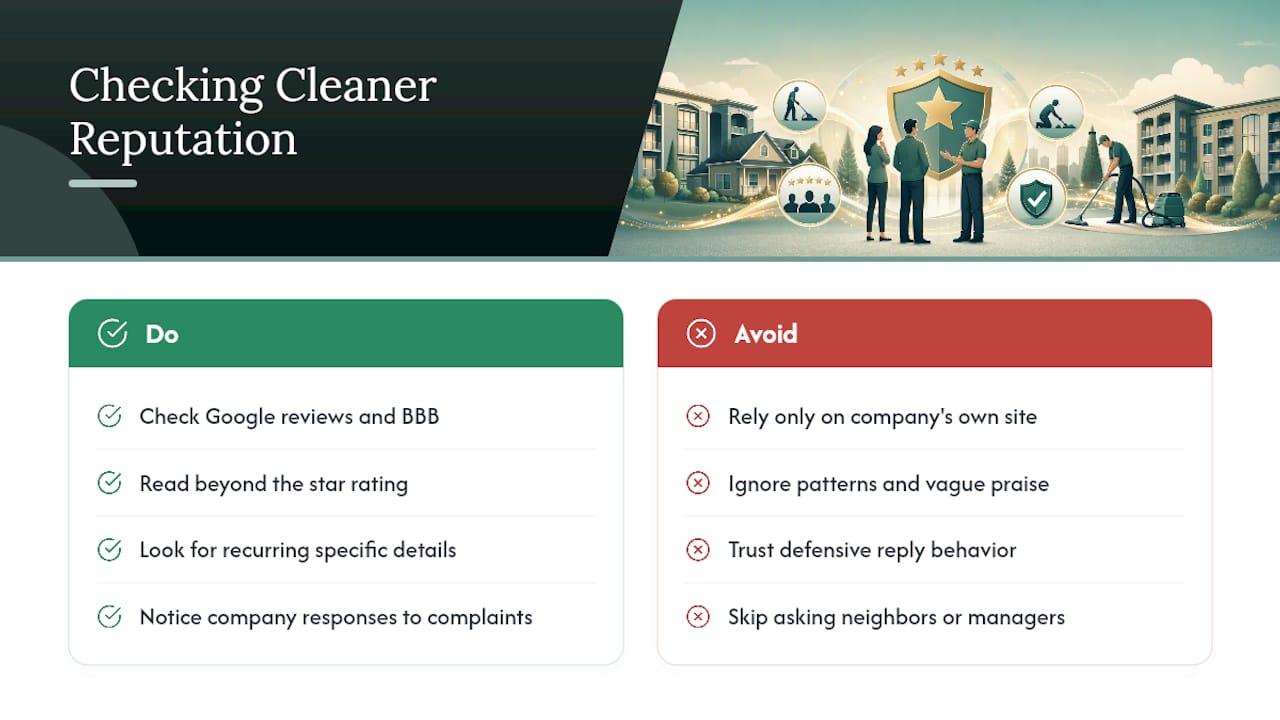
Google reviews and the Better Business Bureau are your two best starting points, but read past the star rating.
Look for patterns, not just praise. A handful of five-star reviews mentioning the same tech by name, on-time arrival, and clear pricing tells you more than a generic “great job!” comment. Pay closer attention to how a company responds to a bad review. Do they acknowledge the issue and offer a fix, or get defensive and argue in the replies? That response says a lot about how they’ll handle a callback if your results fall short.
Check for consistency across platforms too. A company with glowing reviews on their own site but silence or complaints on Google or the BBB is worth a second look. Ask neighbors or your property management network directly. In a market like Wichita, word travels fast among landlords who’ve had a bad experience with a fly-by-night operator.
You can review Home Service Simple’s own customer feedback and track record of reviews directly, which is a fair benchmark for what a transparent local provider’s reputation should look like: consistent, specific, and responsive.
How Far in Advance Should I Book a Carpet Cleaner?
Scheduling gets tight fast during spring and around the holidays, so book at least a week or two out if you have any flexibility.
Move-in and move-out jobs are the most time-sensitive. If you’re a landlord turning over a unit or a tenant trying to protect a security deposit, carpet condition documentation matters for lease disputes, so book early enough to get before-and-after photos before boxes and furniture show up. See our move-in carpet cleaning guide for the full timeline.
Property managers juggling multiple units should ask about a provider’s capacity for recurring or seasonal work, not just a one-off job. If a company can only handle single appointments booked weeks apart, that’s a scheduling bottleneck waiting to bite you during a big turnover season.
Ask directly: What’s your current lead time? Do you offer any consistent scheduling option for repeat customers? A subscription-style plan, like Home Service Simple’s Simple Club, solves this exact problem by locking in regular visits so you’re never scrambling to find an open slot during peak season.
Why Equipment and Technology Matter More Than You Think
The machine behind the tech matters almost as much as the tech themselves.
Truck-mounted systems generate higher water temperature and stronger suction than portable units, which translates to deeper soil extraction and often faster drying on large jobs. Portable machines still do solid work on smaller spaces, apartments, or spot treatments, but they’re not always the right tool for a heavily trafficked commercial space or a whole-house deep clean.
Ask what’s showing up at your door and why. A company that can explain the tradeoff between their equipment options, rather than just showing up with whatever’s on the truck that day, is thinking about your specific job instead of running a one-size-fits-all operation.
Technology extends past the cleaning wand too. Some providers now document jobs with photo timestamps or digital receipts, which matters if you ever need to prove service history for a lease dispute or insurance claim. If a provider treats documentation as an afterthought, that’s usually a sign their process is looser everywhere else too.
Why Pre-Inspection Is the Line Between a Pro and a Gamble
Every red flag in this article traces back to one root cause: a company that skips the pre-inspection.
Some companies build their processes around deep steam cleaning, with pre-inspection as the first step, disclosing stain limits before starting to avoid issues that give steam cleaning a bad reputation. It’s often a rinse issue, not a method issue, and it comes down to whether the technician knows what they’re doing.
Some companies offer a range of services, including upholstery, air duct, and mattress cleaning, to address multiple cleaning needs. Subscription-style plans may exist to help customers maintain consistent cleaning schedules without having to remember to book every few months.
Customer testimonials and satisfaction metrics can be important indicators of service quality. A satisfaction guarantee only means something if the company stands behind the inspection it did before quoting a price.
— chris
Ready to Book a Carpet Cleaner You Can Trust?
Some local providers offer transparent pricing by inspecting your carpet first, explaining the cleaning method they will use, and providing a written estimate before any work begins.
Beyond deep steam cleaning, we handle upholstery, area rugs, air ducts, and mattresses, so you’re not juggling four different companies for four different rooms. If staying on top of cleanings feels like one more thing to remember, Simple Club keeps your home or property on a consistent schedule without you having to call every time.
Ready for a straight answer on pricing? Request a written estimate and schedule your pre-inspection today, and see what a transparent process actually looks like.
Where to Verify Standards and Consumer Guidance
Before you sign with anyone, cross-check their claims against a few outside sources. The IICRC vetting criteria explains exactly what certification should verify, and the BBB’s consumer guidance on hiring a carpet cleaner covers what to expect and what counts as a fair complaint. If you’re renting or managing rental property, review our move-in cleaning guide for lease-specific documentation tips.
Sources
- How to Choose a Carpet Cleaning Company: Vetting Criteria and Red Flags | National Carpet Cleaning Authority
- Questions to Ask Carpet Cleaning Companies Before Booking | Carpet Cleaning Authority
- BBB tip: What to know before you hire a carpet cleaning service
FAQ
How Do I Choose a Carpet Cleaner I Can Trust?
Verify IICRC certification, require proof of insurance, and insist on a written, itemized estimate after an in-person inspection, not a phone quote. Many reputable companies follow this process for jobs in their service areas.
What Questions Should I Ask Before Booking a Carpet Cleaning Company?
Ask if they’re licensed and insured, what cleaning method they use and why, whether techs are IICRC certified, and if they’ll provide a written estimate with a satisfaction guarantee.
How Long Does Carpet Take to Dry After Professional Cleaning?
Hot-water extraction typically takes 6 to 24 hours to dry, while very-low-moisture methods dry in 1 to 4 hours, depending on humidity and airflow.
Can a Professional Cleaner Remove Any Stain?
No. Reputable techs disclose upfront that some set-in stains, like old wine or deep pet urine, may not fully come out without risking fiber damage.
How Often Should I Have My Carpets Professionally Cleaned?
Most manufacturers recommend professional cleaning every 12 to 18 months, though high-traffic homes, rentals, or pet households often need it more frequently.