

Clean your ducts after a remodel only if you see real trouble: visible debris or heavy dust inside the ducts, mold, vermin, or proof the HVAC ran during dusty work. The EPA says routine cleaning isn’t recommended but backs it in those cases, and a 2,000-square-foot home typically runs $450 to $1,000.
TL;DR:
- Schedule cleaning only when an inspection finds visible debris, confirmed or suspected mold, vermin, airflow restriction, or dust blowing from registers; otherwise replace filters.
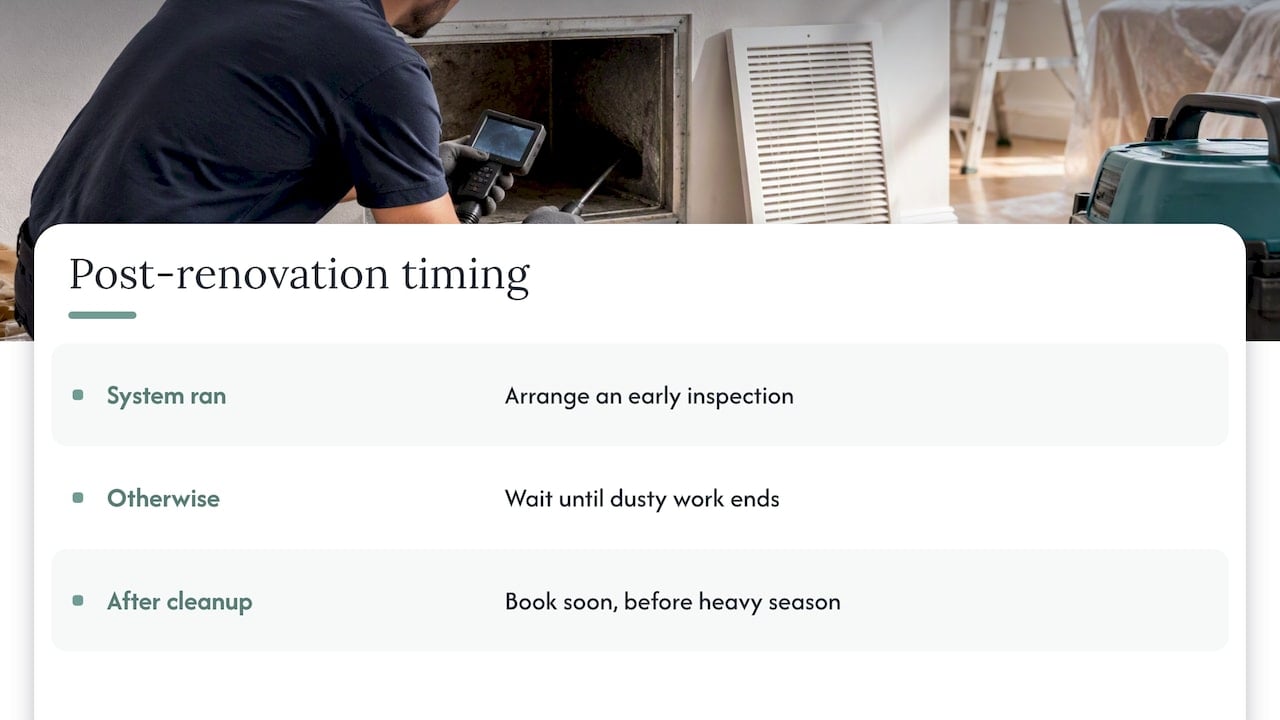
- If the HVAC ran during sanding, demolition, or heavy cutting, arrange an early inspection; otherwise wait until dusty trades and final cleanup are finished.
- Check behind a register with a flashlight; hire a provider who inspects the whole system, supplies before and after photos, and documents the work.
- A full system cleaning typically costs $400 to $1,000 and takes two professionals many hours; question $50 to $100 offers or one hour visits.
- Before work starts, seal supply and return registers with 6 mil plastic, keep the HVAC off during dusty tasks, and change the filter after cleanup.
Table of Contents
- How does renovation dust get into your ducts?
- When is duct cleaning after a remodel actually recommended?
- How do you inspect your ducts and vet a pro?
- What does a quality post renovation duct cleaning include?
- When should you schedule cleaning after the work wraps up?
- How can you prevent duct contamination during the project?
- What should you do right after the renovation?
- Why we take an inspection-first approach
- Ready for a second set of eyes on your ducts?
- FAQ
- Sources
How does renovation dust get into your ducts?
Not every project sends dust into your HVAC. Some jobs are far worse than others, and knowing which one you just finished tells you how worried to be.
The dustiest jobs:
- Drywall sanding, which throws off a fine powder that hangs in the air for hours
- Cutting tile, wood, or concrete without a vacuum attachment
- Demolition of walls, ceilings, or old flooring
- Floor refinishing, especially sanding
Dust moves through the house the same way air does. If the system ran while crews worked, it pulled that powder straight into the returns. Uncovered return grilles, gaps around register boots, and new ductwork left open during the job all give dust a way in. Even with registers covered, fine particles can sneak through small gaps. That’s why “we taped everything off” doesn’t always settle the question.
When is duct cleaning after a remodel actually recommended?
Here’s the short checklist we hand homeowners. If one of these fits, cleaning is on the table:
- Heavy dust or debris you can see inside the ducts, or dust blowing out of the registers
- Mold you’ve confirmed or strongly suspect on duct surfaces or components
- Signs of vermin, or airflow that’s choked by deposits
- New or unexplained breathing symptoms in your household, after you’ve ruled out other causes
The first three line up with what the EPA names as reasons to clean after construction. On inspection, NADCA standards call for checking HVAC components for cleanliness after construction or renovation before the system is allowed to run.
The EPA lists significant visible dust and debris, mold, or vermin as the conditions where cleaning makes sense. If none of them apply, skip it and spend the money on filters.
How do you inspect your ducts and vet a pro?
Start with a quick check you can do yourself. Pull off a register, shine a flashlight down the trunk, and look for debris or a fuzzy coat of particles clinging to the metal. A thin film is normal. Chunks of drywall, sawdust, or caked-on grime are not.
If you hire a pro, expect this:
- A system-wide visual inspection, not just a peek at one vent
- Access openings sized so the equipment can actually reach the ductwork
- Photos or video of the ducts before and after
- Written documentation of what was cleaned, in line with NADCA verification practice
Pro Tip: Ask for before and after photos in the estimate itself. A company that hesitates to show its work probably isn’t planning to do much.
Watch for red flags. The EPA’s consumer guidance warns that offers of $50 to $100 are often bait-and-switch. Be wary of anyone promising a whole-house cleaning with no system access. Our guide to signs your air ducts need cleaning goes deeper on what you’re looking for.
What does a quality post renovation duct cleaning include?
A proper job is source removal. Technicians use mechanical agitation, like brushes and air whips, to knock dust loose, while a HEPA-filtered vacuum under negative pressure pulls it out of the system. NADCA standards call for mechanical agitation with vacuum capture, then verification. Recent industry coverage also reports that the EPA’s 2025 update now lists source removal alongside ventilation and filtration, and that studies show airflow and blower energy improved after cleaning.
A full job covers more than the visible vents:
- Supply and return ducts
- The air handler and blower wheel
- Coils
- Registers and grilles
Expect it to take real time. The EPA’s consumer guidance says a full-system cleaning of a typical home can take two professionals many hours, at the same $400 to $1,000 range for most houses. A quote far below that, or a crew in and out in an hour, deserves a second look. Our breakdown of what a cleaning includes shows what to ask.
When should you schedule cleaning after the work wraps up?
Wait until the dusty trades are done: sanding, painting, and any heavy cutting. Cleaning ducts while crews are still kicking up dust just means doing it twice.
The exception is a system that ran during the messy work. In that case, get an inspection sooner, before the dust has a chance to cake onto surfaces. Otherwise, book cleaning soon after final cleanup, ideally before heavy heating or cooling season.
One practical step helps a lot. Let the contractor finish their cleanup, then do your own pass: vacuum, wipe surfaces, and swap the filter. That way the pro is cleaning settled dust, not construction residue still on its way out the door.
How can you prevent duct contamination during the project?
Prevention beats cleanup every time. If you’re still planning your remodel, or talking to a contractor, push for these:
- Seal every supply and return register with 6-mil poly and painter’s tape before work starts, which is what the EPA’s remodeling best practices recommend
- Keep the HVAC off during visible dust-making work
- Use local exhaust ventilation and hang barriers around the work zone
- Clean up daily, use wet or dustless sanding methods, and change filters often
Pro Tip: Put the “no HVAC during sanding” rule in writing before demolition day. It’s much easier to enforce a line in the contract than a reminder on a dusty Tuesday.
For more ways to keep dust down, a partner’s guide on cutting indoor dust with an HVAC-first checklist is worth a read.
What should you do right after the renovation?
Swap in a fresh filter as soon as cleanup is done. Pick a MERV rating your system can handle, since a filter that’s too restrictive can choke airflow. A portable HEPA cleaner in the rooms you live in adds another layer, and this explainer on MERV versus portable HEPA helps you choose.
The EPA’s strategy is ventilation, filtration, and source control, working together. So open windows when the outdoor air is clear, run bath and kitchen exhaust fans, and keep up regular vacuuming and filter changes. Then plan follow-up checks. Our post on how often to clean air ducts can help you set the schedule.
Why we take an inspection-first approach
Here’s where I land after years around post-remodel homes: look first, clean second. If the ducts are dirty, cleaning is money well spent. If they’re not, prevention and good filters do the job. Photos and written documentation protect you either way, and they keep you from paying for work you don’t need.
— chris
Ready for a second set of eyes on your ducts?

If your remodel left you wondering what’s inside those vents, we can help. Our air duct cleaning service comes backed by our satisfaction guarantee. After a renovation, the rest of the house usually needs attention too, so we also clean carpet, upholstery, and mattresses.
Here’s how to get going:
- Request an inspection of your ducts
- Ask for a written estimate before any work begins
- Walk through the post-cleaning checklist with your technician
Our air duct cleaning benefits page covers what you can expect. Call or text us for a quote.
FAQ
What are the downsides to air duct cleaning?
The main downsides are cost and the risk of a bad provider. Low-ball offers are often bait-and-switch, and cleaning won’t help if leaky ducts or poor filtration keep feeding dust back in. The EPA notes that fixing those causes matters too.
What time of year should I clean air ducts?
After a renovation, the best time is soon after final cleanup, ideally before heavy heating or cooling season. That way the system isn’t pushing dust around while it works hardest. If the HVAC ran during dusty work, don’t wait for a particular season.
How long does it take for construction dust to go away?
It depends on how much dust the project made and how well it was contained. Fine dust can hang in the air and settle slowly, so frequent vacuuming and a fresh filter help a lot. Visible dust still blowing from vents weeks later points to dust in the ducts.
Will my house be dusty after duct cleaning?
A well-done cleaning shouldn’t leave extra dust behind, because technicians capture debris with a HEPA vacuum under negative pressure. Some loose dust may still settle on surfaces afterward, so a quick wipe-down is smart. Fresh filters help keep things clean.
Sources
- Should You Have the Air Ducts in Your Home Cleaned? | US EPA
- NADCA Commercial Checklist
- EPA’s About-Face on Source Removal: NADCA Leaders Weigh In | ACHR News