

High-traffic carpet needs a vacuum pass every single day, medium-traffic rooms do fine with about twice per week, and light-traffic spaces like guest rooms can stretch to once a week. That’s the baseline because dry soil acts like sandpaper on carpet fibers every time someone walks across it. Pair that routine with a professional deep clean every 12 to 24 months to protect your warranty, and keep your machine’s filter and bin clean so it’s actually pulling dirt out instead of just pushing it around.
TL;DR:
- Vacuum high-traffic and pet areas daily, and at least twice per week in medium-traffic rooms, to prevent soil damage and allergen buildup.
- Use slower, overlapping passes with the vacuum to lift dirt effectively, especially on deep-pile or textured carpets, and switch tools for edges and stairs.
- Regular professional cleaning every 12 to 24 months is essential to maintain warranty compliance and remove deep-seated soil and stains.
- Maintain vacuum performance by cleaning filters, checking belts, and emptying bins before they are half full to ensure effective soil removal.
Table of Contents
- Your Room-by-Room Vacuum Schedule Based on Traffic
- Carpet Pile Changes How Often and How You Vacuum
- Pets, Allergies, and Why Some Homes Need Daily Vacuuming
- Choosing and Maintaining a Vacuum That Actually Works
- Why Manufacturers Tie Warranties to Professional Cleaning
- A Simple Technique That Makes Every Pass Count
- The Research and Guidance Behind This Schedule
- What a Realistic Vacuuming Routine Looks Like
- When It Makes Sense to Call in Professional Help
- FAQ
- Sources
Your Room-by-Room Vacuum Schedule Based on Traffic
Think of your home in three zones. High-traffic spots are your entryway, hallway, and the path from the kitchen to the living room: these see shoes, paws, and kids running through all day. Medium-traffic areas are living rooms and bedrooms where you sit and sleep but don’t pace constantly. Light-traffic zones are guest rooms, formal dining rooms, and anywhere the door stays closed most of the week.
The Carpet and Rug Institute recommends daily vacuuming for high-traffic and pet areas, twice a week for medium-traffic rooms, and weekly for light-traffic spots, with once a week as the absolute floor for any carpeted room in your house.
A workable weekly plan might look like this:
- Monday and Thursday: entryway, hallway, and mudroom.
- Wednesday: living room and family room.
- Saturday: bedrooms and any guest spaces.
- Anytime guests leave or kids track in mud: a quick spot pass, no matter what day it is.
Shoes-on households and homes with young kids should lean toward the higher end of every range.
Carpet Pile Changes How Often and How You Vacuum
A low-pile or looped carpet in a hallway can handle frequent, brisk vacuuming without much fuss. A high-pile or shag rug is a different animal: the fibers are longer, softer, and easier to crush or pull out of shape.
- Low-pile and loop carpet: vacuum as often as traffic demands, standard beater-bar settings work fine.
- High-pile, shag, or frieze carpet: vacuum a little less aggressively but just as often, and switch tools.
- Textured or cut-and-loop styles: follow manufacturer guidance since blends react differently to brush rolls.
Motorized brush rolls can snag and distort high-pile fibers over time. CRI’s technical guidance points toward straight-air canister systems or specialty floor tools instead, which lift soil without the aggressive agitation.
Pro Tip: When your carpet’s care tag or manufacturer manual disagrees with general advice, follow the tag. It’s written for your exact fiber.
Pets, Allergies, and Why Some Homes Need Daily Vacuuming
If you share your floors with a dog, cat, or anyone with allergies, your schedule needs to shift. Pet hair and dander settle into carpet fibers fast, and dust mite allergen builds up the same way.
A pilot study on vacuuming frequency found something worth paying attention to here.
In homes where vacuuming happened frequently over five weeks, Der p 1 house dust mite allergen dropped by roughly 48% per gram of fine dust and about 68% per unit area. That’s a real, measurable drop from a habit most of us already have the tools for.
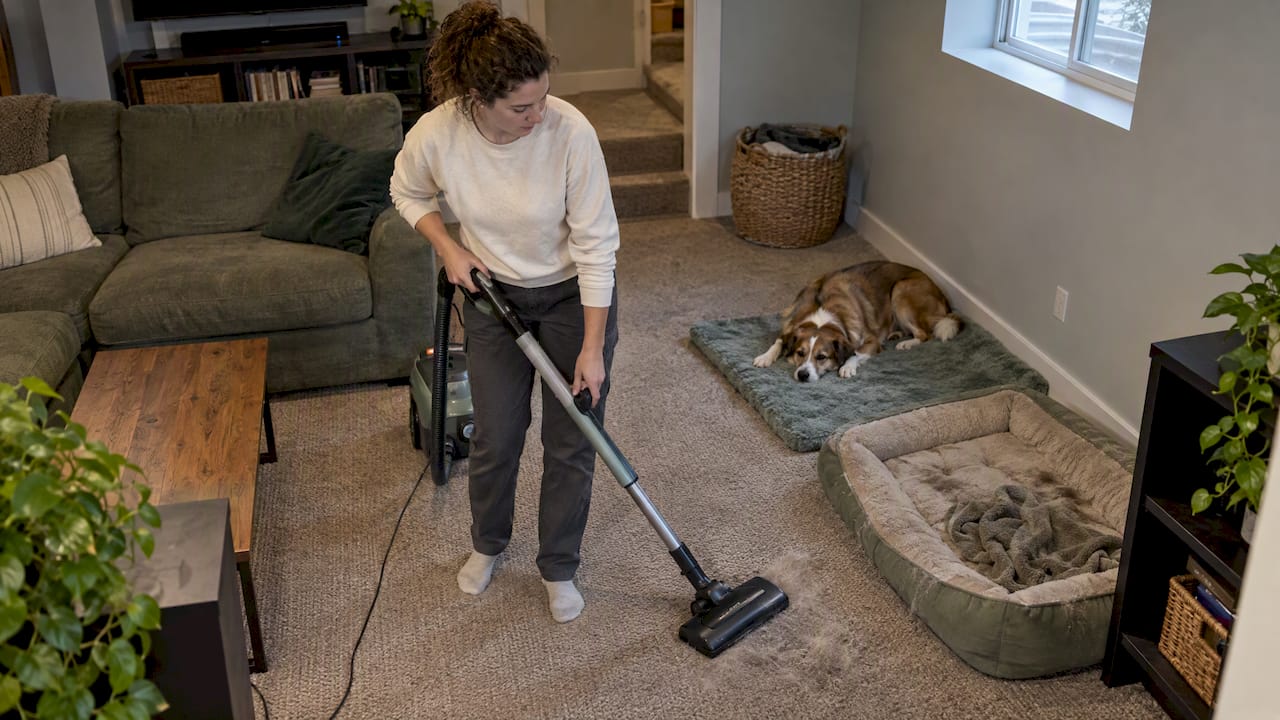
For pet zones, vacuum daily or every other day, focus on favorite napping spots, and look for a machine with strong filtration so you’re trapping dander rather than kicking it back into the air.
Choosing and Maintaining a Vacuum That Actually Works
The best vacuum for carpets is one that’s been tested for soil removal and dust containment, not just the one with the flashiest marketing. Look for the CRI Seal of Approval or HEPA filtration if allergies are a concern in your house.
- Match the height setting to your pile. Too high and it skims the surface, too low and it drags and strains the motor.
- Empty the bag or bin at half to two-thirds full. A packed bin loses suction fast, even on a brand-new machine.
- Check the brush roll and belt monthly. Tangled hair and worn belts quietly kill performance long before the motor does.
- Wash or replace filters on the schedule in your manual. A clogged filter means dirt goes right back into your air.
Pro Tip: A $400 vacuum with a dirty filter cleans worse than a $150 vacuum with a fresh one. Maintenance beats price tag every time.
Why Manufacturers Tie Warranties to Professional Cleaning
Here’s something a lot of homeowners miss until it costs them: many carpet manufacturers reference CRI 205 and expect professional cleaning every 12 to 24 months to keep your warranty valid. Skip that window, and a claim for premature wear or staining can get denied, even if you vacuumed faithfully the whole time.
- Check your carpet’s warranty paperwork for a specific cleaning interval.
- Keep receipts or records from every professional cleaning you book.
- Vacuum thoroughly before any steam or extraction appointment so loose soil doesn’t just turn into mud.
If you’re not sure your high-traffic areas are on the right cycle, that’s worth a look before damage sets in rather than after.
A Simple Technique That Makes Every Pass Count
Speed is the enemy of a clean carpet. CRI recommends slow, overlapping passes, roughly four swipes over the same strip, moving in more than one direction to lift soil sitting deep in the pile.
- Set your height and check the bin before you start, not halfway through.
- Make slow, overlapping passes, about four per section, changing direction at least once.
- Switch to a crevice tool for edges, baseboards, and stairs where the main head can’t reach.
- Do a final walk-through in bright light to catch spots you missed.
- Vacuum thoroughly before any deep clean or stain treatment so the cleaning solution hits soil, not a cushion of dust.
The Research and Guidance Behind This Schedule
The Carpet and Rug Institute’s vacuum schedule exists for a practical reason: dry soil is abrasive, and the longer it sits in carpet fibers, the more it wears them down like sandpaper on a sneaker sole. The EPA notes that carpet can act as a reservoir for dust, pollen, mold spores, and other particles, and that inadequate maintenance lets that buildup grow and re-release during normal daily activity.
- CRI’s guidance: daily, twice-weekly, or weekly depending on traffic.
- EPA’s finding: carpets store particles that regular vacuuming helps clear.
- The pilot study above: frequent vacuuming measurably reduced allergen levels in just five weeks.
If you want a deeper look at what routine cleaning adds beyond vacuuming alone, our regular carpet cleaning benefits page breaks down the appearance and air quality side in more detail.
What a Realistic Vacuuming Routine Looks Like
We’ll be honest with you: nobody vacuums every room on a perfect schedule every week. What works is batching your high-traffic zones with whatever else you’re already doing, running the entryway while dinner’s in the oven, saving bedrooms for Saturday morning. If a week gets away from you, protect the entryway and living room first and let the guest room slide. When life gets too full for even that, professional help covers the gap.
— chris
When It Makes Sense to Call in Professional Help
Vacuuming handles daily soil, but it can’t pull out set-in pet stains, years of ground-in traffic patterns, or the deep soil hiding below the surface. A few situations where professional cleaning is worth booking:
- You’re coming up on your warranty’s 12 to 24 month cleaning requirement.
- Pet accidents or allergy symptoms aren’t improving with vacuuming alone.
- You’re moving in or out and want the carpet reset before furniture arrives.
- A large area or whole-house clean is overdue and vacuuming alone isn’t cutting it.
For Wichita homeowners who’d rather not juggle the calendar, we offer professional carpet cleaning with deep steam extraction and no sticky residue left behind. Our Simple Club membership handles the scheduling for you with Standard and Premium plans, backed by our satisfaction guarantee so you’re never stuck wondering if the job got done right. Additional services may include upholstery, air ducts, mattresses, and area rugs cleaning if needed.
FAQ
How often should carpet be vacuumed?
High-traffic areas and pet zones need vacuuming daily, medium-traffic rooms do well with two to three passes a week, and light-traffic spaces can go weekly, following CRI’s recommended schedule. Once a week is the minimum for any carpeted room in your house, even ones you barely use.
What happens if you don’t vacuum carpet often?
Dry soil left in carpet fibers acts like sandpaper with every footstep, wearing down the pile and dulling its appearance over time. The EPA also notes that carpet left unvacuumed becomes a reservoir for dust, pollen, and mold spores that can re-release into the air.
Is 20-year-old carpet unhealthy?
Carpet that old has likely absorbed decades of dust, allergens, and ground-in soil that regular vacuuming alone can’t fully remove at that point. It’s not automatically a health hazard, but it’s worth an honest look at its condition and a conversation about whether deep cleaning or replacement makes more sense for your household.
What setting should my vacuum be on for carpet?
Set the height so the brush roll just lightly contacts the pile, too high skims the surface, too low drags and strains the motor. High-pile and shag carpets generally do better with a straight-air or canister tool rather than an aggressive motorized brush roll, per CRI’s technical guidance.
Sources
- The effect of frequent vacuum cleaning on the house dust mite allergen, Der p 1 in carpets: a pilot study
- Cleaning and maintenance – Carpet for homes (CRI)
- Does carpet cause indoor air quality (IAQ) problems? – EPA