

Vacuum at least weekly (more if you’ve got kids or dogs tracking in the yard), and plan on a professional deep clean at intervals typically recommended by manufacturers, commonly about every 12 to 18 months, according to the Carpet and Rug Institute’s residential maintenance standard. High traffic, pets, and allergies all shrink that window. The Carpet and Rug Institute (CRI) and the EPA back this up, and we’ll walk through exactly how to tell where you land.
TL;DR:
- Homes with high traffic, pets, or allergies should vacuum every other day with a HEPA machine and consider more frequent interim cleaning.
- Most carpets need deep cleaning every 12 to 18 months, with shorter intervals for households with pets, kids, or allergies, and in commercial spaces.
- Over-wetting during DIY cleaning can cause lasting damage, while professional equipment extracts more moisture, leading to faster drying and less mold risk.
- If carpets do not dry within 12 hours of cleaning, using fans and dehumidifiers can prevent mold and microbial growth within the 24 to 48-hour window.
- Maintaining a consistent cleaning schedule via a managed plan helps extend carpet longevity, especially for households with heavy soil buildup and frequent use.
Table of Contents
- How often should you clean carpet based on your situation?
- What factors should change your cleaning cadence?
- What is the CRI three-tier maintenance framework?
- Signs your carpet needs cleaning right now
- DIY interim care versus hiring a professional
- How fast should carpet dry after cleaning?
- Why your carpet warranty depends on your cleaning schedule
- How a managed cleaning plan keeps you on schedule
- Finding the balance between cost and carpet life
- Keep your carpet on schedule without the hassle
- FAQ
- Sources
How often should you clean carpet based on your situation?
Not every home needs the same schedule, and pretending otherwise is how carpets end up looking like the infield after a rainout.
Here’s how the baseline shifts depending on what you’re dealing with:
- Low-traffic residential rooms (guest bedrooms, formal living rooms): vacuum weekly, and deep clean at intervals commonly recommended by manufacturers, often about every 12 to 18 months.
- Medium-traffic areas (main living room, hallways, kids’ bedrooms): vacuum twice weekly, with professional deep cleaning generally recommended about once a year.
- Pet households or homes with allergy sufferers: vacuum every other day with a HEPA-rated machine, and consider interim cleaning periodically between professional deep cleans.
- Commercial spaces: daily to weekly vacuuming in entryways and heavy-traffic zones, with deep cleaning scheduled multiple times a year depending on foot traffic, per CRI’s commercial maintenance standard.
Your entryway carpet works harder than any other room in the house. It’s basically the dugout of your carpet system: everything gets tracked through there first, so it earns the most attention.
What factors should change your cleaning cadence?
Your baseline schedule is a starting point, not a rulebook carved in stone. A few things push it one way or the other.
- Traffic volume: a carpet that sees 20 trips a day needs more frequent attention than one in a spare room nobody uses.
- Household makeup: kids, dogs, smokers, and allergy sufferers all shorten the interval between cleanings.
- Fiber type and color: lighter carpets show soil faster and may need more frequent interim care, and manufacturer instructions sometimes specify exact intervals.
- Location factors: a house near a dirt road or a red-clay backyard collects more soil than one set back from traffic, and mud season changes everything.
- Budget reality: a professional every 12 months plus light interim care often costs less over time than waiting until carpet damage is permanent.
Think of it like batting practice. Skip it for a month and you’re fine. Skip it for a season and you’re relearning your swing from scratch.
What is the CRI three-tier maintenance framework?
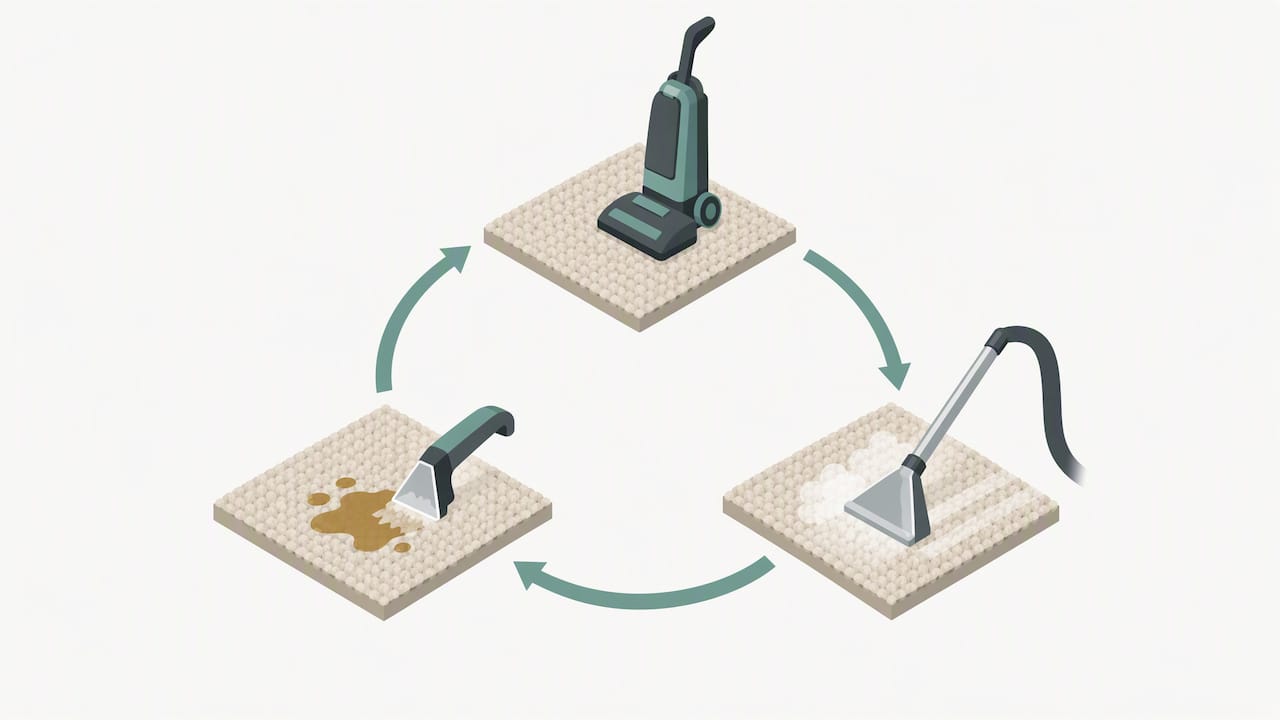
The Carpet and Rug Institute built a system that most professionals still use, and it breaks down into three layers that work together instead of competing for your attention.
- Routine vacuuming: daily in heavy-traffic commercial areas, weekly at minimum in homes, to pull surface soil before it works into the fibers.
- Interim maintenance: low-moisture methods like encapsulation, done monthly in soil-prone areas or every few months at home, to refresh appearance between deep cleans.
- Deep cleaning: hot-water extraction, done every 12 to 18 months residentially and as often as two to six times a year in heavy commercial traffic, according to CRI’s commercial standard.
Skip the middle tier and you’re asking deep cleaning to do all the work alone. Interim maintenance is the batting cage session between games: it keeps soil from building up so the deep clean actually resets the carpet instead of just managing the mess. For high-traffic areas, leaning on interim care between deep cleans often beats waiting and hoping the carpet holds up.
Signs your carpet needs cleaning right now
Some signs mean “clean it this weekend.” Others mean “call someone today.” Here’s how to tell the difference.
- Traffic lanes or visible wear paths: by the time you can see them, dry soil has already started abrading the fibers, according to CRI’s traffic area guidance.
- Persistent odors: a smell that lingers after vacuuming usually means soil or spills have worked past the surface.
- Rising allergy symptoms: more sneezing or congestion at home is a signal to vacuum more often with a HEPA-rated machine and consider earlier interim cleaning, since frequent vacuuming reduces indoor particulate buildup.
- Visible staining that won’t lift: spot cleaning only gets you so far before it’s time for a professional inspection.
Waiting until the damage is obvious usually means it’s already permanent.
DIY interim care versus hiring a professional
Vacuuming and spot treatment handle the everyday stuff. A weekly vacuum pass and quick response to spills keep soil from setting in, and that’s work any homeowner can do without special equipment.
Rental machines are a different story. They can lift surface soil, but most extract far less water than professional equipment, which means more detergent residue stays behind and the carpet takes longer to dry.
Here’s where that matters:
- Rental extractors often leave sticky residue that actually attracts soil faster afterward.
- Truck-mounted extraction (what most professionals use) pulls more moisture out, which means faster drying and less mold risk, per EPA mold remediation guidance.
- Over-wetting is the most common DIY mistake, and it’s the one most likely to cause lasting damage.
For a full breakdown of what each approach can and can’t handle, see our guide to deep cleaning options.
Pro Tip: If your carpet still feels damp after 12 hours, point a fan at it and crack a window instead of waiting it out.
How fast should carpet dry after cleaning?
Carpet and the padding beneath it need to dry within 24 to 48 hours after wetting. Past that window, you’re looking at mold and microbial growth, and that’s not a problem you want to discover later.
- Run fans and a dehumidifier in the room right after cleaning to speed up the process.
- If the carpet or padding is saturated (think burst pipe, not routine cleaning), pull it up and dry both pieces separately.
- Carpet that’s been soaked repeatedly or stayed wet too many times may be cheaper to replace than to keep treating.
A burst pipe turns this from a maintenance question into an emergency one fast, so speed matters more than perfection.
Why your carpet warranty depends on your cleaning schedule
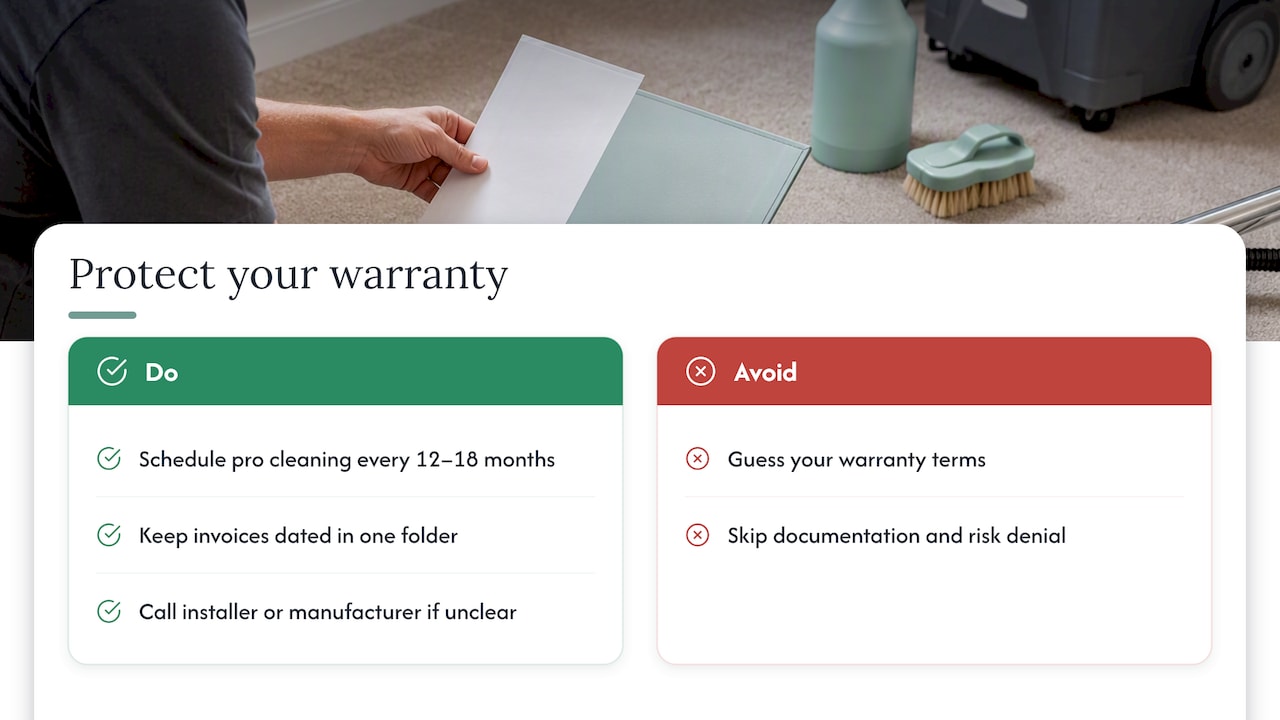
Most carpet warranties aren’t just suggestions, they’re conditions. Many require professional cleaning on a set schedule, often that same 12 to 18 month window, and some ask for proof you followed it, per CRI’s FAQ page.
Keep your invoices in a folder, digital or paper, labeled by date. If your warranty language is unclear, call the installer or manufacturer directly instead of guessing and risking a denied claim later.
How a managed cleaning plan keeps you on schedule
Following CRI’s three-tier system sounds simple until real life gets in the way: work travel, kids’ ballgames, a dog that tracks in half the yard after every walk. That’s where a scheduled plan earns its keep.
Certain professional cleaning services specialize in deep steam cleaning that removes dirt, allergens, and odors without leaving sticky residue behind, results that help interim maintenance work effectively. Subscription-based cleaning plans can handle the scheduling so customers don’t have to remember when the last deep clean happened. Additional services, such as upholstery, air duct, and mattress cleaning, can complement a full home maintenance routine. High-traffic households, pet owners, and allergy sufferers often benefit from shorter intervals between visits. Some professional services offer satisfaction guarantees.
Finding the balance between cost and carpet life
Follow the CRI baseline, then adjust up for pets, kids, or allergies rather than waiting for visible damage to make the decision for you. Budgeting for interim maintenance a few times a year is almost always cheaper than letting soil build up and forcing a reactive deep clean later.
— chris
Keep your carpet on schedule without the hassle
Staying on a 12 to 18 month deep-clean schedule, plus regular vacuuming, is the single best thing you can do for carpet longevity. The hard part isn’t knowing the schedule, it’s actually sticking to it between ballgames, work trips, and everything else on the calendar.
That’s exactly what the Simple Club membership is built to solve: a set cadence so you’re never the one tracking dates on a calendar. If you’d rather book a single visit first, start with professional carpet cleaning and see what a proper deep clean looks like before committing to a plan.
FAQ
How long do you have to wait between carpet cleanings?
For most homes, 12 to 18 months between professional deep cleans is the standard window, according to CRI’s residential maintenance standard. Households with pets, kids, or allergies often use a shorter interval, sometimes every 6 to 12 months, with interim maintenance in between.
Can you overuse a carpet cleaner?
Cleaning too often with the wrong method, especially rental extractors that leave detergent residue, can actually attract more soil and extend drying time. Vacuuming can’t really be overdone, but wet extraction should stick to the recommended 12 to 18 month cadence unless traffic or stains call for interim care.
How often does carpet need to be shampooed?
Full shampooing or hot-water extraction generally follows the same 12 to 18 month baseline as other deep-cleaning methods, per CRI’s commercial maintenance guidance. Heavy-traffic homes or businesses may need it closer to every 6 months.
What’s the difference between routine, interim, and deep cleaning?
Routine vacuuming happens weekly or daily and removes surface soil. Interim maintenance uses low-moisture methods like encapsulation every few months to refresh appearance, while deep cleaning (hot-water extraction) resets the carpet fully on a cycle often recommended within about 12 to 18 months.
How quickly does carpet need to dry after cleaning?
Carpet and its backing should dry within 24 to 48 hours to prevent mold and microbial growth, according to EPA mold remediation guidance. Fans, dehumidifiers, and proper extraction all help hit that window.
Sources
- CRI 205 Residential Carpet Standard for Maintenance and Cleaning
- Mold remediation: EPA guidance (Chapter 4)
- EPA: Sources of indoor particulate matter (PM)