

Yes, you can clean most cotton fringe at home with a gentle anionic detergent hand-wash, rinse, and extraction followed by a slow, forced-air dry. Silk fringe, antique rugs, and anything with frayed or missing knots need a professional’s hands, not yours. Skip the bleach, skip the ammonia, never run a beater-bar vacuum over fringe, and don’t drown it in water. That’s the whole game, safely played.
TL;DR:
- Home cleaning is suitable for cotton fringe using gentle detergent, but silk, viscose, or antique rugs require professional care due to fiber sensitivity.
- Proper prep involves shaking, brushing, vacuuming, and testing cleaners on hidden areas to prevent soil embedding or dye bleeding.
- Carefully rinse and extract moisture to avoid stiffness, mildew, or dye migration, and dry with airflow to maintain fringe integrity.
- Avoid common mistakes like using bleach, over-wetting, high heat, or trimming loose warp threads, which can cause irreversible damage.
- Regular professional inspections every 6 to 12 months help catch early signs of wear and prevent costly repairs.
Table of Contents
- What Is Rug Fringe Cleaning and Why Material Matters
- How Do You Prepare a Rug Before Cleaning the Fringe?
- The Step-By-Step Method for Cleaning Rug Fringe at Home
- How Do You Treat Stains on Rug Fringe Without Damaging It?
- How to Dry and Groom Fringe So It Doesn’t Curl or Mildew
- When Should You Call a Professional for Fringe Cleaning?
- What DIY Mistakes Damage Rug Fringe the Most?
- Home Service Simple’s Take: When It’s Worth Calling In a Pro
- Get Professional Rug Fringe Care in Wichita
- Where This Guide’s Recommendations Come From
- Sources
- FAQ
What Is Rug Fringe Cleaning and Why Material Matters
Fringe isn’t decoration hanging off the edge of your rug like tassels on a lampshade. It’s the warp, the actual structural backbone the whole rug is woven onto. Damage the fringe badly enough and you’re not looking at a cosmetic problem anymore. You’re looking at unraveling, which spreads into the body of the rug and turns a $200 cleaning job into a $2,000 repair.
Different fibers react to water and chemicals in wildly different ways.
- Cotton wicks moisture readily and generally tolerates water well, but bleach weakens it fast and permanently.
- Wool handles cleaning with moderate resilience, though it can felt or mat if you overwork it wet.
- Silk and viscose are the danger zone. They lose strength dramatically when wet and can shred with even light agitation.
If your rug has a “silk” or “viscose” label, looks noticeably fine and lustrous, or you know it’s an antique, treat that as your stop sign. Visible warp threads poking through, missing knot rows, or fringe that’s already fraying past the point of a simple trim are all red flags that mean it’s time to call someone who does this for a living, not grab a spray bottle.
How Do You Prepare a Rug Before Cleaning the Fringe?
Wetting dirty fringe without prepping it first is one of the fastest ways to grind soil deeper into the fibers or spread a stain you didn’t know was there. Prep work takes ten minutes and saves you from most disasters.
- Shake the rug outdoors or give it a firm but gentle beating over a railing to knock loose dry soil free.
- Brush the fringe lightly with a soft-bristle brush, working in the direction the fibers naturally lie.
- Vacuum the rug body with the rotating beater brush switched off, then pull loose debris toward the fringe and off the ends, following tips from best thing to clean interior doors with for safe cleaner use.
- Spot test any cleaner on a hidden section of fringe, wait 5 to 10 minutes, and check for color bleed, texture change, or stiffness before treating the whole piece.
Gather your supplies before you start: soft white towels, a spray bottle, a soft-bristle brush, a mild anionic (foaming) shampoo made for rugs, and either a wet-dry extractor or a stack of dry towels for manual extraction.
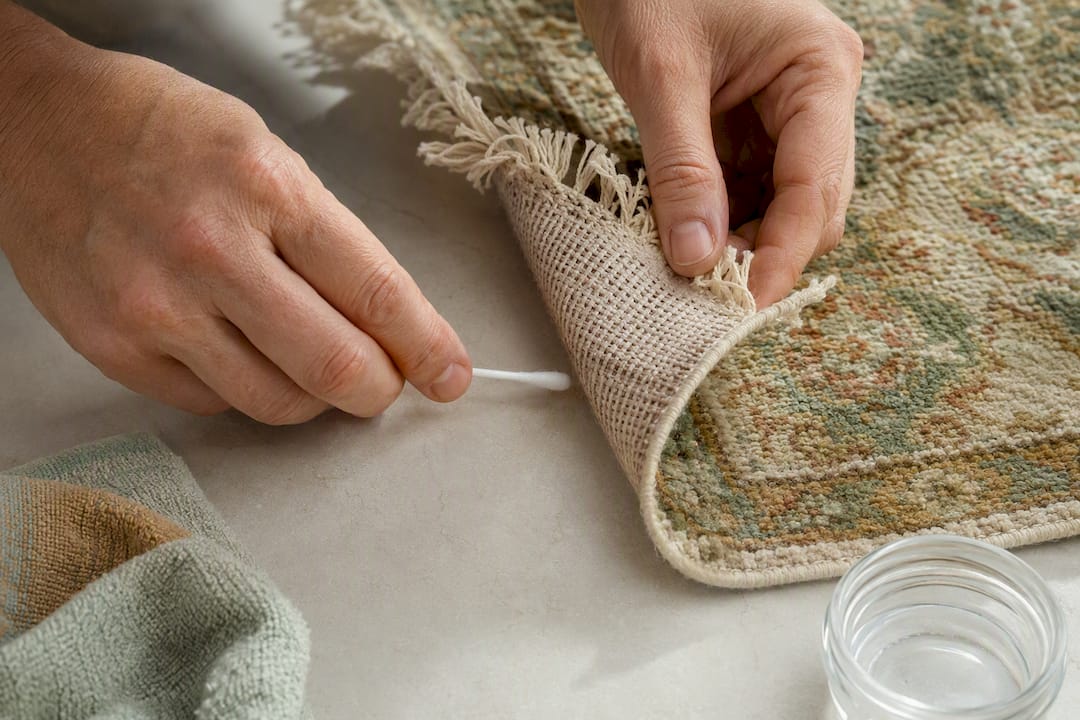
Pro Tip: Test cleaners on the underside of the fringe near the rug’s edge, not the visible top. If something goes wrong, nobody sees it but you.
The Step-By-Step Method for Cleaning Rug Fringe at Home
Clean and thoroughly dry the rug body first. Wet pile sitting next to wet fringe is how dye migrates from the rug into the fringe, leaving permanent staining you can’t undo.
- Mix your detergent. Follow the label directions for an anionic (foaming) shampoo, the same category SCRT’s technical guidance points to for ground-in soil on cotton or wool fringe.
- Saturate the fringe only. Spray or apply the solution directly to the fringe, keeping it off the pile yarns as much as possible.
- Agitate gently. Use a soft brush or your fingers to work the shampoo into knots and twisted sections. Don’t scrub hard.
- Let it dwell. Give the detergent at least 10 minutes to break down soil before rinsing.
- Rinse and extract with minimal water, working from the pile edge outward toward the fringe tips, and repeat once if the fringe still looks dingy.
- Extract remaining moisture with a wet-dry vacuum or by pressing dry towels firmly into the fringe.
- Groom and force-dry, combing the fringe straight and directing a fan or air mover across it while it’s blocked flat or hanging over an edge.
Technicians handle fringe as a completely separate zone from the rug pile for a reason. SCRT’s guidance describes blocking tables specifically so excess solution runs away from the rug’s foundation instead of soaking back into it. That separation, more than any specific product, is what keeps a home cleaning job from turning into a repair bill.
How Do You Treat Stains on Rug Fringe Without Damaging It?
Stains on fringe tempt people into reaching for the strongest thing under the sink. Resist that instinct. The fix depends entirely on what caused the stain.
- Pet urine: Blot immediately, treat with an enzyme cleaner labeled safe for rugs, then rinse and extract promptly. Never mix ammonia-based products or improvised bleach solutions into the treatment. If odor lingers after extraction, a dedicated pet stain protocol handles the bacteria that plain detergent leaves behind.
- Oil or grease: Absorb as much as you can with an absorbent powder first, then follow with a solvent method matched to the fiber. Keep water to an absolute minimum on silk or viscose.
- Rust: Skip household acid cleaners entirely. Rust removers can bleach fringe just as badly as they lift stains, and this one belongs to a professional.
- Browning: Don’t reach for bleach. Cellulosic browning is a natural aging reaction in cotton fringe, and a professional reducer-shampoo treats it far more safely than anything you’ll find at a hardware store.
Pro Tip: Homeowner forums love suggesting hydrogen peroxide for stubborn fringe stains, but community threads on the subject are full of mixed results. Stick to detergents built for rugs instead of experimenting with what’s in the medicine cabinet.
How to Dry and Groom Fringe So It Doesn’t Curl or Mildew
Over-wetting is the single biggest cause of stiff, rotted, or discolored fringe after a DIY cleaning attempt, according to rug care specialists who see the aftermath regularly. Extract moisture immediately after rinsing rather than letting the fringe air dry on its own timeline.
- Point a fan or air mover directly at the fringe to cut drying time dramatically.
- Block the fringe flat, or let it hang straight off a table edge, so it dries without curling or twisting.
- Comb out tangles and realign knots by hand once the fringe is dry. Resist trimming stray warp threads. What looks like a loose end is usually load-bearing.
- Check for leftover residue, stiffness, or any sign of color migration once everything has fully dried.
When Should You Call a Professional for Fringe Cleaning?
Some fringe problems just aren’t DIY territory, no matter how careful you are. Silk labeling, antique age, visible warp exposure, missing knot rows, or fringe that’s badly frayed all mean it’s time to hand the rug to a professional cleaner or restorer.
Industry guidance from the Carpet and Rug Institute recommends a professional inspection or deep cleaning every 6 to 12 months, with more frequent service for rugs in high-traffic zones or homes with pets and kids tracking in dirt daily.
- Controlled anionic detergent work with acid-rinse extraction, matched precisely to fiber type.
- Blocking tables that dry fringe flat and straight without stressing the knots.
- Re-knotting or fringe replacement when warps have already started unraveling.
What DIY Mistakes Damage Rug Fringe the Most?
Most fringe disasters trace back to the same five habits, all of which are avoidable once you know to watch for them.
- Bleach or ammonia on any fringe fiber weakens the strands and speeds up rot.
- Beater-bar vacuuming catches and pulls fringe threads, a leading cause of irreversible unraveling.
- Over-wetting during cleaning leads to stiffness, dye bleed, and mildew.
- Trimming loose warp threads to “neaten” fringe often removes structural material you actually needed.
- High-heat drying with a blow dryer or space heater can scorch or embrittle natural fibers.
If you’ve already made one of these mistakes, stop immediately, extract any remaining moisture, and get a professional inspection before the damage spreads further into the rug body.
Home Service Simple’s Take: When It’s Worth Calling In a Pro
Homeowners sometimes bring rugs to professional cleaners after a well-intentioned cleaning attempt goes sideways. Antique Persian pieces, silk accent rugs, and anything with heavy cellulosic browning are exactly the cases where our oriental rug cleaning service earns its keep, and where our satisfaction guarantee means something concrete rather than just a slogan on a page.
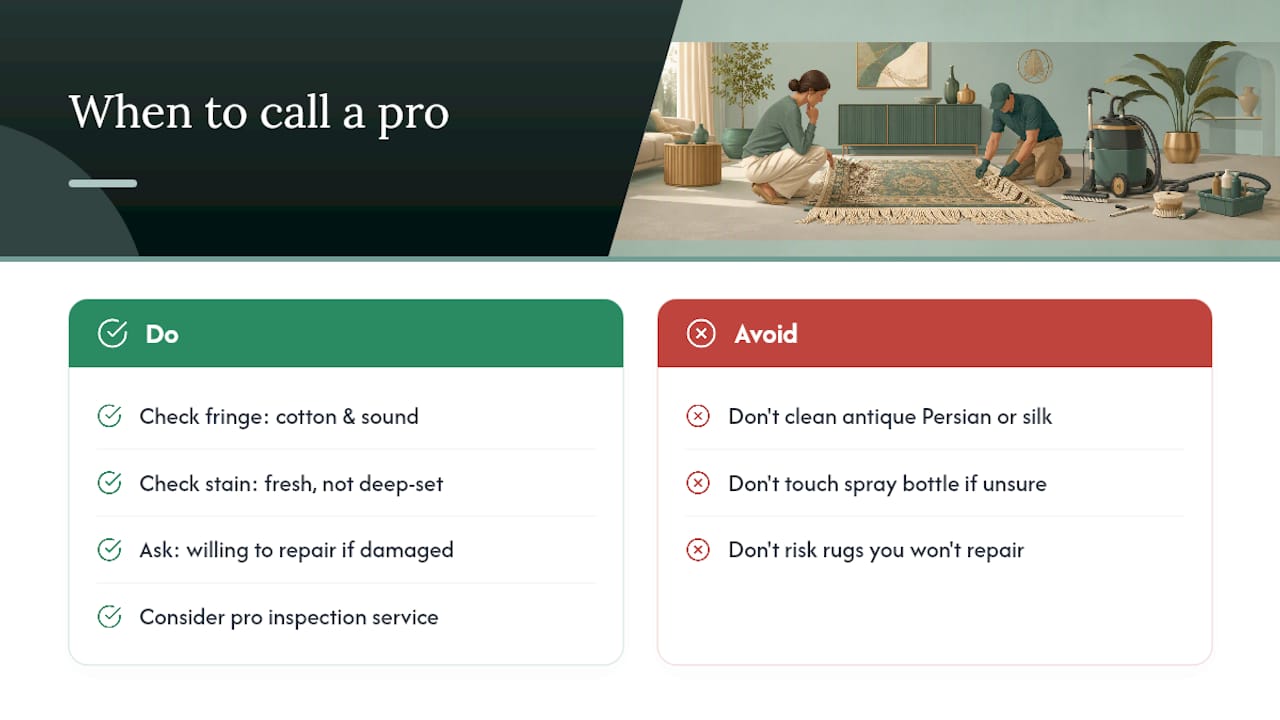
Ask yourself three questions before you touch a spray bottle: Is the fringe cotton and structurally sound? Is the staining fresh rather than deep-set? Are you working with a rug you’d be fine repairing if something went wrong? Two no’s mean it’s time to call in help. Some cleaning services offer inspections built into their regular service, helping catch fringe problems before they become structural ones.
— chris
Get Professional Rug Fringe Care in Wichita
DIY methods work fine for a lightly soiled cotton fringe on a rug you clean twice a year. Where they fall short is antique wool, silk accents, and fringe that’s already showing wear, situations where one wrong move turns a cleaning job into a repair project. Professional cleaners handle the fiber-specific judgment calls: using the right detergent, controlled extraction, and blocking to keep fringe straight instead of curled or stiff.

Technicians follow fringe-safe protocols on oriental and area rugs and flag anything that needs repair instead of guessing and hoping. Some services offer scheduled inspections to catch fringe wear before it turns structural, often backed by a satisfaction guarantee. Ready to get your rug looked at? Book a carpet and rug cleaning appointment and let us handle the parts that shouldn’t be a home experiment.
Where This Guide’s Recommendations Come From
This guide draws on SCRT’s technical fringe cleaning FAQ, Carpet and Rug Institute maintenance guidance, and field reporting from DFW Rug Care & Cleaning on fringe repair and restoration.
Sources
FAQ
How do you get dirt out of rug fringe?
Shake and brush the fringe to remove dry soil first, then hand-wash with a mild anionic shampoo, rinse thoroughly, and extract excess moisture before force-drying with directed airflow.
What is the fringe on a rug actually called?
Technically it’s the warp, the structural threads the rug is woven onto, not a separate decorative trim. That’s why damaged fringe can threaten the whole rug’s integrity.
How do you fix curled or twisted fringe after cleaning?
Curling almost always comes from drying too slowly or unevenly. Re-wet lightly, comb the fringe straight, and block it flat or over a table edge with a fan directed at it until fully dry.
Can you clean rug fringe with baking soda?
Baking soda can help absorb odors and light soil as a dry pre-treatment, but it’s not a substitute for a proper anionic detergent wash on ground-in soil or stains. For anything beyond light refresh, follow the detergent and extraction method rather than relying on baking soda alone.
How often should rug fringe get professional attention?
Industry guidance recommends professional inspection or deep cleaning every 6 to 12 months, more often for high-traffic rugs, which catches fraying or structural wear before it becomes a bigger repair.