

Most carpet dents from furniture can be fixed at home with controlled moisture, gentle heat, or good old-fashioned fluffing. Start with the gentlest method first, and only step up if you have to.
Here’s your fast plan:
- Pull the furniture off the dent completely.
- Give it 24 to 48 hours. Seriously, some dents just bounce back on their own once the weight is gone.
- Still flat? Grab an ice cube (or two) and let it melt right into the crushed spot.
- Stubborn dent that won’t budge? Move to the damp towel and steam method, but test it on a hidden patch first.
Expect results in hours to about 48 hours for most DIY fixes. Deep dents, or ones that have been sitting under a recliner since the Clinton administration, may need a professional steam cleaning to fully bounce back.
Key Takeaways
Most furniture dents respond to controlled moisture or gentle steam within 48 hours, but fiber type, pile height, and dent age determine whether DIY alone will finish the job.
| Point | Details |
|---|---|
| Wait before you act | Give the carpet 24 to 48 hours after moving furniture since some fibers rebound on their own. |
| Start with ice | Let ice cubes melt into the dent for 2 to 12 hours, then blot and fluff the fibers. |
| Use steam carefully | Apply steam in 30 to 60 second bursts over a damp towel, never touching the iron directly to carpet. |
| Prevent future dents | Rotate furniture roughly an inch every 3 to 6 months and use coasters or rug pads under heavy pieces. |
| Call a pro for deep damage | Home Service Simple’s steam cleaning and pile-lifting tools restore dents that ice and steam alone can’t fix. |
Table of Contents
- How to Assess Carpet Indentations Before You Start
- Step-by-Step Methods to Fix Furniture Dents in Carpet
- How to Prevent Carpet Dents From Furniture
- When Should You Call a Professional Carpet Cleaner?
- Long-Term Effects of Furniture Dents on Your Carpet
- Can You Patch a Deep Carpet Dent That Won’t Bounce Back?
- What I’d Try First, and a Note for Renters
- Get Professional Help Restoring Your Carpet
- Sources
- FAQ
How to Assess Carpet Indentations Before You Start
Not every dent needs the same fix, so play detective for a minute before you grab supplies.
Move the furniture, run your hand across the flattened area, and feel for the backing. If you can feel ridges under a thin layer of fiber, that’s a sign of real compression, not just surface flattening. Check whether you’re dealing with loop pile (like Berber, where fibers form little loops) or cut pile (where fibers stand up individually, like most plush carpet). Loop pile needs gentler handling since snagged loops can unravel like a bad sweater.
- Light surface dent: vacuum and brush, done.
- Moderate dent: ice cube method, then fluff.
- Deep or old dent with visible backing: consider a professional check.
Fiber type matters too. Wool and nylon typically rebound better than polyester or olefin, which tend to hold their shape once heat sets the fibers flat.
Pro Tip: Always test your chosen method on a hidden section of carpet first, like inside a closet or under a rug. Heat-sensitive synthetic fibers can scorch or melt before you even realize what’s happening.
Step-by-Step Methods to Fix Furniture Dents in Carpet
Once you know what you’re working with, pick the method that matches the damage. Work from gentlest to most aggressive.
The Ice Cube Method
- Place one or two ice cubes directly on the dent, right in the center of the flattened spot.
- Let them melt naturally. This typically takes 2 to 12 hours depending on dent depth and carpet thickness.
- Blot up excess moisture with a dry towel. Don’t let water pool into the padding.
- Fluff the fibers with your fingers, a soft brush, or the edge of a spoon.
- Let the area air dry completely before you even think about moving furniture back.
If the dent is still stubborn after this, repeat it, or move on to heat.
Steam and Damp Towel Method
This is the step-up move for dents that laugh at ice cubes. Lay a damp (not soaking) cloth over the dent, then apply steam in short bursts of 30 to 60 seconds, holding the iron just above the towel rather than pressing hard. Never let the iron touch the carpet fibers directly. Hovering an iron over wet fabric loosens the crushed fibers without cooking them.
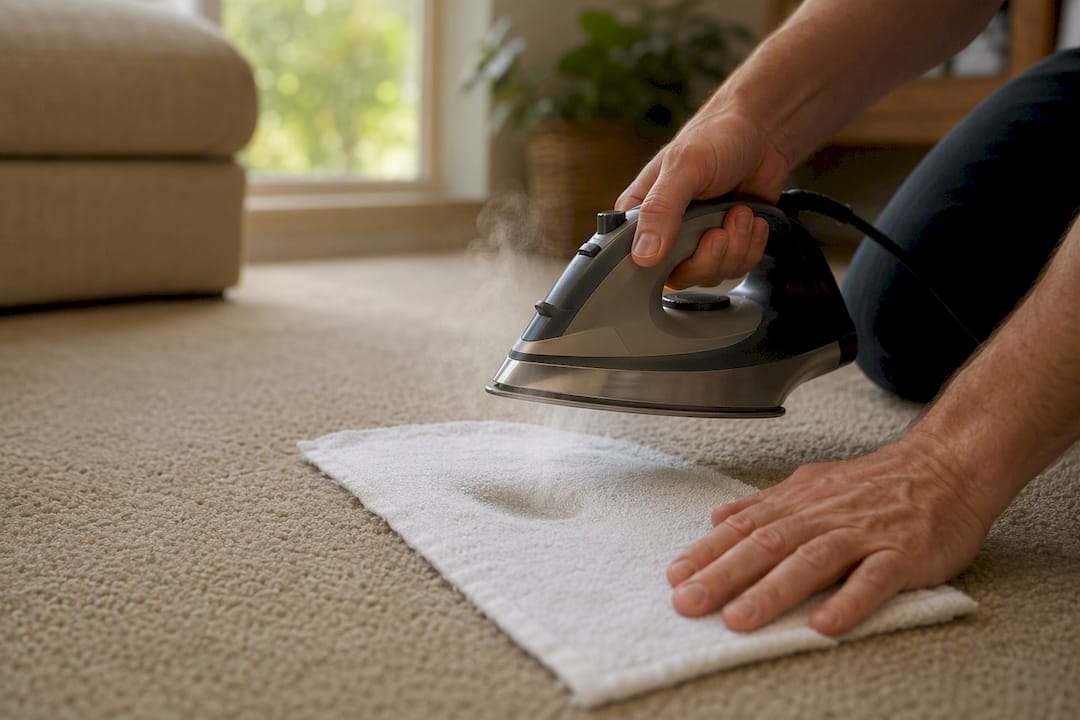
A garment steamer works similarly and is often the safer bet since there’s no hot metal plate anywhere near your carpet. A hairdryer on medium heat, held a few inches away, is the gentlest heat option and works well on synthetic fibers that scorch easily.
Vacuum, Rake, and Fluff
The finishing move for every method above:
- Vacuum the area from multiple directions to blend the texture back into the surrounding pile.
- Use a carpet rake or pile lifter for deeper matting, dragging gently in the direction of the nap.
- For stubborn spots, work a spoon or dull coin under the flattened tips and lift them one small section at a time.
Safety cautions: test on a hidden spot first, never soak the padding underneath (that invites mold), keep the iron off direct contact with fibers, and let everything dry fully with a window open or a fan running before you replace furniture.
Loop pile carpets like Berber need extra care here. Aggressive raking can snag and pull loops loose, so use a soft brush instead of a stiff rake, and skip the coin trick entirely on loop weaves.
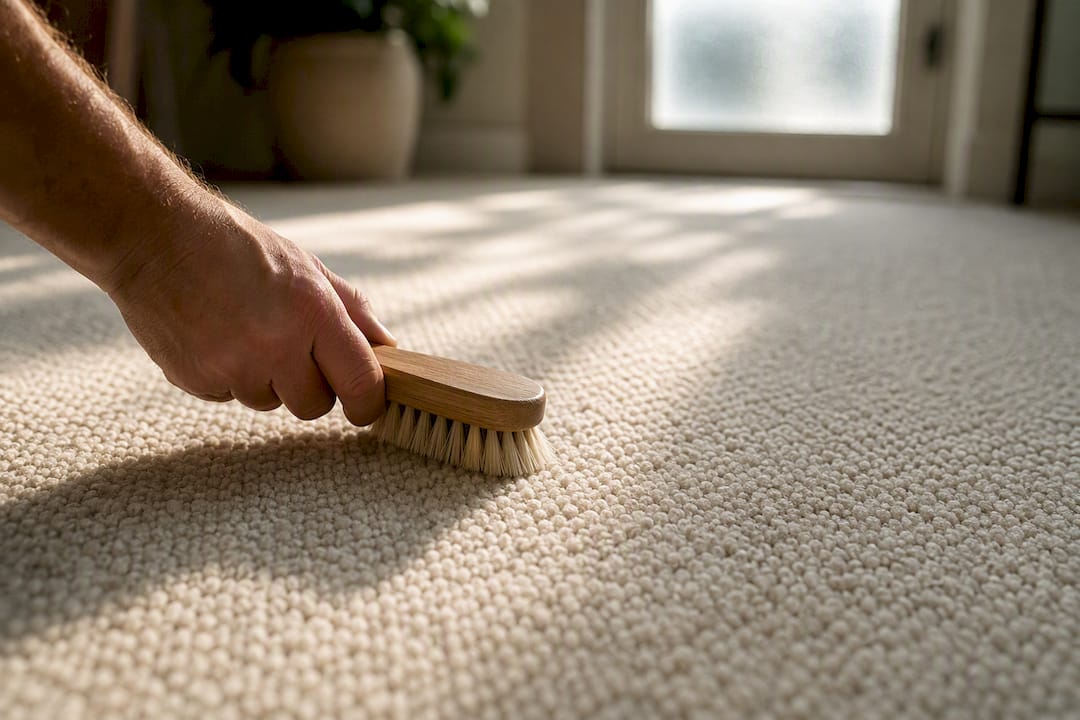
Pro Tip: After steaming or icing, run your spoon or comb through the fibers in short strokes, then finish with a vacuum pass in two crossing directions. That crosshatch pattern blends the fixed spot into the rest of the room so nobody can tell furniture was ever there.
How to Prevent Carpet Dents From Furniture
Fixing a dent is a lot more work than never getting one in the first place.
- Slide furniture coasters or caster cups under table and sofa legs to spread the weight over a wider area.
- Use felt pads on lighter pieces like chairs and end tables.
- Put a high-density rug pad under area rugs that sit beneath heavy furniture.
- Shift furniture about an inch every 3 to 6 months so the same fibers aren’t always under pressure.
- Vacuum weekly. Trapped dirt weighs down fibers and makes them more prone to permanent crushing.
If you’re installing new carpet, this is the moment to think long term. Firmer, higher-density padding resists indentation far better than the cheap stuff, and lower pile heights generally recover from compression better than plush, high-pile options, which tend to flatten under sustained weight.
Pro Tip: Rotating your furniture doesn’t have to be a big production. Just nudge the couch when you vacuum every few months. Small habit, real payoff.
When Should You Call a Professional Carpet Cleaner?
Some dents are past the DIY toolkit. Here’s how to tell:
- The dent has been there for several months or longer.
- The backing looks distorted or you can see it through the fibers.
- Ice and steam methods left the spot just as flat as before.
- You’re dealing with matting across a large area, not just one dent.
- The carpet smells musty or feels damp after you tried fixing it yourself.
What a professional actually does is different from home fixes. They use commercial-grade steam equipment, pile-lifting tools that generate more consistent pressure than a household iron, and they can assess whether your padding needs replacing entirely. Some pros also handle re-stretching if the backing has shifted.
- Ask if they test fiber type before applying heat or steam.
- Ask what drying method they use, since trapped moisture invites mold.
- Ask whether they can assess or replace padding.
- Ask if the work comes with any kind of guarantee.
Long-Term Effects of Furniture Dents on Your Carpet
A dent that never gets addressed doesn’t just sit there quietly. It compounds.

Every time fibers get crushed and never fully spring back, that section loses a little resilience. Repeated wear cycles degrade a carpet’s viscoelastic recovery, meaning fibers that once bounced back after light pressure eventually stop bouncing at all. It’s the carpet equivalent of an old mattress spring that’s lost its bounce.
Left alone for years, dents can create visible traffic patterns and permanent shading differences across a room, especially under rearranged furniture where old dent marks stay darker or duller than the surrounding pile. That’s not just cosmetic. Compressed fibers also trap more dirt and oils at the base, which accelerates wear in that exact spot compared to the rest of the carpet.
There’s a resale angle too. Deep, permanent dents and matting are one of the first things a buyer or landlord’s inspector notices when walking through a room, right alongside stains. A carpet with scattered permanent dents reads as neglected even if it’s otherwise in decent shape.
The fix is timing. Catching a dent within the first few weeks, before repeated pressure fully sets the crush into the fiber structure, gives you a much better shot at full recovery than waiting a year and hoping ice cubes will undo months of compounded compression.
Can You Patch a Deep Carpet Dent That Won’t Bounce Back?
Sometimes moisture and heat just aren’t enough, especially on a dent that’s crushed the backing itself, not just the fibers.
For genuinely permanent indentations, the DIY move is a small patch rather than more fluffing. If you have leftover carpet from installation, or can pull a matching swatch from an inconspicuous spot like a closet floor, you can cut a small patch and set it into the damaged area using carpet seam tape or adhesive. This works best on cut pile carpet where seams blend more easily; loop pile patches are trickier to disguise.
A lower-effort option is fiber filling. Some hardware stores sell carpet repair fibers designed to match common colors, which you brush into the damaged spot and bond with adhesive to build the pile back up. It’s not invisible, but it beats a bald patch or a permanent crater near your baseboard.
Before you patch anything, rule out whether the dent is actually damage or just deep compression that hasn’t had a fair shot at recovery yet. Cutting into a carpet fiber, if you left the furniture off for only a day or two. Give the fluffing and steam methods a real try first, since patching is permanent and can’t be undone if it turns out ice cubes would’ve solved it.
What I’d Try First, and a Note for Renters
If it were my living room, I’d wait it out for a day, then hit it with ice. Steam with a towel barrier is the next step up, and I’d save the iron for carefully tested, low-heat situations only.
Renters, take a phone photo of the dent before you rearrange anything. Stick with felt pads and coasters, and skip anything that risks the backing or adhesive without a nod from your landlord first.
Get Professional Help Restoring Your Carpet
Ice cubes and steam handle most furniture dents just fine, but some indentations run deeper than a DIY fix can reach, especially in rooms where the same recliner has sat in one spot for years. That’s where a professional deep clean earns its keep. Home Service Simple’s steam cleaning process doesn’t just refresh the surface. It works pile-lifting into the process, which restores crushed fibers that ice and towels alone can’t fully bring back.

Beyond dent restoration, the team assesses your padding condition, targets pet stains or embedded dirt that’s been silently wearing down your fibers, and finishes with a controlled drying process so you’re not left waiting days for carpet to feel normal again. Every job comes backed by a satisfaction guarantee, and if you’d rather not think about carpet care again until next year, the Simple Club subscription keeps your floors on a regular cleaning schedule without you having to call and book each time. If those old furniture dents haven’t budged after your own attempts, reach out to Home Service Simple for a quote and get your carpet’s texture back where it belongs.
Sources
- 3 Easy Ways to Get Furniture Dents Out of Carpet
- How to remove carpet dents from furniture — easy fixes that actually work
- How to get dents out of carpet
Always test a hidden spot first, and call a professional if a dent doesn’t respond after a few attempts.
FAQ
Will Dents in Carpet From Furniture Go Away on Their Own?
Many shallow dents partially or fully rebound within 24 to 48 hours once the furniture’s weight is removed, since compressed fibers naturally decompress over time. Deeper or long-standing dents usually need ice, steam, or professional help to fully recover.
How Do You Fix Carpet That’s Been Flattened by Furniture?
Start by letting the area sit uncovered for a day or two, then use the ice cube method to rehydrate the fibers, followed by gentle fluffing with a spoon or soft brush. If that doesn’t fully work, move to the damp towel and steam method before considering a professional steam clean.
How Do You Stop Dents From Forming in Carpet?
Use furniture coasters or caster cups to spread weight, place rug pads or area rugs under heavy pieces, and shift furniture roughly an inch every 3 to 6 months. Regular vacuuming also helps keep fibers from compacting further under dirt.
How Do You Fix Furniture Dents in Carpet With Ice?
Place one or two ice cubes directly on the dent and let them melt slowly over 2 to 12 hours so the fibers absorb moisture and swell back into shape. Blot any excess water, then fluff the area with your fingers or a brush and let it dry fully before replacing furniture.
When Should I Hire a Professional Instead of Fixing It Myself?
Call a professional if the dent has lasted several months, the carpet backing looks distorted, or DIY methods leave the area just as flat as before. Home Service Simple’s deep steam cleaning and pile-lifting tools can restore texture that household fixes can’t reach.