

Unscented baking soda is your first move for everyday carpet funk. Spread it, let it sit, vacuum it up. If the smell is pet urine, though, baking soda alone won’t cut it. You need an enzymatic cleaner to break down the uric acid crystals actually causing the smell. And if the odor keeps coming back after you’ve tried both, or it’s soaked through to the pad, that’s your sign to call a professional before it spreads further.
TL;DR:
- Baking soda reduces surface odors by about 70% when left on the carpet for several hours, but it won’t eliminate deep-seated pet urine odors.
- Enzymatic cleaners are essential for removing pet urine odor because they break down uric acid crystals that cause persistent smells, unlike baking soda or vinegar.
- Professional treatments combine enzyme or oxidizer chemistry with truck-mounted extraction, effectively reaching and removing odors embedded in padding or the subfloor.
- Repeated DIY attempts, especially with masking sprays or scented products, often cause odors to reappear or worsen, making professional intervention necessary.
- Regular maintenance such as vacuuming with a HEPA filter and seasonal deep cleaning helps prevent odor buildup, but persistent cases may require pad or subfloor replacement.
Table of Contents
- Carpet Deodorizing Methods You Can Try Tonight
- Your Pet Urine Removal Protocol, Step by Step
- What Professional Deodorizing Actually Involves
- The Mistakes That Make Carpet Odor Worse
- A Simple Schedule to Keep Odors From Coming Back
- What Years of Carpet Calls Taught Us About Odor
- Book a Deodorizing Visit With Home Service Simple
- Sources
- FAQ
Carpet Deodorizing Methods You Can Try Tonight
Here’s the thing about carpet odor: most of it lives below the surface, in fibers and backing you can’t see. That’s why the fix has to match the problem. Let’s go through what actually works.
Baking soda is the classic for a reason. Sprinkle a generous, even layer over the whole carpet, not just the smelly spot, and let it sit for at least an hour. Overnight is better if you can stand the crunch underfoot. Baking soda neutralizes acidic odor compounds rather than just covering them up, and research on stored food waste found it cut odor concentration by roughly 70% at moderate application rates. Go too heavy, though, and you can throw off the pH and actually make ammonia smells worse. Vacuum thoroughly, ideally with a HEPA filter vacuum so you’re not just kicking dust back into the air.
White vinegar works on a different class of odor, mostly mildew and general mustiness. Mix one part white vinegar to one part water in a spray bottle, mist lightly (don’t drench), and let it air dry. Always spot test on a hidden corner first since some dyes react to acid. Skip vinegar on wool carpets and on urine spots. It won’t touch uric acid, and the acidity can actually set the stain.
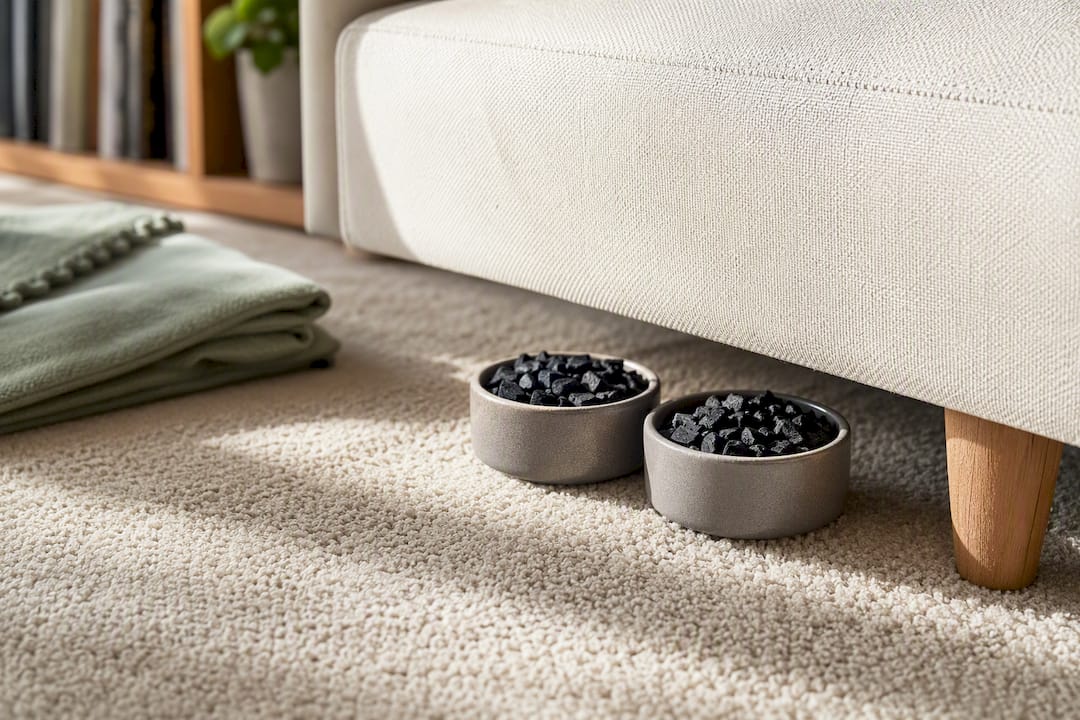
Activated charcoal is the quiet workhorse nobody talks about enough. Bags or bowls of activated charcoal placed near problem areas, closets, or under furniture pull moisture and odor molecules out of the air over several days. It won’t deep-clean anything, but as a background odor absorber it holds its own, and lab comparisons of natural deodorizers rank it alongside baking soda for cutting volatile compounds.
For a light DIY enzyme spot treatment, look for a product that lists live bacterial cultures or enzymes on the label, not just “odor eliminator.” Saturate the spot, don’t mist it lightly, and give it real dwell time before blotting.
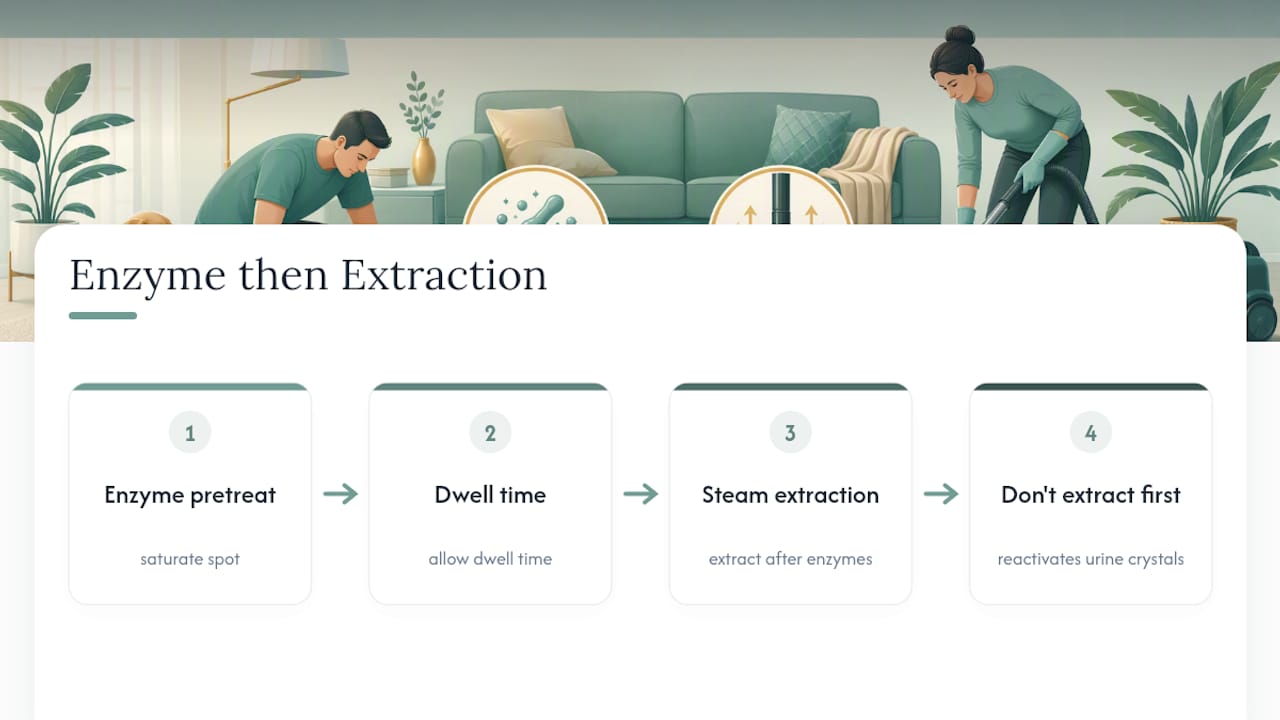
Steam or rental extraction is where people get tripped up. Heat can actually reactivate old urine crystals if you run it before enzymes have had a chance to work. Always pre-treat with an enzymatic cleaner first, then extract.
Your Pet Urine Removal Protocol, Step by Step
Pet urine deserves its own process because guessing where it is wastes time and product.
- Find every spot. A UV blacklight in a dark room lights up old urine like a map. Pair it with your nose. Press a white cloth into suspect areas; if it smells stronger when damp, you’ve found a live spot.
- Check how deep it goes. Press down near the stain. If it feels squishy or the smell gets worse under pressure, the pad underneath is likely holding urine too.
- Saturate, don’t spray. Pour the enzymatic cleaner on generously so it reaches the same depth the urine did. A light spritz won’t touch what’s soaked into the backing.
- Give it dwell time. Fifteen to twenty minutes minimum, longer for older stains. Enzymes need time to actually digest the uric acid crystals, not just sit on top of them.
- Blot, don’t rub, with a clean towel until it’s just damp. Rubbing spreads the contamination wider.
- Test and repeat. Let it dry fully, then smell it again once it’s warm (odor is strongest when carpet warms up). If it’s still there, reapply. Two or three rounds on an old stain is normal.
Pro Tip: Never run a steam cleaner over a urine spot before the enzymes finish their job. Heat sets uncleaned protein and locks the smell in for good.
If the pad is soaked or the stain has been there for months, enzyme treatment on the surface alone usually won’t fully clear it; professional office carpet & vinyl removal services are often needed for thorough remediation. That’s your cue that padding replacement or a pro visit is the more realistic path.
What Professional Deodorizing Actually Involves
Professionals reach for tools most homeowners don’t have access to, and the chemistry works differently, too.
- Oxidizers break down odor molecules through a chemical reaction rather than digesting them biologically like enzymes do. Pros often use them for smoke odor or when the source isn’t organic.
- Truck-mounted hot water extraction pulls far more moisture and residue out of carpet than a rental machine, which matters because leftover moisture is exactly what lets odors linger and mildew take hold.
- Restoration-level work, including pad replacement, subfloor sealing, or thermal fogging, comes into play for smoke damage, mold, or urine that’s penetrated concrete subfloor. At that point, no surface treatment fixes it.
- Professional deodorizing treatments generally combine saturation with extraction. Masking sprays alone are one of the most common reasons homeowners call a cleaner back out a second time.
Cost and timeline vary by the size of the job and whether padding needs replacing, but a straightforward enzyme treatment and extraction visit is typically a same-day fix, while pad or subfloor work adds drying time on top.
The Mistakes That Make Carpet Odor Worse
A few habits sabotage otherwise good intentions.
- Masking instead of neutralizing. Scented sprays cover a smell for an hour, then it comes right back, often stronger once the fragrance fades.
- Essential oils around pets. Tea tree, peppermint, eucalyptus, clove, and citrus oils are commonly flagged as toxic to cats and dogs through inhalation, skin contact, or grooming residue picked up off the fibers.
- Ammonia, chlorine bleach, and phenol-based disinfectants on carpet. Ammonia actually smells like a component of stale urine to pets, which can encourage repeat marking in the same spot. Bleach discolors fibers and doesn’t reach the odor source.
- Skipping the rinse. Leftover powder or cleaning residue attracts new dirt and can sit against paws and skin.
Baking soda works best as a short term surface refresh; it’s the enzymes and oxidizers doing the real, lasting work underneath.
A Simple Schedule to Keep Odors From Coming Back
Prevention beats another round of spot treatment every time.
- Vacuum weekly with a HEPA filter vacuum, twice a week if you have pets.
- Do a light baking soda refresh monthly, unscented only if pets are in the house.
- Book a deep clean seasonally, or sooner if you notice odor returning within weeks of your last treatment.
- Add a door mat, encourage a shoes-off habit, and clean spills the moment they happen. Fresh spills lift out far easier than ones that have dried in.
What Years of Carpet Calls Taught Us About Odor
Most callbacks carpet cleaning services see follow the same pattern: someone sprayed a scented product, felt satisfied for a week, and called once the smell crept back stronger. A proper enzyme treatment paired with real extraction often resolves surface and moderate pet odors in a single visit, with no repeat trip usually needed. For households that can’t stay ahead of spills and pet accidents on their own, standing plans exist precisely because prevention is cheaper than restoration.
— chris
Book a Deodorizing Visit With Home Service Simple
If you’ve run through the baking soda, the vinegar, and even a round of enzyme spot treatment and the smell is still there, that’s the signal DIY has hit its ceiling. Professional steam cleaning and enzyme saturation can reach the pad-level contamination that surface products simply can’t touch, often with satisfaction guarantees.
Persistent smell after two DIY attempts, odor covering a large area, or a musty smell you can’t pin to a visible stain are all signs the pad or subfloor is involved. That’s exactly what our technicians check first. Book a carpet cleaning appointment near 13th & Greenwich and we’ll walk your carpet with a moisture check before we ever run a machine, so you know what you’re paying for before we start. Landlords and property managers can also request an itemized estimate to compare against any other quote you’ve received.
Sources
- Pet-safe essential oils in cleaning products
- Baking soda reduced odor in stored food waste by ~70% at specified doses
- Carpet deodorizing treatments: pro operator guide
- Pet odor removal from carpet: the complete guide
FAQ
What is the best thing to get odor out of carpet?
For general household smells, unscented baking soda left on the carpet for several hours before vacuuming works well. For pet urine, an enzymatic cleaner is necessary since baking soda doesn’t break down uric acid crystals.
What is the best carpet deodorizer for pet odors specifically?
Look for a product labeled as enzymatic or enzyme-based, since these digest the uric acid causing the smell rather than just covering it up. Products without live enzyme cultures typically only mask the odor temporarily.
How do professionals deodorize carpets?
Professionals use enzyme or oxidizer chemistry combined with saturation and truck-mounted hot water extraction, pulling out far more residue and moisture than store-bought sprays or rental machines can. For smoke or mold damage, that can extend to pad replacement or subfloor sealing.
How can I clean and deodorize my carpet at home?
Vacuum thoroughly first, then apply baking soda for surface odors or an enzymatic cleaner for pet stains, giving it proper dwell time before extraction. If the odor returns within a few weeks or covers a large area, that’s usually a sign the pad needs professional attention.