

For high-traffic area carpet cleaning, the winning combo is daily targeted vacuuming, blotting spills the second they happen, and professional hot-water extraction every 6 to 12 months. The Carpet and Rug Institute (CRI) backs this exact rhythm, and CRI’s Seal of Approval (SOA) marks which vacuums, sprays, and extractors actually pull soil out instead of just moving it around. DIY handles the daily grind. Once soil, odor, or crushed pile settle in deep, it’s time to call in the pros.
TL;DR:
- Daily vacuuming with a CRI Seal of Approval vacuum and blotting spills immediately are essential to prevent deep-set soil and odor buildup in high-traffic areas.
- Professional hot-water extraction every 6 to 12 months is necessary to remove embedded dirt, allergens, and residues, especially in homes with pets, kids, or heavy foot traffic.
- Intermittent cleaning with rentals should follow strict procedures, including correct dilution and thorough drying, to avoid residue that attracts more dirt and shortens cleaning effectiveness.
- Using mats, asking guests to remove shoes, and adding felt pads under furniture significantly reduce soil and prevent permanent pile crushing.
- Signs that DIY cleaning is insufficient include persistent odors, reappearing stains, and traffic lanes that remain dingy despite regular vacuuming.
Table of Contents
- Your Quick Action Checklist for High Traffic Area Carpet Cleaning
- How Often Should You Vacuum High Foot Traffic Carpet Maintenance Zones?
- How Do You Treat Spots and Stains Without Making Them Worse?
- How Often Should You Deep Clean High Traffic Carpet, and When Do You Need a Pro?
- What’s the Right Way to Handle Interim Cleaning Between Deep Cleans?
- What Actually Prevents Traffic Lane Wear Before It Starts?
- When Does DIY Stop Working and a Professional Make Sense?
- What I’d Prioritize First If I Only Had Time for One Thing
- Ready for a Deep Clean That Actually Finishes the Job?
- Sources
- FAQ
Your Quick Action Checklist for High Traffic Area Carpet Cleaning
If your hallway looks like the infield of Field 7 after a Saturday doubleheader, start here with proven large-scale cleaning techniques like those documented in the article on stadium drone cleaning that keep even heavily used public spaces looking years newer. Walk your home and mark the paths that see the most feet: front door to kitchen, hallway to bedrooms, that spot in front of the couch where everyone drops their cleats.
- Vacuum those exact paths daily, not just “whenever you get to it.”
- The moment a spill hits, blot with a dry white cloth. Never scrub.
- Toss a runner or rug over your worst traffic lane while you figure out a longer-term fix.
- Slide felt pads or plastic tabs under heavy furniture legs to stop new crush marks.
- Bump vacuuming to twice a day if you’ve got dogs, toddlers, or a house full of ballplayers tracking in red dirt.
- Book a professional deep clean if it’s been longer than a year since the last one.
How Often Should You Vacuum High Foot Traffic Carpet Maintenance Zones?
CRI’s own cleaning and maintenance guidance calls for daily vacuuming in heavy-traffic zones, twice a week in medium zones, and once a week where nobody really walks. Most homes have all three zones under one roof, so treat your entryway and hallway like heavy-traffic commercial space, even if the guest room can wait.
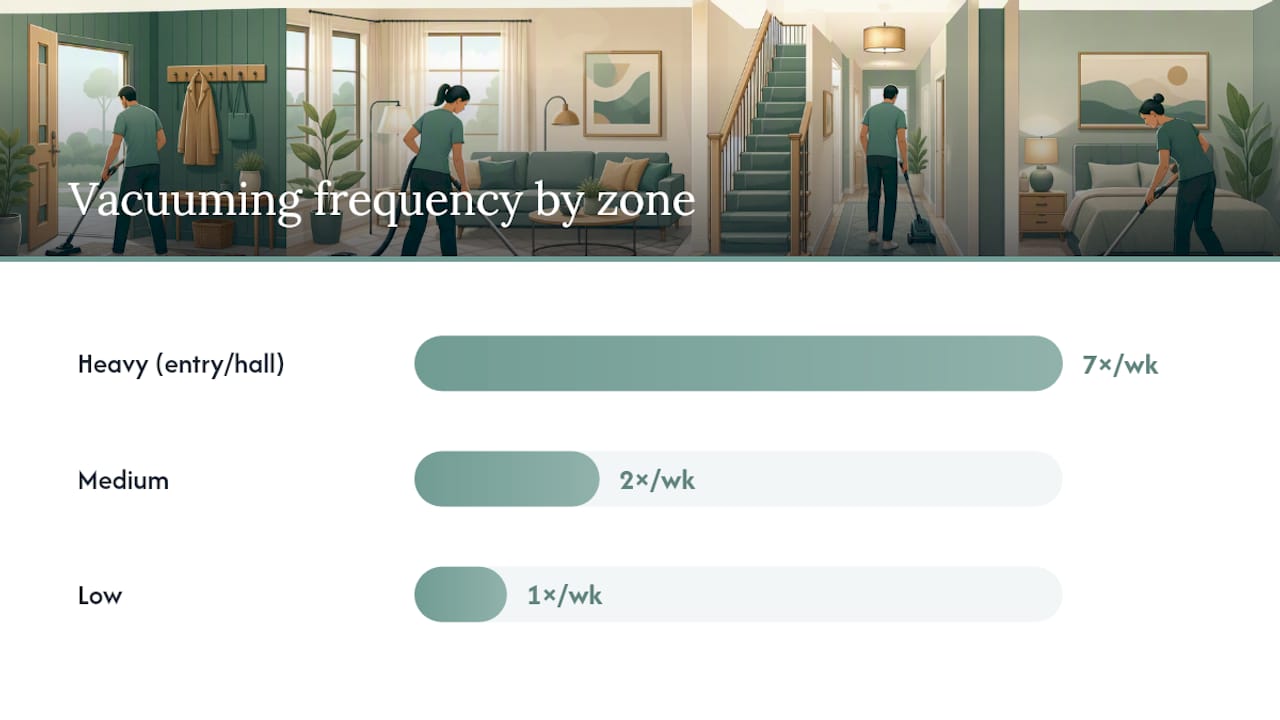
Look for a vacuum with adjustable brush height, strong suction, and a HEPA filter if allergies are a concern in your house. SOA-certified vacuums have been tested to pull soil without grinding it deeper into the pile, which matters a lot more than horsepower alone.
Technique matters as much as the machine. Use slow, overlapping passes, work your edges where a stick vacuum or crevice tool reaches better than the main head, and use a pile lifter periodically to stand crushed fibers back up before they set permanently.
Pro Tip: Vacuum in two directions, once with the grain and once against it. That cross pattern lifts embedded grit a single-direction pass leaves behind.
How Do You Treat Spots and Stains Without Making Them Worse?
Scrubbing feels productive. It’s actually the fastest way to push a stain deeper into the backing and fray the fibers around it. CRI’s residential carpet maintenance standard is blunt about this: blot, don’t scrub.
- Blot immediately with a dry white cloth, working from the outside edge of the spill toward the center so you’re not spreading it wider.
- Test any cleaning solution on a hidden patch of carpet first. Some solvents and heat can set a stain permanently instead of lifting it.
- Rinse with plain water once the spot lifts, and blot again until the area is barely damp.
- If the stain reappears after it dries, or heat from a hair dryer or heater has already baked it in, stop DIY and get professional eyes on it.
Coffee, wine, and pet accidents each behave a little differently. If coffee is your problem, speed matters more than the product you grab.
How Often Should You Deep Clean High Traffic Carpet, and When Do You Need a Pro?
CRI recommends professional hot-water extraction every 6 to 12 months for high-traffic areas. Pets, kids, or a household that tracks in a lot of yard dirt push that number toward the 6-month end.
Vacuuming pulls surface debris. Hot-water extraction reaches embedded soil, dust mite allergens, and old residues sitting down near the carpet backing that no rental machine or upright vacuum gets to. A real professional visit typically includes:
- A thorough pre-vacuum pass
- Pre-treatment sprayed directly onto traffic lanes
- Hot-water extraction and rinse cycles
- Multiple dry passes to pull out excess moisture
- Furniture protection and a 6 to 12 hour drying window before anything gets moved back into place
If your carpet is still soaked well past that window, something went wrong with the drying process and it’s worth a follow-up call.
What’s the Right Way to Handle Interim Cleaning Between Deep Cleans?
Interim, low-moisture cleaning fills the gap between vacuuming and a full deep clean. CRI’s commercial maintenance standard suggests monthly interim cleaning for severe-traffic areas and quarterly for heavy-traffic zones, which translates well to a busy household entryway.
Renting an extractor for interim cleaning works, if you follow the process:
- Vacuum thoroughly first, always.
- Follow the dilution ratio on the bottle exactly. Don’t eyeball it.
- Do one wet pass, then several dry passes to pull moisture back out.
- Open a window or run a fan, and give it 6 to 12 hours to dry fully.
Here’s where most rental jobs go wrong: over-diluting or under-rinsing detergent leaves a sticky residue that actually attracts more dirt, so your “clean” carpet resoils faster than before you rented the machine.
What Actually Prevents Traffic Lane Wear Before It Starts?
Every bit of soil you keep off the carpet is soil you never have to clean out later. CRI’s own home maintenance guidance treats matting and a shoes-off habit as core to any real maintenance plan, not an optional extra.
- Put a scraper mat outside every entry door and an absorbent mat just inside it.
- Ask family and guests to leave shoes at the door. It sounds simple because it is.
- Change your HVAC filter regularly. Settled dust from your air system lands right back on the carpet.
- Lay a runner or area rug over your worst traffic lane, and rotate it occasionally so wear spreads evenly.
- Add felt pads under furniture legs to stop pile crush where couches and chairs sit.
Pro Tip: Darker, patterned carpet in high-traffic hallways hides soil far longer than light, solid berber. If you’re replacing carpet in a heavy path anyway, factor that into the color choice.
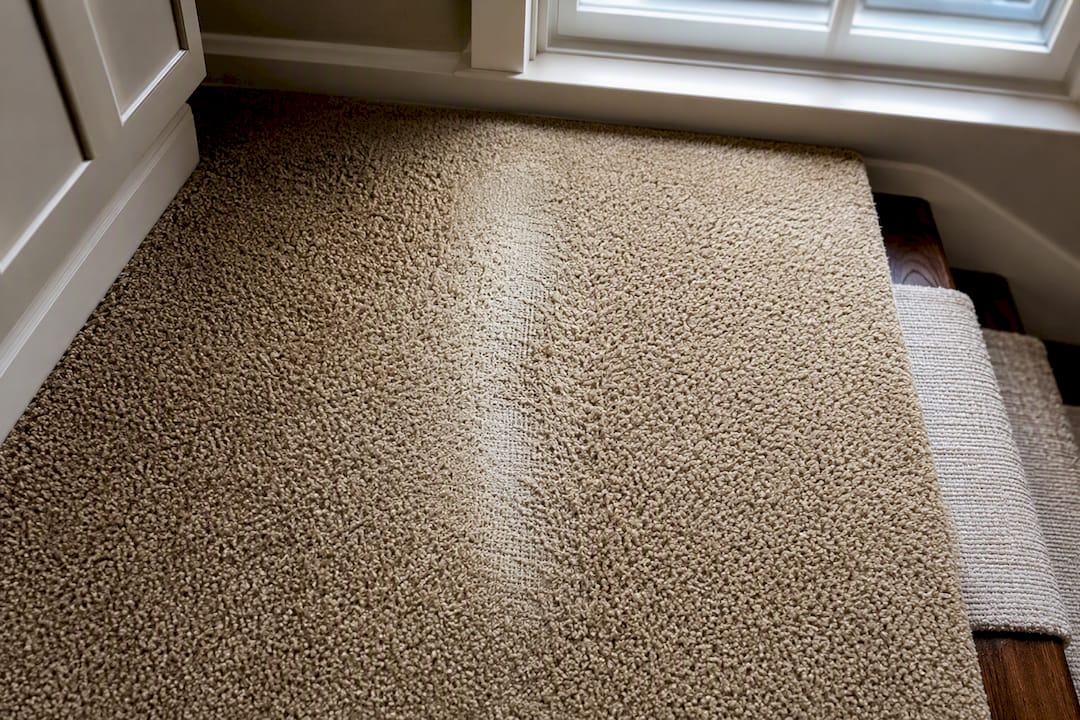
Once pile is permanently crushed flat or backing shows through worn fibers, no amount of cleaning brings it back. That’s a replacement conversation, not a cleaning one.
When Does DIY Stop Working and a Professional Make Sense?
Daily vacuuming and careful spot treatment handle the day-to-day grind. What they can’t touch is soil and residue that have worked their way down past the pile and into the backing, which is exactly where odors, allergens, and dingy traffic lanes live.
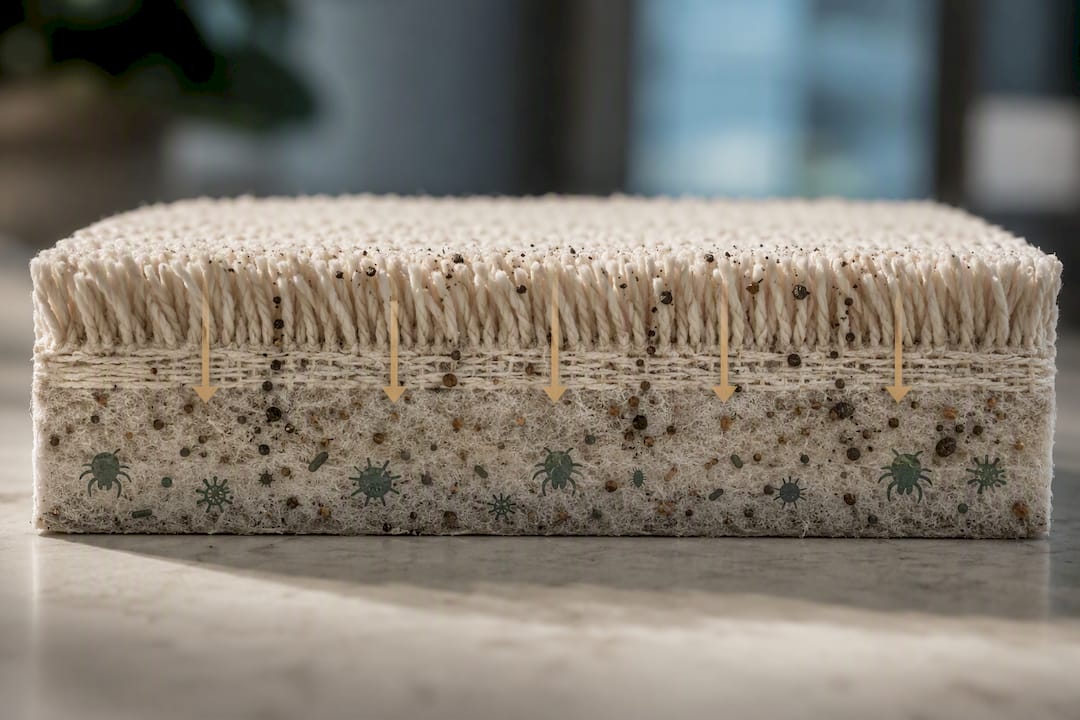
Professional hot-water extraction, using SOA-friendly solutions, pulls that embedded material out and controls drying so residue doesn’t just settle back in. A trained technician also knows how to protect furniture, manage drying airflow, and treat a stubborn stain without setting it permanently, something a rental machine and a Saturday afternoon rarely match.
Watch for these signals that it’s time to stop DIY-ing:
- Odors that vacuuming doesn’t touch
- Stains that reappear days after you thought you got them out
- Traffic lanes that stay visibly dingy no matter how often you vacuum
- It’s been over a year since your last professional deep clean
If you’re weighing hiring a pro against doing it yourself, those four signs are the tiebreaker.
What I’d Prioritize First If I Only Had Time for One Thing
If you take one thing from all of this, make it vacuuming frequency. Homeowners obsess over stain removal and rental extractor technique, but a hallway vacuumed daily needs far less rescue work than one vacuumed “when I remember.” Prevention is cheaper than repair, in carpet and in most everything else.
The conventional advice oversells DIY extraction as a full substitute for professional cleaning. It isn’t. A rental machine run correctly handles interim maintenance fine. It does not replicate the extraction power, controlled drying, or residue-free rinse a real hot-water system delivers, and CRI’s own standards draw that line clearly.
So prioritize in this order: stop soil at the door with mats and a shoes-off habit, vacuum your traffic lanes daily, blot spills the second they happen, and put a professional deep clean on the calendar every 6 to 12 months instead of waiting until the carpet looks bad. Waiting for visible damage means you’re already behind.
— chris
Ready for a Deep Clean That Actually Finishes the Job?
Vacuuming and blotting keep traffic lanes from getting worse. They can’t pull out the embedded soil and allergens sitting deep in the backing after months of foot traffic, that’s a job for real hot-water extraction. Professional deep steam cleaning removes dirt, allergens, and odors from carpets without leaving the sticky residue that DIY rental machines are famous for.
For homeowners who don’t want to think about scheduling every six months, a subscription cleaning plan can handle that timing automatically, so your traffic lanes get professional attention on the CRI-recommended cycle without you having to remember to book it. Pair that with upholstery, mattress, or air duct cleaning in the same visit to cover more of the house in one trip.
If your entryway or hallway is overdue, check availability for carpet cleaning near 13th and Greenwich and get your traffic lanes back to looking like the rest of the room.
Sources
- Cleaning and maintenance — Carpet & Rug Institute
- How to properly care for your carpets — Multi-Clean
FAQ
What is the best way to clean a heavy traffic area on my carpet?
Vacuum it daily with overlapping passes, blot spills immediately instead of scrubbing, and schedule professional hot-water extraction every 6 to 12 months, per CRI guidance.
What is the average price to clean a carpet?
Pricing varies by home size, soil level, and service type, so it’s not publicly listed as one flat number; request a quote from a local provider like Home Service Simple for your specific space.
What is the best carpet cleaner for heavy traffic areas?
Look for a vacuum or extractor carrying the CRI Seal of Approval, since those products are tested to remove soil effectively without damaging fibers or leaving residue.
Which is better, Stanley Steemer or Chem Dry?
Both are national franchise brands using different cleaning methods; rather than comparing chains, focus on whether a provider uses SOA-certified equipment and follows CRI’s extraction and drying standards, which matter more to your results than the name on the truck.
How do I know when DIY carpet cleaning isn’t enough anymore?
Persistent odors, stains that reappear after cleaning, and traffic lanes that stay dingy despite regular vacuuming are all signs embedded soil has outgrown what a rental extractor or vacuum can fix on its own.