

Steam carpet cleaning is a catchall term most folks use to mean hot water extraction: injecting hot water and cleaning solution deep into carpet fibers, then pulling it back out with strong suction. If you’ve got pet stains, heavy foot traffic, or carpets that haven’t been touched in a year or more, hire a pro with real extraction equipment. If you’re spot-treating a juice spill or a small rug, a rental or portable steamer will get you by.
- True steam cleaners release vapor and don’t extract water
- Professional extraction typically dries in 6 to 12 hours
- Professional service usually costs a moderate price per room
Key Takeaways
Hot water extraction removes embedded soil and allergens that vacuuming leaves behind, while DIY steam devices only sanitize the surface without extracting moisture.
| Point | Details |
|---|---|
| Steam vs. extraction | True steam cleaners sanitize but don’t extract water; extraction machines pull moisture and soil back out. |
| Clean every 12 to 18 months | This frequency protects carpet warranties and extends fiber lifespan. |
| Watch dry time | Professional extraction usually dries in 6 to 12 hours; poor equipment or humidity can stretch that much longer. |
| Budget $40 to $90+ per room | Add-ons like pet treatment, deodorizing, and protector raise the total. |
| Hire for heavy jobs | Home Service Simple’s hot water extraction and Simple Club plan suit pet stains, high traffic, and recurring care. |
Table of Contents
- What’s the Difference Between Steam Cleaning and Hot Water Extraction?
- What Does Hot Water Extraction Actually Remove?
- What Are the Disadvantages of Steam Carpet Cleaning?
- Should You Rent a Machine or Hire a Professional?
- How Much Does Professional Steam Carpet Cleaning Cost?
- How Do I Choose a Professional Carpet Cleaner?
- Which Carpet Types Are Safe for Hot Water Extraction?
- How Home Service Simple Handles Deep Steam Cleaning
- What the Research Actually Tells You About Steam Cleaning
- Ready for a Deep Clean Without the Guesswork?
- Sources
- FAQ
What’s the Difference Between Steam Cleaning and Hot Water Extraction?
Here’s where things get muddled. A portable steam cleaner shoots out hot vapor that sanitizes surfaces on contact, but it has no suction to pull dirty water back out. It’s great on tile grout or countertops. On carpet, it leaves moisture and grime behind because only true extractors inject and remove water.
What pros call “steam cleaning” is almost always hot water extraction:
- Heated water and cleaning solution get sprayed into the carpet fibers under pressure.
- A powerful vacuum immediately pulls the dirty solution back out, along with the grit it loosened.
- Steam cleaners sanitize but don’t extract, while carpet cleaners spray and pull the water back out for a deeper clean and faster dry time.
Truck-mounted units bring far more heat and suction than portable machines, which shows up directly in how fast your carpet dries and how deep the clean actually goes.
What Does Hot Water Extraction Actually Remove?
Vacuuming skims the surface. Hot water extraction reaches the grit that’s been ground into the backing for months, along with dust mite debris, pollen, and pet dander that a regular vacuum simply can’t reach.
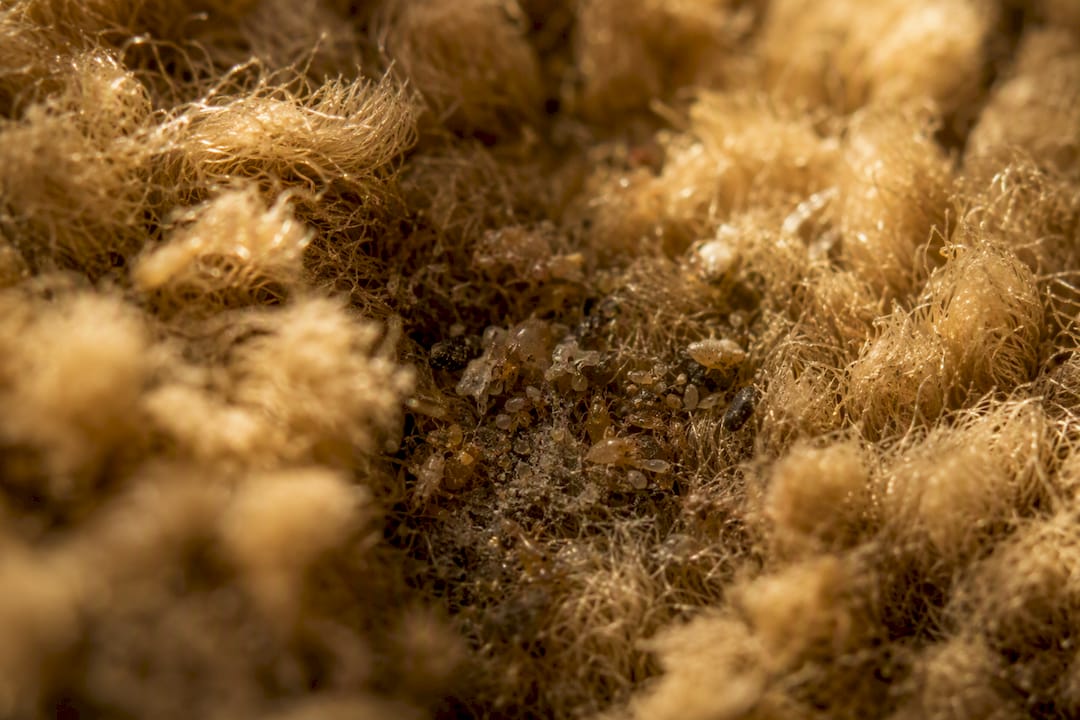
The heat matters here, too. It doesn’t sterilize a carpet, but it does help knock down surface bacteria and odor-causing residue, which is a real plus for anyone dealing with allergies or a home with pets. Combine that with the physical removal of allergens, and indoor air quality tends to improve noticeably after a deep clean.
There’s a maintenance angle most homeowners miss:
- Warranty compliance: many carpet manufacturers require documented professional cleaning to keep warranties valid.
- Fiber lifespan: trapped grit acts like sandpaper on carpet fibers every time you walk on them.
- Odor control: deep cleaning pulls out the source of smells, not just the surface smell.
Statistic to know: carpet manufacturers commonly recommend professional hot water extraction every 12 to 18 months to protect both warranty coverage and the carpet’s usable lifespan. Skip that window for a few years and you’re not just risking stains. You’re risking the fibers themselves.
What Are the Disadvantages of Steam Carpet Cleaning?
Nothing about this process is risk-free if it’s done poorly, and this is exactly where most DIY jobs go sideways.
Drying time is the biggest complaint. Hot water extraction typically dries within hours, not days, when the equipment has enough suction to recover most of the moisture, but a weak machine or humid weather can stretch that to 24 hours or more. Longer drying windows raise the odds of mold, musty odors, and wicking, which happens when moisture trapped deep in the padding travels back up and re-stains the surface days later.
Other risks worth knowing about:
- Over-wetting can weaken carpet backing and cause it to separate from the padding underneath.
- Poor rinsing leaves detergent residue, which actually attracts more dirt and speeds up re-soiling.
- Aggressive heat can shrink or discolor delicate natural fibers if the technician doesn’t adjust settings.
A skilled technician with strong extraction equipment prevents nearly all of these problems by controlling how much water goes in and making sure nearly all of it comes back out.
Pro Tip: Ask whether the company uses a pH-neutral rinse pass after the main cleaning solution. That extra step is what keeps carpets from feeling sticky or re-soiling within weeks.
Should You Rent a Machine or Hire a Professional?
Rental machines and professional equipment are not the same tool wearing different labels. A grocery-store rental unit runs on household water pressure and a small motor, while a professional truck-mount system generates far more heat and suction, which changes both the depth of the clean and how fast your carpet dries.
Here’s a practical way to think through it:
- Go DIY when: you’re spot-cleaning a single room, working within a tight budget, or dealing with light traffic and no pet issues.
- Hire a pro when: you’ve got heavy traffic zones, pet odor, allergy concerns, delicate fibers, or you need documentation for a carpet warranty.
- If you rent, follow this order: vacuum thoroughly first, test your cleaning solution on a hidden corner, work in slow overlapping passes, run a dry pass afterward to pull out extra moisture, then open windows or run fans to speed drying.
- Finish with grooming: rake the carpet pile once it’s dry to prevent matting and help it look uniform again.
Rental machines can handle a stain here or there. They’re not built to replace a full annual deep clean, especially in high-traffic homes.
How Much Does Professional Steam Carpet Cleaning Cost?
Pricing varies more than people expect, mostly because of equipment type, carpet condition, and how many extras get added to the ticket.
Typical professional hot water extraction runs $40 to $90 or more per room, or roughly $0.20 to $0.50 per square foot depending on your region and the company’s pricing model.
Common add-ons that change your final quote:
- Pet stain and odor treatment
- Heavy soil or traffic-lane pretreatment
- Deodorizing after the main clean
- Carpet protector application post-cleaning
Most companies price by the room, by the square foot, or occasionally by the hour, and add-ons like stain removal or protector typically carry their own line-item cost. Truck-mounted service tends to cost a bit more than portable units, but it usually cleans faster and dries quicker, which can offset the price difference when you factor in your own time and hassle.
How Do I Choose a Professional Carpet Cleaner?
A five-minute phone call tells you almost everything you need to know before booking.
- Ask about certification. IICRC-trained technicians follow documented standards for water temperature, dwell time, and extraction. A company that can’t answer this clearly is a red flag.
- Ask specifically about equipment. Don’t accept “we do steam cleaning” as an answer. Ask whether they use truck-mounted or portable hot water extraction, and ask about suction power.
- Ask about dry time and rinse method. A pH-neutral rinse pass and realistic dry-time estimate (hours, not “totally dry when we leave”) signal a company that knows what it’s doing.
- Ask about insurance, bonding, and guarantees. Confirm coverage in case of damage, and ask what happens if you’re not satisfied with the result.
- Watch for red flags: vague answers about method, promises of instant dryness, or heavy upselling of treatments you didn’t ask for.
Which Carpet Types Are Safe for Hot Water Extraction?
Not every carpet handles heat and moisture the same way, and this is where a rushed DIY job can turn expensive.
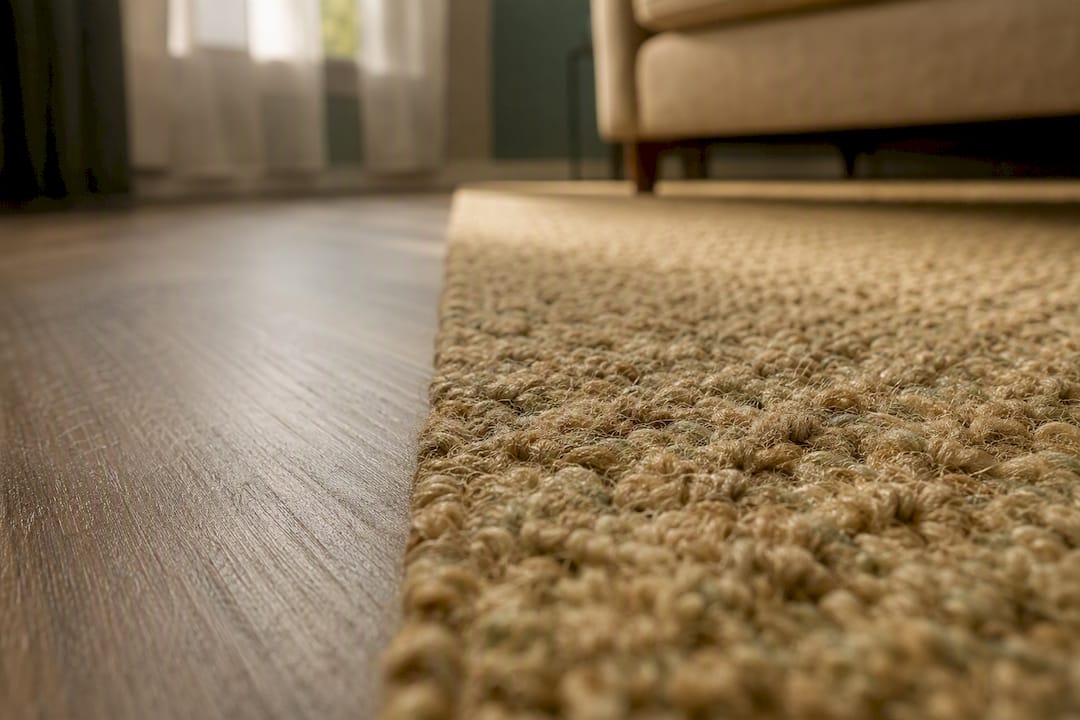
Wool and other natural fibers carry more risk of shrinkage, dye bleeding, or delamination from excess heat. Checking manufacturer instructions before cleaning is critical for these fibers, and a specialist familiar with wool is often worth the extra cost.
Synthetic carpets like nylon and polyester generally tolerate hot water extraction well, though it’s still smart to confirm manufacturer guidance before a full clean.
Area rugs and delicate pieces often do better off the floor entirely, cleaned by a specialist with controlled equipment rather than treated in place with a standard carpet extractor.
How Home Service Simple Handles Deep Steam Cleaning
Home Service Simple runs hot water extraction with equipment tuned to pull moisture back out fast, which is exactly what prevents the sticky residue and slow dry times that give carpet cleaning a bad reputation. The Simple Club subscription keeps carpets on a consistent schedule so grit never gets the chance to build up between visits.
Before a visit, customers help the process along:
- Clear small furniture and clutter from the areas being cleaned
- Point out specific stains or pet accidents ahead of time
- Vacuum lightly if there’s loose debris on the surface
Pro Tip: Flag pet stains before the crew arrives. Pretreating those spots separately gets far better odor results than treating the whole room the same way.
What the Research Actually Tells You About Steam Cleaning
The “steam cleaning” label has done homeowners a disservice for years. People picture a handheld device blasting vapor onto a stain and assume that’s a deep clean, when the real workhorse is extraction, plain water pressure paired with strong suction. That confusion is why so many DIY jobs end in disappointment: a re-soiled carpet within weeks, a musty smell that wasn’t there before, or a patch that never quite dried right.
What gets underestimated is how much equipment quality matters versus technique. A determined renter with a weak machine can follow every recommended step and still end up with a carpet that stays damp for a day and a half. That’s not a user error. That’s a suction problem.
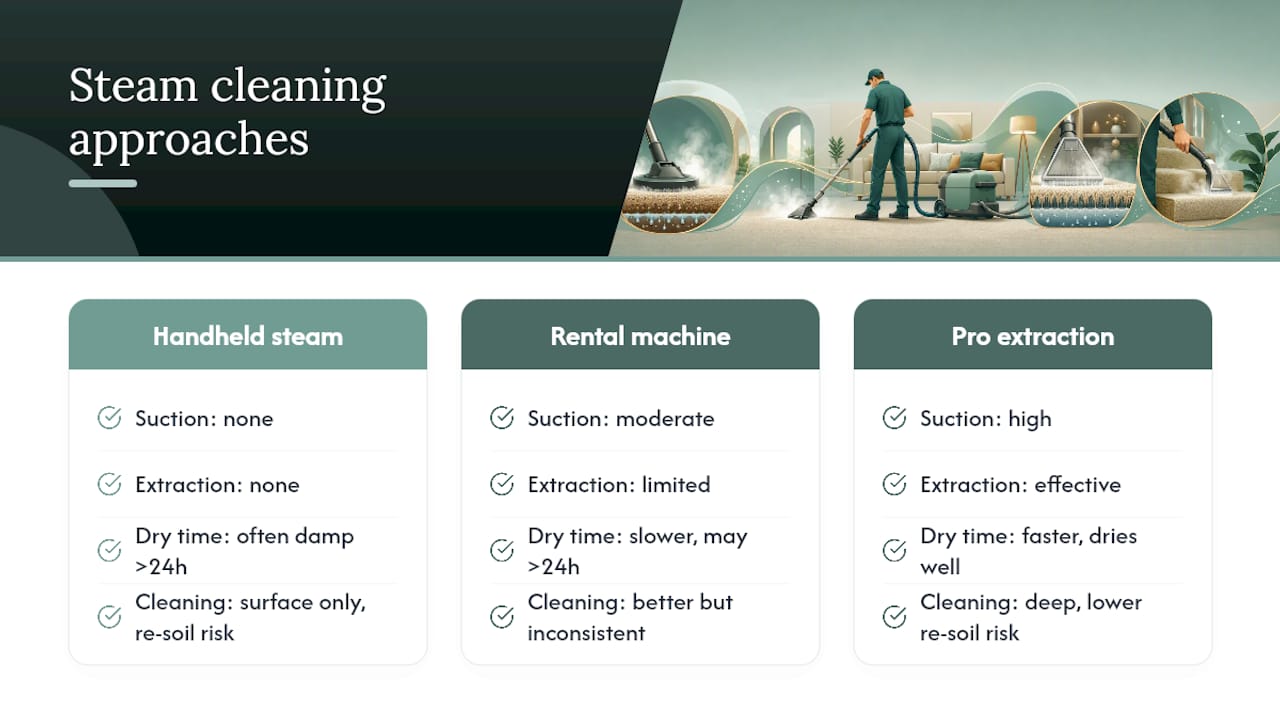
If there’s one thing to prioritize, it’s asking about extraction power and dry time before you book anyone or rent anything. Skip the marketing language entirely. A company that answers those two questions clearly is one you can trust with the rest of the job.
Ready for a Deep Clean Without the Guesswork?
Renting a machine means hauling it home, guessing at the right solution, and hoping your dry-time math works out before mold becomes a problem. Home Service Simple skips all of that: professional hot water extraction with equipment built to pull moisture back out fast, so your carpets dry in hours instead of days and never feel sticky afterward.
For homes with pets, kids, or carpets that haven’t seen a deep clean in over a year, that difference in equipment is exactly what separates a clean floor from a re-soiled one two weeks later. The Simple Club subscription plan takes scheduling off your plate entirely, so regular deep cleaning happens automatically instead of becoming another thing you have to remember. Check customer reviews and book a cleaning to see current availability in your area.
Sources
Method differences, pricing, and fiber safety guidance above draw from Airtasker’s equipment comparison, Tom’s Guide’s steam vs. extraction breakdown, HomeGuide’s cost data, Housecall Pro’s pricing models, and HGTV’s carpet fiber guide. Visit Home Service Simple for local service details.
- Steam cleaner vs carpet cleaner: which should you buy? — Airtasker
- Steam cleaner vs. carpet cleaner: Which should you buy? | Tom’s Guide
- Carpet cleaning prices | HomeGuide
- Carpet cleaning prices | Housecall Pro
- Your guide to the different types of carpet — HGTV
FAQ
Is It Worth Steam Cleaning a Carpet?
Yes, for most homes: professional hot water extraction removes embedded soil and allergens that regular vacuuming can’t reach, and manufacturers commonly recommend it every 12 to 18 months to protect carpet warranties.
Do Steam Cleaners Work Well on Carpet?
Handheld steam devices sanitize surface bacteria but don’t extract water, so they leave behind moisture and loosened dirt. Hot water extraction machines, what most companies mean by “steam cleaning,” inject and remove water for a genuinely deep clean.
What Are the Disadvantages of Steam Carpet Cleaning?
The main risks are long dry times, over-wetting that can damage carpet backing, and leftover detergent residue if the rinse pass is weak. Choosing a technician with strong extraction equipment and a pH-neutral rinse avoids most of these issues.
How Much Does Professional Steam Cleaning Usually Cost?
Professional hot water extraction typically runs $40 to $90 or more per room, or about $0.20 to $0.50 per square foot, depending on your region and any add-ons like pet treatment or deodorizing. Home Service Simple’s pricing reflects room condition and requested extras, so ask for a specific quote before booking.