

Freeze the gum solid, then chip and lift it. That’s the safest first step for almost every carpet, and it works because cold turns sticky gum brittle instead of stretchy. Skip straight to a professional if you’ve got wool, an antique rug, tight Berber loops, or a wad the size of a golf ball ground deep into the pile. For everything else in between, ice and a little patience beat every bottle on the shelf.
TL;DR:
- Freezing gum with ice tends to be the most effective method for removal, especially before it bonds deeply into the fibers.
- WD-40, peanut butter, and citrus-based removers can loosen gum but require thorough cleaning afterward to prevent dirt accumulation.
- Heat from a hair dryer is suitable only for shallow, low-pile carpets and can worsen the problem in high-pile or synthetic materials.
- Scraping tools should be blunt and used at a shallow angle to avoid damaging delicate or looped fibers, with vacuuming between passes.
- Professional assistance is recommended for antique, wool, or deeply ground-in gum, or if multiple household methods have failed to prevent fiber damage.
Table of Contents
- How Do You Get Gum Out of Carpet?
- Does WD-40 Get Gum Out of Carpet?
- Can You Use a Hair Dryer to Get Gum Out of Carpet?
- What Tools Should You Use to Scrape Gum Out of Carpet?
- How Do You Clean Up Sticky Residue After Removing Gum?
- When Should You Call a Professional for Gum Removal?
- What Wichita Parents Get Wrong About Gum in Carpet
- Why Hire a Pro for the Gum Your Freezer Couldn’t Beat
- Sources
- FAQ
How Do You Get Gum Out of Carpet?
If you’ve ever peeled a kid’s shoe off the driveway after a Little League double header, you already know gum doesn’t come off warm. It smears. It stretches. It grabs three more fibers on the way. The trick is temperature, not muscle.
Gum is basically a polymer, and polymers get stiff and crackable when they’re cold. Freeze it hard enough and it stops behaving like taffy and starts behaving like a Jolly Rancher left in the truck overnight. That’s your opening.
What you’ll need:
- Ice cubes in a sealed zip-top bag (a gel pack works too)
- A dull plastic scraper, an old spoon, or a butter knife
- A shop vacuum or regular vacuum with a hose attachment
- A compressed-air duster, held upside down
Step-by-step:
- Press the ice bag directly onto the gum and hold it there until the gum becomes hard and brittle enough to crack and lift cleanly. Ice held that long typically hardens gum enough to crack and lift cleanly.
- Tap the gum with your fingernail or the scraper. If it cracks like peanut brittle, you’re ready. If it dents like Play-Doh, give it another five minutes.
- Chip the gum away in small pieces, working from the outer edge toward the center. Don’t dig straight down into the pile.
- Vacuum the fragments immediately so they don’t get stepped on and reground into the fibers.
- Still got a stubborn patch? Refreeze and repeat. Old, ground-in gum from a stroller wheel or a dropped piece that’s been walked on for a week sometimes needs two or three rounds.
Got Berber or a loop-pile carpet in the mudroom? Chip sideways, never straight up. Pulling a frozen chunk upward can snag and unravel a loop, which turns a small gum spot into a visible pull line that’s harder to fix than the original mess. A compressed-air duster turned upside down also sprays a freezing mist, which is handy if the gum is somewhere an ice bag won’t sit still, like a stair edge.
Does WD-40 Get Gum Out of Carpet?
WD-40 does loosen gum, and so do peanut butter and citrus-based gum removers. All three work on the same basic idea: oils break down the gum’s grip on the fibers so it slides free instead of clinging.
Here’s the catch nobody mentions on the can. WD-40 loosens gum reliably, but it leaves an oily film that pulls dirt straight to it if you don’t clean it out afterward. Skip the follow-up rinse and that greasy circle turns into a magnet for every crumb and dust bunny in the house within a week.
- WD-40: fast-acting, but always needs a detergent rinse after.
- Peanut butter: gentler and food-safe around toddlers, though slower to work.
- Citrus gum removers: break down gum’s polymer structure chemically, but should be spot-tested first on colored or delicate carpet.
Apply any of these sparingly with a cloth, dab rather than rub, and let it sit two or three minutes before you lift the softened gum with your scraper. Blot the area afterward instead of scrubbing, since scrubbing just drives the loosened gum and oil deeper into the backing.
Pro Tip: Test any lubricant on a hidden corner of carpet first, especially wool. Wool dyes can react to citrus oils and WD-40 in ways synthetic fibers never will, and you won’t know until you see a faded patch where the gum used to be.
Can You Use a Hair Dryer to Get Gum Out of Carpet?
Heat has a narrow use case. It works on shallow, low-pile carpet where the gum sits mostly on top of the fibers instead of buried between them. On anything plush or synthetic with deep pile, heat is more likely to melt the gum further into the backing than lift it out.
If your carpet qualifies, here’s the sequence:
- Set a hair dryer to low heat and hold it four to six inches from the gum for 20 to 30 seconds.
- Press a brown paper bag or a clean cloth directly onto the softened gum.
- Lift the paper away. Warm gum often transfers onto it instead of staying in the carpet.
- Use a plastic scraper to nudge any leftover bits, then vacuum the area.
A hair dryer paired with a paper bag can pull softened gum off low-pile carpet when you work gently, but this is one method where more heat is not better. Push it too far on a thick or high-pile rug and you’ll spread melted gum across a wider patch of fiber than you started with, turning a coin-sized problem into a saucer-sized one.
What Tools Should You Use to Scrape Gum Out of Carpet?
Stick to blunt, plastic-edged tools. A dull butter knife, an old credit card, a plastic scraper, or even a spoon all do the job without slicing fibers. Tweezers help pick out the last stubborn crumbs once the bulk of the gum is gone.
- Scrape at a shallow angle, almost flat against the carpet, not straight down.
- Work from the outside edge of the gum toward the middle.
- Chip in small pieces. Never grab and pull, even when the gum feels loose.
- Vacuum between passes so loose bits don’t get pressed back into the pile.
Cutting the pile with scissors should be your last resort, and honestly, it rarely helps. Trimming fibers usually leaves a visible bald patch that stands out more than the original gum ever did. Before you reach for scissors, ask yourself: has the gum stopped responding to freezing and lubricants entirely? If yes, that’s your cue to call a pro instead of reaching for the shears.
How Do You Clean Up Sticky Residue After Removing Gum?
Once the gum itself is gone, you’re usually left with a faint sticky patch and maybe an oily ring if you used WD-40 or peanut butter. This part matters more than people expect. Skip it, and dirt starts collecting on that spot within days.
Mix one teaspoon of dish soap into one cup of warm water. Dip a clean cloth in the solution and blot the sticky area, working from the outside in. Never pour liquid directly onto carpet and never scrub in circles, since that spreads the residue wider instead of lifting it.
- Mild detergent solution: the go-to for everyday oily or sticky leftovers.
- Rubbing alcohol: effective on stubborn residue, but always spot-test on a hidden corner first.
- Citrus-based spot remover: works similarly to alcohol, gentler on some synthetic fibers.
- Hydrogen peroxide (3%): can lift the last of a stain, but it can also strip dye from carpet fibers, so test it first on an inconspicuous patch before treating the visible spot.
Blot dry with a towel, then let the area air dry completely before anyone walks on it. Damp carpet fibers attract dirt fast, so a fan or open window speeds things along. Once it’s dry, vacuum the spot to fluff the pile back up. Fully dried carpet resists re-soiling; carpet left even slightly damp becomes a dirt trap within hours.
When Should You Call a Professional for Gum Removal?
Some situations just aren’t worth the gamble. Antique rugs, silk, and wool carpets react unpredictably to solvents and heat, and a mistake there isn’t a $9 mistake. It’s a “this rug was your grandmother’s” mistake.
Call a professional when you’re dealing with:
- Wool, silk, or antique carpet and rugs
- A large or deeply ground-in wad that’s been walked on for days
- A spot where you’ve already tried WD-40, then rubbing alcohol, then peroxide, and now there’s a residue you can’t identify
- Any carpet where pulling warm gum has already stretched or matted the fibers
That last one deserves a callout, because layering multiple household chemicals on the same spot often creates a residue that’s harder to flush out than the original gum, and it can leave a full professional extraction as the only real fix.
Professionals bring industrial extraction equipment and fiber-safe solvents that flush dissolved gum and residue straight out of the carpet backing, something a spray bottle and elbow grease can’t match. Have the spot easy to point to, know roughly how long the gum has been there, and mention any DIY products you’ve already tried before the crew arrives.
What Wichita Parents Get Wrong About Gum in Carpet
I’ve talked to enough carpet-cleaning crews around Wichita to know the number one mistake isn’t picking the wrong method. It’s timing. People wait. They notice the gum on a Tuesday, mean to deal with it, and by Saturday it’s been walked over forty times and pressed halfway into the pad.
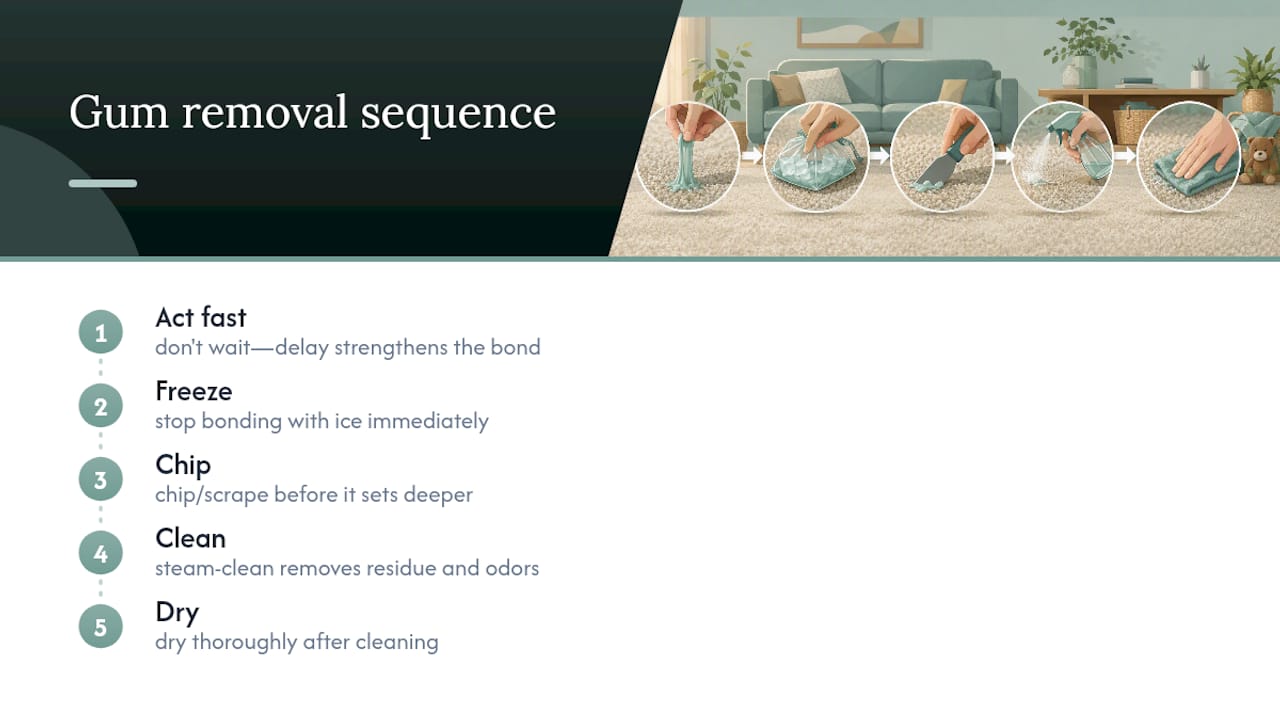
Cold works because gum hasn’t had time to bond with the fibers yet. Every day you wait, that bond gets stronger and the freeze-and-scrape method gets less reliable. The rule I’d tattoo on every parent’s ice tray: freeze, chip, clean, dry. In that order, every time.
Home Service Simple has built its business around the same philosophy that runs through this whole guide: fix it right the first time, without leaving behind more mess than you started with. Its deep steam cleaning removes dirt, allergens, and odors without any sticky residue left behind, and its Simple Club subscription model means your carpets get consistent attention instead of a scramble every time a kid drops a gum wad on the way to the couch. The company’s upholstery, air duct, and mattress cleaning services run on that same satisfaction-guarantee standard.
— chris
Why Hire a Pro for the Gum Your Freezer Couldn’t Beat
Home Service Simple picks up exactly where the ice bag leaves off. When a wad has been ground into Berber loops or worked its way past the pile into wool backing, DIY solvents and scraping only push the problem around. A trained crew inspects the spot, uses fiber-safe solvents matched to your carpet type, and finishes with deep steam extraction strong enough to pull residue out of the padding, not just the surface.
If you’re already a Simple Club member, gum removal on a stubborn spot is exactly the kind of thing that subscription covers without another round of scheduling calls. If you’re not, one visit still comes backed by the same satisfaction guarantee. Have the spot marked, note how long it’s been there, and mention anything you’ve already tried, WD-40, peroxide, a hair dryer, so the crew knows what they’re working with. Book a carpet cleaning appointment near 13th and Greenwich in Wichita and let a professional finish what the freezer started.
Sources
- How to Get Gum Out of Carpet Using Simple Household Methods
- How To Get Gum Out Of Carpet Quickly And Safely At Home Now
- How to get gum out of carpet – Stain Removal
FAQ
How do I get chewing gum out of a carpet?
Hold a sealed bag of ice on the gum for 10 to 15 minutes until it hardens, then chip it away in small pieces with a dull plastic scraper and vacuum the fragments. Refreeze and repeat if any gum remains.
Will Goo Gone get gum out of carpet?
Citrus-based removers like Goo Gone can break down gum’s polymer structure and loosen it from carpet fibers, but always spot-test first and follow up with a mild detergent rinse to remove the leftover residue.
Does WD-40 get gum out of carpet?
Yes, WD-40 loosens gum effectively, but it leaves an oily film that attracts dirt unless you clean the spot afterward with warm water and dish soap.
What can I use to remove gum from my carpet?
Ice is the safest first choice, followed by lubricants like WD-40, peanut butter, or citrus gum removers if freezing alone doesn’t fully release it. For wool, antique, or deeply embedded gum, a professional service like Home Service Simple can extract it without risking the fibers.
Can heat damage carpet when removing gum?
Yes, on high-pile or synthetic carpet, heat from a hair dryer can melt gum deeper into the fibers instead of lifting it out. Heat transfer works best only on shallow, low-pile carpet.