

Upholstery cleaning codes are short manufacturer instructions, usually a single letter or two, that tell you the safest spot-cleaning method for a fabric: W means water-based cleaners only, S means solvent-based only, WS (or W/S) means either, and X means vacuum only. Occasionally a D code indicates dry-cleaning. Whatever the letter, pretest first and never soak the fabric.
TL;DR:
- Upholstery cleaning codes indicate whether water-based cleaners (W), solvents (S), or light vacuuming (X) are safest, but they are voluntary and not guarantees.
- Most manufacturer tags are sewn under cushions or along frame seams, so locating the code requires checking these typical spots first.
- Proper spot cleaning depends on the code: foam only for W, solvent only for S, a combination for WS, and vacuuming for X; always pretest in a hidden area first.
- Avoid scrubbing spills; using gentle extraction methods and patience yields better results than aggressive rubbing, especially on older or fragile fabrics.
- Professional cleaning is advisable for set-in stains, overall soiling, or unfamiliar fabrics, as pros follow industry standards beyond simple spot treatments.
Table of Contents
- 1. What W, S, WS, X, and D codes actually mean
- 2. Where to find your couch’s cleaning code
- 3. Spot-cleaning steps for each code
- 4. Simple habits that keep fabric looking new
- 5. When a stain is bigger than a spot treatment
- 6. What years of couch calls have taught us
- 7. Let us handle the upholstery cleaning for you
- FAQ
- Sources
1. What W, S, WS, X, and D codes actually mean
These letters aren’t arbitrary. They’re shorthand for how a fabric reacts to water and solvents, so you don’t ruin a cushion trying to clean a juice stain.
- W means the fabric held up fine when tested with water-based cleaners, so foam or mild detergent suds work.
- S means water caused spotting, shrinking, or bleeding during testing, so only a solvent-based cleaner is safe.
- WS (sometimes written W/S) means the fabric passed both tests, giving you the choice of water or solvent.
- X means neither liquid passed, so vacuuming or light brushing is the only approved method.
- D or DC shows up less often and usually points toward professional dry-cleaning only.
Here’s the part a lot of homeowners miss: these codes are voluntary. The American Home Furnishings Alliance developed them as guidance for colorfastness, not a guarantee that your couch will come out looking brand new. A fabric can pass the W test and still react badly to a particular stain or an overzealous scrub. Think of the code as a warning label, not a promise.
Manufacturers are also bound by federal rules on what care tags must say. The FTC’s care-labeling regulation requires clear instructions on textile tags, which is part of why you’ll usually find a code stitched somewhere on the piece, even if it takes some hunting.
2. Where to find your couch’s cleaning code
Before you can follow a code, you have to find it. Furniture makers tuck these tags in a few predictable spots.
- Check under seat cushions first. Most labels are sewn to the underside or the zipper flap.
- Look along the frame seams on the back or bottom of the piece, especially near the legs.
- Check any hang tags still attached if the furniture is newer.
- If there’s no tag anywhere, examine the fabric itself: is it a pile weave like chenille, a flat woven cotton blend, or something closer to vinyl or leather? Each behaves differently.
- With no code and no clear fabric ID, run a hidden-area test. Pick a spot on the back or underside, dab a small amount of your chosen cleaner on a white cloth, press it to the fabric, wait a few minutes, then blot with a clean white tissue.
- Check the tissue and the fabric for color transfer, texture change, or puckering. If you see any of that, stop and treat the fabric as untestable without a pro.
3. Spot-cleaning steps for each code
Before you touch any code-specific method, the basics apply across the board: blot, don’t scrub, use white cloths so you can see if dye transfers, and work from the outside of the stain inward so you don’t spread it.
- W code: Whip a small amount of mild detergent with water into a stiff foam. Apply only the foam, not the liquid, with a soft brush or cloth, then blot dry. Extension guidance backs this foam-only approach because it limits how much moisture actually reaches the fabric backing.
- S code: Use a water-free solvent spotter made for upholstery, applied sparingly with a clean cloth. Work in a ventilated room since these solvents can be strong-smelling and flammable, and follow the product’s own directions.
- WS code: Start with the foam method since it’s gentler, and only move to solvent if the stain won’t budge.
- X code: Vacuum or brush only. No water, no solvent, period. These fabrics weren’t built to handle liquid, and even a small amount can leave a permanent ring or weaken the backing.
A fresh coffee spill on a W-coded sofa responds well to foam and a patient blot. Grease on an S-coded chair calls for solvent, applied in small amounts. Ink, though, is trickier on almost any code. Our ink-on-couch guide walks through safer approaches, but set-in ink is often a job for a professional.
Pro Tip: Keep a stack of plain white cloths just for upholstery spills. Colored or printed towels can transfer dye onto damp fabric.
4. Simple habits that keep fabric looking new
Most upholstery damage builds up slowly from dust, oils, and pet dander rather than one dramatic spill. A little routine care goes a long way.
- Vacuum upholstery weekly with a soft brush attachment to lift surface dust before it works into the weave.
- Rotate and flip cushions every few weeks so wear and sun fading spread evenly.
- Use washable arm covers or throws in high-contact spots like recliner arms and the backs of dining chairs.
- Keep pet beds and favorite napping spots groomed and brushed so less fur and dander end up embedded in the fibers.
- Don’t expect fabric protectant sprays to make upholstery stain-proof. Extension research notes these finishes only delay soiling, they don’t eliminate the need for regular care, and surface treatments in general change how a material handles spills rather than making it bulletproof.
5. When a stain is bigger than a spot treatment
Spot cleaning handles small, fresh accidents. Overall cleaning, the kind that treats the entire piece, calls for different tools and training. Professionals often follow the IICRC S300 standard, which covers testing and cleaning methods beyond what a spray bottle and a cloth can manage.
Call a pro when you’re dealing with:
- Set-in or old stains that didn’t respond to a first spot-cleaning attempt.
- Discoloration that showed up after you tried cleaning it yourself.
- Soiling across the whole cushion or seat, not just one spot.
- Fragile, aging, or unknown fabric backing you’re not confident testing.
When you do call, have the code, the fabric type, where the stain sits, and what you’ve already tried ready to share. It saves time and helps them pick the right method from the start.
6. What years of couch calls have taught us
We’ve cleaned enough upholstery in Wichita living rooms to know the most common mistake: scrubbing. People see a stain, grab a towel, and go to work on it like they’re buffing a car. That pushes the spill deeper into the padding and often sets it for good.
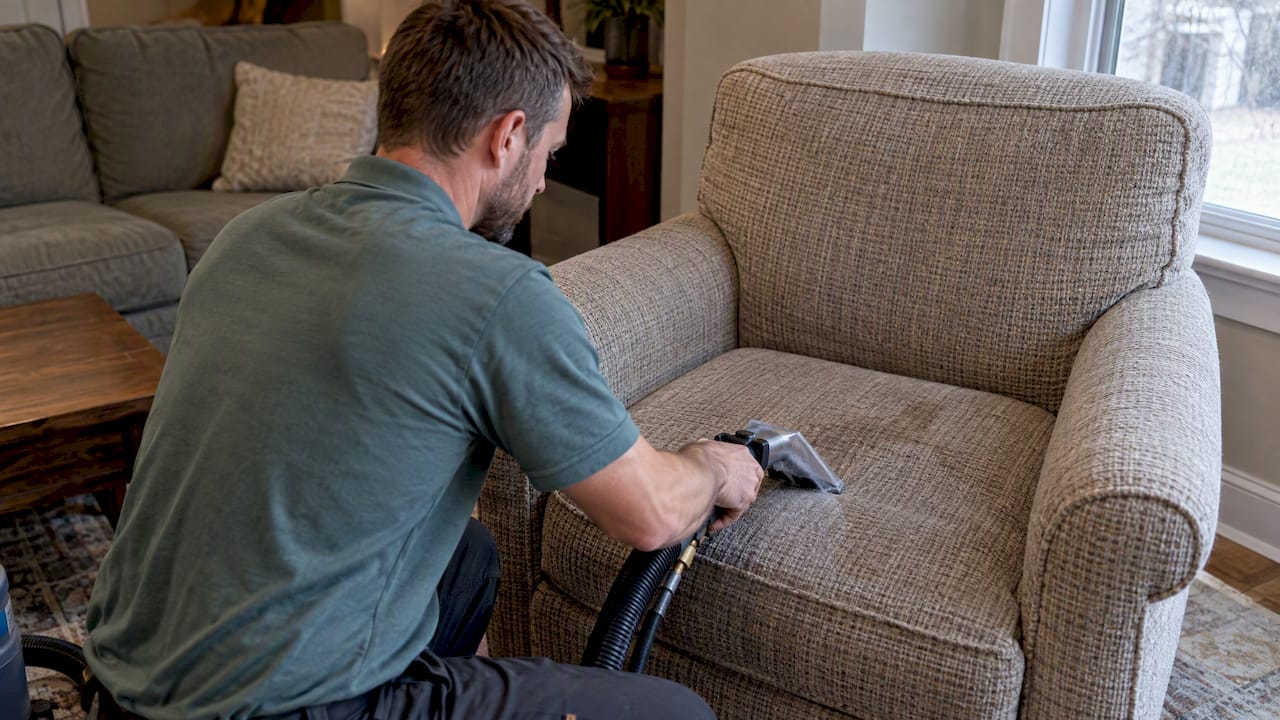
The fix professionals use is almost boring by comparison: gentle extraction, the right pretest, and patience. A coffee spill that looked permanent after a homeowner’s scrub session often lifts clean once it’s treated with proper suction and the correct method for that fabric’s code.
— chris*
7. Let us handle the upholstery cleaning for you
If a stain has outgrown a spot treatment, or you’d rather skip the guesswork altogether, deep steam cleaning lifts dirt, allergens, and odors from fabric without leaving sticky residue behind.
Every job comes with our satisfaction guarantee, and if you want upholstery, carpets, and more cared for on a set schedule, our Simple Club membership keeps it off your to-do list for good. Ready to get your furniture looked at? Visit our upholstery cleaning service page to get started.
FAQ
How do I clean upholstery with an S code?
Use a water-free, solvent-based upholstery spotter applied in small amounts with a clean cloth, never liquid water. Work in a ventilated space since these solvents can have strong fumes, and always pretest on a hidden spot first, as extension guidance recommends.
Where can I find the cleaning code for my couch?
Check under the seat cushions first, since that’s where most tags are sewn, followed by the seams along the frame’s back or bottom edge. Newer furniture sometimes keeps the code on a hang tag rather than a sewn-in label.
What if my couch doesn’t have a cleaning code?
Without a code, identify the fabric type as best you can, then test a hidden area with a small amount of your intended cleaner, following the step-by-step hidden-area test of applying, waiting, and checking for color transfer. If you see any discoloration or texture change, stop and treat it as a professional job.
When should I call a professional instead of spot cleaning?
Call a professional when a stain is set-in, when overall soiling covers more than one spot, or when the fabric’s backing feels fragile or unfamiliar. Pros often use IICRC S300 testing and methods that go beyond what a basic spot treatment can safely do.
Sources
- Woven & knit residential upholstery fabric standards & guidelines — AHFA
- General upholstery care; stain solutions — University of Illinois Extension
- EC86-418 Upholstered furniture care: cleaning and stain removal — University of Nebraska Extension
- Care labeling of textile wearing apparel — 16 C.F.R. §423 (FTC)