

Use a pH-neutral stone cleaner, or a very dilute mild dish soap with warm water, and skip anything acidic or abrasive. Vinegar, lemon juice, bleach, and scouring powders can etch travertine because the stone is basically calcium carbonate, the same stuff that fizzes when you pour vinegar on chalk. If a stain doesn’t budge after a gentle cleaning, it’s time to think poultice, or call in a pro before you make it worse.
TL;DR:
- Travertine should always be cleaned with pH-neutral cleaners or diluted mild dish soap to prevent etching and surface damage.
- Avoid acidic products like vinegar, lemon juice, and bleach, as they dissolve calcium carbonate and cause dull patches or discoloration.
- Regular cleaning involves sweeping first, using a damp microfiber mop with diluted cleaner, rinsing thoroughly, and drying to prevent water spots or film buildup.
- Stubborn stains require specific poultice treatments based on stain type, with multiple applications often necessary before professional help.
- Sealing depends on absorption rate; perform water-drop tests to determine if resealing is needed, and avoid using abrasive tools or heavy-duty chemicals.
Table of Contents
- Which cleaners work on travertine and which ones ruin it
- Routine cleaning: step-by-step method for floors and counters
- Stain identification and removal: poultices and when to call a pro
- Sealing and long-term maintenance: what sealers actually do
- Common mistakes, prevention, and damage control
- Field perspective: when pros help and what a tile and grout visit looks like
- How to remove and prevent mold and mildew on travertine tiles
- Repairing chips, cracks, and scratches in travertine tiles
- Honed versus polished travertine: cleaning methods differ
- Tools and equipment that make travertine cleaning easier
- Environmental considerations and pet-safe cleaning options
- What matters most when you’re cleaning travertine
- How Home Service Simple handles travertine, tile, and grout
- FAQ
- Sources
Which cleaners work on travertine and which ones ruin it
Here’s the deal: travertine doesn’t care how strong your cleaner is. It cares whether that cleaner fights fair.
A pH-neutral cleaner, sometimes labeled “stone soap” or sold as a purpose-made stone cleaner, is formulated to sit right in that middle zone where travertine stays happy. The Natural Stone Institute recommends these neutral cleaners for routine care, along with mild liquid dish detergent used sparingly and well diluted. Dawn works in a pinch, but go easy. Too much, too often, and you’ll build up a dull film that makes your floor look tired even when it’s technically clean.
Travertine is acid-sensitive because it’s calcium carbonate, essentially the same mineral family as marble and limestone. Acids dissolve that surface on contact. Etching shows up as dull gray or white patches, sometimes with a slightly rough feel, right where the acid sat.
Skip these on travertine:
- Vinegar and lemon juice: classic “natural” cleaners that etch calcium-carbonate stone on contact.
- Bleach and Clorox wipes: can discolor grout, weaken sealers, and won’t touch mineral stains.
- Powdered abrasives and scouring pads: scratch the surface, especially on polished finishes.
- Generic all-purpose sprays: many carry hidden acids or degreasers not meant for natural stone.
Pro Tip: Test any new product on a hidden corner, like under an appliance or in a closet, and wait 24 hours before trusting it on the whole floor.
Routine cleaning: step-by-step method for floors and counters
Clean travertine like you mean it, but gently. Here’s the routine that keeps floors and counters looking right without wearing down the stone.
- Sweep or vacuum first. Grit is the real enemy here, since dragging a wet mop over sand and dirt just grinds tiny scratches into the surface.
- Mix your cleaner. Follow the label on a neutral stone cleaner, or if you’re using dish soap, a teaspoon per gallon of warm water is plenty.
- Mop with a soft microfiber or non-abrasive mop, wrung out so it’s damp, not dripping. Standing water is bad news for grout lines and unsealed spots.
- Rinse with clean water using a second mop or cloth, because leftover soap residue dulls the finish over time. Change your rinse water as soon as it looks cloudy, usually every one or two rooms.
- Dry and buff with a clean towel to prevent water spots, especially on polished finishes where every drop shows.
For most households, this routine once or twice a week keeps travertine looking sharp, with a quick dry sweep in between.
Pro Tip: Keep two buckets going, one for cleaner and one for rinse water, so you’re never mopping dirty water back onto a clean floor.
Stain identification and removal: poultices and when to call a pro
Not all stains behave the same, so figure out what you’re dealing with before you start scrubbing.
Oil-based stains look darker than the surrounding stone and feel slightly greasy. Organic stains, like coffee or fruit, show up as yellowish or brownish rings. Iron or rust stains have that telltale orange-brown color, often near metal fixtures. Copper stains lean blue-green. Biological growth shows up as dark, fuzzy patches, usually in damp corners.
The Natural Stone Institute’s poultice guidance breaks treatment down by stain type:
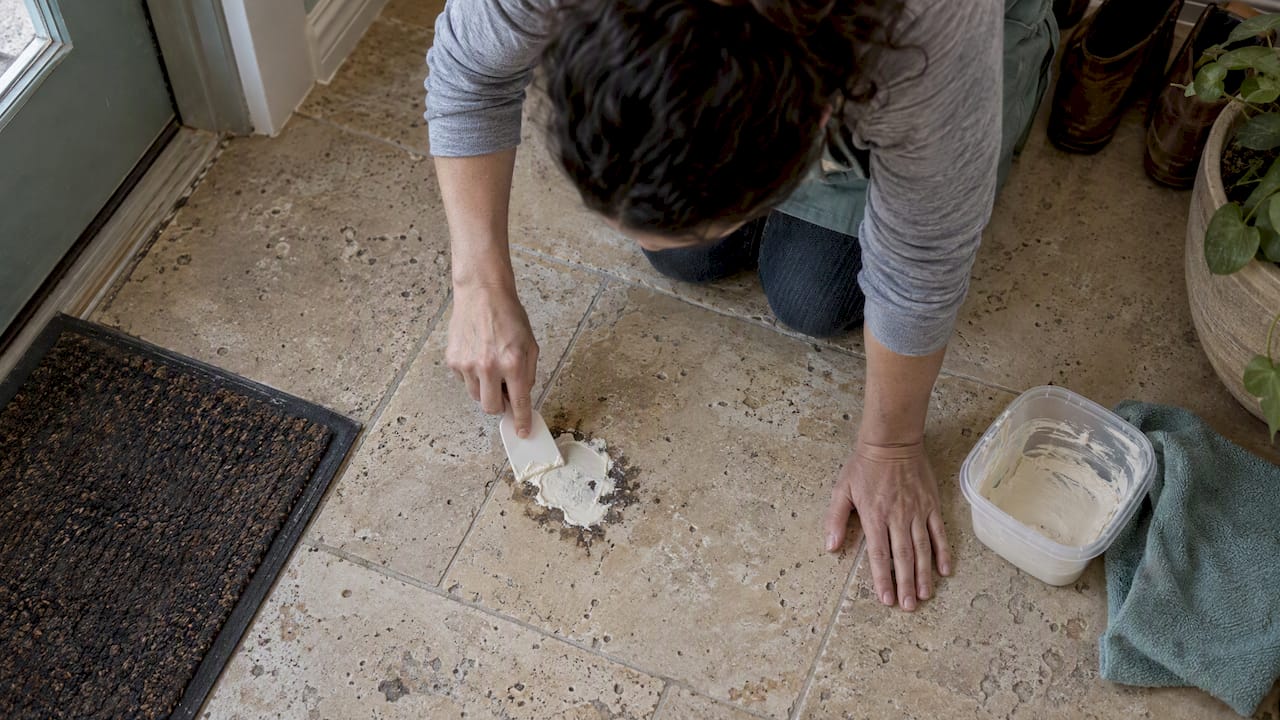
- Oil stains: mix baking soda with water, or a poultice powder with mineral spirits, into a paste.
- Organic stains: combine poultice powder with 12% hydrogen peroxide.
- Iron or rust stains: diatomaceous earth mixed with a rust remover made for stone.
Spread the paste a quarter to a half inch thick, cover with plastic wrap, tape the edges, and let it sit for 24 to 48 hours as it draws the stain out. Work in a ventilated space, and never mix cleaning chemicals, especially ammonia and bleach, which create dangerous fumes together.
Most poultice treatments need more than one round to fully lift a stubborn stain, according to the Natural Stone Institute’s stain removal instructions. If you’ve tried twice with no progress, or the stain covers a large area, that’s your cue to call a stone restoration pro before the damage becomes permanent.
Sealing and long-term maintenance: what sealers actually do
Sealers don’t make travertine bulletproof. They buy you time.
Impregnating sealers soak into the stone’s pores and repel liquids from within, which is what most travertine floors need. Topical sealers sit on top and add a surface layer, but they wear faster underfoot and can trap moisture if the stone isn’t fully cured first.
How often you reseal depends on absorption, not a date on the calendar. Travertine absorption rates vary widely, from under 1% to over 10%, so a one-size-fits-all schedule doesn’t hold up.
- Run the water-drop test: splash a few drops on the surface, and if it beads up for 15 to 20 minutes, your seal is still doing its job.
- If the water soaks in fast, darkening the stone within a minute or two, it’s time to reseal.
- Check manufacturer guidance for your specific sealer and stone finish rather than guessing at a yearly routine.
For outdoor travertine or adjacent hardscape, the same logic about testing before sealing applies, and guidance on sealing pavers after installation follows a similar wait-and-test approach.
Common mistakes, prevention, and damage control
Most travertine damage we see traces back to the same handful of habits.
- Reaching for vinegar or lemon because it’s “natural”: it still etches the stone.
- Using bleach or Clorox wipes to tackle grout grime, which can discolor and weaken sealant.
- Scrubbing with abrasive pads, leaving fine scratches that catch dirt over time.
- Over-sudsing with dish soap, building a dull film that’s hard to strip back off.
Prevent most of this with entry mats, coasters under planters, and prompt blotting of spills before they sit.
If something acidic spills, flush the area with water right away, follow with a neutral cleaner rinse, then dry thoroughly.
Pro Tip: If a spot looks worse after you’ve cleaned it twice, stop. Continued scrubbing often deepens etching instead of fixing it.
Field perspective: when pros help and what a tile and grout visit looks like
Extensive etching, stains spread across multiple tiles, or a polished floor that’s lost its shine are all signs DIY has reached its limit.
A typical professional visit starts with inspection to identify stone type and finish, followed by targeted chemical treatment or poultice work, then low-speed polishing or honing to restore sheen without over-grinding the surface. Sealer choice comes last, matched to the stone’s absorption.
Our tile and grout cleaning service handles exactly this kind of restoration work for Wichita homes, backed by a satisfaction guarantee.
How to remove and prevent mold and mildew on travertine tiles
Mold and mildew on travertine almost always trace back to trapped moisture, think shower floors, entryways after wet boots, or grout lines that never fully dry.
For light surface mold, a soft brush and a pH-neutral cleaner diluted in warm water usually lifts it. Work in small sections and rinse thoroughly, since leftover soap residue gives mold something to feed on later. For more stubborn mildew in grout lines, a biocidal cleaner made for stone, rather than household bleach, handles the growth without risking discoloration or sealer breakdown.
Prevention matters more than treatment here. Run a bathroom fan or crack a window after showers to cut down humidity. Squeegee shower floors after use. In entryways, swap out damp mats regularly instead of letting them sit wet against the stone.
Grout lines are usually the first place mildew shows up, since they’re more porous than the tile itself. Keeping grout properly sealed, and resealing it on the same test-based schedule you’d use for the stone, closes off the moisture mold needs to take hold.
If mildew keeps coming back in the same spot despite regular cleaning, that’s often a sign of an underlying moisture problem, like poor drainage or ventilation, that cleaning alone won’t fix.
Repairing chips, cracks, and scratches in travertine tiles
Travertine is naturally pitted, so small surface holes are often original to the stone, not damage. Chips, cracks, and deep scratches are a different story.
For minor chips, a color-matched epoxy or resin filler, available at most stone supply stores, can patch the spot so it blends into the surrounding tile. Press the filler in, let it cure per the product’s instructions, then lightly buff flush with the surrounding surface.
Hairline cracks usually call for a penetrating stone adhesive rather than a surface filler, since it bonds the crack from within instead of just covering it. Wider cracks or cracks that run through multiple tiles often signal a subfloor issue, which is worth having checked before any cosmetic repair.
Light surface scratches on a honed finish often buff out with a fine stone polishing compound and a soft cloth. On a polished finish, scratches are more visible and typically need actual honing and repolishing to disappear, since a quick buff won’t restore true shine.
Large cracks, deep chips, or damage across several tiles are generally a job for a stone restoration professional, since DIY fillers can look obviously patched if the color or texture doesn’t match.
Honed versus polished travertine: cleaning methods differ
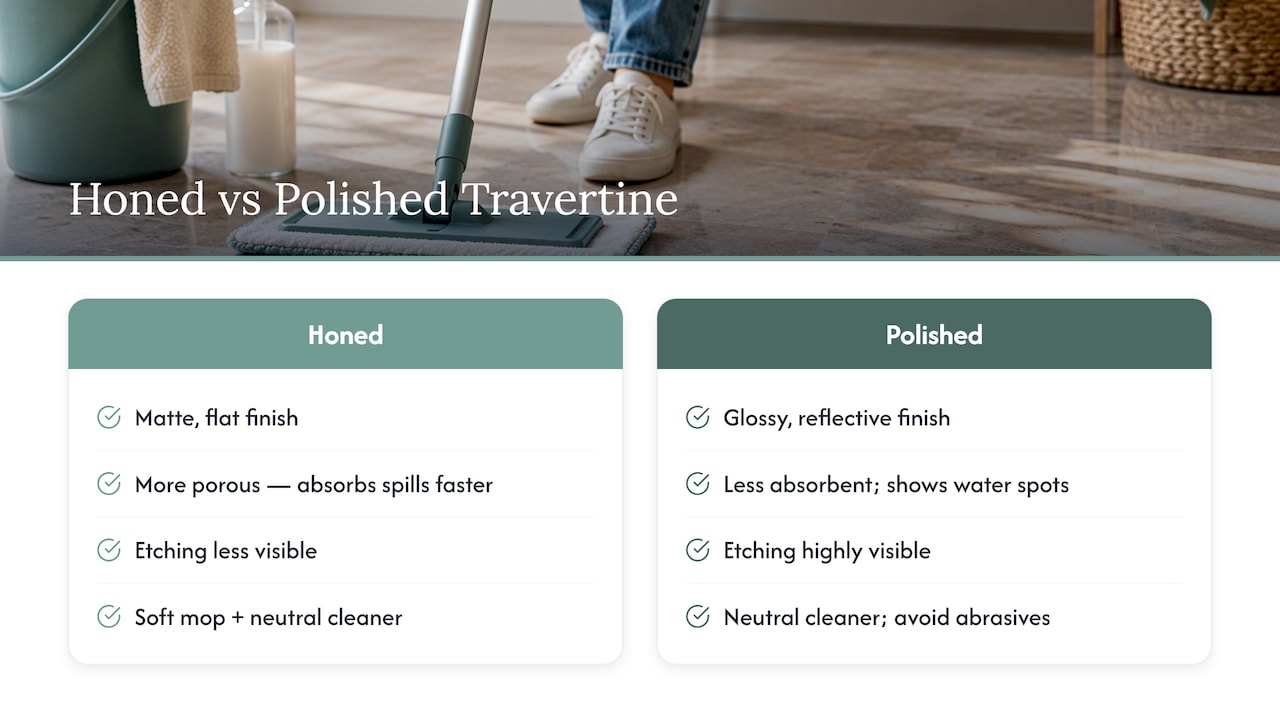
Honed travertine has a matte, flat finish, while polished travertine is glossy and reflective. That difference changes how you should clean each one.
Honed surfaces are more porous and show etching less dramatically, since there’s no shine to disrupt, but they absorb spills faster and need more frequent sealing checks. A soft mop and neutral cleaner work well here, and light scuffing from foot traffic is less noticeable.
Polished travertine shows every water spot, streak, and scratch because of its reflective surface. Dry thoroughly after mopping to avoid spotting, and skip anything remotely abrasive, since even a slightly rough sponge can dull the shine over time. Etching is also far more visible on polished stone because it disrupts that mirror-like surface directly.
Both finishes need the same pH-neutral approach underneath, but polished travertine demands more careful drying and a gentler touch overall.
Tools and equipment that make travertine cleaning easier
The right tools do most of the heavy lifting here.
A soft-bristle broom or a vacuum with a hard-floor setting (no beater bar) handles dry debris without scratching. A microfiber mop head is gentler than string mops and holds less water, which matters on travertine’s porous surface. Keep two buckets on hand, one for cleaner and one for rinse water, so you’re not redistributing dirty water across the floor.
For stains, a soft-bristle grout brush works grout lines without scratching the tile itself. Plastic wrap and painter’s tape handle poultice applications, and a soft microfiber cloth is best for final drying and buffing, especially on polished finishes where streaks show.
Skip steel wool, scouring pads, and anything labeled “heavy duty” for general floors, since those are built for surfaces far tougher than travertine.
Environmental considerations and pet-safe cleaning options
A pH-neutral stone cleaner is generally the safer bet for households with pets and kids underfoot, since it skips the harsh fumes that come with bleach or ammonia-based products.
Look for stone cleaners labeled free of phosphates and heavy fragrances if indoor air quality is a concern, and always ventilate the room while cleaning or poulticing, regardless of which product you’re using. Diluted mild dish soap is also a reasonably gentle option when used sparingly, though it’s worth rinsing thoroughly so no residue is left where paws or little hands make contact with the floor.
For outdoor travertine around pools or patios, rinsing cleaner residue away completely matters even more, since runoff can affect nearby landscaping or grass. Choosing a biocidal cleaner made specifically for stone, rather than a generic bleach solution, cuts down on both fumes and the risk of harming plants nearby.
What matters most when you’re cleaning travertine
Here’s where we land after digging through the guidance: compatibility beats strength every time. The instinct to reach for something stronger when a stain won’t budge is exactly backward with travertine. Strength is what damages it.
The conventional advice we see most often, “just use vinegar and water,” is the single worst piece of folk wisdom floating around for this stone. It’s cheap, it’s natural-sounding, and it etches calcium carbonate every time it touches it.
What we’d prioritize first: identify your stone’s finish and absorption before you do anything else. A polished, low-absorption floor needs a completely different touch than a honed, high-absorption one, and skipping that step is how well-meaning homeowners end up with dull patches they didn’t cause on purpose.
Poultices work, but they’re patient work, not a quick fix. Budget for multiple attempts, proper dry time, and realistic expectations rather than a one-shot miracle cure.
— chris
How Home Service Simple handles travertine, tile, and grout
When etching has already set in, or a stain has outlasted two poultice attempts, DIY has done what it can do. That’s where our tile and grout cleaning service picks up, with tailored treatment and tile floor polishing to bring shine back without risking more damage.

- We assess your stone’s finish and absorption before choosing a cleaning approach.
- Scuff removal and polishing are available alongside standard tile and grout service.
- Our Simple Club membership covers recurring care starting at $20 a month, so your floors get consistent attention without you having to remember to book.
If your travertine needs more than a weekend of elbow grease, get an estimate on our tile cleaning page and we’ll take it from there.
FAQ
Can you use Dawn dish soap on travertine tile?
Yes, in small amounts well diluted with warm water, Dawn is acceptable for routine travertine cleaning. A purpose-made neutral stone cleaner is generally better for regular use, since dish soap can leave a dull film if overused.
What should you not use on travertine tile?
Avoid vinegar, lemon juice, bleach, Clorox wipes, and abrasive powders or pads, since acidic products etch calcium-carbonate stone and abrasives scratch the surface. Even products marketed as “natural” can still damage travertine if they contain acid.
What can I use to clean travertine tiles?
A pH-neutral stone cleaner or stone soap mixed with warm water is the safest everyday option, applied with a soft mop and followed by a clean-water rinse. For stains, a poultice matched to the stain type, like baking soda for oil or hydrogen peroxide for organic stains, handles what routine cleaning can’t.
Can you use Clorox wipes on travertine?
No, Clorox wipes contain bleach, which can discolor grout and weaken sealers on travertine over time. Stick with a neutral stone cleaner or diluted mild dish soap instead, and if mildew is the issue, a biocidal cleaner formulated for natural stone is the safer route.