

Blot the spill with a white cloth, don’t rub it, and go find that little tag under the cushion before you grab a bottle of anything. That tag tells you which cleaners your sofa can handle. If the tag says “S” only, or the stain’s already dried into the fibers, stop right there and call in a pro instead of making things worse.
TL;DR:
- Using water-based cleaners is safe only on W or WS-coded fabrics, while S-coded upholstery requires solvent-based products or professional cleaning.
- Immediate blotting with a white cloth and gentle working from outside to center prevent spreading stains during the first 30 minutes after a spill.
- Specific stain types like grease, blood, or ink need targeted methods such as absorption powders, cold water, or alcohol, and require pretests to prevent damage.
- Deep-set or overall soiled fabrics call for professional extraction, especially when surface cleaning cannot remove embedded stains or odors.
- Regular vacuuming and applying fabric protectors after cleaning can significantly reduce the likelihood of future stains and damage.
Table of Contents
- Sofa first-aid: what to do in the first 0 to 30 minutes after a spill
- Read the tag and identify fabric care codes (W, S, WS, X)
- Stain-type methods: what actually works for each kind of mess
- When DIY risks permanent damage and a pro should step in
- Prevention and maintenance that actually cuts down on future stains
- Home Service Simple perspective: when professional upholstery cleaning is the right choice
- How Home Service Simple can help
- Sources
- FAQ
Sofa first-aid: what to do in the first 0 to 30 minutes after a spill
Every parent in Wichita knows the feeling. Kid tips a juice cup, and suddenly there’s a purple lake spreading across the good couch. What you do in the next half hour decides whether that spot comes out clean or turns into a permanent souvenir.
Here’s the order of operations, straight through:
- Scoop off solids first. Use a spoon or a dull knife to lift anything sitting on top, working gently so you don’t grind it deeper into the weave.
- Blot, don’t rub. Press a white towel or paper towel straight down onto the wet spot, then lift. Rubbing spreads the stain and can fray the fibers.
- Work outside to center. Start at the edge of the stain and blot inward, according to guidance from fabric cleaning code resources, so you don’t push it out wider than it already is.
- Slide dry towels underneath. If the cushion cover comes off or you can reach behind it, tuck paper towels behind the fabric to pull moisture through instead of letting it pool.
- Skip the heat. No hair dryer, no iron, no hot water. Heat can set a stain permanently before you’ve even had a shot at treating it.
- Pretest anything you’re about to use. Dab your cleaner on a hidden seam or the back of a cushion first. Wait a few minutes and check for color change or texture damage.
That’s it. No scrubbing, no panic, no reaching for whatever’s under the kitchen sink until you know what you’re dealing with.
Pro Tip: Keep a stack of plain white towels in a hall closet just for spills. Colored towels can transfer dye onto wet fabric, which turns one problem into two.
Read the tag and identify fabric care codes (W, S, WS, X)
Somewhere on your sofa, usually under a cushion or on a tag near the frame, there’s a letter code. It looks small and boring. It is not. It’s the single most useful piece of information you have before you touch that stain.
Here’s what each letter means, based on upholstery fabric cleaning code guidance:
- W means water-based cleaners are safe, like a mild dish soap foam or upholstery shampoo.
- S means solvent-only. Water can shrink, stain, or discolor the fabric, so you need a dry-cleaning solvent instead.
- WS means either water-based or solvent cleaners work, giving you the most flexibility.
- X means vacuum or brush only. No liquid, no exceptions, professional cleaning only.
These codes are voluntary manufacturer guidance, not a law any furniture maker has to follow, which is exactly why pretesting on a hidden seam matters even when the tag looks clear.
Solvent cleaners for S-coded fabric come with real risks. Many are flammable and need good ventilation, and some can irritate skin or lungs in a closed room. If your sofa is S-coded and the stain is anything more than a light surface mark, that’s your cue to call someone who handles solvents for a living rather than experiment in your living room. Our guide to reading fabric codes before steam cleaning breaks down which situations call for extraction equipment instead of a spray bottle.
Stain-type methods: what actually works for each kind of mess
Different stains need different weapons. Treating a wine spill like a grease spot, or vice versa, is how a lot of DIY attempts go sideways. Here’s the breakdown by stain family, all following the same core sequence recommended by university extension stain guidance: identify the stain, remove solids, blot, choose a cleaner based on fabric code, pretest, rinse, and dry.
Water-based stains: coffee, juice, soda
These are the easiest wins if you move fast.
- Blot up as much liquid as you can with a dry towel.
- Mix one teaspoon of mild dish soap with one cup of warm water and whip it into foam, not a puddle. Apply just the foam with a cloth.
- Blot the foam into the stain, working from the outside in.
- Rinse by blotting with a cloth dampened in plain water to lift the soap residue.
- Blot dry with a fresh towel, then let it air dry completely before sitting on it.
That rinse step matters more than people think. Leftover soap or cleaner residue actually attracts new dirt, according to cleaning-industry technical guidance, so skipping it means your “clean” spot gets dingy again within weeks. If it’s a coffee spill specifically, the same blot-and-foam logic applies whether it landed on your sofa or your carpet, and our coffee stain removal guide covers the carpet version in more detail.
Oily and greasy stains
Grease behaves nothing like coffee. Water alone just pushes it around.
- Lift off any excess grease with a dull knife or spoon.
- Sprinkle baking soda or cornstarch generously over the spot and let it sit for at least fifteen minutes. It needs time to absorb the oil.
- Vacuum up the powder completely.
- If a shadow remains, use a solvent or degreasing cleaner rated safe for your fabric’s code, applied sparingly with a cloth rather than poured on.
Overwetting is the enemy here. Grease stains lift better with patience and absorption than with dousing the cushion in cleaner.
Protein stains: blood, sweat, vomit
Heat cooks protein into the fibers, so cold water only, always.
- Blot with cold water first to dilute the stain before it sets.
- An enzyme detergent, the kind made for laundry protein stains, breaks down the proteins that regular soap can’t touch.
- For blood specifically, hydrogen peroxide can help lift the stain on fabric that’s confirmed colorfast, but pretest it on a hidden seam first since peroxide can lighten some dyes, a caution echoed in soil and stain remover guidance from the American Cleaning Institute.
Ink and dye transfer
Ink is stubborn and sometimes permanent, especially on fabric that’s already absorbed it.
- Isopropyl alcohol on a cotton ball works for many S-coded fabrics, applied with a light dabbing motion rather than a swipe.
- Blot from the outer edge inward to keep the ink from spreading into a bigger ring.
- Understand going in that dye transfer stains, the kind from newspaper, denim, or a leaky pen, may not fully lift no matter what you try.
If ink is the culprit, our dedicated piece on getting ink out of a couch walks through fabric-specific timing that matters more here than with most other stains.
Red wine and berry stains
Every host’s nightmare, and one of the more treatable ones if you act fast.
- Blot immediately, don’t wait for a “good moment.”
- Club soda works surprisingly well as a first pass, or use the same dish soap foam from the water-based method.
- If a shadow remains and your fabric tag allows it, a color-safe oxygen bleach can finish the job, since oxygen bleach is described as color-safe in many applications when used correctly and pretested first.
Pet urine
This one’s less about the visible stain and more about what’s soaked into the cushion.
- Blot aggressively and repeatedly. Urine spreads down into padding faster than most spills.
- An enzyme cleaner made specifically for pet accidents breaks down the compounds causing odor, not just the visible mark.
- If the accident happened a while ago or you can still smell it after cleaning, that odor has likely worked past what surface blotting can reach.
Dog owners dealing with a lingering smell should check our guide on removing couch odor without damaging fabric for the enzyme-cleaner approach in more depth.
Pro Tip: Always test cold water and a mild cleaner on blood or protein stains before reaching for anything stronger. Enzyme cleaners need a few minutes of dwell time to work, so patience beats scrubbing every time.
When DIY risks permanent damage and a pro should step in
Some stains and some fabrics just aren’t a fair fight for a spray bottle and a towel, no matter how careful you are.
- Cellulosic browning shows up on natural plant fibers like linen and cotton as a tan or brown ring after moisture dries slowly, and DIY attempts to fix it often make it worse instead of better, per IICRC consumer guidance.
- S-coded fabrics that need solvent cleaning carry real handling risks. Solvents can be toxic and flammable in an untrained setting, which is exactly why professionals work with proper ventilation and equipment.
- Overall soiling, meaning the whole cushion looks dingy rather than one clear spot, usually signals buildup that surface cleaning can’t reach, and it calls for a full inspection rather than another round of spot treatment.
- Internal fabric treatments, like flame-retardant coatings or ticking layers in some modern upholstery, can react unpredictably with moisture and cause staining that has nothing to do with the original spill.
- Antique or textile pieces with historical value belong with a conservator, not a home remedy, since the wrong cleaner can permanently damage material that can’t be replaced.
When any of these show up, the smart move is stepping back before you make an irreversible call on fabric you can’t get back.
Prevention and maintenance that actually cuts down on future stains
The best stain is the one that never gets a chance to set.
- Vacuum your sofa weekly. Dry soil grinds into fibers over time and makes every future spill harder to lift.
- Apply a fabric protector after cleaning, understanding it buys you blotting time rather than making the fabric stain-proof, since protectors wear off and need reapplication especially after professional cleanings.
- Use washable throws or slipcovers on the cushions that take the most abuse, whether that’s the spot by the snack table or the one your dog claims as his own.
- Blot the second something spills, even if you’re mid-conversation. Thirty seconds of delay is the difference between a wipe and a project.
Pro Tip: Keep a small spray bottle of diluted white vinegar and water under the sink for quick neutralizing on fresh spots, but always pretest it first since vinegar can affect some dyes.
Home Service Simple perspective: when professional upholstery cleaning is the right choice
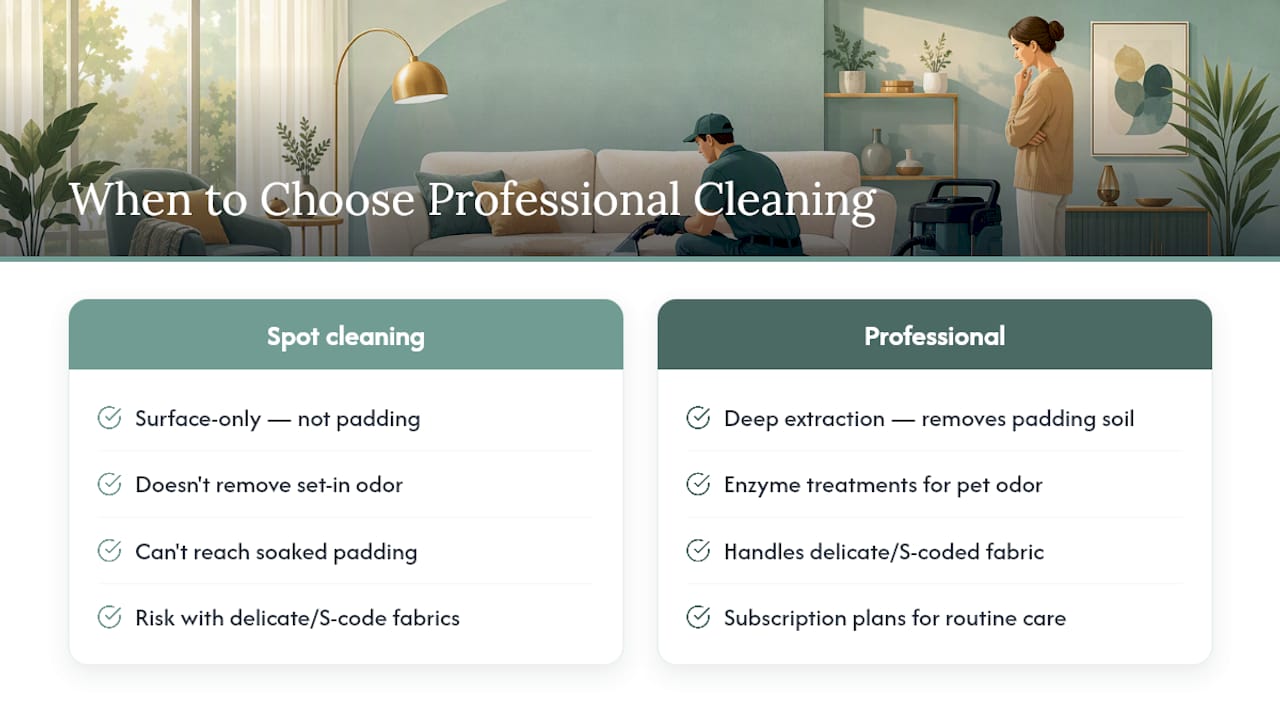
Here’s where I’ll be straight with you. Spot cleaning handles a lot, but it doesn’t reach what’s soaked into the cushion padding, and it can’t fix odor that’s worked its way past the surface.
That’s the gap professional upholstery cleaning fills. Deep extraction pulls out what blotting leaves behind, enzyme treatments target set-in pet odor at the source, and trained technicians know how to handle delicate or S-coded fabric without the guesswork that comes with a home remedy and a hope.
[brand_signal]
For folks who’d rather not think about it twice a year, A subscription cleaning plan offers routine care so the sofa gets attention before a stain becomes a project.
[author_bio]
The couch tells you everything about the family that owns it. Treat it right, and it’ll last.
— chris
How Home Service Simple can help
You’ve got the fabric-safe DIY playbook now. But some sofas need more than a spray bottle and a good towel, and that’s where a service visit earns its keep.
Here’s what we handle and what a visit typically looks like:
- Upholstery cleaning for deep-set stains, pet odor, and delicate or S-coded fabric that needs the right equipment instead of a guess.
- Pre-inspection first. A technician checks fabric type, stain history, and any risk areas before applying anything.
- In-home evaluation and cleaning, using extraction and solvent methods matched to what your fabric can actually handle.
- Realistic drying expectations, since low-moisture methods mean you’re not waiting all day to sit on your own couch again.
If you’re weighing whether a stain is worth a service call, our upholstery cleaning cost guide breaks down what to budget for before you book. And if a routine schedule sounds easier than remembering to call every few months, Simple Club offers a Standard Membership at $20 per month or a Premium Membership at $40 per month so your sofa, carpets, and more stay ahead of the mess instead of chasing it.
Book a visit through our upholstery cleaning service page and let a technician tell you exactly what your fabric can handle.
Sources
- IICRC upholstery consumer tip sheet
- General upholstery care; stain solutions (U of I Extension)
- Understanding upholstery fabric cleaning codes
- Cleaning resources & considerations (Contract Textiles / ACT)
- Soil and stain removers (American Cleaning Institute)
FAQ
How do I get stains out of a fabric couch?
Blot the spill immediately with a white cloth, working from the outside edge toward the center, and check the fabric care tag before applying any cleaner. Match your cleaning method to the fabric code, W for water-based, S for solvent-only, and always pretest on a hidden seam first.
How can I remove deep stains from my sofa?
Deep or set-in stains often need more than surface blotting, especially once they’ve soaked into cushion padding. If a stain resists gentle cleaning or the sofa shows overall soiling, professional extraction can reach what home methods can’t, and it’s the safer call for natural fibers prone to browning.
What can I use to remove stains from my sofa?
For water-based stains like coffee or juice, a foam made from mild dish soap and warm water works well. Oily stains respond better to baking soda or cornstarch left to absorb the grease before vacuuming, while protein stains like blood need cold water and an enzyme detergent rather than heat.
What is the best stain remover for a sofa?
There’s no single best remover since it depends on the stain type and your fabric’s cleaning code. Enzyme cleaners work best on protein-based stains, oxygen bleach is a color-safe option for wine or berry stains on compatible fabric, and solvent cleaners are reserved for S-coded fabric that can’t handle water.