

Steam cleaning a mattress is safe and effective for surface sanitizing and allergen reduction, but only on mattresses built to handle a little moisture, and only when you can get it bone dry within a few hours. Check the care label first. If your mattress is memory foam, latex, or a “spot-clean only” build, steam can trap moisture in the foam and break it down from the inside, so skip it and use a different method instead.
TL;DR:
- Steam cleaning is suitable only for mattresses that can handle light moisture and must be dried completely within a few hours to prevent mold growth.
- It effectively reduces surface allergens, including dust-mite proteins, by as much as 86.7 percent, especially on innerspring mattresses with woven covers.
- Memory foam, latex, and “spot-clean only” mattresses should not be steamed due to their tendency to trap moisture and potential damage.
- Proper cleaning involves vacuuming first, spot-treating stains, using a fabric-safe steamer, working in overlapping passes, and ensuring thorough drying.
- Professional cleaning is recommended for heavy stains, bed bug infestations, or when warranty restrictions prohibit DIY moisture-based methods.
Table of Contents
- What Does Mattress Steam Cleaning Actually Do?
- When Steam Is a Bad Idea for Your Mattress
- How to Steam Clean a Mattress Safely, Step by Step
- How Long Does a Steam-Cleaned Mattress Take to Dry?
- When Should You Call a Professional Mattress Cleaner?
- A Local Cleaner’s Take on Mattress Steam
- Home Service Simple’s Mattress Cleaning Service
- Sources
- FAQ
What Does Mattress Steam Cleaning Actually Do?
Here’s the thing nobody tells you at the store: steam cleaning a mattress isn’t the same as steam cleaning your carpet. Your mattress can’t handle a deep soak the way your living room rug can. Mattress steam cleaning is a surface treatment. It uses heat and light moisture to loosen grime, kill surface bacteria, and knock down allergens sitting in the top layer of fabric. It is not a deep extraction method, and it shouldn’t be treated like one.
The payoff is real, though. A controlled study on dust-mite allergen reduction found steam cleaning cut Der p 1 (the main dust-mite allergen) by as much as 86.7%, with regular vacuuming also producing solid long-term gains. That’s a big deal if anyone in your house wakes up sneezing.
Whether your bed can take it depends entirely on what’s underneath the cover:
- Innerspring mattresses with a woven cover generally tolerate light surface steam.
- Memory foam absorbs moisture and struggles to release it, raising mold risk.
- Latex can degrade with repeated heat and moisture exposure.
- Smart or tech-integrated beds may have sensors or electronics that steam can damage outright.
Always check the manufacturer’s care label before you plug in a steamer. If it says “spot clean only,” that’s not a suggestion.
When Steam Is a Bad Idea for Your Mattress
Some mattresses just weren’t built for this. Before you fire up a steamer, run through these three checkpoints.
- Check the material. Memory foam and latex hold onto moisture instead of releasing it, which means trapped dampness inside the comfort layers, not on top of them. That’s how a mattress starts smelling musty from the inside out, long after the surface feels dry.
- Respect “spot clean only” labels and unknown materials. Consumer Reports warns that many mattress covers and foam cores simply aren’t rated for steam, and using it anyway can void your warranty. If you don’t know what’s inside your mattress, treat it as spot-clean only until you find out.
- Don’t count on steam alone for bed bugs. The EPA’s guidance on DIY bed bug control says steam can help when applied properly, at contact temperatures above 130°F and through a diffuser to keep from scattering pests. But the CDC’s guidance on integrated pest management is blunt about it: infestations usually need multiple inspections and treatments, combining encasements, high-heat laundering, and professional help. A single pass with a handheld steamer is not going to finish the job.
How to Steam Clean a Mattress Safely, Step by Step
If your mattress passes the care-label test, here’s how to do it without turning your bedroom into a science experiment.
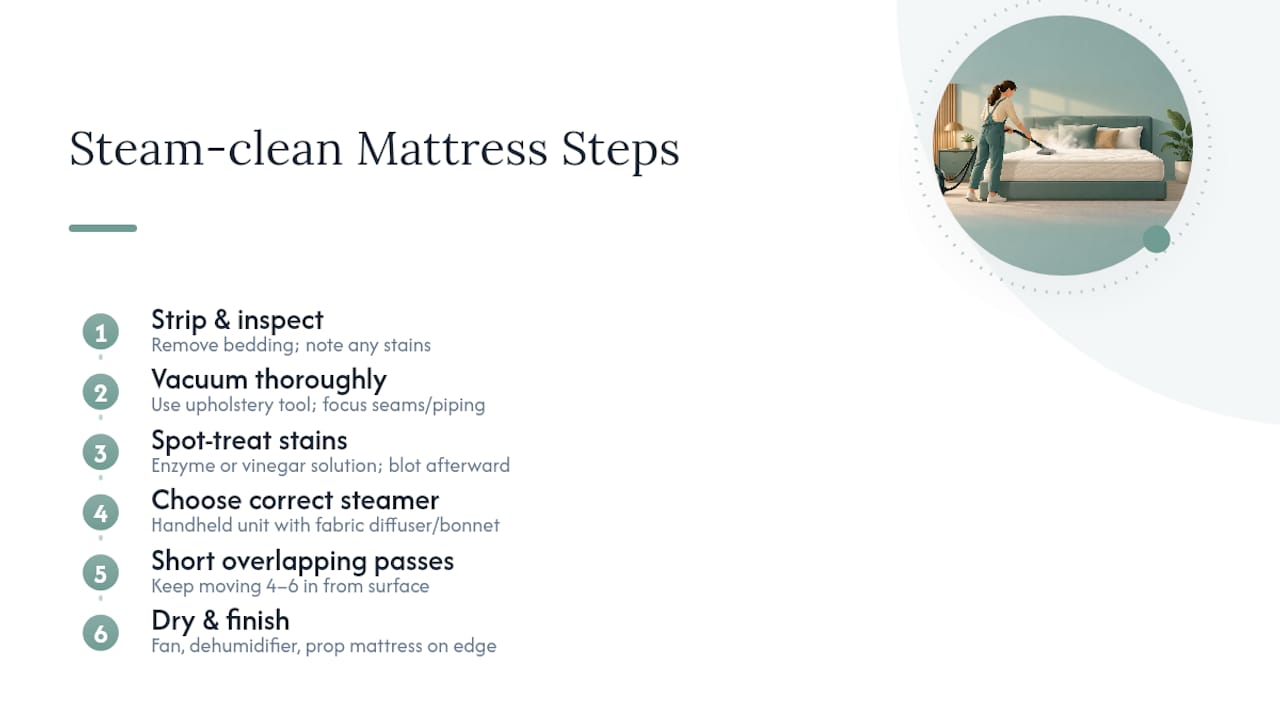
1. Strip and inspect. Pull off all bedding, including the mattress protector, and take a good look at the surface under bright light. Note any stains so you know what you’re dealing with before steam ever touches the fabric.
2. Vacuum first, always. Run a vacuum with an upholstery attachment over the entire surface, paying extra attention to seams and piping where dust and dead skin cells collect. Skipping this step just means you’re steaming dirt into the fabric instead of lifting it out.
3. Spot-treat stains before steaming. For sweat rings, light urine spots, or general grime, treat the area first with a mild enzyme cleaner or a vinegar-water solution and let it sit briefly. If you’re dealing with a urine stain specifically, our guide on mattress urine removal walks through the right sequence so you don’t push the stain deeper.
4. Choose the right steamer and attachment. Use a handheld garment or fabric steamer, not an industrial floor unit. Attach a fabric-safe diffuser or bonnet head. This spreads the heat and moisture over a wider area instead of blasting one spot, which is exactly what the EPA recommends to avoid scattering pests during bed-bug treatment.
5. Work in short, overlapping passes. Keep the steamer moving constantly, roughly 4 to 6 inches from the surface. Never let the nozzle sit in one place. A quick pass followed by a second overlapping pass beats one slow, lingering sweep every time.
6. Hit the seams and edges last. These areas trap the most dust-mite allergen and skin debris, but they’re also thicker and slower to dry. Give them attention, but don’t over-saturate.
7. Blot, don’t rub, any treated spots. If you spot-treated a stain earlier, blot residual moisture with a clean towel immediately after steaming that section.
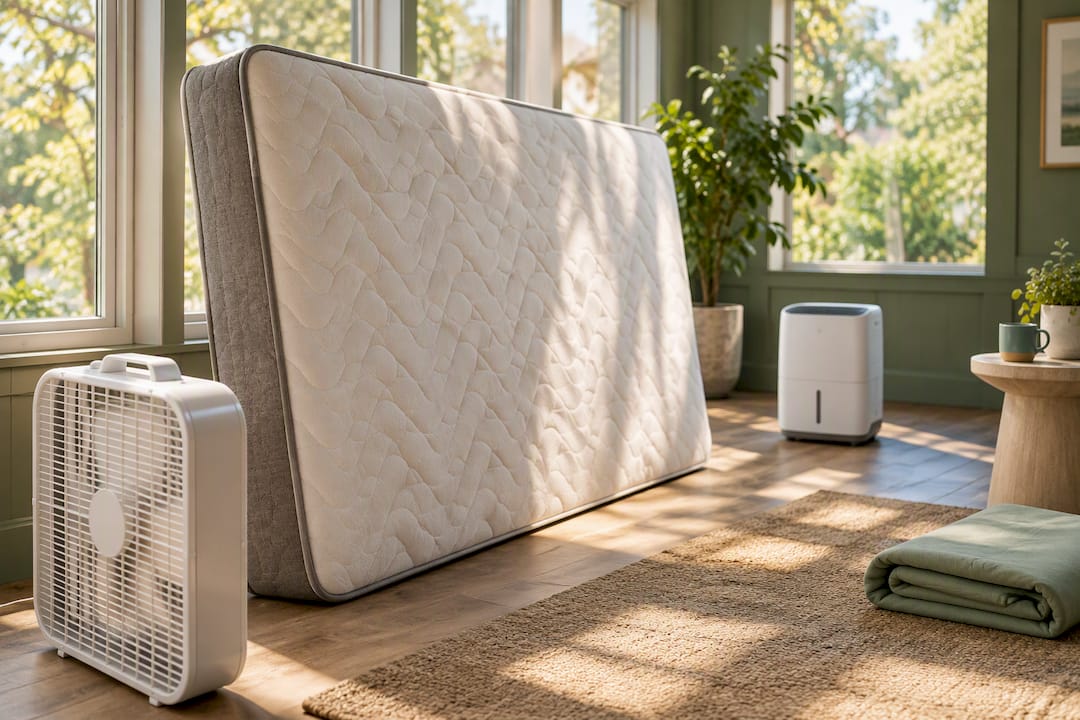
8. Start drying the second you finish. Point a box fan directly at the mattress, run a dehumidifier in the room if you have one, and if it’s practical, prop the mattress on its edge to expose both sides to airflow.
Pro Tip: Never steam the same spot twice in one session. Repeated passes over one area push moisture deeper into the comfort layers instead of lifting it out, and that’s exactly how a “quick clean” turns into a hidden mold problem three days later.
How Long Does a Steam-Cleaned Mattress Take to Dry?
This is the part most people rush, and it’s the part that causes the real damage. A wet mattress that stays wet is a mildew factory waiting to happen.
- Consumer handheld steamers: roughly 2 to 6 hours to dry fully, depending on room humidity and airflow.
- Commercial dry-vapor systems (what most professionals use): often just 1 to 2 hours, since they output far less moisture at higher temperatures.
- Hot-water extraction methods: can take 5 to 8 hours, and honestly, that’s part of why extraction isn’t recommended for mattresses in the first place.
Test dryness with the back of your hand pressed flat against the surface for a few seconds. If it feels cool or damp, it’s not ready. A sniff test matters too. Any musty smell means moisture is still trapped below the surface, even if the top feels dry. For anyone dealing with allergy-prone household members, that’s not a risk worth taking. If you want more certainty, a moisture meter (the kind used in flooring and drywall work) gives you a real reading instead of a guess.
Once it’s dry, keep it that way. Run a dehumidifier in humid climates, let the mattress get some direct sunlight if you can angle it near a window, and leave bedding off for a few extra hours even after it feels dry to the touch. A quality mattress encasement afterward helps block future spills and allergens from soaking in again. Mold prevention applies beyond mattresses. It’s the same airflow-and-moisture-control logic restoration pros use everywhere, including tighter spaces like crawl spaces, where trapped humidity causes even bigger headaches.
When Should You Call a Professional Mattress Cleaner?
DIY steam cleaning has real limits, and knowing where they are saves you from a ruined mattress.
Call a pro when:
- You suspect a bed bug infestation, since the CDC’s IPM guidance makes clear that DIY steam alone rarely finishes the job.
- You’re dealing with a heavy urine stain, biological spill, or deep-set odor that spot treatment hasn’t touched.
- Your mattress warranty explicitly restricts moisture-based cleaning and you don’t want to risk voiding it.
- Your home doesn’t have good airflow or a dehumidifier, and a 6-hour dry time just isn’t realistic.
Professional equipment matters here. Commercial dry-vapor systems run hotter with far less water output than a handheld steamer, which is a big part of why professional drying times land closer to 1 to 2 hours instead of half a day.
Pro Tip: Before booking anyone, ask three questions: what method do they use, how long will drying take, and does their process respect your mattress’s specific warranty terms? A tech who can’t answer all three confidently isn’t the one you want on your mattress.
A Local Cleaner’s Take on Mattress Steam
Here’s my honest read after seeing plenty of mattresses come through: the care label is not a suggestion, it’s the whole game plan. If you’ve got memory foam or anything marked spot-clean only, low-moisture methods win every time. Home Service Simple’s mattress cleaning service comes with our satisfaction guarantee for exactly this reason. At home, keep it simple: vacuum monthly, use a protector, and treat spills the moment they happen.
— chris
Home Service Simple’s Mattress Cleaning Service
DIY steam has its place, but a heavy urine stain, a possible bed bug scare, or a warranty you don’t want to risk calls for a different approach. Home Service Simple is the alternative to guesswork and gambling with your mattress. Our mattress cleaning uses controlled methods built to lift allergens and stains without soaking foam or trapping moisture where you can’t see it, backed by a satisfaction guarantee on every job.
If mattress cleaning is on your list alongside carpets, upholstery, or air ducts, our Simple Club membership covers recurring care starting at $20 a month, so you’re not stuck rebooking every few months. Ready to get your mattress handled the right way? Request a quote for mattress cleaning today and skip the guessing entirely.
Sources
- PubMed: Study on dust mite allergen reduction
- EPA: Do-it-yourself bed bug control
- CDC MMWR on bed bug control and IPM
- Consumer Reports: How to clean a mattress
FAQ
Is It Okay to Steam Clean a Mattress?
Yes, as long as your mattress’s care label allows moisture-based cleaning and you’re prepared to dry it fully within a few hours. Memory foam, latex, and spot-clean-only mattresses are the exceptions where steam poses real risk of trapped moisture and foam breakdown.
How Long Does a Mattress Take to Dry After Steam Cleaning?
Consumer steamers typically need 2 to 6 hours to fully dry, while commercial dry-vapor equipment used by professionals often finishes in 1 to 2 hours. Check for dryness with a hand test and a sniff test; any lingering musty smell means it’s not ready yet.
Is It Worth Getting a Mattress Professionally Cleaned?
For allergen buildup, stubborn stains, or suspected bed bugs, yes. Professional dry-vapor systems dry faster and use less moisture than a handheld steamer, which lowers the mold risk that comes with DIY methods. Home Service Simple offers mattress cleaning backed by a satisfaction guarantee for exactly these situations.
Can a Cleaning Company Steam Clean a Mattress?
Most professional cleaning companies offer mattress cleaning using controlled, low-moisture methods designed to avoid soaking foam layers. Ask any provider what method they use and how long drying will take before booking.