

The second that red cup tips over, grab a white cloth and blot, don’t rub, working from the outside of the spill toward the middle. For a fresh spill, mist it with cold water and a little mild dish soap. If the stain’s already dried in or you’re dealing with an old juice box disaster, step up to vinegar, an enzyme cleaner, or 3% hydrogen peroxide, and call a pro if it’s wool or if the stain’s been there a while.
TL;DR:
- Immediate blotting from the outside inward is crucial to prevent Kool-Aid dye from spreading deeper into carpet fibers.
- Once dry, stains are best addressed with vinegar, enzyme cleaners, or hydrogen peroxide, each tested on a hidden area first.
- Rinsing after applying any treatment is essential to remove residue that can attract dirt and cause re-staining.
- Speed and gentle, staged treatments outweigh the use of strong chemicals when removing Kool-Aid stains.
- Calling a professional is advisable for large, old, or delicate fiber stains that resist initial DIY methods.
Table of Contents
- What to do in the first five minutes after a Kool-Aid spill
- Safe ways to lift a set or older Kool-Aid stain
- Common DIY mistakes and how to fix them before they get worse
- When a Kool-Aid stain needs a professional’s touch
- Your quick-clean kit and the exact mixes to use
- What most stain-removal advice gets backward
- Sources
- FAQ
What to do in the first five minutes after a Kool-Aid spill
Speed matters here more than muscle. The faster you move, the less chance that red dye has to grab onto your carpet fibers for good.
Supplies to grab first:
- A stack of white cloths or paper towels (no color, no print)
- A spray bottle filled with cold water
- A few drops of mild dish soap, like the kind you use on dishes, not the dishwasher kind
- Club soda, if you’ve got it in the fridge
Here’s the sequence:
- Blot the spill immediately with a dry cloth. Press down, lift up, repeat. Don’t scrub. Scrubbing just grinds the dye deeper into the fibers.
- Work from the outer edge of the stain inward. This keeps the Kool-Aid from spreading into a bigger mess.
- Mist the area with cold water or pour on a little club soda, then blot again. You should see color transferring to your cloth.
- Once the color stops lifting with plain water, mix a few drops of dish soap into a cup of cold water and apply it with a cloth. Blot, don’t pour it on.
- Rinse with plain cold water to pull out the soap, then blot until the spot is just barely damp.
- Point a fan at it or open a window. Carpet that stays wet too long can start to smell musty.
The Carpet and Rug Institute recommends this same blot-and-dilute approach for fresh dye spills, and warns against overwetting since that can push the dye into the carpet backing where it’s much harder to reach.
Pro Tip: Keep a bottle of cold water and a few white rags stashed under the sink. The faster you react, the less you’ll need any of the stronger stuff later.
Safe ways to lift a set or older Kool-Aid stain
Once Kool-Aid dries, the dye molecules bond more tightly to the fiber, and plain soap and water usually isn’t enough anymore. This is where you move up the ladder, one rung at a time, testing as you go.
- Vinegar and baking soda: Mix equal parts white vinegar and cold water, apply to the stain, then sprinkle baking soda on top. It’ll fizz. Let it sit briefly, then blot and rinse thoroughly.
- Enzyme cleaner: If the spill had sugar in it (and Kool-Aid definitely does), an enzyme cleaner can break down that residue. Follow the dwell time printed on the bottle, then blot and rinse.
- 3% hydrogen peroxide: This is your last DIY option. Test it on a hidden corner of carpet first. If the color holds, apply a small amount mixed with a drop of dish soap, let it sit just a few minutes, then blot and rinse right away.
A stepwise guide for food-coloring stains lays out this same order: detergent first, then vinegar or enzyme, then peroxide only after you’ve spot-tested, because peroxide can lighten some dyes along with lifting them.
Skip hot water, irons, and chlorine bleach entirely. Heat can set the dye permanently instead of loosening it, and bleach can strip color right out of the carpet fiber itself, leaving a bleach spot that’s worse than the stain you started with.
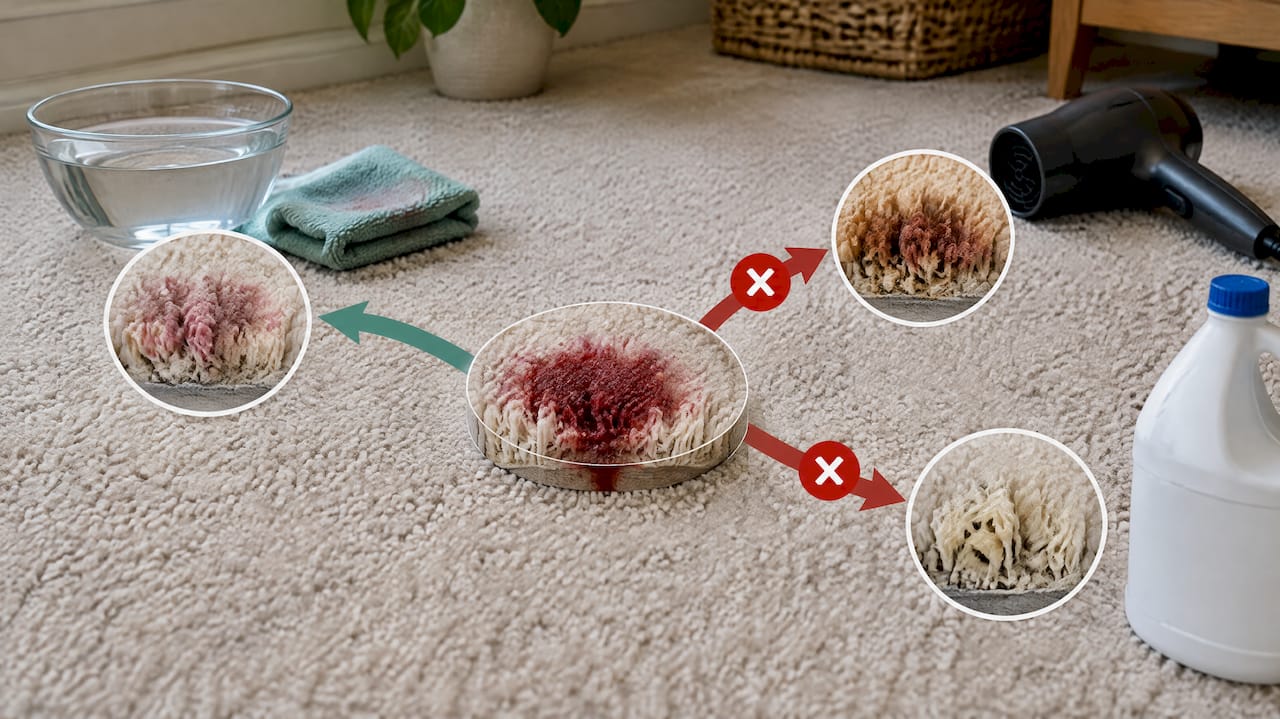
Red dye stains rank among the toughest carpet stains to fully remove, according to the Complete Guide to Removing Red Wine Stains from Any Surface, because the coloring agents in drinks like Kool-Aid can chemically resemble the dyes used in carpet itself. That’s exactly why speed and gentle technique matter more than brute force.
Common DIY mistakes and how to fix them before they get worse
A lot of carpet damage happens after the spill, not during it. Here’s what trips people up.
- Haloing: A ring forms around the treated spot because the edges dried faster than the center. Fix it by re-wetting the ring with cold water and blotting inward toward the middle.
- Soap residue: Skipping the rinse step leaves behind detergent that acts like a magnet for dirt. Rinse with plain cold water two or three times, blotting dry between each pass.
- Peroxide lightening: If you notice the carpet looks lighter than the surrounding area, stop immediately. Further oxidation won’t fix it, and a professional may be able to even out the color.
- Over-treating: If you’ve tried three or four methods and the stain is still visible, stop. Document what you used and when. Repeated chemical treatments can make the fibers harder for a pro to restore later.
Pro Tip: Take a quick photo of the stain before you start treating it. If you end up calling a professional, that photo and a list of what you tried will save everyone time.
When a Kool-Aid stain needs a professional’s touch
Some stains just aren’t a fair fight for a bottle of dish soap and a roll of paper towels.
Call in help when the stain is large, has been sitting for days or weeks, the carpet is wool or another delicate fiber, or you’ve already tried the steps above without success. Professionals work with fiber-specific testing, spotting agents built for dye stains, and hot-water extraction equipment that pulls residue out of the pad, not just the surface.
Before you book anyone, ask a few questions:
- Do they test an inconspicuous spot before treating the whole stain?
- Does the estimate list the methods they plan to use?
- Is there a satisfaction guarantee if the stain doesn’t fully lift?
Home Service Simple offers carpet cleaning built around stain spotting and deep extraction, backed by a satisfaction guarantee, for homeowners who’ve hit the limit of what a spray bottle can fix.
Your quick-clean kit and the exact mixes to use
Keep a small kit near the kitchen or wherever spills tend to happen. It turns a panic moment into a routine one.
Keep these on hand:
- White cloths or paper towels
- A spray bottle
- Mild dish soap
- White vinegar
- 3% hydrogen peroxide
- An enzyme-based stain remover
| Recipe | Mix | Use for |
|---|---|---|
| Detergent solution | 1/4 teaspoon dish soap per cup of lukewarm water | Fresh spills, first pass |
| Vinegar solution | 1 cup white vinegar plus 2 cups water | Set stains, after detergent |
| Peroxide mix | 3% hydrogen peroxide straight, plus one drop dish soap | Last resort, after spot test |
A few safety notes worth repeating: wear gloves when working with vinegar or peroxide for more than a minute or two, open a window for ventilation, and never mix peroxide with vinegar or anything containing bleach. Combining cleaning chemicals can create fumes you don’t want in your living room.
What most stain-removal advice gets backward
Most articles on this topic treat every red stain like an emergency that needs the strongest chemical in the cabinet right now. That’s backward. The strongest tool you have is speed, not strength. A spill blotted within the first minute, with nothing but cold water and a little soap, usually comes out clean. Reach for peroxide only because the stain sat overnight, not because it feels more thorough.
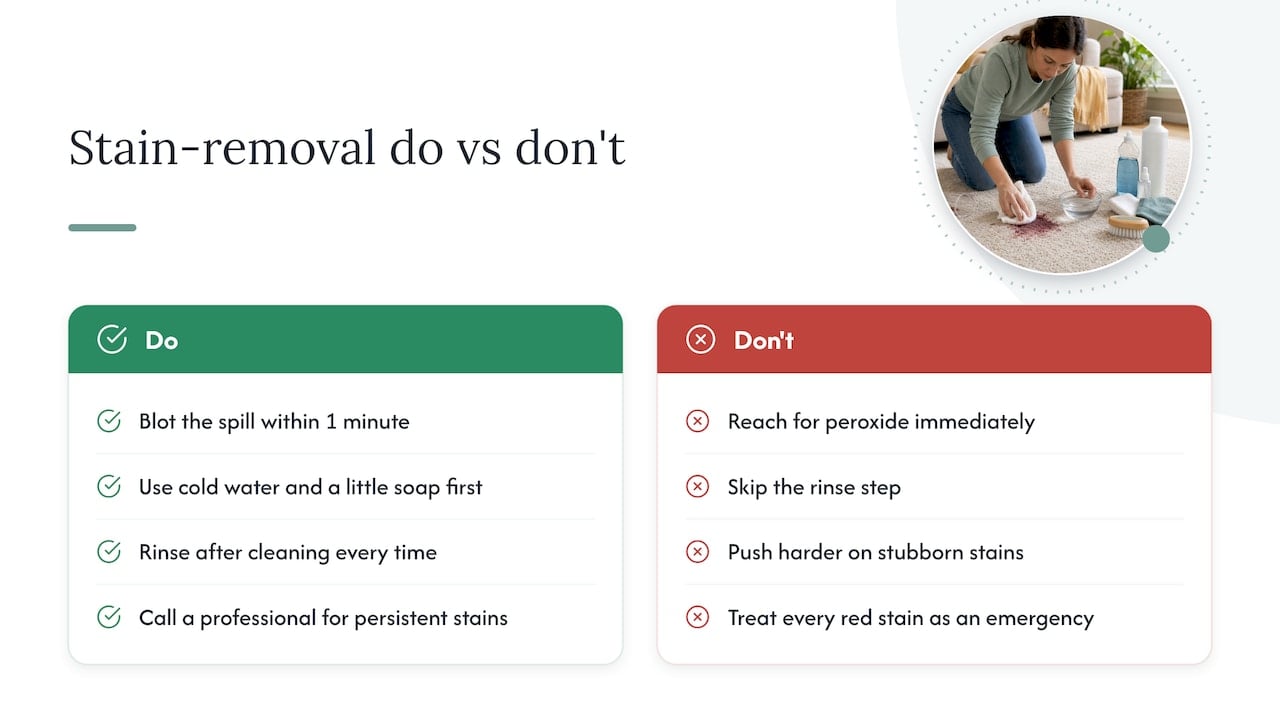
The bigger mistake I see is skipping the rinse step. People spray on a cleaner, blot once, and call it done, then wonder why the spot looks dingy again in a week. That leftover residue grabs dirt out of the air and the stain seems to come back. Rinse every single time, even when the stain looks gone.
If you take one thing from all this: treat fast, treat gently, and know when to stop trying and call someone who does this for a living. Pushing harder on a stubborn stain rarely saves it, and it can turn a fixable spot into a permanent one.
— chris
Sources
- Kool-Aid – The Carpet and Rug Institute
- IICRC consumer floor and furnishings care information (Tip sheet)
- How to Remove Kool-Aid Stains From Carpet Safely
FAQ
How do you get Kool-Aid stains out of carpet?
Blot the spill right away with a dry white cloth, working from the outside in, then treat with cold water and a little mild dish soap. For stains that have already dried, work up through vinegar, an enzyme cleaner, and finally 3% hydrogen peroxide, testing each one on a hidden spot first.
Are Kool-Aid stains permanent?
Not always, but they can be stubborn. Food dyes in Kool-Aid chemically resemble some carpet dyes, which makes full removal harder the longer the stain sits, so treating it fast gives you the best shot at getting it out completely.
How do you get Kool-Aid stains out of fabric?
The same blot-first, cold-water approach works on clothing and upholstery, though fabric can usually handle a slightly stronger detergent soak than carpet can. Always check the care label first, and spot test before using vinegar or peroxide on anything colored or delicate.
What’s the hardest stain to get out of carpet?
Red food dye stains, including Kool-Aid, are consistently named among the toughest because the coloring agents can bond to carpet fiber in a way that resembles the carpet’s own dye. Fast action and gentle, staged treatment give you the better outcome than reaching for a harsh chemical right away.