

Yes, fresh soot usually comes out with careful dry treatment and gentle blotting, but oily or deeply settled soot often needs professional steam extraction. The single best first move: do not wet it, do not scrub it, and do not grind it into the pile. Vacuum up loose particles first. From there, your approach depends on whether that soot is dry and powdery or oily and smeared, and how long it has been sitting in your carpet.
TL;DR:
- Wear an N95 or P100 mask and gloves, ventilate, then vacuum with a crevice tool held above the soot; never use a beater bar.
- For dry, powdery soot, apply baking soda or cornstarch without rubbing, wait 30 to 60 minutes, vacuum, and repeat once or twice if transfer remains.
- Test liquids on a hidden carpet spot first; if the color changes or the backing feels soft, stop and call a professional rather than continuing.
- For residue, blot with isopropyl alcohol on a white cloth, then try mild detergent and water; never pour liquids directly onto carpet.
- Call a professional if soot reaches the backing, odor persists after one or two attempts, or the stain spreads; deeply affected padding may need replacement.
Table of Contents
- First Triage: Ventilate, Gear Up, and Vacuum the Right Way
- Baking Soda, Cornstarch, and the Power of Patience
- Wet Methods: Alcohol, Detergent, and Knowing When to Stop
- When DIY Stops Working and Steam Takes Over
- Keeping the Air and Ducts Clean While You Work
- What an Inspection Actually Tells Us
- How We Handle Soot Damage
- FAQ
- Sources
First Triage: Ventilate, Gear Up, and Vacuum the Right Way
Before you touch a single soot mark, open some windows and shut the door to that room so nobody tracks ash down the hallway like they just raided the fireplace with a shovel. Soot travels. Keep foot traffic off it until the loose particles are gone.
Grab the right gear before you grab the vacuum. Fine ash particles are small enough to irritate your lungs, and county wildfire cleanup guidance recommends treating them that way, not as ordinary dust you can just sweep through.
- Wear an N95 or P100 mask, plus gloves, any time you are handling visible ash.
- Attach the crevice tool or upholstery nozzle, not the standard floor head.
- Hold the nozzle just above the pile instead of pressing it down.
- Skip the beater bar entirely. Brush action grinds soot deeper into the fibers.
- Cover nearby furniture or toys so settled soot does not land on something else.
This step alone, done patiently, often removes a big share of the problem before any cleaner touches the carpet. The Los Angeles County Public Health wildfire cleanup guide lists HEPA vacuuming and ventilation as the starting point for a reason: it keeps you from spreading contamination while you figure out your next move.
Pro Tip: Change your vacuum’s filter or empty the canister outside right after this pass. A clogged filter just recirculates the soot you worked so hard to collect.
Baking Soda, Cornstarch, and the Power of Patience
Dry soot responds well to dry treatment. This is the step where a box of baking soda from your pantry does more work than most bottled sprays.
- Cover the stained area generously with baking soda, cornstarch, or talcum powder. Don’t rub it in with pressure, just let it sit on top.
- If the soot looks heavy, work the powder gently into the pile with a soft brush or your fingertips, using light, straight strokes rather than circles.
- Walk away. Give it 30 to 60 minutes, longer if the stain looks stubborn.
- Vacuum it up slowly with the crevice tool, ideally on a HEPA-equipped machine.
- Repeat once or twice if you still see soot transferring to a white cloth pressed against the area.
One extension-backed detail worth knowing: University of Illinois Extension guidance on soot stain removal lists vacuuming and dry absorption as the first real steps, before any wet treatment comes into play, and that order matters for keeping the stain from setting deeper.
Here’s the honest limit: dry powder is built for dry, powdery soot. Oily soot, the kind left behind by a smoldering fire or a dirty candle, tends to shrug off baking soda and smear instead of lift. If that’s what you’re looking at, move to wet methods next, and go in gently.
Wet Methods: Alcohol, Detergent, and Knowing When to Stop
Before any liquid touches the stain, test it on a hidden corner of carpet first. Wait a few minutes and check for color change or a soft, spongy backing. If either shows up, stop there and treat that as your cue to call in help rather than keep working the spot.
- Dampen a white cloth (not the carpet) with isopropyl alcohol and blot, lifting soot onto the cloth rather than grinding it further into the fibers.
- Work from the outside of the stain toward the center in straight blots, never circles.
- For leftover marks, a mild detergent and water solution applied the same way, then rinsed with a barely damp cloth, often finishes the job.
- Hydrogen peroxide can help on stubborn residue, used sparingly and blotted rather than poured.
- A dry-cleaning solvent goes on the towel, never straight onto the carpet, and should never soak into the backing.
University of Illinois Extension lays out close to this exact sequence: vacuum, blot with isopropyl alcohol, detergent rinse, then hydrogen peroxide if the mark still won’t quit. If you want a broader read on patch-testing and chemical safety before you start mixing cleaners, our guide on household-safe carpet cleaning walks through it.
Pro Tip: Keep a stack of plain white cloths on hand. Colored towels can transfer dye onto wet carpet fibers, which just adds a second stain to the first one.
When DIY Stops Working and Steam Takes Over
Here’s where a lot of well-meaning homeowners get stuck. Dry powder and blotting handle surface soot. They don’t reliably pull oily, bonded residue out of carpet backing, and that’s not a failure on your part, it’s chemistry.
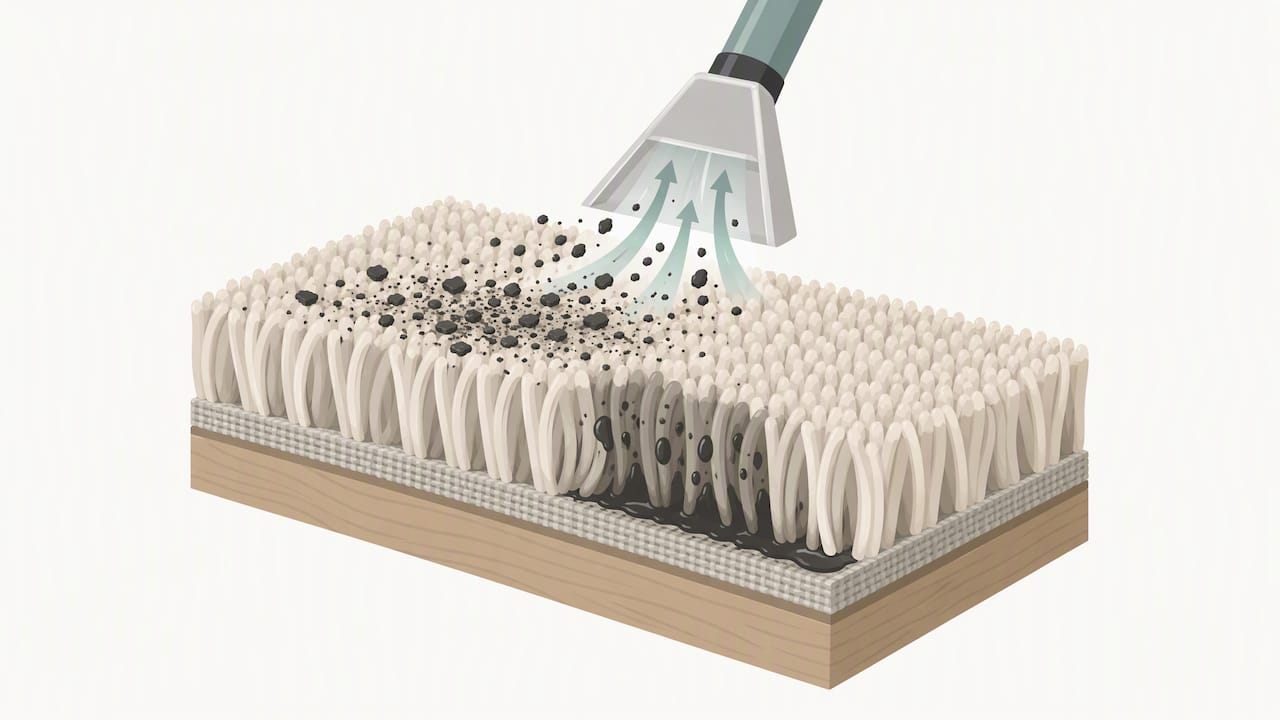
UC Agriculture and Natural Resources cleanup guidance points to professional hot-water extraction as the standard for deep carpet cleaning after a fire, because steam melts and lifts oily carbon films that dry treatment and light blotting leave behind. NADCA’s guidance adds a caution worth taking seriously: aggressive scrubbing or harsh solvents on oily soot can actually reactivate odor-causing compounds instead of removing them.
A professional visit typically includes a clear scope often outlined in your contract, as explained in detail in post remodel cleaning: what your contract should cover:
| Step | What it does |
|---|---|
| HEPA vacuuming | Removes loose particles before any liquid touches the carpet |
| Hot-water extraction | Melts and lifts oily carbon residue from fibers and backing |
| Specialized detergents | Targets soot chemistry that household cleaners miss |
| Odor control treatment | Neutralizes carbon films that cause lingering smell |
| Pad or carpet replacement | Used when penetration into the backing is too deep to restore |
Call a professional when soot has penetrated into the carpet backing, when odor persists after one or two honest DIY attempts, when the stain keeps spreading rather than shrinking, or when the soot came from an actual structural fire rather than a fireplace puff-back. The IICRC’s wildfire restoration guidance is blunt about it: heavily impacted carpet and padding sometimes need full replacement rather than cleaning, and that call is easier to make with a trained eye in the room.
Keeping the Air and Ducts Clean While You Work
Soot doesn’t stay put. If your HVAC was running during or after the event, it may have pulled fine particles into the ductwork, and running the system again can push that same soot right back out onto your freshly cleaned carpet. Tennessee Extension’s smoke removal guidance recommends caution here: if the soot event was significant, hold off on running the HVAC until the ducts get a proper cleaning.
- Keep your N95 or P100 mask, nitrile gloves, and eye protection on through the whole process, not just the vacuuming step.
- Switch off the HVAC system if soot coverage is heavy, and swap filters once cleaning wraps up.
- Set out a few bowls of baking soda or activated charcoal in the room afterward. They adsorb lingering odor far better than any spray.
- Swap your vacuum’s filter promptly so you’re not breathing recycled soot on your next cleaning pass.
What an Inspection Actually Tells Us
When we walk into a home with soot-stained carpet, we’re checking three things: how far it spread, whether the odor has set in, and whether it has reached the backing. That last one is the real decision point.
Some carpets respond fully to hot-water extraction and look like nothing happened. Others, especially with oily soot that sat too long, need pad replacement or a full carpet swap to really solve it. We back every visit with our satisfaction guarantee, and we schedule appointments locally so you’re not left guessing how long the smell will stick around.
— chris
How We Handle Soot Damage
If you’ve worked through the dry powder and the alcohol blotting and that soot is still hanging around, or the smell just won’t quit, that’s exactly the situation deep steam cleaning is built for. Hot-water extraction pulls oily carbon residue out of the pile and backing, not just masks it, and area rugs can be handled the same way when the soot landed on something you’d rather not replace.

Beyond the carpet itself, soot from a fireplace or a kitchen mishap tends to drift onto upholstery and into air ducts too, so we also offer upholstery cleaning and air duct cleaning if you want the whole room handled in one visit. For homes that deal with fireplace soot every winter, a membership can cover routine cleanings so buildup never gets the chance to set in deep.
Call us when coverage is heavy, odor lingers after your own attempts, or you can see soot has worked into the backing. Have the affected room cleared of small furniture and note roughly how long the stain has been there. It helps us pick the right approach fast. Book a visit through our carpet cleaning page and we’ll take it from there.
FAQ
Are soot stains permanent?
Not usually, if they’re treated promptly with the right method for the soot type. Oily soot that sits for a long time or penetrates the carpet backing is far more likely to leave a lasting mark or odor, which is when professional hot-water extraction becomes the more realistic fix.
Can soot stains be removed?
Most dry, surface-level soot can be removed with careful vacuuming, dry absorbent powder, and gentle blotting with isopropyl alcohol or a mild detergent solution. Oily or deeply bonded soot often needs steam extraction to fully lift, according to UC Agriculture and Natural Resources cleanup guidance.
What carpet cleaner can I use to remove soot?
Start with baking soda or cornstarch to absorb dry soot, then move to isopropyl alcohol on a cloth or a mild detergent solution for leftover marks, always testing on a hidden spot first. University of Illinois Extension lists this same vacuum, blot, detergent, hydrogen-peroxide sequence for soot removal.
What takes soot out of a rug?
The same dry-then-wet approach used on carpet works for rugs: vacuum loose particles, apply absorbent powder, then blot carefully with alcohol or detergent if residue remains. Delicate or heavily soiled rugs often do better with professional area rug cleaning rather than repeated home treatment, since scrubbing can push soot deeper into natural fibers.
Sources
- Cleaning Up After a Fire Disaster (UCANR)
- Technical Guide for Wildfire Restoration (IICRC)
- How to Clean Up Smoke and Soot from a Fire (Los Angeles County Public Health)
- Soot stain removal steps (University of Illinois Extension)