

Landlord carpet cleaning means hiring a professional service to reset carpets between tenants, not a rental-shampooer run through the living room. The move that actually protects your turnover schedule is simple: require a documented protocol covering odor treatment, dry time, and photo proof before you ever book the job. A provider that builds its process around those three things will save you more re-clean calls than any bargain quote ever will.
TL;DR:
- Use a documented protocol requiring pre- and post-service photos, odor treatment procedures, and a satisfaction guarantee to prevent disputes and ensure quality.
- Choose the carpet cleaning method based on the underlying issue, with hot water extraction for heavy soil and restoration jobs only for deep-seated problems like pet urine or structural damage.
- Require detailed, itemized estimates with clear scope, dry-time expectations, and exclusion clauses before scheduling to avoid vague results and additional costs.
- Schedule cleaning mid-morning, immediately run air movers, and monitor humidity to achieve same-day dry time for quick move-in readiness.
- Recognize when standard cleaning fails, such as persistent odor or visible seams, and promptly escalate to restoration specialists to avoid ongoing issues and costly replacements.
Table of Contents
- What Should Landlords Ask For When Hiring Carpet Cleaning For Rental Properties?
- Which Carpet Cleaning Method Fits Your Turnover?
- What Scope Details Belong In Your Cleaning Contract?
- How Do You Schedule Carpet Cleaning To Hit Move-In Deadlines?
- When Does A Rental Unit Need A Restoration Specialist Instead Of Standard Cleaning?
- What Documentation Closes Out A Carpet Cleaning Job Without Disputes?
- Why Standardizing Your Vendor Workflow Beats Heroics Every Time
- Book A Turnover-Ready Carpet Clean With Home Service Simple
- Useful Resources For Building Your Turnover Checklist
- Sources
- FAQ
What Should Landlords Ask For When Hiring Carpet Cleaning For Rental Properties?
Every quote request should read like a work order, not a favor. Send this to any vendor bidding on your turnover, and you will weed out the guess-and-go operators fast.
- Pre-service photos and a condition tier. Ask whether the unit shows odor, visible stains, or ripples and seam separation. That tier determines whether you need a standard clean or a restoration referral before work starts.
- An itemized estimate. It should name the method (hot water extraction, low-moisture, or restoration), the chemistry, estimated time on site, the drying plan, and anything explicitly excluded from the price.
- An odor protocol, in writing, when pet odor is suspected. This should spell out pretreatment, dwell time, and whether subsurface work is included or billed separately.
- Post-service photos and written notes. These become your acceptance record and your defense if a resident disputes the condition later.
- A re-clean window and a satisfaction guarantee. Get the timeframe in writing, not implied.
Pro Tip: Keep a saved template of this checklist in your property management software so every vendor bid, from your regular cleaner to a one-off restoration company, gets measured against the same standard.
Vendors who balk at itemizing scope or refuse to commit to a dry-time estimate are telling you something. Move on.
Which Carpet Cleaning Method Fits Your Turnover?
Cleaning for rental properties is not one-size-fits-all. The method has to match what is actually wrong with the carpet, and picking the wrong one either wastes money or leaves the real problem untouched.
- Hot water extraction (steam cleaning) is the workhorse for deep soil removal. A truckmount applies pre-spray and agitation, then flushes hot water through the fiber in a single pass. It is the right call for synthetic carpets with heavy traffic soil, but it needs solid airflow afterward and a longer dry-time window before the unit is show-ready.
- Low-moisture or encapsulation cleaning uses minimal water, which makes it attractive for a quick flip between showings. The trade-off is real: it removes less embedded soil than hot water extraction, so it works best on lightly soiled units, not the ones that smell like the last tenant’s dog lived in the closet.
- Restoration or sub-surface extraction comes into play when the problem has moved past the carpet fibers. Pet urine, pad contamination, or structural issues like buckling call for UV mapping, moisture meters, and subsurface tools, not a standard pass with an extractor.
Sometimes the math just does not work in cleaning’s favor. If a unit has been through three restoration attempts and the odor keeps coming back, replacing the carpet and pad is usually cheaper than a fourth round of chemistry and labor.
What Scope Details Belong In Your Cleaning Contract?
Vague work orders cause vague results. Put these specifics in writing before the crew shows up, and you eliminate the “that wasn’t included” conversation after the invoice arrives.
- Require a photo-based assessment before the method is finalized, or specify the method outright if you already know the unit’s condition.
- Demand a “no sticky residue” clause and ask for a Safety Data Sheet on any chemistry used, on request.
- Set a target maximum dry time for show-readiness, typically same-day for hot water extraction when air movers run continuously.
- List required equipment: truckmount or high-output portable extractor, agitation tools, and for restoration jobs, UV lights and moisture meters.
- Specify exclusions clearly, and require a repair-then-clean sequence: any ripples or failed seams get stretched and repaired before the carpet gets wet.
Pro Tip: Never let a vendor clean over a seam that is visibly separating. Water and heat make loose seams worse, and you will pay for repair and recleaning instead of just repair.
How Do You Schedule Carpet Cleaning To Hit Move-In Deadlines?
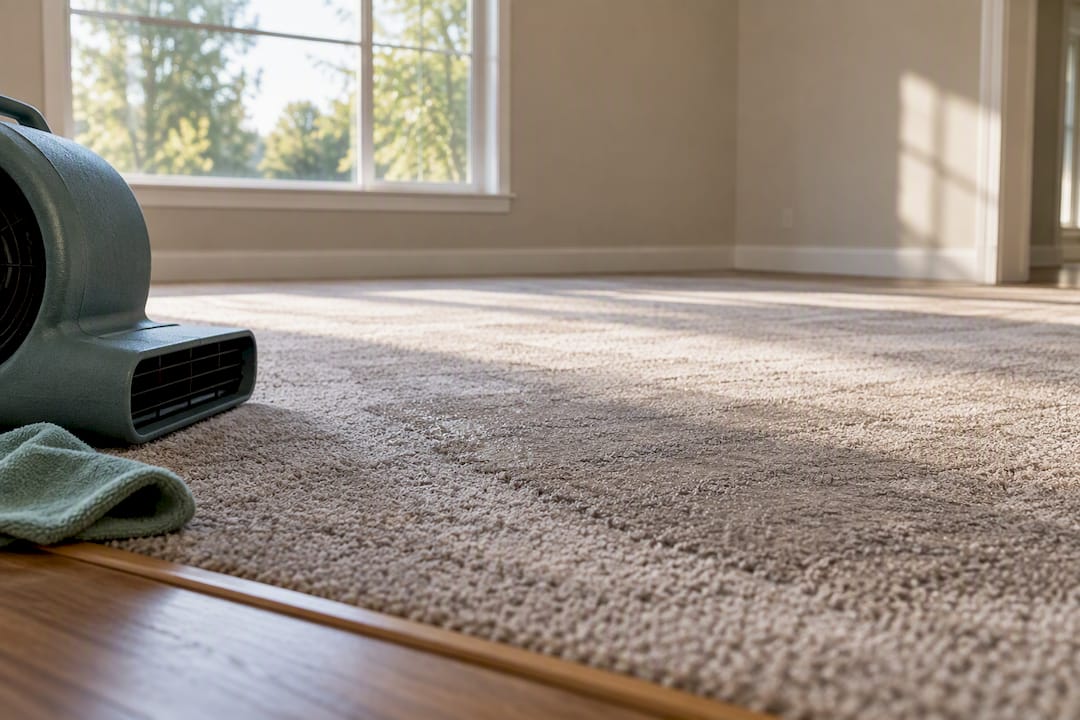
Timing decides whether your unit is ready or whether you are apologizing to an incoming tenant. Book the extraction for mid-morning so the carpet has a full day to dry with airflow working in its favor.
- Run air movers immediately after extraction and set the HVAC fan to “On” rather than “Auto” to keep air circulating through the unit.
- In humid climates, add a dehumidifier to the room; without one, dry time can stretch well past your show-ready window.
- Sequence your trades correctly: paint first, then carpet cleaning, then your punch walk, then photos. Cleaning before paint means redoing the carpet.
- If a truckmount is required, confirm parking and hose-run access ahead of time, especially in multi-unit buildings with tight lot space.
When Does A Rental Unit Need A Restoration Specialist Instead Of Standard Cleaning?
Standard extraction solves most turnovers. These four signals tell you it is time to call in restoration or pet-odor remediation instead of running another pass with the same equipment.
- Odor persists after a properly performed extraction. Run the sniff test and the sock test (walk the carpet in socks, then check for smell transfer). Lingering odor after a correct clean almost always means the pad or subfloor absorbed the contamination.
- Visible ripples or seam failures. These need stretching and repair before any cleaning happens, not after.
- Saturation from a water event, like a burst pipe or appliance leak, needs immediate extraction and a remediation assessment, not a routine turnover clean.
- Old dye-based stains or structural carpet damage where the cost of repeated restoration attempts starts to exceed the cost of replacement.
What Documentation Closes Out A Carpet Cleaning Job Without Disputes?
Paper trails prevent arguments. A short acceptance protocol turns a subjective “does it look clean?” into something you can defend if a resident or previous tenant pushes back.
- Collect before photos of traffic lanes, visible stains, and seams, then require post-service photos with written notes on what was treated.
- Have the vendor log the chemistry used, spots treated, equipment run, and total drying time.
- Run three acceptance tests: a visual sight check, a sniff test, and a sock test for lingering odor transfer.
- Get the re-clean window and dispute process in writing before the invoice is paid.
- Store every record in the unit’s file, whether that is a property management portal or a dedicated email thread, so it is available for warranty claims or audits later.
A documented sequence like this is what separates portfolios with a 4% re-clean rate from ones stuck closer to 12%, according to one cited property management case study, and that gap shows up directly in vacancy days.
Why Standardizing Your Vendor Workflow Beats Heroics Every Time

The landlords who struggle with turnovers are not the ones with bad carpets. They are the ones treating every job as a one-off instead of a repeatable process. A predictable sequence, assess, choose method, execute, document, consistently outperforms a talented crew working without a checklist.
A service model like Home Service Simple’s Simple Club shows what standardization looks like in practice: recurring service removes the scheduling scramble that causes rushed jobs and skipped documentation in the first place.
— chris
Book A Turnover-Ready Carpet Clean With Home Service Simple
If you manage rentals in and around Wichita, Home Service Simple built its process around exactly what this checklist demands: an itemized estimate, before-and-after photos, dry-time expectations set upfront, and a satisfaction guarantee behind the work. For units with pet odor history, the team’s pet urine removal process covers the subsurface work that surface cleaning alone will not fix.
Beyond carpets, landlords juggling full turnovers can bundle upholstery cleaning, tile and grout cleaning, or air duct cleaning into the same visit instead of coordinating separate vendors for each unit. Properties managing multiple turns per year often move to the Simple Club subscription to lock in recurring service without rebooking every quarter. Start by requesting an itemized carpet cleaning estimate for your next vacant unit, or book carpet cleaning directly and get the turnover scheduled before your next move-in date.
Useful Resources For Building Your Turnover Checklist
For move-in timing, see Move-In Carpet Cleaning: Book It Before the Boxes Arrive. For pet-related escalations, review the pet urine removal guide and carpet deodorizing options. For multifamily-specific restoration detail, the 360 Apartment Renovations breakdown covers sequencing and equipment in more depth.
Sources
- Carpet Cleaning & Restoration in Multifamily: The Must-Knows + How 360 Does It
- Carpet Cleaning for Property Managers: Turnover Made Easy – Telegraph
FAQ
Should Landlords Clean Carpets Before Every New Tenant?
Yes, professional cleaning between every tenant protects carpet life and gives you a documented condition baseline for move-in comparisons. Skipping it makes it harder to prove what damage belongs to which tenant later.
What Does Landlord Carpet Cleaning Typically Cost?
Pricing varies by unit size, soil level, and whether restoration work is needed on top of standard extraction. Home Service Simple does not publish a flat rate online, so request an itemized estimate for your specific unit and square footage.
How Long Should Carpet Take To Dry After Cleaning?
Hot water extraction typically needs a full day to dry with air movers running and the HVAC fan set to “On.” Low-moisture methods dry faster, often within a few hours, which makes them useful for tight turnaround windows.
How Do I Know If A Carpet Needs Restoration Instead Of Standard Cleaning?
Run the sniff test and sock test after a proper extraction. If odor persists, the contamination has likely reached the pad or subfloor and needs subsurface restoration work rather than another surface clean.
What Should Be In A Carpet Cleaning Contract For Rental Units?
The contract should specify the cleaning method, chemistry used, dry-time target, required equipment, and any exclusions like restoration work. It should also define the re-clean window and how disputes over condition get resolved.