

Vacuum weekly, blot spills fast with a material-safe cleaner, and hand-wash or machine-wash only when the care tag says you can. Deep soil calls for hot-water extraction or a professional, especially on wool, silk, and antique pieces. The Carpet and Rug Institute’s Seal of Approval program is your best gut-check for which products and equipment actually clean without leaving a residue that makes things worse.
TL;DR:
- Deep cleaning methods like hot-water extraction are best done by professionals, especially for wool, antique, or delicate rugs, to prevent damage.
- DIY options include vacuuming weekly, spot cleaning immediately, and using rental extraction machines within the care tag restrictions for synthetic or cotton rugs.
- Water-based cleaning is suitable only if the care tag allows it and the rug’s material can tolerate moisture without shrinking or warping.
- Certain fibers, such as wool and natural plant fibers, require careful handling with cool water and dry methods to avoid felting, mildew, or permanent staining.
- Professional cleaning is recommended if stains persist after two attempts or if the rug shows signs of damage like shrinkage, backing separation, or persistent odors.
Table of Contents
- What Are the Main Rug Cleaning Methods?
- How Do You Get Fresh Stains Out of a Rug?
- Can You Hand Wash or Machine Wash an Area Rug?
- Hot Water Extraction and Steam Cleaning: DIY or Call a Pro?
- Which Cleaning Method Fits Your Rug’s Material?
- How Do You Dry a Rug Without Damaging It?
- What Rug Cleaning Mistakes Should You Avoid?
- A Publisher’s Take: Where DIY Ends and a Pro Begins
- When It’s Time to Call In a Professional Rug Cleaner
- Sources
- FAQ
What Are the Main Rug Cleaning Methods?
Think of your rug’s care routine like a lineup card. You’ve got your everyday player (vacuuming), your relief pitcher for emergencies (spot cleaning), and your closer for the tough innings (extraction or a pro). Picking the wrong one for the situation is how a coffee spill turns into a permanent brown ring.
Here’s the quick rundown of what each method does and when it earns a spot in your rotation:
- Vacuuming removes loose dirt and grit before it grinds into fibers. Do it weekly, twice for high-traffic spots.
- Spot cleaning targets fresh spills with a damp cloth and a mild, pH-balanced cleaner. Use it the moment something hits the floor.
- Dry powders and shampoos lift soil without water, ideal for plant-fiber rugs that hate moisture.
- Hand washing works for smaller wool or synthetic rugs when you need a full refresh but don’t have a machine option.
- Machine washing applies only when the label allows it, usually smaller cotton or synthetic-blend rugs.
- Hot-water extraction flushes deep soil out of the pile with pressurized solution and suction. This is the gold standard for periodic deep cleaning.
- Dry cleaning (solvent-based, done by a pro) suits delicate or antique rugs that can’t handle water at all.
- Professional rug cleaning combines several of these methods with equipment most homeowners don’t own.
Before you touch any liquid, flip the corner of your rug and check the care tag. Codes matter: W means water-based cleaners are fine, S means solvent-only (no water), WS allows either, and X means vacuum only, no wet cleaning of any kind. Whatever the code says, test your cleaner on a hidden corner first and watch for color transfer before you go all in.
How Do You Get Fresh Stains Out of a Rug?
The first sixty seconds after a spill decide whether you’re dealing with a stain or a memory. Grab a plain white cloth, not a colored one, and press straight down. Never rub. Rubbing pushes the spill deeper into the pile and frays the fibers while you’re at it.
Work through it like this:
- Blot from the outside in. This keeps the spill from spreading wider than it already has.
- Water-based stains (juice, wine, soda): mix one teaspoon of mild dish soap with a cup of cool water, apply with a cloth, then blot with plain water to rinse.
- Oil-based stains (grease, makeup): sprinkle cornstarch or baking soda to absorb the oil first, let it sit 15 minutes, vacuum it up, then treat any remaining mark with the same mild soap solution.
- Protein stains (blood, egg, dairy): use cold water only. Heat sets protein stains permanently, so skip the hot water no matter how tempting it feels.
- Pet urine: blot up as much as possible, then apply an enzyme cleaner that breaks down the uric acid rather than just masking the smell. Baking soda is a solid follow-up for lingering odor once the spot is dry.
- Ink or paint: dab (don’t smear) rubbing alcohol on a cloth for ink, and for wet paint, scrape off the excess before it dries, then treat like a standard water-based stain.
Rinse every treated spot with a cloth dampened in plain water to pull out leftover soap. Soap residue attracts dirt like a magnet, which means your “clean” spot resoils faster than the rest of the rug.
Pro Tip: If a stain is still visible after two honest attempts with the right method, stop. Repeated scrubbing at that point just damages the fiber, and a set-in stain is exactly the kind of job professional rug cleaning handles better than another bottle of carpet cleaner ever will.
Can You Hand Wash or Machine Wash an Area Rug?
Check the tag before you check anything else. A W or WS code means water-based washing is fair game; a machine-wash icon on smaller synthetic or cotton rugs means the washer is fine too, as long as you respect the size limit on your machine.
Hand-washing steps:
- Vacuum both sides first. You’re not washing dirt into the rug deeper than it already sits.
- Test your cleaner on a hidden corner and wait a few minutes to confirm no color bleeds.
- Dilute a mild detergent in cool water, no more than the label recommends.
- Scrub gently in small sections with a soft brush, always working with the direction of the pile.
- Rinse thoroughly with a hose or clean water until the runoff is clear, not soapy.
- Press out excess water with a squeegee or towels, then lay flat to dry.
Machine-washing steps:
- Shake the rug outside hard first to knock loose dirt out before it hits the drum.
- Use a gentle or delicate cycle with warm water, generally in the 90 to 105 degree Fahrenheit range for washable textiles.
- Skip the dryer for most rugs. High heat shrinks fibers and can warp rubber backing.
- If the label allows tumble drying, use the lowest heat setting and check it often.
Hot Water Extraction and Steam Cleaning: DIY or Call a Pro?
Extraction machines combine three things at once: pressurized cleaning solution, agitation, and strong suction that pulls the dirty water back out. That combination is why CRI 205 treats extraction as the standard for real deep cleaning, not the spray bottle and paper towel routine most of us default to.
A rented extractor can absolutely handle interim deep cleaning between professional visits. Here’s the safe sequence:
- Vacuum thoroughly first so the machine isn’t just pushing surface dirt around.
- Pre-spray a cleaning solution and let it sit a few minutes to loosen embedded soil.
- Extract starting from the farthest corner of the room, working back toward the door so you’re not walking on wet rug.
- Make several dry passes with no solution, just suction, to pull out as much moisture as the machine can grab.
- Ventilate the room with fans or open windows so the rug dries within 6 to 12 hours, not overnight.
The Carpet and Rug Institute recommends professional deep cleaning every 12 to 18 months for most homes, and some manufacturers require an SOA-certified pro to keep the warranty intact. Large rugs, delicate backing, wool, or a stain that’s already fought off two DIY attempts are all good reasons to hand the job to someone with commercial-grade equipment instead of a rented unit that may not extract enough water. Our steam carpet cleaning guide breaks down what a professional visit actually involves if you want to compare it against the rental route.
Which Cleaning Method Fits Your Rug’s Material?
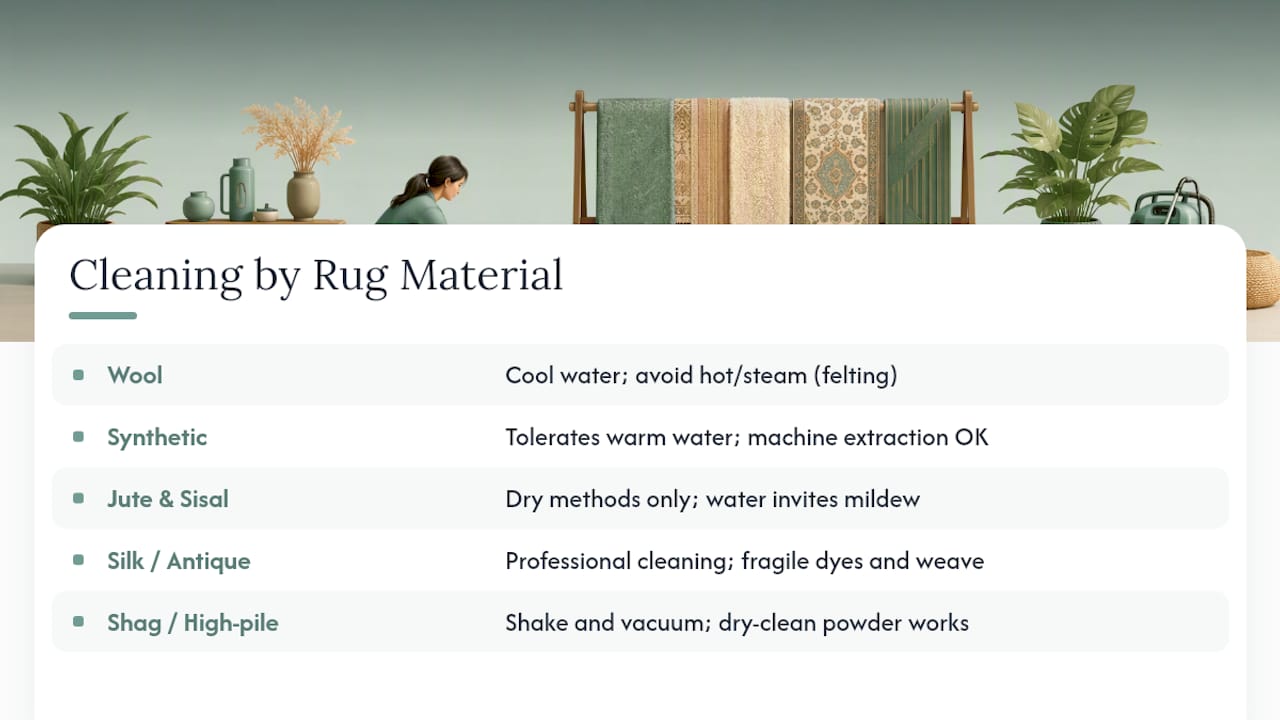
Not every rug reacts the same way to water, heat, or a scrub brush, and this is where most DIY rug cleaning goes wrong. Wool looks tough but hates two things: hot water and steam. Both can felt the fibers into a stiff, matted mess that never looks the same again. Stick to cool water, wool-safe detergents, and always air-dry wool flat rather than hanging it, which stretches the weave.
Synthetic rugs, made from nylon, polyester, or olefin, are the forgiving athletes of the rug world. They generally tolerate warm water and machine extraction just fine, which makes them the easiest candidate for a rental extractor or even a basic hand wash.
Natural plant fibers, jute and sisal especially, are the opposite story. These fibers absorb water like a sponge and rarely dry all the way through, which invites mildew and permanent staining. Dry methods only: vacuuming, dry cleaning powders, and a stiff brush for surface dirt.
Silk, hand-knotted, and antique oriental rugs sit in their own category entirely. The dyes in a lot of vintage and handmade pieces aren’t as stable as modern synthetic dyes, and the foundation weave underneath can be fragile. Professional cleaning is the safer call here almost every time, and it’s worth the cost compared to what a DIY mistake could cost in restoration.
Shag and high-pile rugs need a different kind of patience. Shake them out, vacuum both the front and back, and for a deeper refresh, a dry-cleaning powder worked into the pile and vacuumed back out handles buried dirt without matting the fibers flat. Our shag rug cleaning guide covers the fluff-restoring technique in more detail if your rug has seen a few too many bare feet.
Pro Tip: When in doubt about a material, treat it like wool. Cool water, gentle products, and patience cost you nothing. Hot water and aggressive scrubbing on the wrong fiber can cost you the whole rug.
How Do You Dry a Rug Without Damaging It?
Water left sitting in a rug is where good cleaning turns into a mildew problem. Before you even think about air-drying, pull out as much moisture as physically possible using a squeegee, a wet-dry vac, or repeated blotting with dry towels.
A few things make the difference between a rug that dries clean and one that dries musty:
- Lay the rug flat somewhere with real airflow, a garage with fans running or a room with open windows works better than a closed bathroom.
- Never use direct heat like a space heater. It dries the surface fast while trapping moisture underneath, which is exactly the setup mildew wants.
- Rotate or flip the rug partway through drying so both sides get equal air exposure.
- Once dry, vacuum and brush the pile with a soft brush to lift fibers that got flattened during cleaning.
- Rinse thoroughly enough during washing that the runoff water runs clear. Cloudy runoff means soap is still trapped in there, and that residue attracts dirt fast once the rug goes back on the floor.
What Rug Cleaning Mistakes Should You Avoid?
Most rug damage isn’t from dirt. It’s from well-meaning cleaning gone wrong. A few habits cause the majority of the calls we get after someone’s DIY attempt didn’t go as planned.
- Scrubbing hard instead of blotting. Aggressive scrubbing frays fibers and can push a stain deeper rather than lifting it out.
- Over-wetting the rug. This is the single most common DIY error, and it leads directly to mildew, odor, and backing separation.
- Using the wrong detergent. Bleach, ammonia, or harsh household cleaners can strip dye and damage natural fibers permanently.
- Skipping the rinse step. Leftover soap residue is a dirt magnet that makes your rug look dingy again within weeks.
- Vacuuming fringe with a beater bar. This shreds fringe threads. Use suction only, or better yet, check our rug fringe cleaning guide.
If you catch over-wetting early, rinse the area to clear residue, blot aggressively, and get airflow moving right away. Slide plastic tabs under furniture legs until the rug is fully dry so wood finishes don’t bleed onto damp fibers. If you’re seeing shrinkage, the backing separating from the pile, a smell that won’t quit, or a stain that’s outlasted your patience, that’s your sign to call in a professional rather than try a third round yourself.
A Publisher’s Take: Where DIY Ends and a Pro Begins
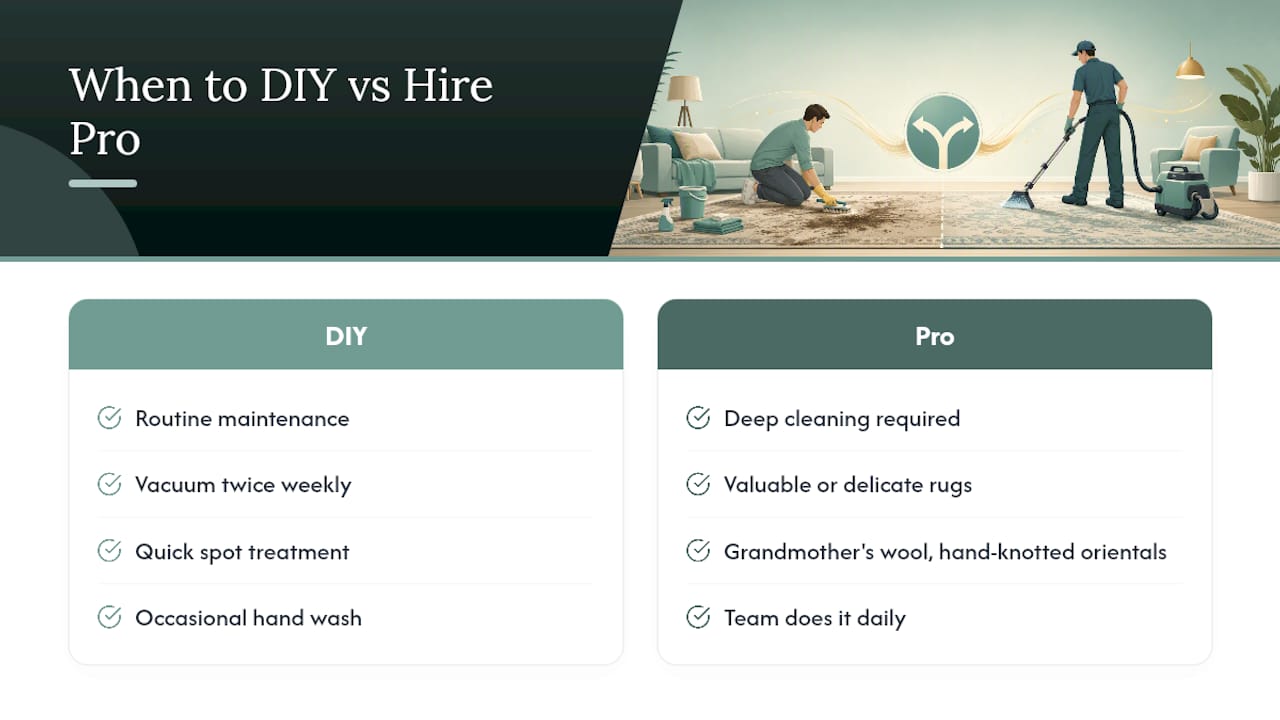
Here’s my honest read after digging into how these methods actually perform: routine maintenance, vacuuming, quick spot treatment, the occasional hand wash, is genuinely homeowner work. You don’t need special training to blot a wine spill correctly or run a vacuum twice a week.
Where I think people get overconfident is deep cleaning on anything valuable or delicate. A grandmother’s wool rug or a hand-knotted oriental piece isn’t the place to test a rental extractor for the first time. That’s a job worth handing to a team that does it daily, with equipment built for it. A satisfaction guarantee indicates confidence in the cleaning process before handling something irreplaceable, especially when you rely on professional house washing services that use commercial-grade equipment.
— chris
When It’s Time to Call In a Professional Rug Cleaner
There are situations where the smartest DIY move is knowing when to stop. If your rug is valuable, delicate, or already carrying a stain that’s outlasted two honest attempts, a professional visit almost always outperforms another trip to the hardware store for a different spray bottle.
A professional visit typically starts with an inspection of the fiber type and existing damage, followed by targeted pre-treatment on stains, full hot-water extraction, pile grooming, and careful fringe cleaning before the rug goes through a controlled drying process. That last part matters more than people think. Drying wrong is how a professionally cleaned rug still ends up smelling musty a week later. Home Service Simple handles that entire sequence for area rug cleaning in Wichita, built around the same commitment to honest pricing and customer satisfaction that backs every service the company runs. If mildew, backing separation, or a set-in stain has you past the DIY stage, or you’d simply rather not risk a wool or oriental piece on a rental machine, request a quote and get it handled right the first time.
Sources
The Carpet and Rug Institute’s Seal of Approval program and its CRI 205 residential standard set the baseline for what “tested clean” actually means for products and equipment. For material-specific how-tos, Architectural Digest and BobVila both offer solid step-by-step breakdowns worth bookmarking.
- Why are Seal of Approval products right for your home? — Carpet and Rug Institute
- How to clean a rug — Architectural Digest
- How to clean an area rug — Martha Stewart
FAQ
What is the best way to deep clean a rug at home?
Hot-water extraction is the most effective DIY deep-clean method, combining pressurized solution with strong suction to pull soil out rather than just push it around. Always vacuum first, work in sections, and make several dry passes to remove as much water as the machine can pull, per CRI 205 guidance.
Is it better to steam clean or hand wash a rug?
It depends on the rug’s material and size. Steam or hot-water extraction works well for larger synthetic or wool-blend rugs with general soiling. Hand washing suits smaller rugs or spot situations where you need more control over the scrubbing.
What are the most common rug cleaning mistakes?
Over-wetting tops the list, since trapped moisture leads to mildew and backing damage. Scrubbing instead of blotting, using harsh detergents, and skipping the rinse step round out the mistakes that turn a simple cleaning job into a repair problem.
How do professional rug cleaners clean rugs?
Professionals inspect the fiber type, pre-treat visible stains, run full hot-water extraction, groom the pile back into shape, and manage drying time carefully to avoid mildew. This is the same sequence Home Service Simple follows for area rug cleaning, tailored to whether the piece is wool, synthetic, or a delicate handmade rug.
How much does professional rug cleaning cost?
Pricing depends on rug size, material, and condition, so current pricing is available directly on the Home Service Simple site rather than a flat number that applies to every rug. Homeowners who want ongoing care without booking each visit separately can also look at the Simple Club membership plans, starting at $20 a month for the Standard tier.