

Bleach doesn’t stain carpet. It erases the dye, which means scrubbing, shampooing, and every carpet cleaner under your sink won’t touch it. Your first move has to be stopping the bleach cold before it spreads any further, blotting and neutralizing right away. After that, you’re choosing between a small DIY color fix, a patch, or a professional dye job, depending on how big the spot is and what your carpet is made of.
TL;DR:
- Bleach permanently destroys carpet dye, so color restoration is only possible through dyeing or patching, depending on fiber type and damage extent.
- Neutralizing bleach immediately with vinegar or a neutralizer and photographing the spot in natural light are essential steps to minimize damage.
- Small spots on nylon or wool can often be retouched with thin, layered dye, while larger or patterned areas may require professional patching for a seamless look.
- Avoid layering chemicals or mixing unknown products on the spill, as this can worsen the damage or complicate repairs.
- Proper prevention, such as storing bleach upright and using protective trays during transfers, avoids the need for costly and complex repairs later.
Table of Contents
- What To Do the Second You Spot a Bleach Spill on Carpet
- Can You Fix Bleach Stains on Carpet Yourself?
- When Should You Patch Carpet Instead of Dyeing It?
- What Does Professional Bleach Stain Repair Actually Involve?
- Preventing Bleach Spots Before They Happen
- A Carpet Cleaner’s Honest Take on Bleach Spots
- How Home Service Simple Handles Bleach Damage in Wichita Homes
- Sources
- FAQ
What To Do the Second You Spot a Bleach Spill on Carpet
The clock matters here. Bleach keeps working on carpet fibers until it’s neutralized. A spot that’s the size of a quarter right now can grow to the size of a dinner plate if you leave it sitting.
Here’s the sequence, in order:
- Blot, don’t rub. Grab white towels (colored ones can transfer their own dye) and press straight down on the wet area. Rubbing or scrubbing just drives the bleach deeper into the pad and spreads it sideways across more fibers, which is the opposite of what you want when you’re trying to contain a chemical spill on carpet.
- Neutralize it. Mix a small amount of white vinegar with cool water, or use a commercial bleach neutralizer if you have one on hand, and apply it directly to the affected fibers. This step is what separates a fixable spot from an ongoing problem, because residual bleach will keep bleaching and will also fight any dye you try to apply later.
- Extract thoroughly. Blot up the neutralizing rinse with fresh dry towels until the area feels barely damp. Don’t flood it. Over-wetting pushes bleach and rinse water into the pad and backing, which can cause its own set of issues down the road.
- Photograph it in natural light. Before the spot dries and before you do anything else, take a few clear photos near a window. Daylight shows the true color loss, which matters enormously if you end up calling a professional for a color match or an estimate.
- Skip the extra chemicals. Don’t layer on stain removers, disinfectants, or anything else you find under the sink. Mixing unknown products with bleach residue is how a bad spot becomes a bigger one, and it makes later restoration harder to predict.
Keep pets and kids off the spot until it’s fully dry and rinsed. Bleach fumes and residue on bare feet or paws are not something you want to deal with on top of a carpet repair.
Pro Tip: Keep a small stash of white microfiber towels specifically for chemical spills. Colored towels can bleed dye onto the carpet and confuse what’s actual bleach damage versus a new stain you just created.
Can You Fix Bleach Stains on Carpet Yourself?
Bleach doesn’t leave behind a residue you can lift out. It oxidizes and destroys the actual dye molecules woven into the fiber, so the fiber itself is still there, it’s just colorless. That’s why no amount of extraction or spot cleaner will ever restore a bleach spot. You’re not removing anything. You’re putting color back.
That distinction changes your whole approach. Before you touch a dye or a marker, figure out what your carpet is made of, because it decides whether DIY color restoration has a shot at working.
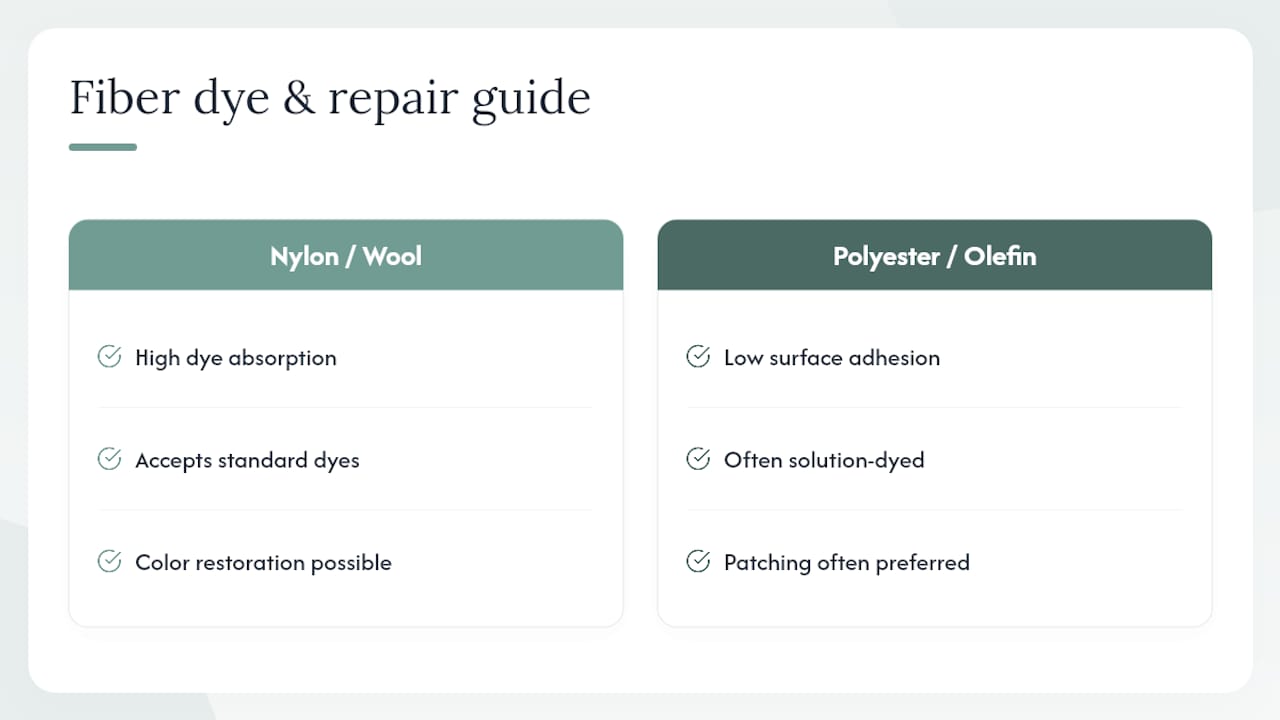
Nylon and wool take dye well. These fibers have an open molecular structure that absorbs pigment, which is exactly what carpet manufacturers rely on when they dye carpet in the first place.
Polyester and olefin (polypropylene) are a different story. These synthetic fibers are typically solution dyed, meaning the color runs all the way through the fiber during manufacturing rather than sitting on the surface. Standard carpet dyes often won’t adhere properly to olefin, which is one reason patching tends to be the more realistic fix for that material.
Small-spot dye application, step by step
If you’ve confirmed nylon or wool and the spot is small, here’s the process:
- Test your dye mix on a hidden scrap first, like a closet corner or leftover remnant, never on the visible spot itself.
- Mix small batches. It’s far easier to add more color than to strip out an oversaturated mess.
- Apply in thin layers, checking the color in natural daylight between coats, and let it dry before judging the match, since wet dye always looks darker than it will once cured.
- Build up gradually rather than trying to nail the shade in one pass.
Quick conceal with markers
For renters or anyone who just needs something presentable fast, a fabric or permanent marker can work as a stopgap. Real carpet rarely has one flat, uniform color, so use two or three shades and dab them in small dots rather than one solid stroke. That flecked, multi-tone layering is what keeps a marker fix from reading as an obvious patch job.
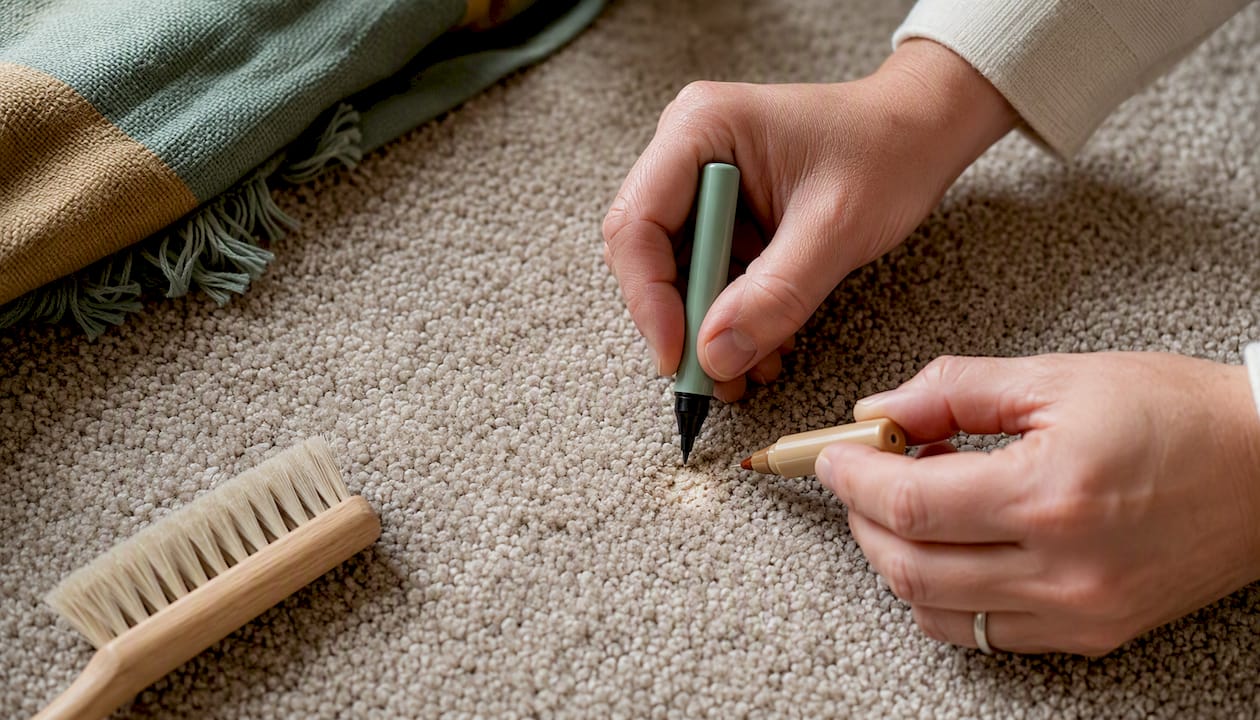
Once color is applied, groom the fibers with a soft-bristle brush to blend the treated strands into the surrounding pile. This feathering step is what makes the difference between a repair you can spot from across the room and one that disappears into the carpet.
Here’s the catch worth knowing before you start: mismatched or overly saturated DIY dye jobs are a common reason professional repairs end up taking longer and costing more than if the spot had been left alone. A tech now has to correct your color on top of the original bleach damage, which is more work than starting fresh.
When Should You Patch Carpet Instead of Dyeing It?
Dyeing works when the fiber structure is intact and the color loss is the only issue. Patching becomes the better call once any of these three factors show up.
Size. A bleach spot larger than a silver dollar starts pushing past what a small-batch dye application can blend convincingly. Bigger spots also mean more surface area where uneven color becomes obvious.
Fiber condition. Bleach doesn’t just strip pigment. Strong or prolonged exposure can leave fibers brittle or structurally weakened, and damaged fibers rarely hold dye evenly. If the carpet feels stiff, crunchy, or the fibers seem to be breaking down at the spot, patching is the more dependable fix.
Pattern complexity. Solid-color, single-tone nylon is forgiving. A multi-tone Berber, a patterned area rug, or a carpet with a visible weave is a different challenge entirely, since matching several colors in a small hand-dyed spot is much harder to pull off convincingly.
If you decide patching is the right call, here’s the general process:
- Source a donor piece. Check closets, under heavy furniture, or any leftover remnant from installation. This is exactly why keeping a scrap piece when carpet goes in pays off years later.
- Match the nap direction. Carpet pile lays a certain way, and a patch installed against the grain will catch light differently and stand out no matter how good the color match is.
- Cut a clean shape. A straight-edged square or rectangle is far easier to seam invisibly than an irregular outline.
- Prepare the seam. Trim the damaged section to match your donor piece’s exact dimensions.
- Install with seam tape or hot-melt adhesive. This bonds the patch securely to the backing without leaving a visible ridge.
- Groom and blend. Brush the seam line so fibers from the patch and the surrounding carpet mix together at the edges.
Patching costs less than replacing an entire room of carpet and, done well, holds up for the life of the flooring. The trade-off is a visible seam if the installer isn’t careful, which is part of why this is skilled work rather than a weekend project for most homeowners.
What Does Professional Bleach Stain Repair Actually Involve?
A carpet repair technician isn’t cleaning your carpet. They’re restoring it, and that distinction shapes everything about how they approach the job.
Professionals start the same way you should: neutralizing any residual bleach before touching a dye bottle, since leftover oxidizer will keep attacking new color the same way it attacked the original dye. From there, they mix carpet-grade acid dyes formulated for the specific fiber, apply them with small precision applicators, and check the result in natural light as it dries. Pros typically mix slightly lighter than the target shade and build up in thin layers, because it’s far easier to deepen a color than to correct an overshot one.
When the spot involves brittle fibers, an unusual pattern, or a large area, most technicians will recommend patching over dyeing and pull a donor piece from a closet or storage remnant for a seamless match.
Before hiring anyone, ask these questions:
- Can they show photos of past bleach repairs, not just general cleaning?
- Do they neutralize the area before starting color work?
- Is there a written guarantee if the color doesn’t hold or fade unevenly?
- How do they source donor carpet for patch jobs?
Pro Tip: Get every quote itemized in writing before work starts. A vague verbal estimate for “spot repair” tells you nothing about whether neutralization, dye matching, and blending are all actually included.
Expect a single spot repair to take under an hour for straightforward dyeing, longer if patching or multiple color layers are involved. Realistic expectations matter here: a well-matched repair will be very hard to spot in normal lighting, but it’s rarely 100% invisible under direct sun or a flashlight held at an angle.
Preventing Bleach Spots Before They Happen
The cheapest bleach repair is the one you never have to make.
- Store bleach upright in a stable, tightly capped container, and keep it off carpeted floors entirely. A tipped bottle on tile is a mop-up. A tipped bottle on carpet is a repair project.
- Use a rigid tray, towel, or carrier any time you’re moving an open bleach container across a carpeted room.
- Reach for a non-bleach disinfectant in carpeted living spaces and bedrooms, and save chlorine bleach for tile, grout, and hard-surface areas where a spill wipes up clean.
- Make it a two-person job to carry a full bleach jug through carpeted hallways. An extra set of hands is cheaper than a dye repair.
A Carpet Cleaner’s Honest Take on Bleach Spots
Bleach spots are restoration jobs, not cleaning jobs, and that’s the mistake most homeowners make first. You cannot shampoo, steam, or scrub color back into a fiber. A quick marker fix is fine for a dime-sized spot behind a couch. For anything bigger, in a hallway, or on a multi-tone carpet, it is recommended to neutralize immediately and send photos before touching a dye kit. That one step often saves both money and a second repair visit.
— chris
How Home Service Simple Handles Bleach Damage in Wichita Homes
Home Service Simple treats bleach spots the way any carpet repair should be treated: as color restoration, not deep cleaning. A carpet cleaning visit starts with an on-site assessment where a technician neutralizes any active bleach, checks fiber type, and matches dye in natural light before anything gets applied.
If you’ve already tried a DIY fix, mention it. It changes how a technician approaches the color match, and it’s better for them to know upfront than to discover a marker layer mid-repair. Before your visit, snap a few photos of the spot in daylight and jot down roughly when the bleach exposure happened. For homeowners weighing options, this guide to reading a carpet cleaning estimate walks through exactly what an itemized quote should include, so you know what you’re paying for before a technician steps through the door. Home Service Simple backs its work with a satisfaction guarantee, and every visit includes a straightforward look at whether your spot calls for dye matching or a patch. Reach out to book an assessment and get a real number instead of guessing at the damage yourself.
Sources
- Bleach Spot Repair on Carpet: A Pro Guide
- How Bleach Removes Color from Carpet (and What You Can Do About It) – DyeGenie Carpet Dying
- How to Repair a Bleach Stain on Carpet: A Step-by-Step Guide
- Bleach Discoloration
FAQ
Is there any way to get a bleach stain out of carpet?
Bleach removes the dye rather than adding a stain, so there’s nothing to lift out. The fix is reintroducing color through dyeing or replacing the damaged fibers with a patch.
Does bleach stain carpet immediately?
Yes, often within seconds to a couple of minutes, and it keeps working until it’s neutralized with a diluted vinegar rinse or a commercial neutralizer and fully extracted.
What happens if you get bleach on your carpet?
The bleach oxidizes and breaks down the dye molecules in the fiber, leaving a lighter or white spot where the color used to be. Blot it immediately, neutralize it, and photograph the area before it fully dries.
Are bleach stains permanent?
The color loss itself is permanent because the original dye is chemically destroyed, but the appearance isn’t. Dyeing, targeted markers, or patching can all restore the look depending on spot size and fiber type.
How do I fix bleached carpet if the spot is small?
For a small, isolated spot on solid-color nylon or wool, careful dye application built up in thin layers usually gets the closest match. Larger spots, patterned carpet, or damaged fibers typically call for patching or a professional visit.