

Move fast. Grab disposable gloves, a plastic scoop or spatula, and a stack of paper towels before you do anything else. Scoop up as much solid material as you can without pressing it deeper into the pile, then blot the wet area from the outside edge inward. Do not rub. Rubbing spreads the stain and pushes waste into the carpet backing, where odor compounds settle in and stay. Once you’ve lifted the bulk of the mess, pretreat the spot with an enzyme-based cleaner or a mild detergent solution, then extract or rinse with clean water. That four-step sequence, done in the first 10 minutes, is the foundation of any good diarrhea carpet cleanup.
Both IICRC and OSHA draw a clear line between cleaning and disinfecting. You can reduce bacteria and odor significantly with the right products and technique. Full decontamination to clinical standards is a different matter entirely, and we’ll get to that.
Pro Tip: Before applying any cleaner, dab a small amount on a hidden corner of the carpet and wait five minutes. If the color holds, you’re good to go. Colorfastness testing takes 30 seconds and saves you from a permanent bleach spot.
Key Takeaways
Effective diarrhea carpet cleanup requires removing solids immediately, blotting without rubbing, applying an enzyme cleaner, and extracting thoroughly to reach backing-level odor before it sets.
| Point | Details |
|---|---|
| Act within 10 minutes | Remove solids, blot from outside in, and pretreat before the stain sets into the backing. |
| Use enzyme cleaners | Products like Nature’s Miracle break down odor molecules; baking soda only absorbs surface smell. |
| Extract, don’t just blot | Multiple short extractor passes at different angles remove backing-level odor compounds. |
| Disinfection has real limits | OSHA confirms carpets cannot be routinely decontaminated with household disinfectants. |
| Homeservicesimple for tough jobs | Wichita pet owners can book deep steam extraction with a satisfaction guarantee when DIY falls short. |
Table of Contents
- What supplies do you need for diarrhea carpet cleanup?
- Step-by-step: how to clean fresh dog diarrhea from carpet
- When does surface cleaning fail, and how does deep extraction help?
- What are the real limits of DIY carpet disinfection?
- When should you call a professional carpet cleaner?
- What we’ve learned from cleaning pet accidents in Wichita
- Wichita pet owners: skip the guesswork and book a pro
- Sources
- FAQ
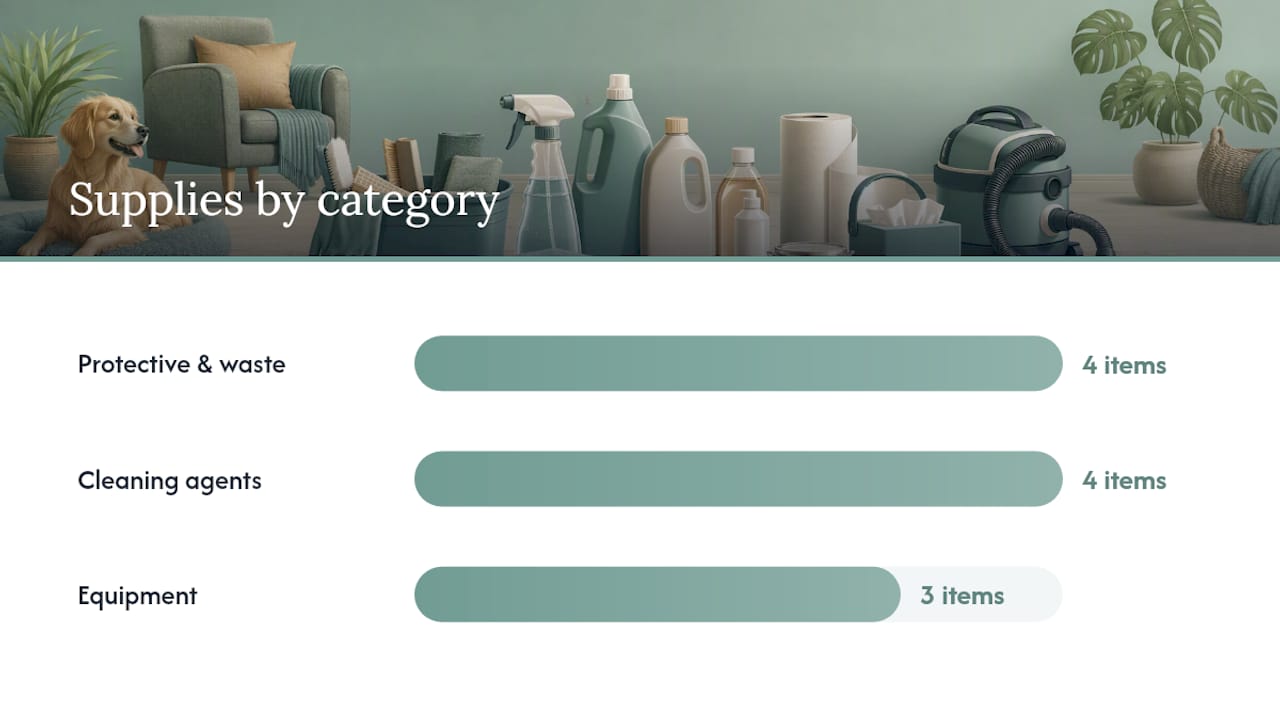
What supplies do you need for diarrhea carpet cleanup?
Getting the right tools together before you start prevents you from making extra trips mid-cleanup, which usually means more spreading.
Protective gear and waste removal:
- Disposable nitrile or latex gloves (double up if the mess is large)
- Plastic scoop, old spatula, or stiff cardboard for lifting solids
- Paper towels or absorbent pads for blotting
- Plastic bags for sealing and disposing of contaminated materials
Cleaning agents:
- Enzyme-based pet cleaner such as Nature’s Miracle, which breaks down the odor-causing organic molecules rather than just masking them
- Mild dish soap solution: UGA Extension recommends 1 teaspoon of white dishwashing detergent per 1 pint of lukewarm water
- OxiClean or another oxygen-based booster for older or set-in poop stains in carpet
- A machine-safe pet formula for extractor use, such as Woolite® INSTAclean® Pet Machine Formula
Equipment:
- White microfiber or cotton towels (colored towels can transfer dye)
- Handheld wet/dry vacuum or a carpet extractor (Bissell-style home machines work well for most pet accidents)
- Fan or dehumidifier to speed drying after extraction
Pro Tip: Never mix ammonia-based cleaners with bleach. The combination produces toxic fumes. Also, avoid ammonia on pet stains entirely — the smell mimics urine and can encourage your dog to re-mark the same spot.
Step-by-step: how to clean fresh dog diarrhea from carpet
Work through these steps in order. Skipping ahead or jumping straight to a strong chemical usually makes things worse.
-
Put on gloves and open a window. Ventilation protects you from fumes and speeds drying. Dog feces can carry pathogens, so treat this like the biohazard it is.
-
Remove solids first. Use your plastic scoop to lift waste gently, working from the outside of the mess toward the center. The goal is to lift, not scrape. Scraping pushes material into the pile.
-
Blot the wet area. Press absorbent pads or folded paper towels firmly onto the stain, working from the outer edge inward. Per UGA Extension guidance, keep blotting and replacing pads until no more color transfers. This step alone removes a surprising amount of the stain.
-
Apply your cleaning solution. Sponge or lightly spray the UGA detergent solution (1 tsp dish soap per 1 pint lukewarm water) or an enzyme cleaner onto the stained area. Do not drench the carpet. Over-wetting pushes residue into the backing and causes wicking later, where the stain reappears as the carpet dries.
-
Let it dwell, then blot again. Give the solution 3–5 minutes to work, then blot with clean white towels. Repeat the apply-and-blot cycle until the towel comes up clean.
-
Rinse with clean water. Sponge the area lightly with plain lukewarm water to remove detergent residue. Leftover soap residue attracts soil and causes rapid re-soiling, which IICRC moisture guidance specifically flags as a common DIY mistake.
-
Extract or blot dry. If you have a wet/dry vacuum or a Bissell-style extractor, run it over the area using a pet-safe machine formula like Woolite® INSTAclean® Pet Machine Formula. Make multiple short passes, changing direction, rather than one long saturating pass. Per BISSELL guidance, multiple passes at different angles pull more residue from the backing.
-
Seal and dispose of waste materials. Bag all used paper towels, gloves, and pads. Wash your hands thoroughly.
-
Dry the area completely. Point a fan directly at the cleaned spot. The faster the carpet dries, the less chance of wicking or mold growth.
Pro Tip: If the stain comes back after drying, that’s wicking — residue from the backing migrating back up through the pile. Don’t add more chemical. Run another extraction pass with plain water, then dry aggressively with a fan.
When does surface cleaning fail, and how does deep extraction help?
Surface cleaning lifts what’s in the pile. It rarely reaches the carpet backing, the pad underneath, or the subfloor. Dog diarrhea is liquid enough to soak through quickly, especially on thicker carpets, and that’s where the persistent odor lives.
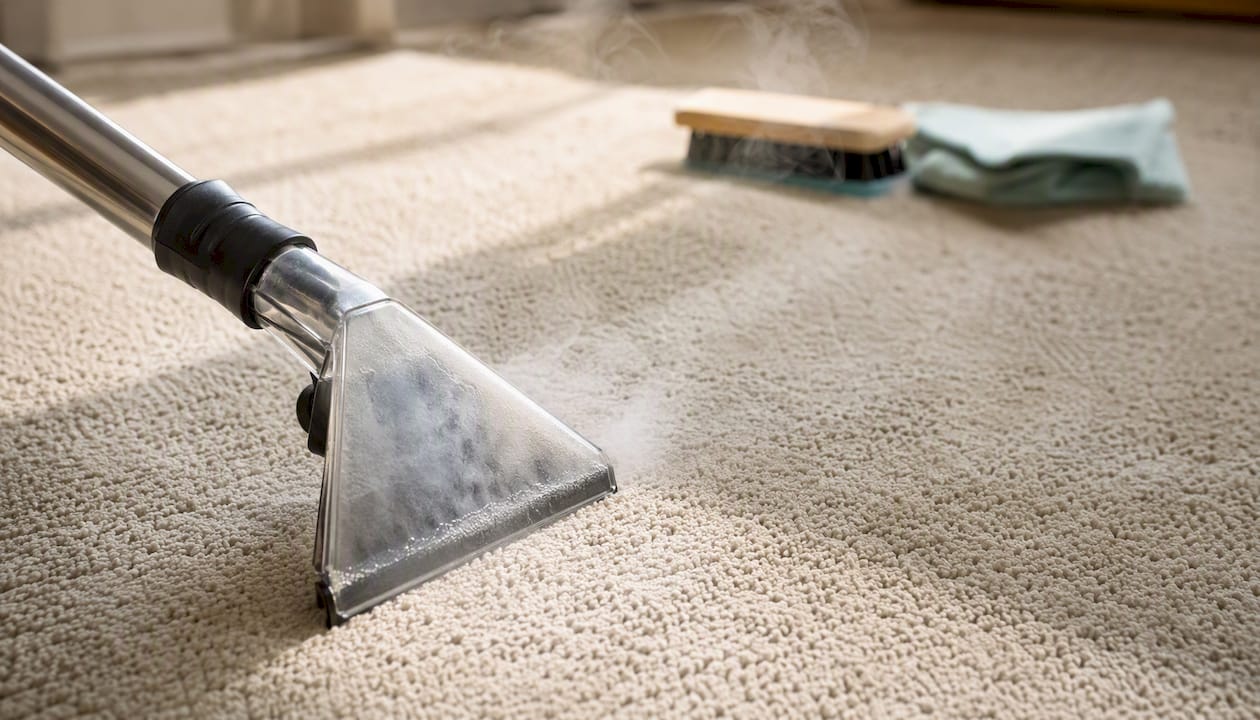
A carpet extractor changes the equation. The machine injects a cleaning solution under pressure, then immediately vacuums it back out, pulling contaminants from deeper in the fiber structure. BISSELL’s guidance on cleaning dog poop from carpet specifically recommends machine extraction with a pet-safe formula to reach backing-level odor and reduce odor-causing bacteria.
How to run an extractor effectively:
- Pre-spray the area with your enzyme cleaner and allow a 5-minute dwell time before extracting
- Make slow, overlapping passes — rushing reduces suction contact time
- Change your pass angle (horizontal, then vertical) to pull from different fiber directions
- Repeat passes until the recovery water runs clear
- Finish with a plain-water rinse pass to remove formula residue
Enzyme cleaners and baking soda serve different roles here. Enzyme cleaners, like Nature’s Miracle, break down the organic molecules that cause odor at a chemical level. Baking soda absorbs surface odors and can be sprinkled on a dry area after extraction, left for 15–20 minutes, then vacuumed up. It won’t disinfect, but it does help with lingering smell between cleaning sessions.
Pro Tip: Two gentle extraction passes beat one heavy one every time. A single saturating pass over-wets the backing and can take 24–48 hours to dry, creating ideal conditions for mold and wicking.
What are the real limits of DIY carpet disinfection?
Here’s the honest answer: you can clean and sanitize a carpet. You cannot routinely decontaminate it to clinical standards with household products.
OSHA has stated directly that there is no EPA-registered disinfectant claim for plush carpeting and that carpets may not be routinely decontaminated. Their guidance for employers is to make reasonable cleaning efforts and consult product labels and carpet manufacturers. For home use, that means doing your best with the right products while understanding the limits.
IICRC guidance draws a useful distinction: cleaning removes the soils that would otherwise interfere with a disinfectant. Sanitizing comes after. For loose or runny feces, IICRC recommends following cleaning with an appropriate disinfectant where sanitizing is required, using products whose labels permit carpet use.
An EPA assessment of wet/vacuum carpet cleaning systems found that extraction alone often failed to fully remove spores from carpet. Combining extraction with a registered sporicide produced substantially larger reductions in recoverable spores. That’s relevant for households with immunocompromised members or when the contamination is large.
Practical steps to reduce biological risk at home:
- Wear gloves and avoid touching your face during cleanup
- Bag and seal all contaminated materials before disposing
- Avoid over-wetting, which spreads contaminants laterally
- Use an enzyme cleaner followed by a carpet-safe disinfectant where the label permits
- Check with your carpet manufacturer before applying bleach-based products — most void the warranty
When should you call a professional carpet cleaner?
Some situations are beyond what a home extractor and a bottle of enzyme cleaner can fix. Here’s a quick checklist.
Call a pro when:
- The carpet padding feels wet or spongy underfoot after cleanup
- The odor persists after two full extraction cycles
- The stained area is larger than roughly 2 square feet
- Your dog has had repeated accidents in the same spot
- Anyone in the home is immunocompromised, elderly, or very young
- You can see staining at the backing level when you lift a corner of the carpet
What professionals bring to the job is different in kind, not just degree. Industrial extraction equipment operates at higher water pressure and suction than consumer machines. Pros also have access to EPA-assessed sporicides and controlled drying equipment that reduces the risk of mold in the backing and subfloor. For pet diarrhea cleanup involving the pad or subfloor, professional remediation is the only reliable path.
When you call, have this information ready: photos of the affected area, approximate square footage, carpet age and fiber type if you know it, and when the accident happened. Ask the company about their satisfaction guarantee and whether they warranty the odor removal.
Pro Tip: Ask specifically whether the company uses hot water extraction (also called steam cleaning) rather than dry cleaning or bonnet cleaning. Hot water extraction reaches the backing and is the method most carpet manufacturers recommend for deep cleaning.
What we’ve learned from cleaning pet accidents in Wichita
We’ve cleaned a lot of pet accidents. The single most common mistake we see in DIY attempts isn’t using the wrong product. It’s using too much of it, too wet, without enough extraction afterward. The carpet looks clean on the surface, but the backing is saturated, and three days later the smell is back and the pile is stiff with residue.
The fix is almost always the same: less chemical, more passes, and aggressive drying. Repeating a gentle extraction cycle twice beats soaking the carpet once. And after extraction, restoring the pile direction with a soft brush keeps the carpet looking right once it dries.
Timing matters more than anything else. A fresh accident cleaned within 10 minutes is a 20-minute job. The same accident left for two hours becomes a half-day project, and sometimes the pad is already compromised.
Wichita pet owners: skip the guesswork and book a pro
When the DIY steps aren’t cutting it, or you’d rather hand it off to someone who does this every day, Homeservicesimple is the local option in Wichita, KS.
Homeservicesimple uses deep steam extraction to pull pet waste, odor compounds, and allergens from the carpet fiber and backing, not just the surface. The team handles pet stain removal as a specialty, and every job comes with a satisfaction guarantee. If the odor comes back, so do we.
For repeat problems, the Simple Club subscription keeps your carpets on a regular cleaning schedule without the hassle of rebooking every time. When you reach out, have your photos, room size, and carpet age handy. That helps the team give you an accurate quote and bring the right equipment.
Book a professional cleaning with Homeservicesimple and get your carpet back to clean.
Sources
These are the primary sources behind the guidance in this article. Worth bookmarking if you want to go deeper.
- Remove Stains From Feces/manure (Human, Animal) | Textiles
- IICRC Consumer Floor and Furnishings Care Information
- Decontamination of a plush carpet surface after a spill. | Occupational Safety and Health Administration
- Determination of the Efficacy of Spore Removal from Carpets using Commercially-available Wet/Vacuum Carpet Cleaning Systems Assessment and Evaluation Report
- How to Clean Dog Poop Out of Carpet | BISSELL® Blog
FAQ
How do you clean up human or dog diarrhea from carpet?
Scoop solids first, blot from the outside in with absorbent pads, then apply a mild detergent solution (1 tsp dish soap per 1 pint lukewarm water) or an enzyme cleaner. Blot repeatedly until no color transfers, rinse lightly with clean water, and extract or blot dry.
How do you get liquid diarrhea out of carpet without spreading it?
Work from the outer edge of the stain inward, using firm blotting pressure rather than any rubbing motion. Replace pads frequently so you’re lifting material rather than redistributing it, and avoid applying so much liquid that the stain spreads laterally.
What is the best cleaner to get poop stains out of carpet?
An enzyme-based cleaner like Nature’s Miracle is the most effective choice for pet poop stains because it breaks down the organic compounds causing both the stain and the odor. For machine extraction, a pet-safe formula such as Woolite® INSTAclean® Pet Machine Formula works well with Bissell-style extractors.
Can carpet make you sick if it isn’t properly cleaned after a pet accident?
Improperly cleaned carpet can harbor bacteria and pathogens from feces. OSHA notes that plush carpets cannot be routinely decontaminated with common household disinfectants, so households with immunocompromised members should consider professional remediation for large or repeated accidents.
When should you call a professional instead of cleaning it yourself?
Call a pro when the padding feels wet after cleanup, the odor returns after two extraction cycles, the affected area is larger than roughly 2 square feet, or anyone in the home is immunocompromised. Homeservicesimple offers deep steam extraction with a satisfaction guarantee for Wichita pet owners dealing with exactly these situations.