

Yes, your mattress is almost certainly home to dust mites, and that is where most of your worst allergy symptoms are coming from. Start tonight: wash your sheets in hot water, get an allergen encasement on the mattress, and pull your bedroom humidity down below 50%. If the sneezing, congestion, or wheezing sticks around after a couple of weeks of that, it is time to talk to an allergist.
TL;DR:
- Regular deep steam cleaning by professionals more effectively reduces dust mite allergen levels than DIY methods or single interventions.
- Maintaining indoor humidity below 50% significantly limits dust mite survival, especially when combined with allergen-proof encasements.
- Encasements, frequent hot-water washing of bedding, and routine vacuuming are essential layers of ongoing dust mite control in the bedroom.
- Symptoms persist year-round if environmental conditions favor mites, and allergist testing is recommended if cleaning efforts do not relieve persistent congestion.
- One-time cleaning is insufficient; consistent, bundled control measures are the most effective strategy for long-term allergy symptom relief.
Table of Contents
- How to Tell if You Have Dust Mites in Your Mattress
- How to Kill and Remove Dust Mites from a Mattress
- Prevention: Your Ongoing Dust-Mite Control Plan
- When to See a Doctor or Call in a Professional
- Why a Combined Approach Beats Any Single Fix
- Let Home Service Simple Handle the Deep Clean
- Sources
- FAQ
How to Tell if You Have Dust Mites in Your Mattress
Your mattress doesn’t need a magnifying glass to diagnose. Dust mites don’t bite, so there is no rash or welt to point to. What you get instead is a slow drip of respiratory irritation, and the timing gives it away. Your body is reacting to proteins in mite droppings and body fragments, and mattresses and pillows are the biggest reservoirs of that material in most homes, according to clinical research on dust mite allergy.
Watch for this pattern:
- Congestion, sneezing, or a runny nose that’s worse right when you wake up and eases a few hours later
- Itchy or watery eyes first thing in the morning
- A cough or wheeze that flares at night, especially if you have asthma
- Symptoms that persist year-round rather than spiking seasonally like pollen allergies do
- A mattress that’s more than a few years old, sitting in a bedroom that runs humid or warm
You don’t need a lab test on your mattress to confirm any of this. Microscopic mite counts rarely change what you’d do next. If the conditions are right (an aging mattress, high indoor humidity, wall-to-wall carpet, heavy curtains) assume mites are present and act accordingly. If your symptoms match the morning pattern above, an allergy skin or blood test through your doctor is the more useful next step than trying to inspect your bedding yourself.
How to Kill and Remove Dust Mites from a Mattress
Killing mites and removing the allergen they leave behind are two different jobs, and most people only do the first one. Here’s the order that actually moves the needle:
- Wash bedding hot, every week. Sheets, pillowcases, and mattress pads need a hot wash cycle to kill mites; a warm dryer cycle afterward helps finish the job. Cooler washes leave live mites behind even if the fabric looks clean, per guidance summarized in the NCBI overview of dust mite allergies.
- Steam the mattress itself. High-heat steam can reduce live mites and knock down surface allergen on the mattress, but check the manufacturer’s care tag first. Memory foam and certain hybrid mattresses can warp or trap moisture if steamed incorrectly, which invites mold instead of solving your allergy problem.
- Vacuum with a HEPA-capable machine. Slow, overlapping passes across the whole mattress surface, including seams and the sides, pull out surface dust and skin flakes mites feed on. HEPA filtration helps here, though the evidence that vacuuming alone meaningfully cuts allergen levels is mixed at best.
- Skip the baking soda theory for allergens. It absorbs odor and can loosen surface dust before a vacuum pass, but it doesn’t kill mites or neutralize the proteins that trigger your immune system.
- Be skeptical of spray-on acaricides. Some products claim to kill mites on contact, but the evidence backing them for home use is thin, and several carry their own respiratory irritation warnings. Read the label closely before you spray anything on a surface you sleep on.
More than 80% of American homes have detectable dust-mite allergen in the bedroom, according to a housing intervention review from the University of North Carolina, and levels above roughly 2 micrograms per gram of dust are linked to sensitization in exposed people. That number matters because it tells you this isn’t a niche problem. It’s the default state of most bedrooms.
Pro Tip: Killing the mites on cleaning day doesn’t erase the allergen already built up in the mattress fibers. You need repeated cleaning plus a barrier (an encasement) to actually bring your exposure down, not a single deep clean.
If your mattress has visible staining from other sources, tackle that separately. Our guide to mattress urine removal covers spot treatment without soaking the mattress core, which matters for mold prevention too.

Prevention: Your Ongoing Dust-Mite Control Plan
One clean mattress won’t stay that way for long unless you change the conditions mites depend on. Prevention here isn’t a single fix, it’s a routine.
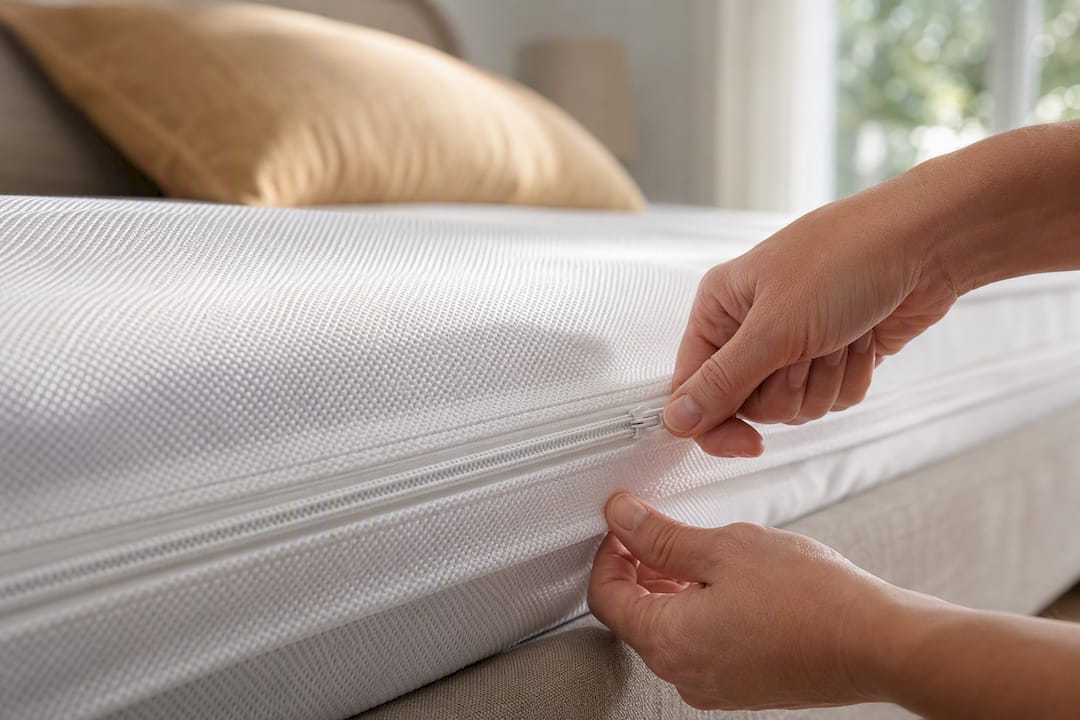
Encasements. A zippered, allergen-impermeable cover on your mattress and pillows blocks mites from colonizing the inside of the mattress and blocks the allergen they’ve already left from escaping. Look for tightly woven fabric rated to block particles at the micron level mite allergen falls into, not just a basic mattress protector. A randomized trial on impermeable bedding covers found they cut measured allergen significantly, though on their own they didn’t consistently improve people’s clinical symptoms, per findings published on PubMed. Encasements work best as one piece of a bigger plan, not the whole plan.
Humidity. Dust mites need moisture to survive and reproduce, and keeping indoor relative humidity below roughly 50% meaningfully cuts their numbers, according to the AAAAI’s environmental control guidance. A basic hygrometer costs less than a takeout dinner and tells you exactly where your bedroom stands. A dehumidifier or your AC’s dehumidify setting, run consistently rather than occasionally, does the actual work.
Your weekly routine should include:
- Hot-wash sheets and pillowcases weekly, blankets and mattress pads every couple of weeks
- Launder or replace pillows on a regular schedule since they absorb sweat and skin cells
- Vacuum the mattress and surrounding carpet weekly with a HEPA filter
- Reduce dust traps like heavy curtains, stuffed animals on the bed, and thick rugs near the bed frame
Pro Tip: Don’t treat any single step here as the fix. The research consistently shows bundled interventions, encasement plus humidity control plus regular laundering, outperform any one measure done in isolation.
When to See a Doctor or Call in a Professional
If you’ve done the laundering, the encasement, and the humidity control for a few weeks and you’re still waking up congested, stop troubleshooting on your own. That’s the signal to get real data instead of guessing.
- Get allergy tested. A skin prick or blood test confirms whether dust mites, rather than pet dander or seasonal pollen, are actually your trigger. This changes what treatment makes sense.
- Ask about immunotherapy. For patients with confirmed dust-mite sensitization and persistent symptoms despite environmental control, allergy shots or sublingual immunotherapy are established options your allergist can evaluate you for.
- Bring in professional mattress cleaning when DIY steam and vacuuming aren’t cutting it, especially on an older mattress that’s absorbed years of allergen. A professional deep steam clean followed by proper drying time reaches deeper into the mattress structure than a household steamer typically can.
Before you hire anyone, ask what temperature their steam process runs at, how long drying takes, and whether they guarantee the work. Those three answers tell you more than any marketing page will.
Why a Combined Approach Beats Any Single Fix
Homeowners often buy one product, an encasement, a fancy vacuum, a spray, and expect symptoms to disappear. They rarely do. Clinical literature backs this up: successful outcomes tend to come from layering interventions rather than relying on one purchase to solve the whole problem.
Home Service Simple built its Simple Club subscription around that same logic. Deep steam mattress cleaning matters less as a one-time event and more as a maintained habit, paired with the encasement and humidity work you’re doing at home. Set realistic expectations here. Professional cleaning and a good routine will meaningfully cut your allergen exposure. Clearing up genuine allergy symptoms may still require your doctor’s involvement alongside it.
— chris
Let Home Service Simple Handle the Deep Clean
Home Service Simple’s advantage for allergy sufferers is simple: you get the deep steam cleaning that DIY tools can’t fully replicate, without committing to buying, storing, and maintaining industrial equipment yourself.

Our mattress cleaning service uses deep steam heat to reduce mite populations and lift allergen buildup from the mattress surface and seams, followed by proper drying time so you’re not sleeping on a damp bed. If allergens are a whole-home issue for you, pairing mattress cleaning with our air duct cleaning or carpet cleaning for allergies tackles the other reservoirs mites and dust hide in. For ongoing control instead of a one-and-done visit, the Simple Club membership starts at $20 a month and keeps your home on a consistent cleaning schedule without you having to remember to book it. Consider getting a quote for mattress cleaning to help manage allergen levels and reduce the chance of flare-ups.
Sources
The clinical guidance behind this playbook comes from a handful of sources worth reading directly. The NCBI’s StatPearls entry on dust mite allergy covers the allergic mechanism and symptom patterns. The AAAAI’s practice parameters back the 50% humidity target. A randomized trial on bedding covers grounds the encasement limitations, and the NCBI’s broader dust mite overview supports the laundering and combined-control recommendations.
This article is general information, not a substitute for advice from a qualified doctor. Consult a qualified healthcare professional about your own circumstances before acting on anything here.
- Dust Mite Allergy – StatPearls – NCBI Bookshelf
- Environmental control recommendations (AAAAI practice parameters summary)
- Randomized trial of impermeable bedding covers — PubMed (2003)
FAQ
How do I know if my mattress has dust mites?
You won’t see them without a microscope, so look at the pattern instead: morning congestion, itchy eyes, or a nighttime cough that eases once you’re up and moving. Combine that with an older mattress or a humid bedroom, and it’s reasonable to assume mites are present and start remediation, per clinical descriptions of dust mite allergy.
How long do dust mites live in mattresses?
Dust mites can persist in a mattress indefinitely as long as conditions (warmth, humidity, and a food source of skin cells) stay favorable, which is why a one-time cleaning doesn’t solve the problem long term. Keeping humidity below roughly 50% cuts their ability to survive and reproduce, according to AAAAI environmental control guidance.
How do you kill dust mites in your mattress?
Hot-water washing kills mites in bedding, and steam cleaning the mattress itself can reduce live mites and surface allergen when done at the right heat level for your mattress material. Killing the mites is only half the job. You still need an encasement and regular cleaning to manage the allergen residue that’s already accumulated, as research on bedding covers makes clear. Home Service Simple’s mattress cleaning service handles the steam step professionally if you’d rather not manage the equipment yourself.
Is it okay to sleep with dust mites?
Nearly everyone does, since more than 80% of American homes have detectable dust-mite allergen in the bedroom, according to a UNC housing intervention review. Mites themselves don’t bite or cause direct harm, but if you’re sensitized to their allergen, ongoing exposure can keep triggering respiratory symptoms, which is why control measures matter more than elimination.