

Yes, most yellow sweat stains on a mattress can be noticeably lightened at home with a hydrogen peroxide, baking soda, and mild dish soap treatment, applied carefully and dried all the way through. Baking soda alone won’t lift the color, but it will kill the smell fast. Spot-test any cleaner first, keep the mattress from getting soaked, and if the stains are old, wide, or the smell keeps coming back, that’s your cue to call in a pro instead of fighting it solo.
TL;DR:
- Hydrogen peroxide with baking soda and dish soap effectively lightens yellow sweat stains when applied in a thin layer and fully dried; older, extensive stains may require professional cleaning.
- Regular prevention measures include using waterproof mattress protectors, washing bedding weekly, and promptly treating new stains to prevent deep oxidation and odor buildup.
- Deep cleaning should be scheduled every three to six months, with vacuuming and rotation, to minimize stain buildup and odor caused by prolonged moisture exposure.
- For large, persistent, or moldy stains, or if odor keeps returning after DIY treatments, professional cleaning offers deeper extraction and better results.
- Mattress type influences cleaning method, with memory foam requiring lighter liquid application and longer drying times to prevent mold, while innerspring and latex beds handle moisture differently.
Table of Contents
- What Causes Sweat Stains on a Mattress in the First Place?
- How Do I Safely Prep a Mattress Before Cleaning It?
- Which DIY Method Actually Works for Mattress Stains?
- How Do You Remove Sweat Stains With Peroxide and Baking Soda?
- What About Vinegar, Enzymes, and Baking Soda on Their Own?
- When Should You Call a Professional Instead of DIY?
- How Do You Stop Sweat Stains From Coming Back?
- Should You Deep Clean a Mattress on a Schedule?
- When Is a Stain a Sign the Mattress Needs Replacing?
- Does Cleaning a Memory Foam Mattress Differ From Innerspring or Latex?
- Spot Cleaning vs. Full Mattress Cleaning: Which Do You Need?
- An Honest Perspective on Stain Removal and Realistic Results
- When It’s Time to Call in Home Service Simple for Mattress Cleaning
- Sources
- FAQ
What Causes Sweat Stains on a Mattress in the First Place?
Sweat itself is mostly water, but it’s the salts, urea, and body oils riding along with it that turn your mattress that dingy yellow color. Those compounds sit in the fibers and, over months of nightly exposure, oxidize. Think of it the same way a peeled apple browns on the counter. It’s a slow chemical reaction, not dirt you can just wipe away.
Wichita summers don’t help. When your bedroom runs warm and humid, sweat doesn’t dry between nights. It just builds up, and that wet-to-dry cycle speeds up both the staining and the odor, because bacteria thrive in that lingering moisture. That’s why the sweaty side of the bed almost always looks worse than the other. It gets more moisture, more often, with less time to fully dry out.
Not every stain is the same animal, though. A few common culprits:
- Sweat stains show up as yellow or tan discoloration, usually with a musty or sour smell.
- Urine stains turn a darker yellow to brown and carry a sharper, ammonia-like odor.
- Blood stains dry into a rust or brown color and need cold water, never hot, or they set permanently.
- Rust stains from old coil springs look orange-brown and won’t respond to any of the sweat-stain methods below.
Knowing which one you’re dealing with matters, because a treatment built for oxidized body oils won’t touch a protein-based urine stain, and vice versa.
How Do I Safely Prep a Mattress Before Cleaning It?
Skipping the prep work is how people end up with a bigger mess, a voided warranty, or a mattress that never fully dries. Do these steps in order:
- Strip everything off the bed. Pull sheets, the mattress protector, and any pillow toppers, and wash them on the hottest setting the fabric allows.
- Check the manufacturer’s care tag or manual before unzipping any cover. Some covers are washable; others will fray or shrink if you try.
- Vacuum the entire surface with an upholstery attachment, working in overlapping passes to pull up dust, hair, and dry skin cells before you add any liquid.
- Spot-test your chosen cleaner on a hidden seam or the underside edge. Apply a small amount, wait 15 to 20 minutes, then check for discoloration or texture change before treating the visible stain.
That spot test feels like an extra step you don’t have time for, but it’s the difference between a lightened stain and a bleached-out blotch in the middle of your mattress. Peroxide and even vinegar can react unpredictably with certain dyed fabrics, so give it the full waiting period before committing to the whole stain.
Which DIY Method Actually Works for Mattress Stains?
Not every stain calls for the same fix, and grabbing the wrong one wastes time and risks damage. Here’s how the main options stack up:
- Hydrogen peroxide + baking soda + dish soap: the strongest option for oxidized yellow sweat stains, because the combination of an oxidizer, an abrasive, and a surfactant tackles color, lift, and oil together. Always test colorfastness first.
- White vinegar + dish soap: a lighter touch for fresh, faint stains and general odor. It neutralizes smell well, but repeated acid exposure can break down memory foam over time, so don’t make it your weekly go-to.
- Enzyme cleaners: the right call whenever urine, vomit, or other biological matter is part of the picture, since enzymes break down uric acid proteins that peroxide barely touches.
- Baking soda alone: a deodorizer and moisture absorber, not a stain remover. It’ll make the mattress smell fresher, but it won’t lift a single shade of yellow out of the fabric.
If you’re staring at a stain and not sure which category it falls into, go with your nose. A sour, musty smell points to sweat and peroxide. A sharper, ammonia smell points to urine and enzymes. When in doubt, the peroxide method is the safer starting point for anything that looks like plain sweat discoloration, since it’s the most documented at-home protocol for yellow stains and doesn’t carry the foam-degrading risk that repeated vinegar use does.
How Do You Remove Sweat Stains With Peroxide and Baking Soda?
This is the method that does the heavy lifting on oxidized yellow stains, and getting the ratios right matters more than people expect.
- Mix your solution. For a stain roughly the size of a dinner plate, combine 2 tablespoons of baking soda, a few drops of mild dish soap, and enough 3% hydrogen peroxide to form a loose paste. Scale up proportionally for a larger area, but never mix more than you’ll use in one session since peroxide loses potency once combined.
- Apply thin, not thick. Spread the paste in a light layer directly over the stain. Resist the urge to pile it on. More product doesn’t mean more cleaning power here.
- Let it dwell for 10 to 20 minutes. You’ll see gentle bubbling as the peroxide works.
- Agitate lightly with a soft brush or old toothbrush to help lift the stain.
- Mist, don’t soak, with clean water to rinse the residue, then blot with a dry towel.
- Dust a fresh layer of plain baking soda over the damp area to pull out remaining moisture.
- Vacuum once fully dry, then repeat the whole process on stubborn spots if any color remains.
Pro Tip: Set up a box fan blowing directly across the treated area the moment you finish rinsing. Cutting drying time in half is the single best thing you can do to keep mold out of the picture.
Bleach can degrade mattress materials and does nothing to address the bacteria causing the odor the way peroxide or enzymes do.
What About Vinegar, Enzymes, and Baking Soda on Their Own?
Peroxide isn’t the only tool in the shed, and sometimes it’s not even the right one.
Vinegar mist for light, fresh stains. Mix equal parts white distilled vinegar and water in a spray bottle with a small squirt of dish soap. Mist lightly over the stain, let it sit five minutes, then blot dry. The vinegar smell is strong at first but fades completely once the mattress dries. Skip this method on foam mattresses if you’re already treating stains monthly. That level of acid exposure adds up.
Enzyme cleaners for anything biological. If sweat is mixed with urine or vomit residue, an enzyme cleaner will outperform peroxide every time. Follow the label’s dwell time exactly, usually 10 to 15 minutes, then blot rather than rub. Enzymes need contact time to break down the proteins, so rushing the process just wastes product. If you’re dealing with a urine stain specifically, our mattress urine removal guide walks through the enzyme process in more detail.
Baking soda alone for maintenance, not stains. Sprinkle a generous, even layer across the whole mattress surface, let it sit for at least an hour (longer if you can swing it), then vacuum thoroughly. This won’t touch existing discoloration, but it’s the fastest way to knock down odor between deeper cleanings.
When Should You Call a Professional Instead of DIY?
Some stains are worth fighting yourself. Others are a sign it’s time to stop pouring peroxide on the problem.
- Staining covers more than a third of the mattress surface. At that point, spot treatment isn’t realistic, and you risk creating an uneven patchwork of clean and discolored fabric.
- The smell comes back within a few days of cleaning. That usually means moisture got trapped below the surface, which DIY surface treatments can’t reach.
- You can see visible mold or a musty smell that doesn’t fade after full drying. This is a health issue, not a cosmetic one.
- The mattress got soaked through, whether from sweat, a spill, or a leak, rather than just surface-stained.
Professional cleaning uses controlled extraction equipment that pulls moisture back out immediately, rather than letting it sit and soak in the way a DIY spray bottle does. That, paired with industrial drying and enzyme depth treatments, reaches stains that never made it past the surface layer with a hand-mixed paste.
Set your expectations honestly, though. Older mattresses with deep-set foam discoloration may only lighten with professional treatment, not disappear entirely. A pro can dramatically improve hygiene and smell. Turning a five-year-old, deeply stained mattress back to showroom white isn’t always in the cards.
How Do You Stop Sweat Stains From Coming Back?
Prevention is boring compared to a satisfying deep clean, but it’s the part that actually saves you time down the road.
- Use a washable, waterproof mattress protector or encasement. This is the single biggest lever you have. Everything lands on the protector instead of the mattress itself.
- Wash sheets and the protector weekly, more often in summer or if anyone in the house runs hot at night.
- Choose breathable sheets, cotton or linen over synthetic blends, and keep bedroom humidity in check with a fan or dehumidifier if your house tends to run damp.
- Do a light baking-soda refresh every three to six months, even if nothing looks stained yet.
- Treat any new stain the moment you notice it. Fresh sweat lifts far more easily than sweat that’s had months to oxidize.
Pro Tip: Keep a spray bottle of diluted vinegar under the bed frame. Catching a fresh sweat mark within a day or two, instead of weeks later, is the difference between a five-minute fix and a full peroxide treatment.
Should You Deep Clean a Mattress on a Schedule?
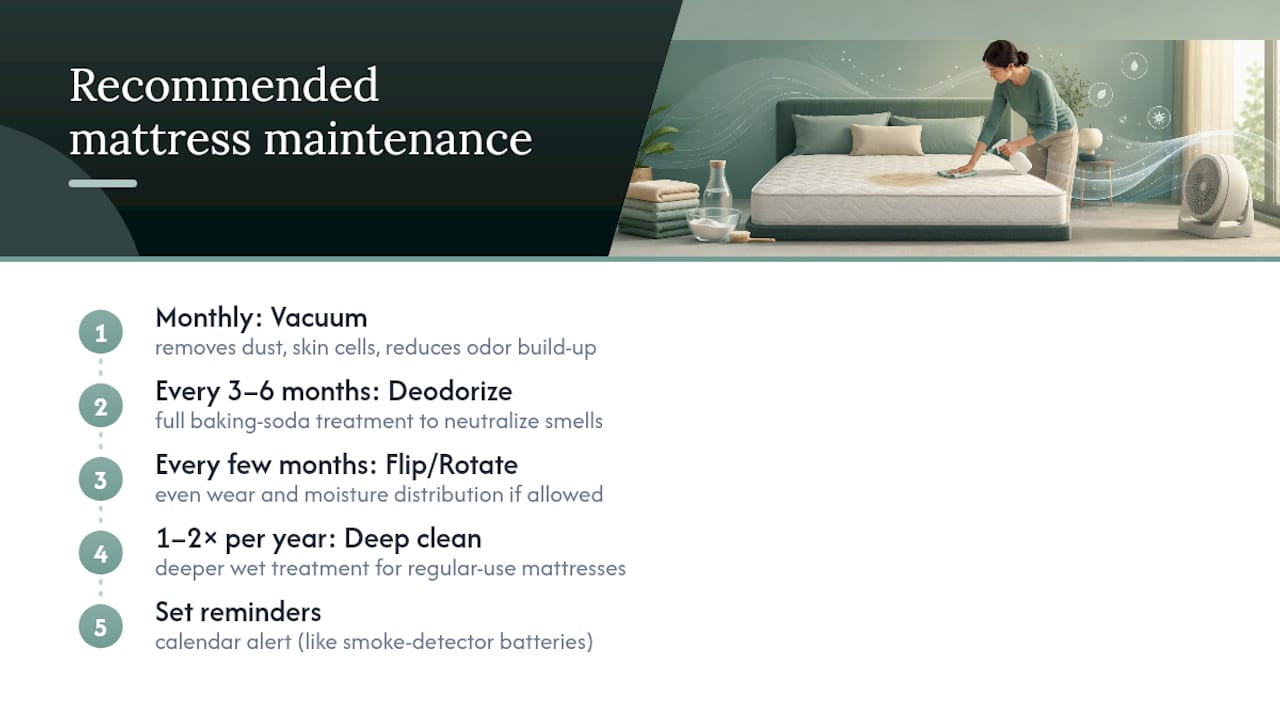
Prevention keeps stains from starting, but a mattress still needs a real deep clean on a recurring basis, not just a reaction to visible marks. Most mattresses benefit from a full baking-soda deodorize every three to six months, paired with a deeper wet treatment once or twice a year depending on how much use the bed gets.
Think of it like rotating tires. You don’t wait for a blowout to check your tread. A mattress with two regular sleepers, pets that hop up, or a household that runs warm needs that yearly deep clean more than a guest room mattress that sees occasional use. Mark it on the same calendar reminder you use for smoke detector batteries. It’s easy to forget until the smell reminds you.
Vacuuming monthly matters more than people realize, too. It’s not just about visible debris. Regular vacuuming pulls up dead skin cells and dust before they have a chance to feed the bacteria that cause odor in the first place. Pair that with flipping or rotating the mattress every few months, if the model allows it, so wear and moisture exposure don’t concentrate in the same spot night after night.
The households that skip this maintenance rhythm are the same ones calling about a mattress that’s “suddenly” got a smell that won’t quit. It wasn’t sudden. It built up slowly, the same way the yellowing did, and a consistent light-touch schedule is what keeps it from reaching that point.
When Is a Stain a Sign the Mattress Needs Replacing?
Not every stain means the mattress is done. But certain signs point past cleaning and toward replacement.
Sagging combined with staining. If the stained area also dips or feels softer than the rest of the mattress, moisture has likely broken down the internal materials, not just the surface fabric.
A smell that returns no matter how many times you clean it. This usually means moisture worked its way into the foam core or coil padding where surface cleaning can’t reach. Memory foam is especially prone to this because it’s hygroscopic and holds onto moisture, which means low-volume application and real drying time aren’t optional. Skip that step and you risk mold setting in permanently inside the foam.
Visible mold that spreads even after treatment. Surface mold you can clean. Mold that reappears in the same spot a week later means it’s colonized the interior, and no amount of peroxide reaches that.
Age past the mattress’s expected lifespan, generally seven to ten years, combined with any of the above. At that point, you’re not preserving a mattress. You’re just delaying a replacement that’s already overdue.
If your mattress checks two or more of these boxes, cleaning is a stopgap, not a solution. That’s a harder conversation than “just add more baking soda,” but it’s the honest one.
Does Cleaning a Memory Foam Mattress Differ From Innerspring or Latex?
Mattress type changes how much liquid you can safely use, and that’s the detail most cleaning guides skip past.
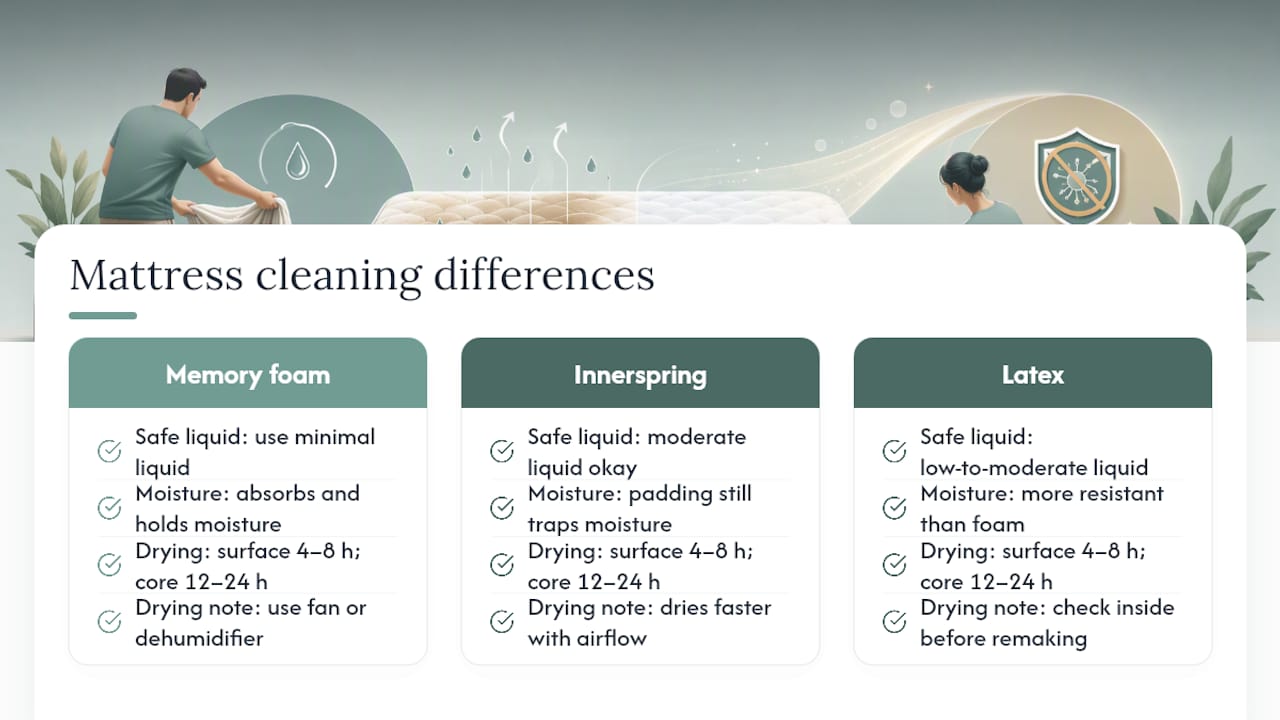
Memory foam absorbs moisture and holds onto it, so every step above needs to lean lighter on liquid than you’d think. Apply peroxide paste thinly, mist-rinse instead of pouring, and plan on 12 to 24 hours of drying time for the core even after the surface feels dry. Skipping mechanical drying (a fan, a dehumidifier, or both) on foam is the number one cause of mold complaints after a DIY stain treatment.
Innerspring mattresses handle moisture a bit more forgivingly because air can move through the coil structure, but the padding layers around the coils still trap it. The same peroxide method works well here, and drying tends to run a little faster since there’s more airflow underneath the surface layers.
Latex mattresses are naturally more resistant to moisture retention than foam, but they’re sensitive to certain chemicals. Skip vinegar on natural latex if you can, since repeated acid contact can cause it to break down faster than synthetic blends. Peroxide in small, spot-tested amounts is generally safe.
Across every type, the same rule holds: surface fabric layers typically dry within 4 to 8 hours, while the core underneath can take 12 to 24 hours. Don’t remake the bed until you’re confident the inside is dry too, not just the top you can touch.
Spot Cleaning vs. Full Mattress Cleaning: Which Do You Need?
A single yellow patch on one side of the bed calls for a completely different approach than a mattress that smells musty all over.
Spot cleaning targets one stain in isolation. You apply the peroxide paste or enzyme treatment directly to the affected area, keep the treatment zone as small as the stain itself, and dry that section thoroughly before moving on. This is the right call for fresh, contained stains, whether that’s a sweat mark, a small blood spot, or a single urine accident.
Full mattress cleaning treats the entire surface, usually with a lighter overall approach since you’re covering more ground. A whole-mattress baking soda deodorize, followed by a light vacuum, fits this category. So does a professional steam or extraction service when odor has spread beyond one identifiable spot.
The mistake people make most often is treating a small, contained stain with a full-mattress-level of product, which just means more area to dry and more risk of trapped moisture. Match the treatment size to the problem size. A dinner-plate stain needs a dinner-plate amount of solution, not a flood.
An Honest Perspective on Stain Removal and Realistic Results
The biggest mistake people make isn’t picking the wrong cleaner. It’s using too much of the right one. Oversaturating a mattress to “make sure it works” is how a treatable yellow stain turns into a mold problem that costs far more to fix. Early treatment, applied thin and dried fast, beats a heavy-handed approach every time.
Some stains, especially old, deep-set discoloration in foam, simply won’t come all the way out. That’s not a failure of technique. It’s chemistry and time working against you. When a stain doesn’t respond after one or two honest attempts, that’s not stubbornness worth fighting. It’s a signal to get a professional inspection, whether that’s through a service like Home Service Simple or another qualified cleaner, before you spend another weekend on it.
— chris
When It’s Time to Call in Home Service Simple for Mattress Cleaning
If you’ve spot-tested, treated, dried, and the stain or smell is still winning, that’s exactly the point where a professional pass makes sense instead of another round of peroxide. Home Service Simple’s mattress cleaning service uses deep steam extraction to pull moisture and odor-causing residue out rather than pushing more liquid in, backed by a satisfaction guarantee if the results don’t meet expectations.

Consider booking a professional visit when staining covers a large portion of the mattress, when the smell keeps returning days after you’ve cleaned it yourself, or when you suspect mold has set in below the surface. Those are the situations where DIY has done what it can, and extraction equipment can reach what a spray bottle can’t. If mattress upkeep is a recurring headache in your house, pair a one-time cleaning with the Simple Club membership so mattresses, carpets, and upholstery get routine attention without you having to remember to schedule it every few months. Get in touch to check availability and get a straightforward quote for your mattress.
Sources
- How to Get Yellow Stains Out of a Mattress: Step-by-Step
- How to Clean Sweat Stains From a Mattress (2026 Guide)
- How to clean your mattress
- How to get yellow stains out of a mattress (Casper)
FAQ
Can sweat stains be removed from a mattress?
Yes. A hydrogen peroxide, baking soda, and mild dish soap paste noticeably lightens most sweat stains when applied thinly, given a 10 to 20 minute dwell time, and dried completely afterward.
How do you get old, set-in sweat stains off a mattress?
Old stains usually need two or three careful applications of the peroxide paste rather than one heavy treatment, since oxidized discoloration lifts gradually. If it doesn’t budge after a couple of honest attempts, that’s a sign to consider professional mattress cleaning.
Why is one side of the bed more yellow than the other?
The side that runs warmer at night, or belongs to whoever sweats more, gets more repeated moisture exposure, and that wet-dry cycle speeds up oxidation and staining on that half of the mattress.
What do brown stains on a mattress mean?
Brown stains typically point to dried blood, urine that’s aged, or old rust from mattress springs, and each needs a different treatment. Blood responds best to cold water, urine to enzyme cleaners, and rust generally won’t respond to any at-home method.
When should I stop trying to clean a mattress myself?
If staining covers more than a third of the surface, the odor returns within days of cleaning, or you see visible mold, DIY has likely reached its limit and it’s worth calling a professional cleaner for an inspection.