

Yes, a fresh red wine carpet stain usually comes out if you move fast and blot instead of rub. Grab white towels, work outside to center, and hit it with cold water or club soda before the pigment sets. If the stain is old, sitting on a wool or antique rug, or already changed color from a DIY attempt, stop and call a pro.
TL;DR:
- Removing fresh red wine stains from synthetic carpets is highly effective within the first hour using blotting, cold water or club soda, and salt if applied immediately.
- Salt on wet stains helps lift pigment but is ineffective on dried marks or natural fibers like wool or antique rugs, which can be damaged by oxidizers.
- Combining dish soap and vinegar is a reliable option for moderate stains but is not recommended for delicate fibers without a patch test first.
- Dried or older stains often require re-wetting, multiple treatments with hydrogen peroxide and dish soap, and professional cleaning if the stain has set for days or weeks.
- Avoid heat, heavy scrubbing, or bleach on natural fibers, and consider professional treatment for large, old, or chemically altered stains for the best chance of removal.
Table of Contents
- Your First Five Minutes With A Red Wine Carpet Stain
- What Actually Removes A Red Wine Carpet Stain?
- How To Treat A Dried Or Old Red Wine Stain
- Does Your Carpet’s Fiber Type Change The Plan?
- When Should You Call A Professional Cleaner?
- Our Take: When To Grab A Towel And When To Grab The Phone
- Get A Professional Assessment From Home Service Simple
- Sources
- FAQ
Your First Five Minutes With A Red Wine Carpet Stain
Here’s the thing about wine on carpet: the first few minutes decide whether this is a five-minute fix or a call-a-professional situation. Move like it matters, because it does.
- Blot straight down, don’t wipe. Press white towels or paper towels onto the spill and lift. Wiping just grinds the pigment deeper into the fibers.
- Swap towels often and work outside to center. Fresh towels every 30 seconds or so. Coming from the edges in keeps the stain from spreading wider than it already is.
- Mist lightly with club soda or cold water. The carbonation in club soda helps lift pigment before it bonds to the fiber, and it’s gentle enough to use right away.
- Salt goes on fresh, wet stains only. Pour it on thick, let it sit 10 to 15 minutes to soak up the wine, then vacuum it away.
- Skip hot water and heavy scrubbing. Heat can set the stain permanently, and scrubbing just pushes wine deeper into the pad underneath.
A wine spill treated within about 60 minutes is highly removable using nothing more than what’s already in your kitchen.
What Actually Removes A Red Wine Carpet Stain?
Once the panic blotting is done, it’s time to pick a real treatment. Each of these works differently, so match the method to the stain and the fabric underneath it.
Club soda, method and reasoning. Pour a small amount directly on the stain, let it fizz for a minute, then blot with a clean towel. The carbonation agitates the fibers just enough to loosen anthocyanin pigments (the same compounds that give red wine its color) without introducing harsh chemistry. Repeat two or three times on a fresh spill and you’ll often see the stain fade almost completely.
Salt, one more time, correctly. If you skipped it in the first five minutes, it’s not too late as long as the carpet is still wet. Salt draws moisture and pigment up and out but should not be left on stains too long and is ineffective on dried stains. It won’t rehydrate the wine, and on natural fibers it can actually set the color in further.
Dish soap and vinegar. Mix 1 tablespoon dish soap, 1 tablespoon white vinegar, and 2 cups cold water. Sponge it onto the stain, let it sit a few minutes, then blot dry. This combination is a standard recommendation from Home Depot for a reason: the soap breaks down the tannins while the vinegar’s mild acidity helps neutralize the color without bleaching.
- Best for: fresh to moderately set stains on synthetic carpet
- Skip on: wool, silk, or hand-knotted rugs without a patch test first
Hydrogen peroxide and dish soap. For stains that shrugged off the vinegar mix, combine 1 part 3% hydrogen peroxide with 1 part Dawn dish soap. Dab it on, let it dwell for 10 to 25 minutes, then blot and rinse with cold water. This pairing works because hydrogen peroxide oxidizes the chromophores in wine pigment while Dawn lifts residue. Controlled testing found Dawn dish soap performed as well as or better than specialty red wine removers on synthetic samples, which says a lot about how far a $5 bottle can go.
Pro Tip: Always patch test hydrogen peroxide on a hidden corner of carpet first. It’s an oxidizer, meaning it can lighten dye along with the wine stain, especially on colored or natural-fiber carpet.
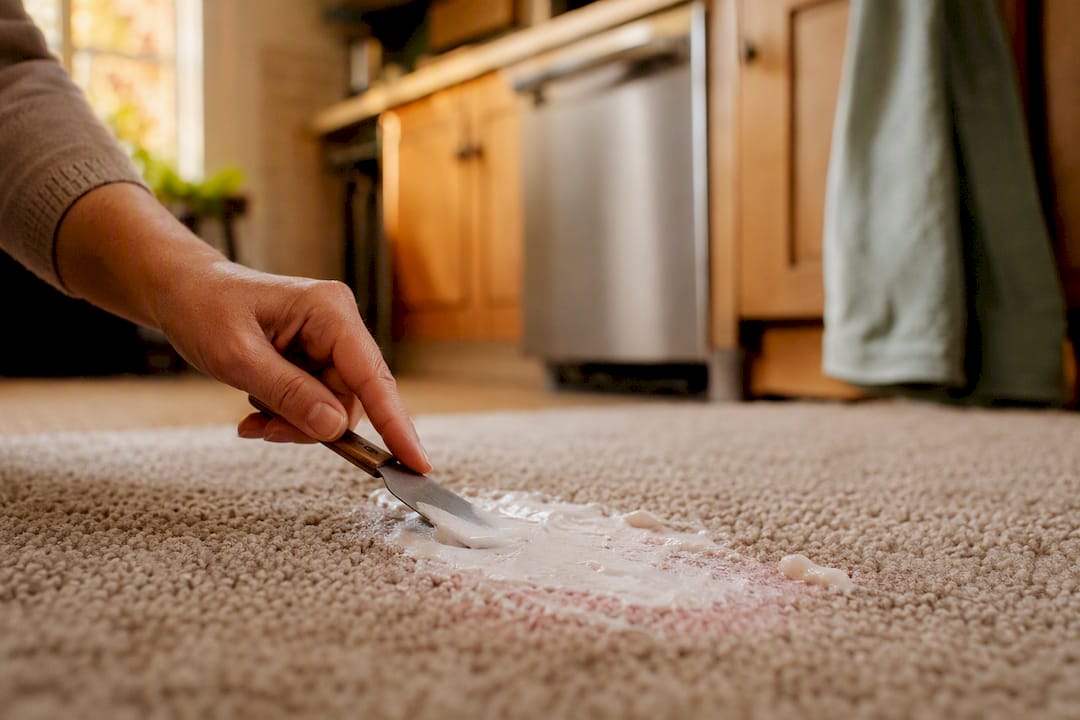
Baking soda paste for the leftover pink ghost. Sometimes the purple is gone but a faint pink shadow remains. Make a paste of baking soda and water, work it into the spot, let it dry completely, then vacuum. For stubborn ghosting, an oxygen-based (Oxi) carpet treatment applied per label instructions and followed by a thorough rinse and extraction usually finishes the job.
How To Treat A Dried Or Old Red Wine Stain
Dried stains take more patience, but they’re not hopeless. Here’s the escalation path:
- Re-wet the stain first. Dampen it with cold water or club soda for a few minutes. Wine pigment bonds tighter once dry, and rehydrating loosens it enough for treatment to actually reach it.
- Apply the hydrogen peroxide and Dawn mix. On synthetic carpet, let it dwell 10 to 25 minutes, blot, and extract with cold water.
- Repeat the cycle if needed. Old stains often need two or three passes, with a full extraction between each one to keep from redepositing pigment.
- Know when it’s beyond DIY. Stains untouched for days or weeks may need a professional-grade oxidizer and hot-water extraction. If you’ve already hit it with bleach or a strong oxidizer at home, tell your cleaner. Prior chemical treatments can sometimes make professional-grade products less effective.
Does Your Carpet’s Fiber Type Change The Plan?
Absolutely, and this is where a lot of well-meaning DIY attempts go sideways. Nylon, polyester, and olefin carpets are tough and generally safe for the treatments above. Wool, silk, and antique or hand-woven rugs are a different story entirely: they’re protein-based or delicate plant fibers that react to oxidizers and high pH by lightening or yellowing.
- Quick ID check: synthetics feel slightly waxy and spring back fast when pressed; wool feels warmer and denser, with a natural crimp to the fibers.
- 60-second patch test: apply your chosen cleaner to a hidden spot, wait a minute, blot, and check for color transfer or texture change before treating the visible stain.
- Safe on synthetics, risky on wool: hydrogen peroxide and baking soda pastes.
- Avoid across the board: hot water, chlorine bleach, and hard scrubbing, all of which can set stains or damage fibers permanently.
Hydrogen peroxide is genuinely effective, but pros note it’s also a mild bleach that can lighten wool and other natural fibers if you skip the patch test.
When Should You Call A Professional Cleaner?
Some stains just aren’t a DIY job, and knowing the difference saves you time and carpet. Watch for these red flags:
- The stain is more than a few days old and has fully set
- It’s on a wool, silk, or antique rug rather than synthetic carpet
- You’ve already tried an oxidizer or bleach and the color changed
- The stain is large or has wicked up from the padding underneath
Professional treatment follows a sequence home products can’t fully replicate: an alkaline pre-spray to lift the wine, an oxidizer dwell of 15 to 25 minutes to break down the anthocyanin pigments and bound tannins, then hot-water extraction and a neutral rinse to flush everything out of the pile. That extraction step matters because it removes loosened pigment and chemical residue that blotting alone leaves behind. Before your appointment, snap a photo of the stain, avoid further DIY treatment, and be ready to mention any products you already tried.
Our Take: When To Grab A Towel And When To Grab The Phone
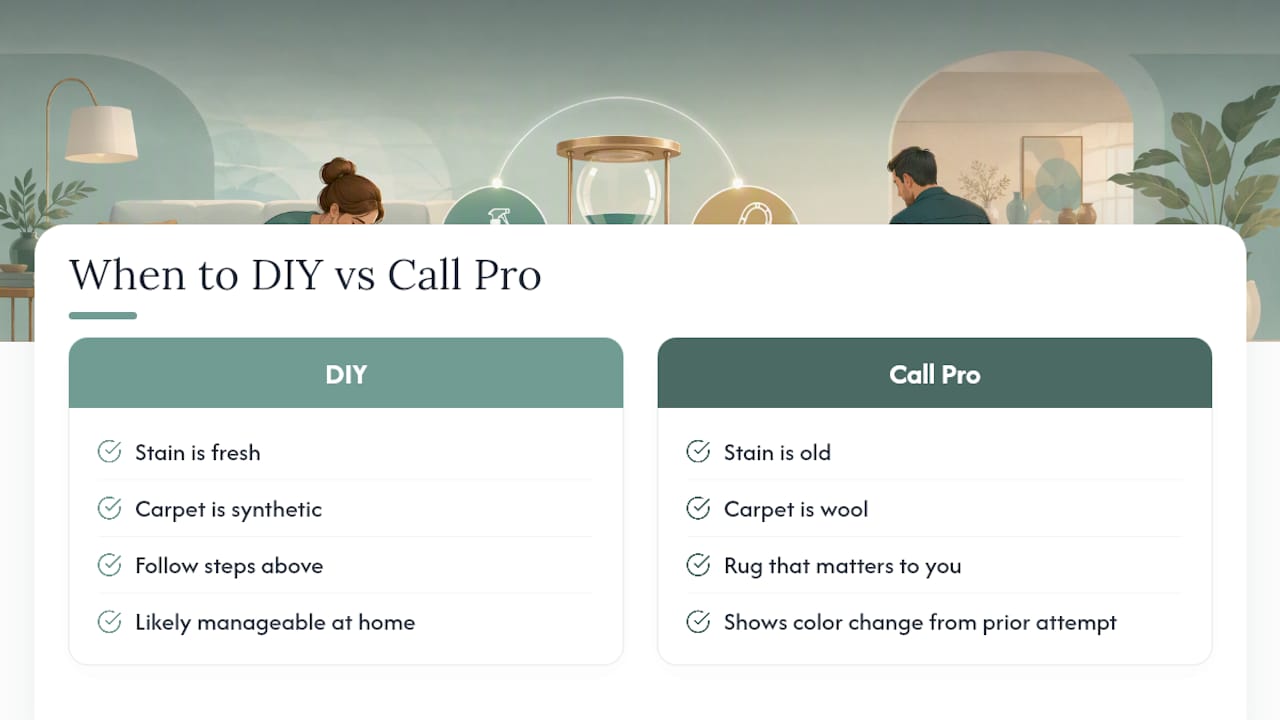
We get calls about wine stains constantly, usually from someone who tried three different internet remedies before giving up. Here’s our honest read: if it’s fresh and on synthetic carpet, you can probably handle it yourself with the steps above. Where we start recommending a visit instead of another home remedy is when the stain is old, sitting on wool or a rug that matters to you, or already shows color change from a prior attempt.
At that point, more scrubbing usually makes our job harder, not easier. That’s exactly why Home Service Simple backs every visit with a satisfaction guarantee.
— chris
Get A Professional Assessment From Home Service Simple
When a red wine stain outlasts your patience or your patch test comes back looking sketchy, Home Service Simple gives Wichita homeowners a faster, safer path than another round of home remedies. Our deep steam cleaning uses hot-water extraction and specialty stain treatments built for exactly this kind of pigment and tannin combination, on carpet, rugs, and upholstery alike, all backed by a satisfaction guarantee.

Getting an assessment is simple: send us a photo of the stain along with your address, and we’ll tell you what to expect before we ever show up. If DIY has already been attempted, mention which products you used so we can plan the right approach. Ready to stop treating the same stain twice? Request your free quote from Home Service Simple today.
Sources
- We tested 2 red wine stain removers people swear by to see which was best, but neither worked better than dish soap — Business Insider
- How to Get Red Wine Out of Carpet — Home Depot
- Red wine stain removal: Pro carpet cleaner guide — CarpetCleaningDigital
FAQ
Does Dawn Dish Soap Remove Red Wine Stains?
Yes. Controlled testing found Dawn performed as well as or better than specialty red wine removers on synthetic carpet and fabric, often leaving no visible trace where some name-brand removers left a faint pink tinge.
Can You Get Out A Red Wine Stain After It’s Dried?
Often, yes, though it takes more work. Re-wet the dried stain first, then apply a hydrogen peroxide and dish soap mix with a 10 to 25 minute dwell time, repeating with extraction between passes.
Does Red Wine Stain Permanently?
Not usually, if it’s treated within the first hour or so with proper blotting and chemistry. Stains left untreated for days, or on wool and antique rugs, are far more likely to become permanent without professional oxidizer treatment.
How Do I Remove Red Wine From My Carpet?
Blot immediately with white towels, working from the outside in, then treat with club soda, a dish soap and vinegar mix, or hydrogen peroxide and dish soap depending on how set the stain is. Always patch test first, and call Home Service Simple if the stain is old or on a delicate fiber.