

Blot it, don’t rub it. Hit it with an enzyme cleaner and let that thing sit for its full dwell time. Cover it in baking soda overnight, then dry it out completely with fans, not heat. That four-step combo handles most fresh accidents. If the urine soaked clear into the core, or the smell keeps coming back after a couple enzyme rounds, it’s time to call in a pro or start shopping for a new mattress.
TL;DR:
- Promptly treating fresh urine with blotting, enzyme cleaner, and baking soda can often fully remove stains and odors, especially if done within half an hour.
- Dried urine stains require repeated enzyme treatments and extended dwell time to dissolve uric acid crystals, often needing two to three cycles for complete odor removal.
- Memory foam and latex mattresses absorb liquids deeper into their cores, requiring less liquid use and longer enzyme application times compared to innerspring or hybrid mattresses.
- Complete drying before mattress re-use is essential to prevent mold growth, which involves using fans, airflow, and refraining from heat sources like hair dryers.
- When contamination reaches the core, persists after multiple enzyme treatments, or shows visible mold, professional cleaning or mattress replacement is usually necessary.
Table of Contents
- Mattress Urine Removal: The Fresh-Stain Protocol
- How Do You Treat Dried or Set-In Urine Stains?
- What Mattress Materials Need Different Cleaning Care?
- How Long Does a Mattress Take to Dry After Cleaning?
- When Should You Call a Professional or Replace the Mattress?
- How Can You Prevent Future Mattress Accidents?
- What Does a Professional Mattress Cleaning Visit Include?
- A Cleaning Pro’s Take on Mattress Accidents
- Book Professional Mattress Cleaning With Home Service Simple
- Sources
- FAQ
Mattress Urine Removal: The Fresh-Stain Protocol
Fresh urine is a gift, honestly. It hasn’t had time to set up camp in the foam yet, so you’ve got a real shot at getting it out completely if you move fast. Think of it like a grounder headed your way. React quick and you make the play. Hesitate and it skips right past you into the outfield.
Here’s the order that works:
- Strip the bedding first. Pull sheets, mattress pad, everything, and get it into the wash according to the fabric care label. If the fabric allows it, add a cup of white vinegar to the rinse cycle. It knocks out odor without wrecking the fibers.
- Blot, don’t rub. Grab a stack of clean towels or paper towels and press straight down, then lift. Rubbing just grinds the urine deeper into the padding and spreads the stain wider, which is the opposite of what you want.
- Extract what you can. If you’ve got a Shop-Vac or a portable wet extractor sitting in the garage, now’s the time. Pull as much liquid out of the mattress as the machine can grab before you add any cleaning product.
- Apply the enzyme cleaner generously. Saturate the stained area evenly, roughly matching the size of the wet spot plus a couple inches of buffer around the edges. Enzyme cleaners break down the proteins and uric acid that plain soap and water leave behind, and that’s the whole reason this method works better than a squirt of carpet shampoo.
- Let it dwell. Most labels call for 10 to 30 minutes of contact time, and skipping that window is one of the most common reasons odor comes back days later. Set a timer. Walk away. Don’t rush it.
- Blot again, then bury it in baking soda. Press out the excess moisture, then pour on a thick, even layer of baking soda covering the whole treated area. Leave it for at least eight hours, ideally overnight, so it can pull out the leftover moisture and neutralize any ammonia smell still hanging around. Vacuum thoroughly once it’s done its job.
- Dry it out completely. Point a fan at it, crack a window, run a dehumidifier if you’ve got one. No heat guns, no hair dryers, no space heaters pressed up against the mattress.
Pro Tip: Speed beats intensity every time. A quick blot followed by an enzyme cleaner within the first half hour will usually outperform someone who waits a day and then scrubs like their life depends on it.
How Do You Treat Dried or Set-In Urine Stains?
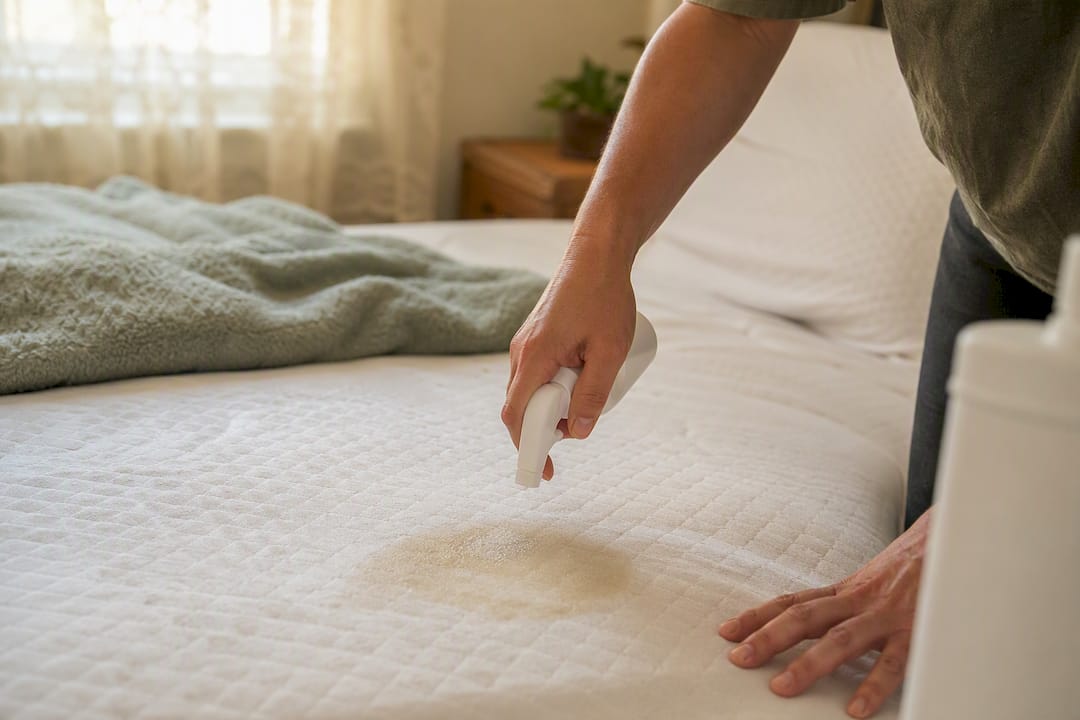
Dried urine plays by different rules, and pretending otherwise is how people end up with a mattress that smells fine in January and reeks again by July. Once urine dries, the uric acid inside it crystallizes. Those crystals have low water solubility, which means they hang around stubbornly, resisting a single pass of any cleaner, enzyme or otherwise.
You can’t blast through crystallized uric acid the way you’d handle a fresh puddle. You have to coax it out in layers, which means:
- Rehydrate lightly with cold water or a bit more enzyme solution. Don’t oversaturate. You’re loosening the crystals, not staging a flood.
- Apply enzyme cleaner and extend the dwell time well past the standard 10 to 30 minutes. Old stains need more contact, not more product.
- Repeat across consecutive days. Dried urine often takes two to three full enzyme cycles before the odor actually lifts for good, since each pass dissolves another layer of crystal buildup.
- Use a blacklight before you start. Urine glows under UV light even when it’s invisible to the naked eye, so a quick sweep in a dark room can reveal spots you’d otherwise miss and re-treat later.
- Know when to stop DIYing it. If you’ve run two or three complete enzyme cycles and the smell is still there, home methods have likely hit their ceiling.
This is where a lot of well-meaning people go wrong. They dump water on an old stain trying to “flush it out,” and instead they just spread the crystals deeper and add a moisture problem on top of an odor problem.
What Mattress Materials Need Different Cleaning Care?
Not every mattress reacts the same way to a soaked spot, and treating a memory foam mattress like an innerspring is a recipe for a mattress that never quite dries right.
- Memory foam and latex absorb deeper and faster. Their dense structure pulls liquid down into the core rather than letting it sit near the surface, so use less liquid overall and stretch out your enzyme dwell time to compensate.
- Innerspring and hybrid mattresses dry faster on the surface, but the comfort layers on top still trap odor just as stubbornly, so don’t skip the enzyme step just because it feels dry to the touch.
- Stick with enzyme cleaners labeled for urine or pet stains, plus baking soda. Hydrogen peroxide can work as a spot treatment on visible discoloration, but only after testing it on a hidden corner first.
- Check the manufacturer’s care label before you touch anything. Some warranties get voided by the wrong cleaning product, and that’s a detail nobody wants to discover after the fact.
Odds are decent this isn’t a one-time event either. Enzyme cleaners and baking soda show up as the two most consistently recommended tools across nearly every cleaning guide out there, and for good reason: they’re the only combo that addresses both the stain and the source of the smell.
Never use hot water, steam, bleach, or ammonia-based cleaners on a urine stain, and never rub at it with a brush or cloth. Heat sets the proteins in urine permanently into the fibers, and steam cleaners can straight-up damage memory foam and latex, turning a stain problem into a structural one.
How Long Does a Mattress Take to Dry After Cleaning?
A mattress that goes back on the bed while it’s still damp is asking for a mold problem, and mold is a whole different headache than a urine stain ever was.
- Run the towel-press test. Press a dry white towel firmly against the treated area. If it comes away damp, the mattress needs more time.
- Check the seams and tufts. Moisture likes to hide where fabric folds meet stitching, so press along every seam near the treated spot, not just the center.
- Set up real airflow. Fans pointed directly at the wet area, windows cracked, and a dehumidifier running in the room all speed things along far better than letting it sit untouched.
- Stand the mattress on its side if you can. Gravity and airflow work together to pull moisture out faster than laying flat.
- Skip the hairdryer and space heater. Heat can set any leftover stain into the fabric permanently, undoing everything the enzyme cleaner just accomplished.
- Wait until it’s bone dry before remaking the bed. A musty smell, a cool damp patch, or any visible dark spotting means it’s not ready yet. Give it more time before you cover it back up.
When Should You Call a Professional or Replace the Mattress?
Home treatment handles the majority of accidents, but there’s a line where DIY stops being the smart move.
- The urine soaked through to the core and you can feel dampness deep inside the mattress, not just near the surface.
- Odor persists after two or three full enzyme cycles, which usually means the contamination has spread beyond what surface treatment can reach.
- You spot visible mold anywhere on or inside the mattress, which is a health issue, not just a cleaning one.
- Accidents keep happening on the same mattress over weeks or months, since repeated saturation compounds faster than any single-pass cleaning can keep up with.
A professional service typically brings deeper extraction equipment and controlled drying methods than a household Shop-Vac and a box fan can match, which matters most when urine has traveled past the surface layer.
Before you book anyone, ask a few pointed questions: What method do they use? How long will drying take? Is there a satisfaction guarantee if the odor comes back? A cleaner who can’t answer those clearly probably isn’t the right one for a mattress that’s already given you trouble once.
Replacement makes more sense when the core soak is extensive, the mattress shows structural sagging or deterioration, it’s already past the 10-year mark, or the smell survives professional treatment. At that point you’re not fighting a stain anymore. You’re fighting a mattress that’s simply worn out.
How Can You Prevent Future Mattress Accidents?
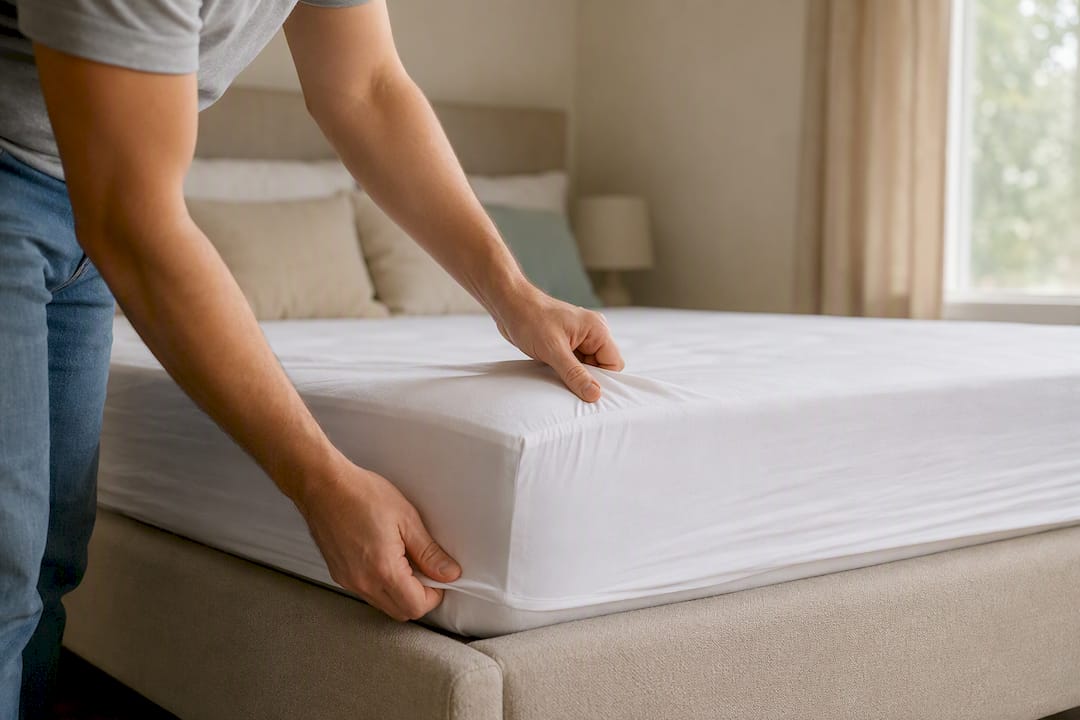
The single best move you can make after any cleanup is installing a waterproof mattress protector before the mattress goes back into use. A protector keeps urine on a surface you can toss in the washing machine instead of letting it soak into foam or springs where you’ll be right back doing this whole process again.
Look for a protector that’s:
- Waterproof but still breathable, so you’re not trading a urine problem for a sweaty, overheated mattress.
- Machine-washable, because a protector that can’t survive regular laundering defeats the purpose fast.
- Deep-pocketed enough to stay put through a full night of tossing and turning.
Pro Tip: Pair the protector with a fitted sheet on top and treat the whole setup as a quick-strip system: pull both layers, toss them in the wash, and the mattress underneath never gets touched.
If accidents are a recurring reality (potty training, bedwetting, an aging pet, a family member managing incontinence), a protector isn’t optional gear. It’s the difference between a five-minute laundry run and another round of blotting, enzyme cleaner, and an anxious wait to see if the smell comes back.
What Does a Professional Mattress Cleaning Visit Include?
When home methods have hit their limit, a professional visit typically starts with an inspection of how far the urine traveled, followed by deep steam or extraction cleaning designed to pull contamination out of the core rather than just the surface.
- Deep extraction reaches what a Shop-Vac can’t, pulling moisture and residue out of layers a household machine simply isn’t built to access.
- Controlled drying prevents the mold risk that comes with DIY jobs left slightly damp.
- A satisfaction guarantee gives you a real backstop if the odor tries to sneak back after the job is done.
Ask about drying time and guarantee terms before booking, and strip the bedding yourself beforehand so the technician can get straight to work.
A Cleaning Pro’s Take on Mattress Accidents
Most calls come in the same day something happens, and that’s exactly the right instinct. The mistake I see most often isn’t laziness. It’s over-wetting, someone dumping cup after cup of water on a stain trying to flush it out, or skipping the enzyme dwell time because they’re in a hurry to remake the bed.
Fresh accidents respond well to the right steps, almost every time. Stains that sat for months before anyone touched them are a tougher fight, and sometimes the honest answer is that a mattress has taken all it can. Either way, get a protector on there the moment you’re done cleaning. It’s the cheapest insurance you’ll ever buy for that mattress.
— chris
Book Professional Mattress Cleaning With Home Service Simple
If you’ve run the blot-enzyme-baking soda routine and the mattress still isn’t right, or you’d rather skip the whole process and hand it to someone who does this daily, Home Service Simple handles mattress cleaning right alongside its carpet and upholstery work around Wichita.

An appointment starts with a straightforward inspection of how deep the urine traveled, followed by deep steam extraction built to pull contamination out of layers that towels and box fans can’t reach. Every job comes backed by a satisfaction guarantee, so you’re not left wondering if the smell will creep back in a week later. It’s a good fit for anyone dealing with a soaked core, a mattress that’s had more than one accident, or simply a household too busy to spend an evening babysitting an enzyme cleaner’s dwell time. For ongoing households with kids, pets, or aging family members, the Simple Club subscription keeps cleanings on schedule without you having to remember to book each one yourself. Get a quote from Home Service Simple and find out what a same-week appointment looks like for your mattress.
Sources
- How to Get Urine Smell and Stains Out of a Mattress
- How to Clean Your Mattress (2025) | WIRED
- How to Remove Urine from Mattress: 7-Step Method – MattressHelp
- How to clean urine from a mattress — 7 pro tips for removing stains and smells | Tom’s Guide
FAQ
What Draws Urine Out of a Mattress?
An enzyme cleaner does the actual work by breaking down the proteins and uric acid in the urine, while baking soda afterward absorbs the leftover moisture and neutralizes any remaining odor.
What Is the Best Way to Remove Urine From a Mattress?
Blot the area thoroughly, apply an enzyme cleaner and let it dwell for the full 10 to 30 minutes listed on the label, then cover the spot in baking soda overnight before vacuuming and drying it completely with fans.
Is It Possible to Clean Urine Out of a Mattress Completely?
Yes, especially with fresh accidents treated promptly, though dried or set-in stains often need two to three repeated enzyme cycles and, in tougher cases, a professional cleaning to fully clear the odor.
Is a Mattress Ruined if It Gets Peed On?
Not usually. A fresh accident treated with prompt blotting, an enzyme cleaner, and full drying rarely causes lasting damage, but a mattress with a soaked core, visible mold, or repeated untreated accidents may need professional attention or replacement.