

Here’s the play: run a HEPA-filter vacuum right now, get your indoor humidity under control, and book a dry-steam deep clean (or do one yourself) because it dries fast and doesn’t feed mold. That’s the whole game plan. Everything else in this article is just the “why” behind it.
Do these three things today, before you read another word:
- Vacuum with a HEPA-filter machine, slow passes, especially where kids or pets camp out.
- Kick off the shoes at the door. Every outdoor allergen hitchhiking on a shoe sole ends up ground into your carpet fibers.
- Run a dehumidifier or crack a window when the pollen count outside is low, to keep indoor humidity under 50%.
Statistic to know: a controlled study of home carpets found that pairing HEPA vacuuming with dry steam cleaning cut dust loading by 64.4% and house dust mite allergens by 85.5%, well beyond what HEPA vacuuming alone achieved. That’s your ceiling. Everything below is how to get close to it.
Key Takeaways
Reducing carpet allergens comes down to consistent HEPA vacuuming combined with a fast-drying deep-clean method like dry steam, done on a regular schedule.
| Point | Details |
|---|---|
| Vacuum weekly with HEPA | Use slow, multi-directional passes to pull embedded allergens rather than a quick single pass. |
| Choose dry steam over slow-drying methods | Combining HEPA vacuuming with dry steam cut dust loading by 64.4% and dust mite allergens by 85.5% in controlled testing. |
| Control humidity below 50% | Lower moisture discourages dust mites and prevents the mold growth that ruins slow-drying cleaning methods. |
| Deep clean every 3 to 6 months | Severe allergy households may need up to four deep cleans a year to stay ahead of buildup. |
| Consider Home Service Simple for allergen-focused deep cleans | Its dry-steam process and Simple Club subscription keep allergens down without the mold risk of slow-drying extraction. |
This article is general information, not a substitute for advice from a qualified doctor. Consult a qualified healthcare professional about your own circumstances before acting on anything here.
Table of Contents
- Why Carpets Trap Allergens (and Why Some Are Worse Than Others)
- How Do You Vacuum a Carpet for Allergies the Right Way?
- Dry Steam vs. Hot Water Extraction: Which Actually Removes Allergens?
- When Should You Call a Professional Carpet Cleaner?
- Building a Maintenance Routine That Actually Sticks
- How Home Service Simple Puts This Into Practice
- What the Research Actually Tells Us to Prioritize
- Ready for a Deep Clean That Doesn’t Leave You Waiting?
- Sources
- FAQ
Why Carpets Trap Allergens (and Why Some Are Worse Than Others)
Carpet is basically a filter that never empties itself. Pollen drifts in through open doors, pet dander flakes off during a good couch nap, dust mites leave behind waste particles smaller than a grain of pepper, and mold spores settle in after a spill nobody noticed. All of it works down into the fibers, and every time someone walks across the room, a chunk of it kicks back up into the air you’re breathing.
Not every carpet holds onto allergens the same way. A few factors stack the odds against you:
- Pile height — thick, plush carpet buries allergens deeper than low-pile carpet, out of reach of a quick vacuum pass.
- Carpet age — older, compacted fibers trap particles more tightly and resist extraction, even with a good machine.
- Wear pattern — heavily trafficked areas mat down and hide allergens below where bristles or steam can reach them.
If your carpet is old, matted, and still triggering symptoms after a real cleaning effort, replacing it with low-pile carpet or hard flooring following a low-dust door replacement process for homeowners is often the more practical fix.
How Do You Vacuum a Carpet for Allergies the Right Way?
Equipment matters, but technique matters just as much. A vacuum without a sealed HEPA system just blows those particles right back out the exhaust.
Here’s how to actually use one for allergy relief:
- Go slow. Research on vacuum technique found that methodical, slow passes pull out significantly more embedded particles than a quick once-over.
- Cross your pattern. Vacuum one direction, then go over the same area at a right angle. This lifts fibers and exposes allergens the first pass missed.
- Hit high-traffic zones twice. Hallways, in front of the couch, under the dining table. These spots load up faster and deserve extra attention.
- Vacuum weekly, or every 2 to 3 days if you have pets or a household allergy sufferer.
Don’t skip maintenance on the machine itself. Empty the canister outside, not in the kitchen trash can where it just re-releases everything into your air. Rinse or replace filters on schedule, and check the brush roll for tangled hair that keeps it from making full contact with the carpet.
Pro Tip: Set a timer for a slow count while you vacuum a single room. Most people move through a space twice as fast as they think, and that speed is exactly what leaves allergens behind.
Dry Steam vs. Hot Water Extraction: Which Actually Removes Allergens?
The numbers favor dry steam, and it’s not close. In the same controlled study referenced above, adding dry steam cleaning to a HEPA vacuuming routine pushed dust reduction from 55.5% to 64.4%, and house dust mite allergen reduction from 80.8% to 85.5%. The heat from dry steam kills dust mites outright and loosens sticky, compacted debris so a follow-up HEPA vacuum pass can actually pull it out.
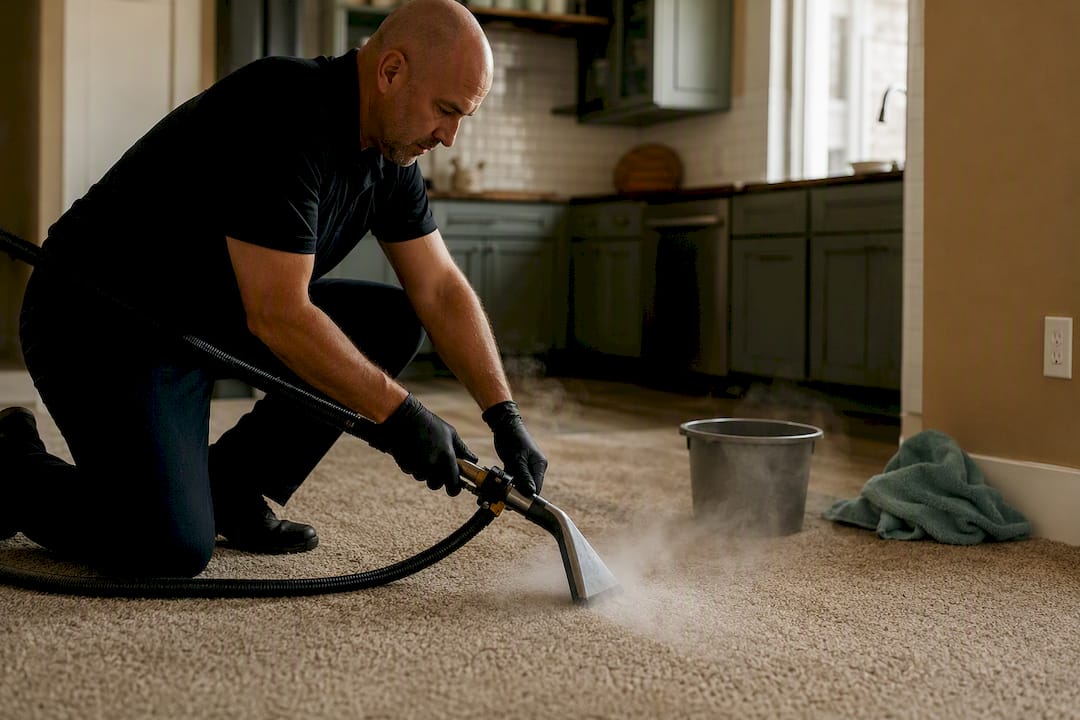
That follow-up step isn’t optional. Skip the post-steam vacuum and you leave the loosened allergens sitting right back in the fibers.
Here’s how the three common deep-cleaning approaches stack up:
- Dry steam (vapor cleaning): Dries in minutes, uses no detergent residue, and is effective against dust mites. Weaker on ground-in soil compared to wet extraction.
- Hot-water extraction: Pulls deep soil and stains out effectively, but carpets can stay damp for 12 to 24 hours, which raises mold risk if airflow is poor.
- Low-moisture systems: Dry fast and are convenient for a quick refresh, but allergen removal results vary more depending on the machine and technique.
If you’re renting a machine or doing this yourself, pre-vacuum with HEPA first, use the fastest-drying setting your machine offers, and vacuum again with HEPA once the carpet is fully dry. That sequence mirrors what produced the best results in the research and gives you the most allergen reduction for the effort.
When Should You Call a Professional Carpet Cleaner?
Not every allergy problem needs a pro. But a few signs mean it’s time to stop DIY-ing it:
- Symptoms persist despite weekly HEPA vacuuming and a recent deep clean.
- You see visible mold or discoloration, especially near baseboards or in a spot that’s been damp.
- The carpet has water damage. Damaged padding often holds mold that resurfaces no matter how many times you clean the surface.
- Traffic and wear are heavy, and household vacuuming just isn’t reaching deep enough anymore.
A quality allergen-focused visit should include HEPA pre-vacuuming, a dry-steam or controlled extraction pass, and a HEPA vacuum follow-up once everything is dry. Ask providers directly about drying time. If they can’t give you a clear number, or the answer is vague, that’s a red flag. Most homeowners notice a difference in symptoms within a few days to two weeks after a proper deep clean, though results depend on how allergen-heavy the home was to start.
Building a Maintenance Routine That Actually Sticks
One deep clean won’t hold the line forever. Allergens rebuild steadily, so the routine matters more than any single appointment.
Weekly: HEPA vacuum the whole house, shake out or launder small area rugs, and glance at corners and edges where dust collects and vacuums tend to miss.
Every 3 to 6 months: Schedule a full deep clean. The AAAI recommends weekly vacuuming as the baseline, and severe allergy households often benefit from deep cleaning closer to four times a year rather than two. Wash curtains and bedding on the same cycle, and check your HVAC filter while you’re at it.
Ongoing choices that pay off:
- Choose low-pile or washable rugs over thick, high-pile carpet.
- Enforce a no-shoes household rule.
- Keep indoor humidity under 50% to discourage dust mites and prevent mold growth.
- Swap heavy drapes for washable curtains, which trap less dust.
- Groom pets regularly, ideally outside or in a bathroom, not on the living room rug.
How Home Service Simple Puts This Into Practice
Home Service Simple built its process around the same science: HEPA pre-vacuuming, a dry-steam deep clean that lifts allergens without leaving sticky detergent residue behind, and a fast-dry finish that keeps mold risk off the table. Here’s what that looks like in practice:
- Deep steam cleaning targets dust mites and pet dander while leaving carpets touchable, not soaked, within hours.
- The Simple Club subscription keeps allergen buildup from creeping back between visits, so you’re not stuck remembering to schedule it yourself.
- Related services — mattress cleaning, air duct cleaning, and upholstery cleaning — cover the other places allergens hide that a carpet-only routine misses.
- A satisfaction guarantee backs every visit, because allergy relief shouldn’t be a gamble.
If you’re weighing DIY steam rental against a professional visit, the difference usually comes down to drying time and technique consistency, and that’s exactly where a trained crew earns its keep.
What the Research Actually Tells Us to Prioritize
Most carpet cleaning advice buries the lede. People fixate on which cleaning solution smells best or which machine has the most attachments, when the research points somewhere else entirely: technique and drying time matter more than the product on the label.
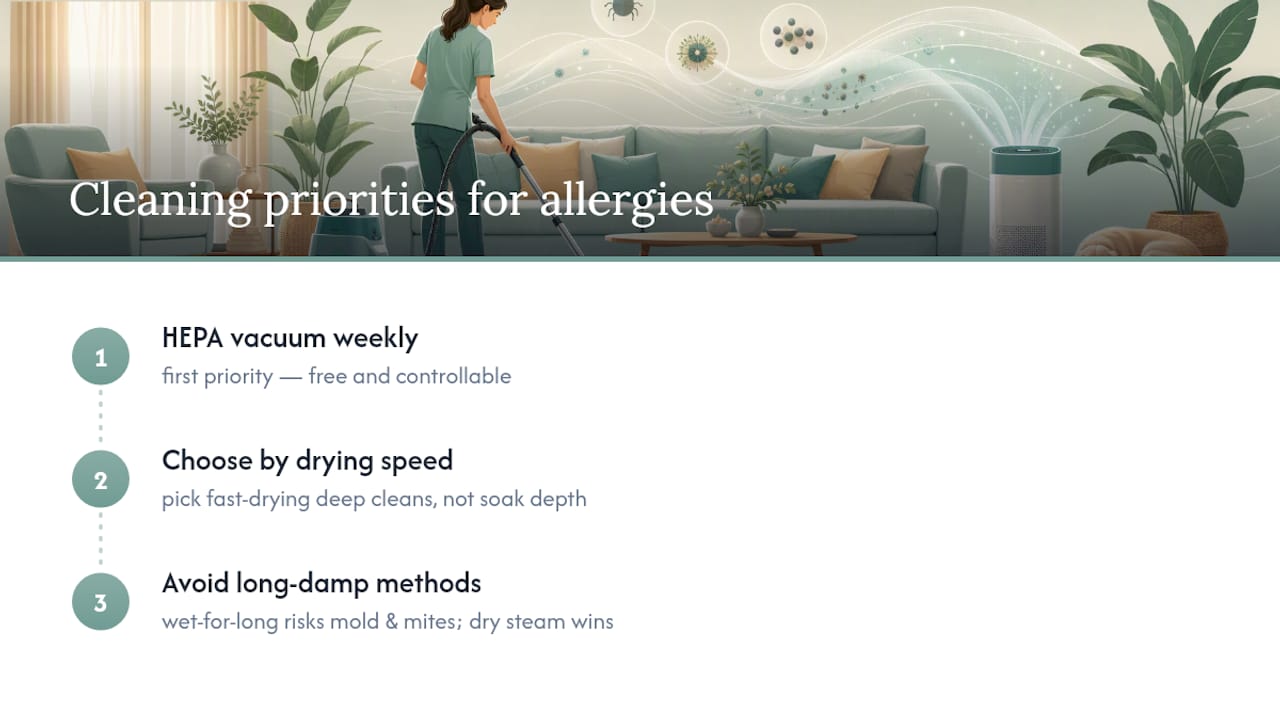
The conventional wisdom that “any deep clean is a good deep clean” falls apart once you factor in mold risk. A hot-water extraction job that leaves carpet damp for a full day can undo months of allergen control by creating the exact conditions dust mites and mold thrive in. That’s the tradeoff nobody puts on the box.
If you take one thing from this article, make it this: prioritize HEPA vacuum technique first, because it’s free and you control it every week, then pick a deep-clean method based on how fast it dries, not how deep it soaks. Dry steam wins that comparison for most allergy households. Home Service Simple’s approach reflects that same order of operations, not because it’s convenient marketing, but because that’s what the evidence supports.
— chris
Ready for a Deep Clean That Doesn’t Leave You Waiting?
Home Service Simple is the straightforward alternative to renting a machine and hoping it dries fast enough. Its dry-steam process removes allergens and dirt without soaking your carpet or leaving sticky residue behind, so you get the allergen reduction without the mold risk that comes with slow-drying hot-water extraction.
Between visits, the Simple Club subscription plan keeps your carpets, upholstery, and even air ducts on a consistent cleaning schedule, so allergen buildup never gets the chance to creep back in. That matters if anyone in your house deals with year-round symptoms rather than a seasonal flare.
Check out real customer reviews and book your first deep-steam cleaning to see the difference a fast-dry, allergen-focused process makes in your own home.
Sources
- Evaluation of HEPA vacuum cleaning and dry steam cleaning in reducing levels of polycyclic aromatic hydrocarbons and house dust mite allergens in carpets – PMC
- Allergy and Asthma Cleaning Tips | AAAAI
- Guide to air cleaners in the home | EPA
- Vacuum technique improves allergen removal | Bissell Commercial blog
FAQ
What kills allergens in carpet?
High-temperature dry steam kills dust mites on contact, and a follow-up HEPA vacuum pass removes the loosened debris; a study combining both methods reduced dust mite allergens by 85.5%.
Is sweeping or vacuuming better for allergies?
Vacuuming with a HEPA-filter machine is far more effective than sweeping, which mainly stirs allergens into the air instead of capturing and containing them.
Does professional carpet cleaning actually help allergies?
Yes, especially for households with heavy wear, visible mold, or symptoms that persist despite regular vacuuming. A quality allergen-focused visit, like the process Home Service Simple uses, combines HEPA pre-vacuuming with dry steam and a fast-dry finish to avoid the mold risk that comes with slow-drying methods.
How often should carpets be deep cleaned for allergy relief?
Most households benefit from a deep clean every 3 to 6 months, while severe allergy sufferers may need it closer to four times a year alongside weekly HEPA vacuuming.