

Act fast. Blot the excess, don’t rub, and reach for isopropyl alcohol or a non-acetone remover on a cloth, not straight on the carpet. Patch-test first.
Here’s your 90-second game plan before you do anything else:
- Grab paper towels or a white cloth, a spoon, and rubbing alcohol or non-acetone remover.
- Blot, don’t rub. Rubbing just grinds the pigment deeper into the pile.
- Scoop any pooled polish with the spoon before it spreads.
- Patch-test your solvent on a hidden spot first. Carpet dye doesn’t grow back.
Fresh nail polish is a Tuesday-night inconvenience. Dried nail polish is a Saturday-morning project. The difference between those two outcomes is usually about four minutes and whether you panicked and started scrubbing.
Key Takeaways
Fresh nail polish comes out with blotting and a non-acetone solvent worked from the outside in, while dried polish and delicate fibers call for patience, patch tests, and sometimes a professional.
| Point | Details |
|---|---|
| Act within minutes | Blot excess and scoop pooled polish before it bonds to carpet fibers. |
| Solvent goes on the cloth | Apply isopropyl alcohol or non-acetone remover to a cloth, never directly onto carpet. |
| Patch-test every time | Test a hidden spot for 60 to 90 seconds before treating the visible stain. |
| Know the stop signal | If colored pigment remains after the plastic film lifts, further scrubbing risks pulling out carpet dye. |
| Call a pro for delicate fibers | Home Service Simple offers color-safe spot treatment and deep steam extraction for wool, viscose, and stubborn stains in Wichita. |
Table of Contents
- How to Get Nail Polish Out of Carpet While It’s Still Wet
- How to Remove Dried Nail Polish From Carpet Safely
- Which Solvents Are Safe, and Which Carpet Fibers Need Extra Caution?
- Gentler DIY Options and Where They Fall Short
- When Should You Call a Professional Carpet Cleaner?
- Finishing the Job Without Leaving a Ring
- Sources
- FAQ
How to Get Nail Polish Out of Carpet While It’s Still Wet
Wet polish is forgiving. It hasn’t bonded to the fiber yet, so your job is simple: lift it, don’t spread it.
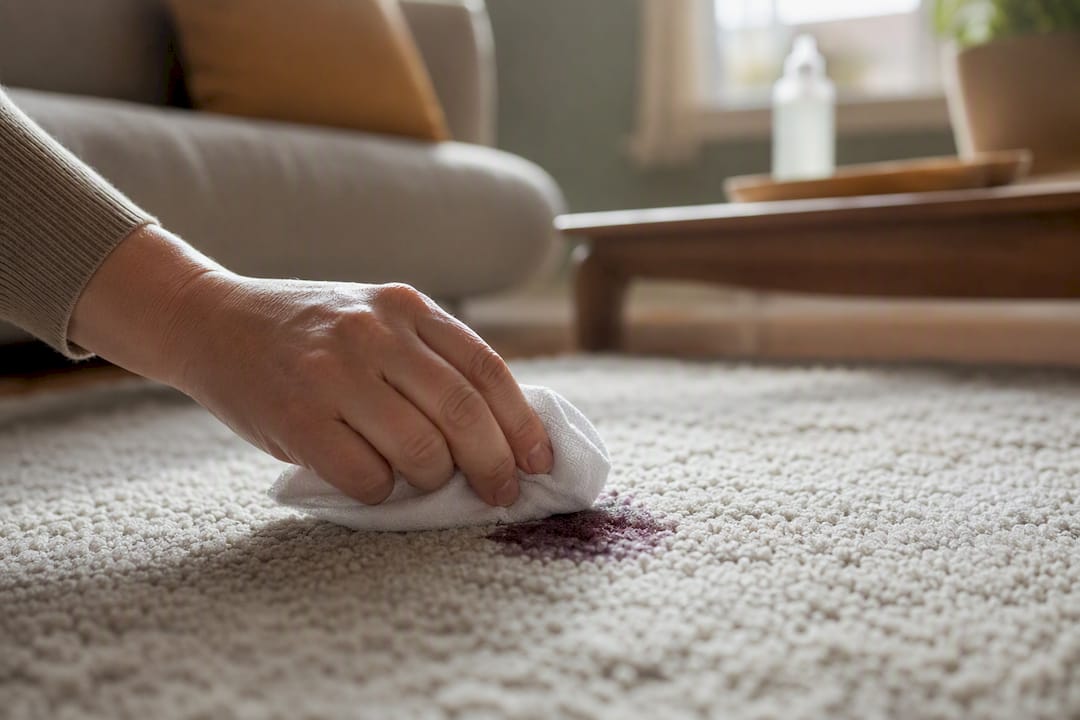
- Blot, don’t wipe. Press paper towels or a clean white cloth straight down onto the spill. No swirling, no side-to-side motion.
- Scoop the pool. If there’s enough polish to puddle, run the edge of a spoon under it and lift it out like you’re rescuing a marble from carpet fibers.
- Apply solvent to the cloth, not the carpet. Dampen a fresh white cloth with isopropyl alcohol or a non-acetone remover. Blot from the outside of the stain toward the center so you’re not dragging pigment into clean carpet.
- Rotate to a clean section of cloth constantly. The moment color starts transferring onto your cloth, that spot is used up. Flip to a fresh corner and keep going.
- Rinse with mild dish soap and cold water. Once the stain has faded, blot the area with soapy water to clear out any leftover solvent, then blot dry with a towel.
- Skip the heat. No hairdryer, no steamer. Heat sets whatever polish residue is left, and now you’ve got a stain for life instead of a stain for the evening.
Pro Tip: Keep a small stack of white cloths under the bathroom sink specifically for spills. Colored towels can bleed dye onto wet carpet, which turns a one-color problem into a two-color problem.
Rubbing alcohol or dry cleaning solvent applied this way, blotted and worked from the outside in, is the standard first response most cleaning authorities recommend for fresh polish. It’s not fancy. It’s just fast and correct.
How to Remove Dried Nail Polish From Carpet Safely
Once nail polish cures, it hardens into a thin plastic film sitting on top of your carpet fibers, sometimes soaked into them. This takes patience, not muscle.
- Scrape gently first. Use the dull edge of a spoon (never a knife) to flake off the brittle top layer. Vacuum up what breaks loose.
- Try ice on small blobs. Rub an ice cube over a hardened glob for 30 to 60 seconds. Cold polish gets brittle and often pops off cleaner than aggressive scraping ever will.
- Bring in the solvent. Dampen a cloth with isopropyl alcohol or a non-acetone remover and press it directly onto the dried spot. Hold for 15 to 20 seconds to let it soften the film, then blot.
- Refold and repeat. Move to a clean part of the cloth each time color lifts, and keep pressing and blotting until no more polish transfers.
- Know when to stop. If a colored haze remains after the plastic film is gone, that’s likely dye, not polish, and more scrubbing risks pulling the carpet’s own color out with it.
Pro Tip: Work in small sections rather than attacking the whole stain at once. A dried polish spot the size of a quarter can take five or six rounds of blot-and-rotate before it’s fully gone, and rushing it usually means over-wetting the carpet backing.
Non-acetone remover or rubbing alcohol blotted onto a cloth removes most dried polish without the fiber damage that comes from pouring solvent straight onto the spot.
Which Solvents Are Safe, and Which Carpet Fibers Need Extra Caution?
Nail polish is really two things stacked on top of each other: a plastic film and a pigment. Solvents dissolve the film fine. The pigment is a separate problem, and once it’s dyed the fiber, no amount of extra scrubbing brings it back out.
Acetone is the strongest solvent in most people’s medicine cabinets, and that strength cuts both ways. It dissolves polish fast, but it can also strip the dye right out of your carpet along with it. Treat it as a last resort, never a first move.
Fiber matters more than most people realize:
- Wool reacts to solvents unpredictably. Test a hidden spot and use minimal product.
- Viscose or rayon should avoid solvents almost entirely; they can distort or lose sheen when wet.
- Polypropylene and other synthetics generally tolerate alcohol well, but check for a greasy residue afterward.
- Acetate blends can soften or dissolve under acetone specifically, so stick to non-acetone options.
Before you treat the visible stain, patch-test on a hidden spot like a closet corner or under a couch. Dampen a small cloth, press it there for 60 to 90 seconds, and check for color transfer or a soft, fuzzy texture change. If either shows up, switch solvents or call a professional instead. Never pour solvent directly onto carpet, and never apply heat afterward. Both moves turn a treatable stain into a permanent one.
Gentler DIY Options and Where They Fall Short
Not every polish spot needs solvent. Light marks or residual haze sometimes respond to gentler kitchen fixes:
- Vinegar and dish soap mix: Combine 1 tablespoon white vinegar, 1 teaspoon dish soap, and 1 cup warm water. Apply with a cloth, blot, then rinse with plain water.
- Baking soda paste: After solvent treatment, a thick paste of baking soda and water can help lift lingering residue. Apply, work in gently, then rinse and blot dry.
These work best on faint or already-loosened marks, not on a fresh puddle or cured polish film. Vinegar and dish soap won’t dissolve set nail polish on their own, so don’t expect miracles from the pantry alone.
Skip hairspray, WD-40, colored nail polish removers, and hot water. Hairspray can loosen polish but leave a sticky film behind, and hot water tends to set stains rather than lift them. Aggressive scrubbing just spreads pigment wider.
When Should You Call a Professional Carpet Cleaner?
Some stains are DIY-friendly. Others are a fast track to a bald, faded patch if you push too hard. Call in help when:
- The carpet is wool, viscose, or another delicate fiber sensitive to solvents.
- The stain is large, bright red, or a dark shade that shows even faint residue.
- Polish soaked through to the carpet backing, not just the visible pile.
- You’ve made two or three careful attempts and colored pigment is still there.
- You notice the carpet’s own dye starting to lift along with the polish.
Professional cleaners carry specialized solvents and spotting agents that go beyond what’s under your sink, plus controlled hot-water extraction equipment used only after a stain is safely spot-treated. They also patch-test as a matter of routine, which is exactly how color loss gets avoided in the first place. If you’d rather skip the guesswork, request a spot-treatment estimate and let a technician assess the fiber before anything touches it.
Finishing the Job Without Leaving a Ring
Once the polish is gone, rinse with small amounts of cold water on a clean cloth, blotting until no solvent smell remains. Don’t soak the backing.
- Air-dry the spot completely. Skip the hairdryer.
- Vacuum only after the area is fully dry, never while damp.
- Prevent repeat spills: paint your nails over a sink, tile floor, or a tray, and keep polish bottles capped and stored upright.
A Quick Note From Home Service Simple
We’ve pulled nail polish, wine, and worse out of carpets across Wichita for years, and delicate fibers like wool or viscose are where DIY attempts go sideways fastest. If a stain has us worried, we say so before we touch it, and our satisfaction guarantee means you’re covered either way.
Prefer to Skip the DIY Route Entirely?

If blotting, patch-testing, and rotating cloths sounds like more evening than you signed up for, that’s exactly what Home Service Simple handles for Wichita homes and businesses.
Our technicians use color-safe spot-treatment protocols built for exactly this kind of stain, followed by deep steam extraction that pulls out residue without leaving the sticky film some over-the-counter fixes cause. For households that deal with spills, pets, or kids on a regular basis, the Simple Club subscription keeps carpets in consistent shape without you having to remember to book anything. Ready to get a stain looked at before it sets for good? Request a spot-treatment estimate through Home Service Simple and get it handled right the first time.
Sources
- How to Get Nail Polish Out of Just About Everything
- How to Get Nail Polish Out of Carpet: Easy Fixes That Work
- How to Remove Nail Varnish From Carpet
FAQ
Does nail polish stain carpet permanently?
Not usually, if you act while it’s fresh. Cured polish that’s soaked through to the backing or transferred pigment into delicate fibers like wool or viscose can leave a permanent mark even with careful treatment.
Does dish soap get nail polish out of carpet?
Dish soap mixed with vinegar can help lift light or residual marks after solvent treatment, but it won’t dissolve a cured polish film on its own.
Will nail polish remover take the color out of carpet too?
Yes, that’s the real risk with acetone-based removers. Always patch-test on a hidden spot first, since acetone can strip carpet dye along with the polish.
I spilled nail polish remover on my carpet. What now?
Blot it up immediately with a dry cloth. Rinse the spot with cold water and a little dish soap, then blot dry. Skip the hairdryer, since heat can set any solvent residue left behind.
When should I stop trying DIY and call a professional?
If pigment remains after the plastic film lifts, if the carpet is wool or viscose, or if the stain reaches the backing, stop and call a professional like Home Service Simple for a spot-treatment estimate before further scrubbing does more damage.