

Rust stains on carpet are fixable. Blot up any loose particles right now, then treat the spot with white vinegar or lemon juice. That two-step move handles most fresh rust stains before they bond deeper into the fibers.
First 5–10 minutes — do these now:
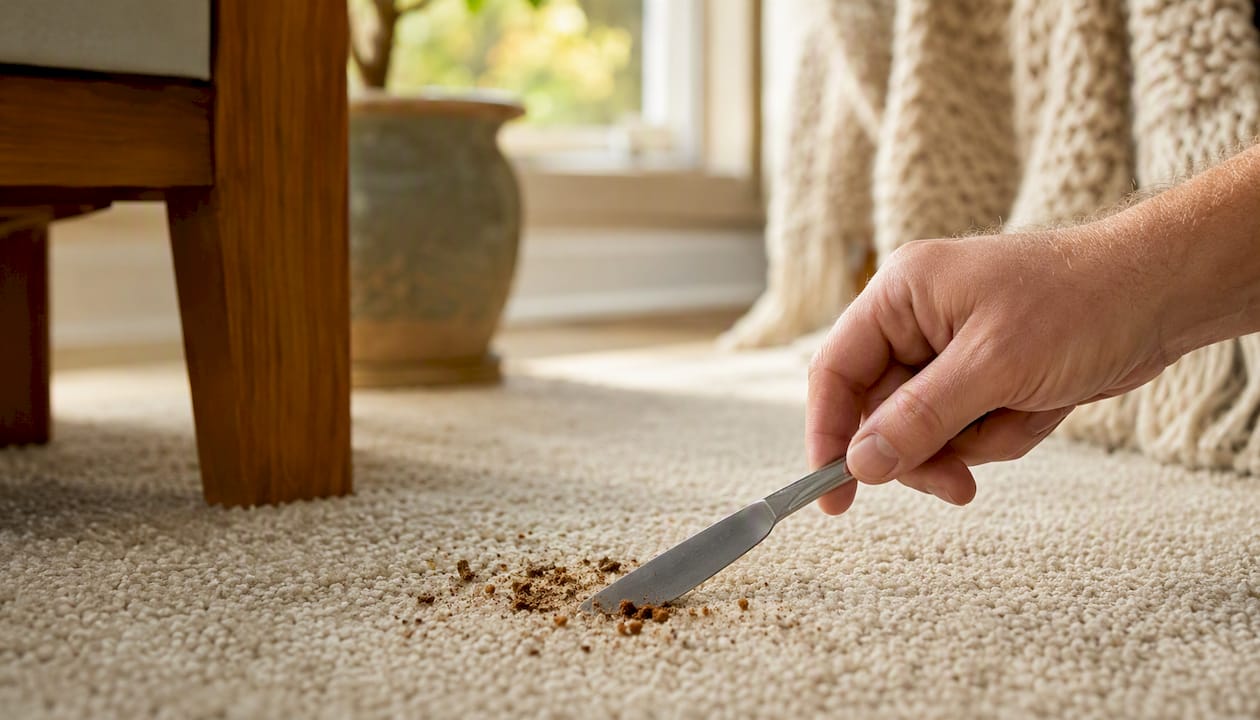
- Scrape loose rust gently with a butter knife or spoon. Work from the outside edge inward.
- Vacuum the loosened particles with a brush attachment. Do not press down hard.
- Blot (never rub) with a clean white cloth to lift any moisture or surface rust.
- Photograph the stain. You’ll want that record if you call a pro later.
The clock matters here. Fresh rust is surface-level iron oxide. The longer it sits, the deeper it chemically bonds to carpet fibers, and the harder it is to pull out with household methods alone.
Key Takeaways
Rust stains on carpet respond best to fast action, mild acid chemistry, and a thorough rinse — and bleach should never enter the picture.
| Point | Details |
|---|---|
| Act fast and blot | Lift loose rust immediately, then blot from the outside in with a clean white cloth. |
| Test before treating | Always do a colorfastness test on a hidden area before applying any cleaner. |
| Use acid, not bleach | White vinegar, lemon juice, and oxalic-acid removers work; chlorine bleach permanently sets rust. |
| Know when to stop | Two to three DIY passes is the limit — beyond that, fiber damage risk outweighs the benefit. |
| Homeservicesimple | For set-in or delicate-fiber stains in Wichita, KS, Homeservicesimple offers fiber-safe rust treatment with a satisfaction guarantee. |
Table of Contents
- 1. What to do before you apply any cleaner
- 2. DIY methods ranked from gentlest to strongest
- 3. When commercial rust removers are the right call
- 4. How to treat older, deeply set rust stains
- 5. Things that make rust stains permanent — avoid these
- 6. How to prevent rust stains from coming back
- 7. When it’s time to call a professional carpet cleaner
- Homeservicesimple can handle what DIY can’t
- Sources
- FAQ
1. What to do before you apply any cleaner
Prep work is what separates a stain that comes out from one that gets worse. Skip this step and you risk grinding rust deeper or damaging the carpet’s color.
Remove loose particles first. Use a butter knife, a spoon, or the edge of a credit card to gently lift any dried rust flakes. Slide, don’t press. Then vacuum with a brush tool on low suction. You’re trying to get the physical rust out before any liquid touches it.
Blot, don’t rub. Rubbing spreads the stain and pushes iron particles further into the pile. Use a clean white cloth (colored cloths can transfer dye). Press down, lift, move to a clean section of the cloth, repeat. Work from the outer edge of the stain toward the center. Use cold or lukewarm water only — heat can set the stain.
Do a colorfastness test. Before applying any cleaner, dab a small amount on a hidden area — inside a closet, under a piece of furniture. Wait two minutes. If the color lifts or changes, stop and call a professional. Per local carpet-stain guidance, this test is non-negotiable before treating any stain.
- Test spot: inside a closet corner or under a sofa
- Wait at least 2 minutes before checking
- Look for color transfer onto the cloth or any lightening of the carpet
Pro Tip: If your carpet is wool, silk, or a hand-knotted area rug, use the absolute minimum moisture possible. These fibers are sensitive to both acid and over-wetting. When in doubt, skip DIY entirely and call a fiber-specialist cleaner.
2. DIY methods ranked from gentlest to strongest
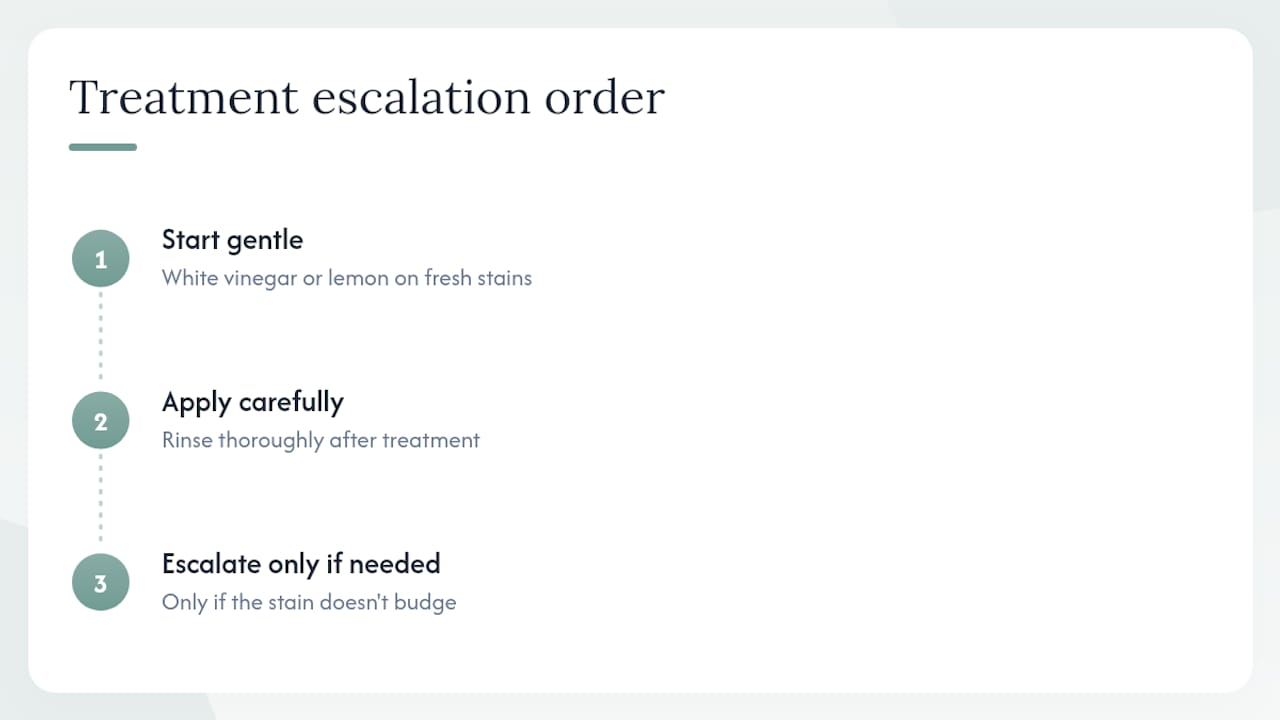
Household acids like white vinegar and lemon juice can knock out many fresh rust stains when you apply them carefully and rinse thoroughly. Start gentle. Escalate only if the stain doesn’t budge.
Method 1: Dish soap and cold water (for very fresh, surface rust)
- Mix one teaspoon of dish soap with one cup of cold water.
- Apply a small amount to the stain with a clean white cloth.
- Blot from the outside in. Do not scrub.
- Rinse with cold water and blot dry.
- Repeat once if needed. If the stain doesn’t lift after two passes, move to an acid method.
Method 2: Undiluted white vinegar
- Pour a small amount of undiluted white vinegar directly onto the stain.
- Let it sit for 5 minutes.
- Blot with a clean cloth, working inward.
- Rinse with cold water and blot dry.
- Repeat up to two more times if the stain is fading but not gone.
Method 3: Lemon juice and salt paste
- Squeeze fresh lemon juice onto the stain until it’s saturated.
- Sprinkle a generous layer of table salt over the lemon juice.
- Let the paste sit for 5–10 minutes. The salt acts as a mild abrasive and draws out the iron.
- Vacuum up the dried salt residue.
- Blot with a damp cloth, then rinse with cold water and blot dry.
Method 4: Baking soda paste (combined with acid)
- Mix baking soda with just enough white vinegar or lemon juice to form a thick paste.
- Apply the paste directly to the stain.
- Let it sit for 5 minutes. You’ll see some fizzing — that’s normal.
- Blot and lift the paste with a clean cloth.
- Rinse with cold water and blot dry. Vacuum once fully dry to remove any residue.
Method 5: Hydrogen peroxide (light-colored carpets only)
Hydrogen peroxide can work on light carpets but requires real caution. It’s a mild bleaching agent, so it can lighten carpet color if left too long.
- Test colorfastness on a hidden area first. Wait 2 minutes.
- Apply a small amount of 3% hydrogen peroxide (standard drugstore strength) to the stain.
- Let it sit for no more than 3 minutes.
- Blot immediately with a clean cloth.
- Rinse with cold water and blot dry.
Do not use hydrogen peroxide on dark, vibrant, or patterned carpets.
Safety reminder: Wear rubber gloves when working with any acid-based cleaner. Keep the room ventilated. Never mix vinegar, lemon juice, hydrogen peroxide, and dish soap together in the same application — apply one method at a time, rinse fully between attempts, and always blot dry before the next pass.
Pro Tip: Acids can attract dirt if any residue is left behind. After every treatment, rinse the area with cold water and blot until the cloth comes up clean. Then place a stack of white paper towels over the damp spot, weight them down with a heavy book, and leave for 30 minutes to wick out remaining moisture.
3. When commercial rust removers are the right call
Sometimes the household pantry isn’t enough. Older or set-in rust stains often need a commercial rust remover — specifically one formulated for textiles, not for metal or porcelain.
Why commercial products work differently. Household acids are mild and dilute. Commercial rust removers use oxalic acid or chelating chemistry to convert iron oxide into a water-soluble compound that rinses away cleanly. They’re also pH-controlled, which matters for fiber safety. Professional-grade, fiber-safe rust removers are the recommended choice for stains that have been sitting for more than a day or two.
Two products worth knowing:
- Bar Keepers Friend (powder or liquid): Contains oxalic acid and is widely available at grocery and hardware stores. It’s designed for hard surfaces but some carpet-cleaning guides reference it for spot treatment on synthetic fibers. Read the label carefully — it is not recommended for wool or delicate fibers.
- Whink Rust Stain Remover: A liquid rust remover formulated for fabric and carpet. It works quickly, so dwell time must be controlled. Always follow the label instructions and test on a hidden area first.
How to apply a commercial rust remover safely:
- Read the full label before opening the bottle.
- Wear gloves and open a window.
- Do a patch test on a hidden area. Wait the full time the label specifies.
- Apply a small, controlled amount to the stain. Do not flood the carpet.
- Follow the label’s dwell time exactly. More time is not better — it risks fiber damage.
- Rinse thoroughly with cold water and blot dry.
- If possible, check the rinsed area with pH strips to confirm neutrality before drying.
Never mix a commercial rust remover with bleach, ammonia, or any other cleaning product. Chemical combinations can produce toxic fumes and will likely make the stain worse. One product at a time, always.
Pro Tip: If you’re unsure whether a product is fiber-safe, call the manufacturer’s customer service line before applying it. Most brands have a helpline and can tell you whether their formula is safe for your specific carpet type.
4. How to treat older, deeply set rust stains
Old rust is a different problem. Iron oxide bonds chemically to fiber dye sites, and mechanical extraction alone — vacuuming, scrubbing, steam — usually can’t break that bond. You need acid chemistry, applied in a controlled way.
A poultice method for set-in stains:
- Mix an absorbent base (baking soda or powdered chalk) with enough lemon juice or white vinegar to form a thick paste.
- Apply a generous layer over the stain, at least a quarter-inch thick.
- Cover loosely with plastic wrap to slow evaporation and extend dwell time.
- Leave for 15–20 minutes. Check at 10 minutes — if the paste is drying out, add a few drops more acid.
- Remove the plastic wrap and let the paste dry completely.
- Vacuum up the dried residue.
- Blot the area with a damp cloth, rinse with cold water, and blot dry.
How many passes are reasonable? Two to three treatment cycles is a fair limit before the risk of fiber or color damage starts to climb. Between each pass, let the carpet dry fully — usually a few hours. If the stain is fading with each pass, keep going. If it’s not moving after two attempts, stop.
Decision checklist — when to stop DIY:
- The stain covers more than a few square inches
- The carpet is wool, silk, or a hand-knotted rug
- You’ve already tried bleach on it (more on that below)
- The fibers look matted, discolored, or frayed from previous attempts
- The stain has been there for weeks or months
Any one of those conditions is a signal to call a professional rather than risk permanent damage.
5. Things that make rust stains permanent — avoid these
Some common “fixes” will lock that rust stain in for good. Here’s what to skip.
Chlorine bleach. This is the big one. Bleach can permanently set rust stains and damage carpet fibers, according to University of Georgia Cooperative Extension guidance. If bleach has already been applied to a rust stain, the discoloration is often irreversible — even a professional cleaner may not be able to fully restore the area. Keep the bleach bottle away from rust stains entirely.
From University of Georgia Cooperative Extension: Chlorine bleach should never be used on rust stains. It can set the stain permanently and cause fiber damage that no subsequent treatment can reverse.
Hardware-store rust removers for metal or porcelain. Products designed to strip rust from pipes, tools, or bathroom fixtures are far too aggressive for carpet fibers. They can dissolve dye, weaken fiber structure, and leave a bigger problem than the original stain.
Heat. Hot water, steam irons, and hair dryers all risk setting the stain deeper. Stick to cold or lukewarm water throughout the entire process.
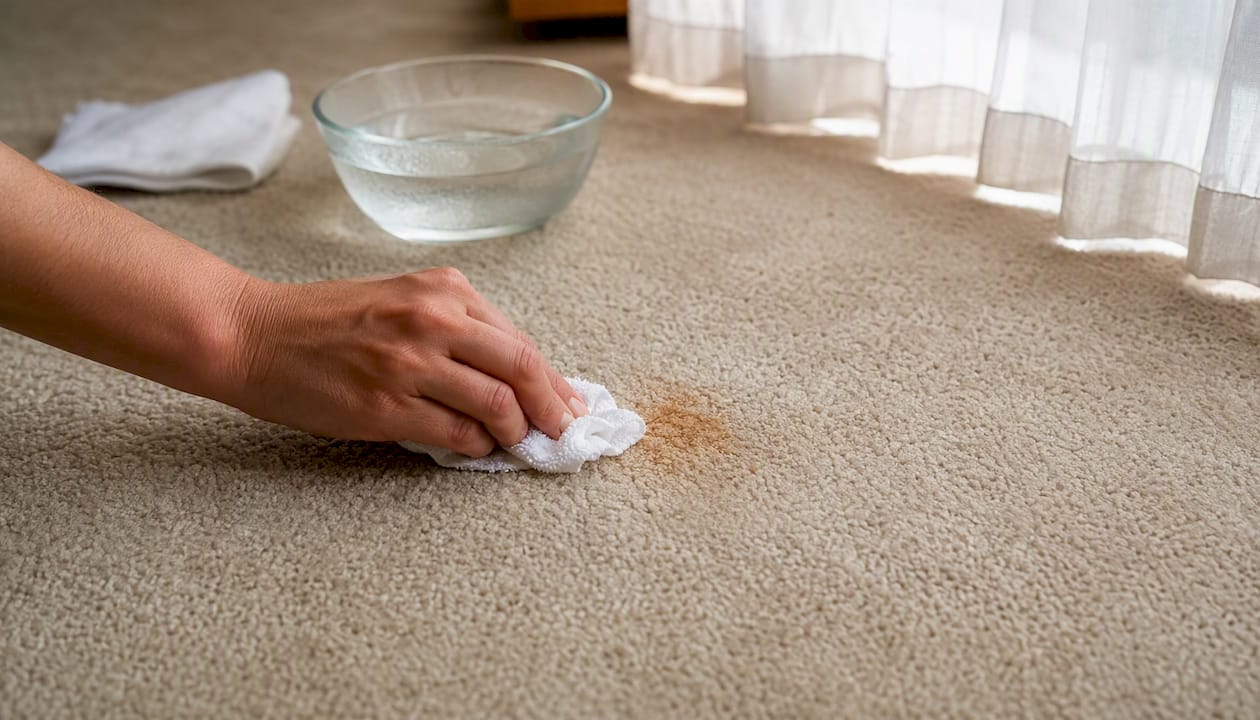
Scrubbing. Friction frays fibers and spreads the stain outward. Every application — cleaner, rinse, or dry — should be a blot, not a scrub.
6. How to prevent rust stains from coming back
Prevention is easier than removal. Most rust stains on carpet come from the same handful of sources: furniture legs, metal plant pots, damp tools left on the floor, or wet door mats sitting on metal thresholds.
- Felt pads on all metal furniture legs. Check them every few months — they compress and wear down, and once the metal touches the carpet, rust transfer can happen overnight.
- Move metal objects off damp carpet immediately. A wet mat near a door is one of the most common culprits. If the mat gets soaked, pick it up and let both the mat and the carpet dry before putting it back.
- Dry spills fast. Moisture activates rust transfer. Any spill near a metal object needs to be blotted up right away.
- Inspect under rugs and furniture regularly. Rust can develop slowly and silently. Lift your area rugs every month or two and check the floor underneath.
- Use plastic coasters or rubber pads under metal objects. Plant pots, tool boxes, and decorative metal items all benefit from a barrier between them and the carpet.
Pro Tip: For entryways and mudrooms where metal boots, tools, or equipment come in, lay down a rubber-backed mat that you can toss in the wash. It’s a much cheaper fix than a rust-stain treatment.
7. When it’s time to call a professional carpet cleaner
DIY gets you far. But there’s a point where more attempts cause more damage than the stain itself. Here’s when to pick up the phone.
Call a pro when:
- The stain is larger than a dinner plate
- The carpet is wool, silk, or a high-value area rug
- You’ve done two or three DIY passes with no meaningful improvement
- Bleach has already been applied (the pro needs to know this upfront)
- The fibers look damaged, matted, or discolored beyond the original stain
What a professional rust-stain service typically includes:
- Fiber identification — knowing whether you have nylon, polyester, wool, or a blend changes the chemistry used.
- A spot test for colorfastness before any product touches the stain.
- Application of a pH-controlled, fiber-safe oxalic-acid or chelating rust remover.
- Controlled dwell time — pros watch the clock because over-dwelling damages fibers.
- Neutralization rinse to stop the acid reaction and protect the fiber.
- Hot water extraction to pull out the dissolved iron and any remaining product.
- Accelerated drying to prevent mold.
Professional cleaners who handle difficult stain treatment and safe cleaning protocols follow this kind of systematic process because skipping any step — especially neutralization — can leave residue that re-attracts soil or weakens fibers over time.
Questions to ask before you book:
- Do you use a fiber-safe, oxalic-acid-based rust remover?
- Will you neutralize after treatment?
- Do you offer any guarantee on spot treatments?
- What’s your per-spot pricing, and is there a minimum call-out fee?
Per-spot pricing for professional rust-stain treatment generally varies by market, carpet type, and stain severity — always ask for an estimate before the tech arrives.
A note from the field
Rust stains are one of the more satisfying jobs when they go right — and one of the most frustrating when a homeowner has already thrown bleach at them. Fresh rust, caught early, usually responds well to acid chemistry and a careful rinse. Moderate stains that have been sitting a week or two often need a commercial oxalic-acid product and two or three passes. Heavily set stains, especially ones that have been treated with bleach, may be permanent. No amount of chemistry reverses that.
The fiber type matters as much as the stain age. Synthetic carpets — nylon, polyester — tolerate acid treatments reasonably well when dwell times are controlled. Wool is a different story. Wool fibers are protein-based and can be damaged by strong acids or over-wetting. If you’re not sure what your carpet is made of, check the manufacturer’s tag or call a pro before you start.
At Homeservicesimple, the approach is always to diagnose first: confirm it’s rust (not tannin or dye transfer), test the fiber, and use the mildest effective chemistry. That’s what protects the carpet and gets the best result.
Homeservicesimple can handle what DIY can’t
When the stain is set, the fiber is delicate, or you’ve already tried two rounds of home remedies with nothing to show for it, professional extraction is the smarter move.
Homeservicesimple brings fiber-safe rust-removal chemistry, neutralization rinses, and deep steam extraction to homes in Wichita, KS. No guesswork on dwell times. No risk of over-wetting or leaving acid residue behind. The team identifies your carpet fiber first, applies the right product at the right concentration, and neutralizes before extraction — the full protocol, not just a spray-and-blot.
What’s included when you book a rust-stain treatment:
- On-site fiber identification and spot inspection
- Patch test before any product is applied
- pH-controlled rust remover with timed application
- Full neutralization and hot water extraction
- Fast drying to protect against mold
- Satisfaction guarantee on eligible jobs
Have your stain photos ready and note any products you’ve already tried — that information helps the tech choose the right approach from the start. Homeservicesimple and get a free quote.
Sources
- Stain removal — iron/rust | University of Georgia Cooperative Extension
- Rust stain removal from carpet — a pro guide | CarpetCleaningDigital
- How to Remove Rust Stains From Clothes, Carpet, and Upholstery | The Spruce
- How to Remove Rust Stains From Carpet Fast and Safely | SuperClean
- Carpet Stain Tips – Rust | Clean As A Whistle, Inc.
FAQ
Will rust stains come out of carpet?
Yes, most fresh rust stains come out with household acid methods like white vinegar or lemon juice and salt. Older or set-in stains may need a commercial oxalic-acid remover or professional treatment.
Does rust permanently stain carpet?
Rust can become permanent if left untreated for a long time or if chlorine bleach is applied to it. Bleach chemically sets rust into carpet fibers in a way that even professional cleaning often cannot reverse.
Does WD-40 remove rust from carpet?
WD-40 can loosen surface rust enough to blot away some residue, but it leaves an oily film behind that requires a separate degreasing step. Acid-based methods like white vinegar or lemon juice are generally more effective and don’t leave secondary residue.
Will hydrogen peroxide remove rust stains from carpet?
It’s a mild bleaching agent, so it should never be used on dark or vibrant carpets, and dwell time should not exceed 3 minutes.