

Duct cleaning delivers real value in specific situations, but for most homes with normal dust buildup, the U.S. EPA says it has not been shown to prevent health problems. That’s the honest verdict. If none of the triggers below apply to your home, routine duct cleaning is probably not necessary. But when contamination is confirmed, a proper cleaning can improve airflow, eliminate odors, and protect your equipment.
Clean your ducts if any of these apply:
- Visible mold growth inside ducts or on HVAC components
- Evidence of rodents, insects, or other vermin in the ductwork
- Ducts clogged with heavy debris that’s visibly restricting airflow
- Recent fire, water damage, or a major renovation that pushed dust and debris into the system
- Persistent, unexplained odors coming from the vents
If none of those describe your home, inspect first. Document what you find. Hire a pro only if a trigger is present.
Table of Contents
- What air duct cleaning actually covers
- Air duct cleaning benefits you can realistically expect
- Scams and risks you need to know about
- How to pick a qualified duct-cleaning contractor
- How to verify the job was done right
- Preventing re-contamination after cleaning
- What the research actually says
- Key Takeaways
- The honest truth about duct cleaning from someone who does this work
- Homeservicesimple’s air duct cleaning in Wichita
- Useful sources
- FAQ
What air duct cleaning actually covers
“Air duct cleaning” is the common phrase, but the industry term is HVAC system cleaning, and the scope matters a lot. A thorough job covers more than just the metal tubes in your walls.
A complete service typically includes the supply and return ductwork, registers, grilles, diffusers, and the air handler components: the blower motor, evaporator coil, and drain pan. That last group is where the real efficiency gains usually hide. Dirty coils restrict airflow and force your system to work harder, so skipping the air handler and cleaning only the ducts often leaves the biggest problem untouched.
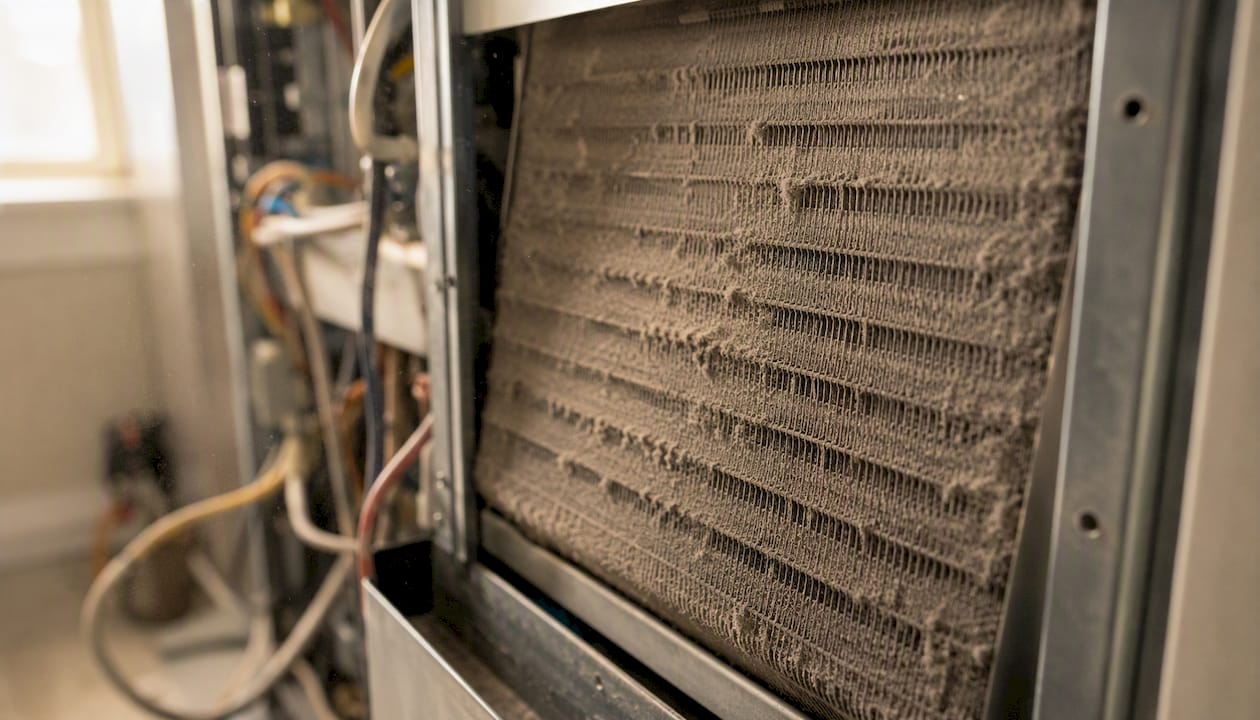
The method matters just as much as the scope. Source removal means using a high-powered negative-air vacuum to pull contaminants out of the system rather than just blowing them around or wiping surfaces. It’s the accepted standard, and it’s what separates a legitimate cleaning from a truck-idling-in-the-driveway scam. Blowing compressed air through ducts without proper vacuum containment can actually release more dust into your living space than was there before.
Pro Tip: Ask specifically whether the air handler, coil, and drain pan are included in the quoted price. If they’re not, ask for an add-on. That’s often where the efficiency improvement actually comes from.
Light household dust coating the inside of ducts is completely normal. It’s not a health emergency, and it’s not a reason to schedule a cleaning.
Air duct cleaning benefits you can realistically expect
Here’s where homeowners need a straight answer, not a sales pitch. Some benefits are well-supported. Others are overstated.
What the evidence supports:
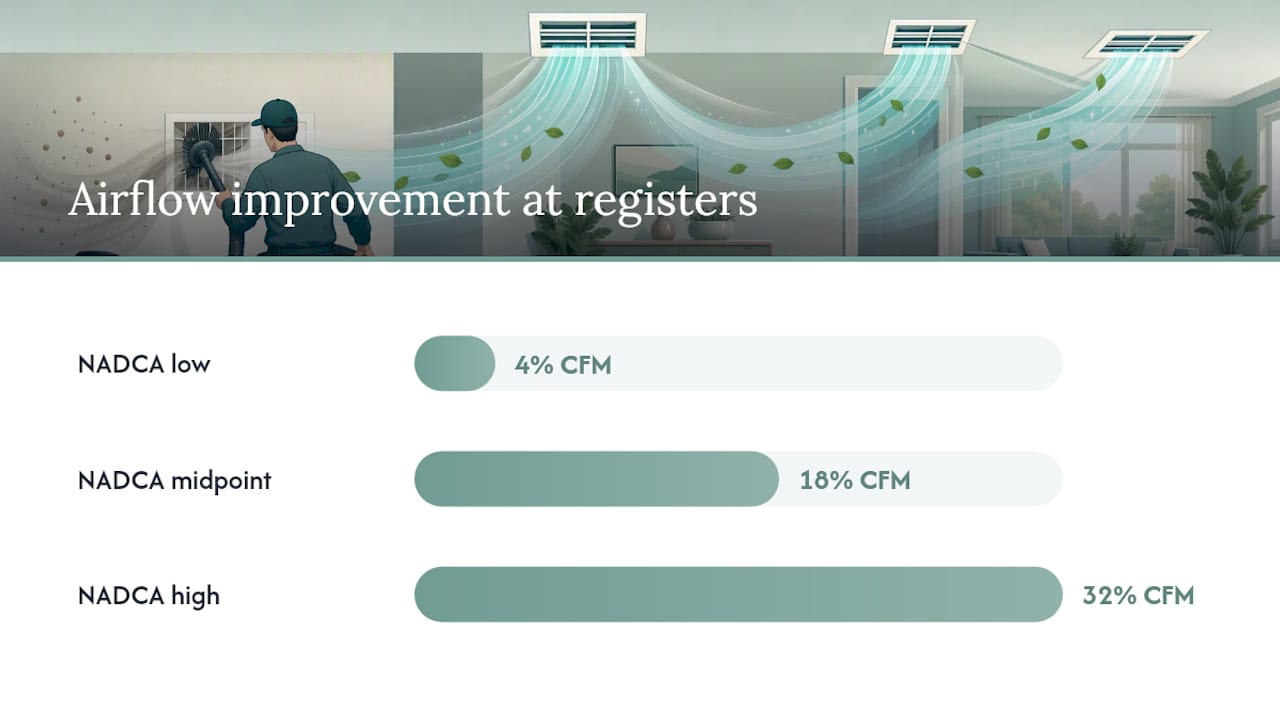
- Improved airflow. NADCA field testing measured airflow increases at supply registers ranging from about 4% to 32% in homes where cleaning was performed. Results varied based on how contaminated the system was before cleaning.
What the evidence does NOT support:
The EPA’s pilot field study found that mechanical cleaning methods removed particulate contamination from residential HVAC systems, but could not conclusively show improvements in airborne indoor air quality or health outcomes. Surface dust levels dropped measurably, with pre-cleaning dust on supply ducts ranging from 1.5 to 26.0 g/m² and post-cleaning averages much lower. But short study durations and other contaminant sources made health conclusions inconclusive.
Routine duct cleaning as an allergy cure is the most common overclaim in this industry. If you have allergies, better filtration, humidity control, and source control (like reducing pet dander) will do more for you than a one-time duct cleaning. The American Lung Association frames HVAC maintenance as one component of a broader indoor air quality strategy, not a standalone fix.
The most likely benefits are airflow improvement, odor removal, and equipment protection. The least likely benefit is a dramatic change in allergy symptoms for a home with normal dust levels.
Scams and risks you need to know about
This industry has a real problem with low-quality providers making big promises. Knowing the red flags before you pick up the phone saves you money and protects your system.
Common scam patterns:
- The $49 whole-house special. A legitimate source-removal cleaning of a typical home costs significantly more. A rock-bottom price almost always means a surface wipe or a leaf blower in the ductwork, not actual source removal.
- Guaranteed allergy cure claims. No contractor can promise that cleaning your ducts will eliminate allergy symptoms. If they do, walk away.
- Chemical biocide upsells. Some contractors push chemical treatments inside ducts as an add-on. The EPA notes that the safety and effectiveness of biocides in ductwork have not been fully established, and some products are not registered for use inside HVAC systems. Don’t agree to chemical treatments without understanding exactly what’s being applied and why.
- Duct sealant upsells. Encapsulants sprayed inside ducts to “seal in” contamination are not a substitute for actual removal. They may also void equipment warranties.
- Bait-and-switch pricing. A low estimate grows once the crew is in your home and starts finding “problems” that require expensive add-ons.
Risks from poor cleaning:
- A vacuum that lacks sufficient power or containment can release more dust and debris into your home than existed before the job started.
- Aggressive agitation tools used incorrectly can puncture or disconnect flexible ductwork.
- Wet cleaning methods that leave moisture behind create conditions for mold growth inside the system.
Red flags during the sales call:
- No mention of negative-air vacuuming or source removal
- Refusal to provide a written scope of work before starting
- No proof of insurance or NADCA membership
- Pressure to decide on the spot
How to pick a qualified duct-cleaning contractor
The NADCA ACR standard defines what a proper cleaning looks like, and the 2025 edition updated requirements for containment, capture velocity, and verification. Use these standards as your hiring benchmark.
What to verify before hiring:
- NADCA membership (check the NADCA website directly, not just the contractor’s word)
- Proof of general liability insurance and worker’s compensation
- References from local jobs, not just online reviews
- Written scope of work that names specific components to be cleaned
Methods and equipment to insist on:
- Source-removal negative-air vacuuming with a collection device outside the home or with HEPA filtration
- Access openings cut or removed to allow inspection and cleaning of duct interiors
- Air handler, coil, and drain pan cleaning included or clearly quoted as a separate line item
- No chemical treatments without written explanation of the product, its registration status, and why it’s needed
Questions to ask the contractor:
- What vacuum system do you use, and what is its CFM rating?
- How do you verify the job is complete? Do you offer a NADCA Surface Comparison Test or visual acceptance documentation?
- Will you provide before-and-after photos?
- What’s your containment plan to keep debris out of the living space during cleaning?
Pro Tip: Before the crew leaves, ask them to show you the inside of a duct through an access opening. A clean duct interior is visible proof. If they can’t or won’t show you, that’s a problem.
How to verify the job was done right
Don’t just take the contractor’s word for it. Here’s a quick checklist to run through before you pay.
- Ask about the NADCA Surface Comparison Test — Per the NADCA ACR standard, contractors can perform a surface comparison test to verify cleanliness. Ask if they offer it, and request documentation.
If you suspect the job was incomplete, contact NADCA directly. They have a complaint process for members who don’t meet ACR standards.
Preventing re-contamination after cleaning
A good cleaning buys you time, but your habits and maintenance routine determine how long that lasts. Reducing dust and contaminants at the source is always more effective than cleaning up after the fact.
Routine HVAC maintenance:
- Change filters on schedule. For most homes, a MERV 8 filter changed every 60–90 days is a solid baseline. Allergy-focused households benefit from MERV 11–13 filters, but check that your system can handle the added resistance before upgrading.
- Schedule an annual air handler inspection. A technician should check the coil, drain pan, and blower every year, especially before cooling season.
- Keep the drain pan clean and dry. Standing water in the drain pan is one of the most common sources of mold in residential HVAC systems.
Home habits that reduce duct contamination:
- Seal off supply and return registers during any remodel or construction work. Construction dust is one of the fastest ways to contaminate a clean system.
- Control indoor humidity. Keeping relative humidity between 30% and 50% discourages mold growth in the ductwork.
- Groom pets regularly and vacuum frequently if you have animals. Pet dander is a major contributor to filter loading and duct buildup.
- Avoid indoor smoking. Smoke residue coats duct walls and is extremely difficult to remove.
For broader steps to reduce dust buildup indoors, source control and regular filter changes do more than any single cleaning. Pairing those habits with room air quality improvement steps like portable air cleaners and humidity management gives you a more complete picture.
What the research actually says
Here’s the condensed version of what authoritative sources have found, so you can see exactly where the evidence is strong and where it isn’t.
EPA headline finding: The U.S. EPA states that duct cleaning has not been shown to prevent health problems in most homes. Light dust in ducts is normal. Cleaning is appropriate when specific contamination is confirmed, not as a routine measure.
NADCA standards: The ACR standard requires source removal as the cleaning method, with verification through visual inspection, surface comparison testing, or vacuum testing. The 2025 edition updated requirements for capture velocity and containment. Circumstances that justify cleaning include mold, vermin, heavy debris, fire or water damage, and post-construction contamination.
Field study results: The EPA pilot study measured pre-cleaning dust on supply ducts ranging from 1.5 to 26.0 g/m², with post-cleaning averages significantly lower. Airborne IAQ measurements were variable and health outcomes were inconclusive. NADCA field testing found airflow improvements at supply registers ranging from about 4% to 32% after cleaning, with coil cleaning identified as the primary driver of energy-related benefits.
| Metric | Pre-Cleaning | Post-Cleaning | Source |
|---|---|---|---|
| Surface dust on supply ducts | 1.5–26.0 g/m² | Significantly lower | EPA pilot field study |
| Airflow (CFM) improvement | Baseline | 4%–32% increase observed | NADCA field testing |
| IAQ/health outcomes | Variable | Inconclusive | EPA pilot field study |
| Coil cleaning energy impact | Restricted airflow | Measurable efficiency gains | NADCA field testing |
“Duct cleaning has never been shown to actually prevent health problems. Neither do studies conclusively demonstrate that particle (e.g., dust) levels in homes increase because of dirty air ducts or go down after cleaning.” — U.S. EPA, Should You Have the Air Ducts in Your Home Cleaned?
The honest read: cleaning works for removing surface contamination and improving airflow when the system is genuinely dirty. It’s not a health remedy for typical homes.
Key Takeaways
Duct cleaning delivers measurable airflow and odor benefits when contamination is confirmed, but the EPA and field research both show it is not a routine health measure for most homes.
| Point | Details |
|---|---|
| Clean only when triggers are present | Mold, vermin, heavy debris, fire/water damage, or persistent odors justify cleaning; normal dust does not. |
| Source removal is the required method | Insist on negative-air vacuuming per NADCA ACR standards; surface wiping alone is not acceptable. |
| Airflow gains are real but variable | NADCA field testing found CFM improvements of 4%–32% at supply registers after proper cleaning. |
| Health benefits are inconclusive | EPA research found no conclusive evidence that duct cleaning prevents health problems in typical homes. |
| Homeservicesimple follows source-removal standards | For Wichita homeowners, Homeservicesimple offers professional air duct cleaning with written scope and verification. |
The honest truth about duct cleaning from someone who does this work
Most homeowners who call about duct cleaning fall into two groups. The first group just heard an ad promising allergy relief and a healthier home. The second group pulled off a vent cover, shone a flashlight inside, and found something that genuinely alarmed them. The second group almost always needs the service. The first group usually doesn’t.
What I see most often in homes around Wichita is post-renovation contamination and systems that haven’t had the coil or drain pan touched in years. Remodel dust is brutal on HVAC systems. It coats coil fins, loads up filters faster than normal, and leaves a fine layer inside every duct in the house. That’s a real problem with a real fix. But a homeowner who just wants “cleaner air” without any specific contamination trigger? Better filtration and a humidity check will do more for them than a duct cleaning.
The other thing I’d push back on is the idea that duct cleaning is a one-and-done fix. It’s not. The homes that stay clean longest are the ones where the homeowner changed filters on schedule, kept humidity in check, and sealed off the HVAC during any construction work. Cleaning is a reset, not a solution.
Homeservicesimple’s air duct cleaning in Wichita
Wichita homes deal with real contamination challenges: construction season, seasonal humidity swings, and the kind of dust that finds its way into everything. When your vents smell off, your airflow feels weak, or you’ve just finished a remodel, that’s the moment a professional cleaning actually pays off.
Homeservicesimple provides air duct cleaning in Wichita using source-removal methods, written scopes of work, and before-and-after documentation so you can verify the job was done right. Air duct cleaning is part of a broader service lineup that includes carpet, upholstery, and mattress cleaning, plus the Simple Club subscription for homeowners who want consistent care without the scheduling hassle.
Ready to find out whether your system needs attention? Book an inspection or request a written estimate from Homeservicesimple today.
Useful sources
- Should You Have the Air Ducts in Your Home Cleaned? | US EPA
- NADCA Releases 2025 Edition of ACR, The NADCA Standard for Assessment, Cleaning and Restoration
- DOHS Fact Sheet On HVAC Duct Cleaning
- American Lung Association — Indoor air quality
FAQ
Does air duct cleaning actually improve health?
The EPA has found no conclusive evidence that duct cleaning prevents health problems in typical homes. It can help in specific cases, like confirmed mold or vermin contamination, but it’s not a reliable allergy or respiratory remedy for homes with normal dust levels.
How often should air ducts be cleaned?
There’s no set schedule. The EPA and NADCA both recommend cleaning based on confirmed triggers, such as visible mold, pest evidence, heavy debris, or post-renovation contamination, rather than on a routine annual or biannual basis.
What is source removal and why does it matter?
Source removal means using a negative-air vacuum system to physically extract contaminants from the ductwork, rather than blowing or wiping them. It’s the method required by the NADCA ACR standard and the only approach that actually removes debris instead of redistributing it.
How much does professional duct cleaning cost?
Costs vary by region, system size, and scope, but a legitimate source-removal cleaning for a typical single-family home generally runs from a few hundred dollars to over $1,000 when air handler cleaning is included. A quote well below that range usually signals a surface-only job, not true source removal.
How do I know if the cleaning job was done properly?
Ask to see inside the ducts through an access opening, review before-and-after photos, and confirm the contractor used a negative-air vacuum throughout the job. Per the NADCA ACR standard, contractors should be able to offer a Surface Comparison Test or visual acceptance documentation as proof of cleanliness.